Article Contents:
- Portal as Architectural Philosophy
- Historical Roots of Modern Portal Understanding
- Psychology of Perceiving Portal Compositions
- Constructive Foundations of Portal Architecture
- Structural Elements of Classical Portal
- Material Aspects of Modern Portal
- Production and processing technologies
- Stylistic Typology of Portal Solutions
- Classicism: Mathematics of Perfection
- Baroque: Theater of Architectural Forms
- Modernism: natural forms in architecture
- Art Deco: geometry of luxury
- Modern Styles: Minimalism and High-Tech
- Design and Calculation of Portal Systems
- Proportional Systems and Modular Grids
- Adaptation to Architectural Features
- Digital technologies in design
- Installation and Mounting: Professional Secrets
- Preparation Work and Planning
- Technology for installing various elements
- Mounting Systems and Their Features
- Operation and Maintenance of Portal Systems
- Maintenance Regulations
- Repair and restoration
- Economic aspects and market trends
- Pricing factors
- Market development trends
- Conclusion: The Art of Creating Portals in the Modern World
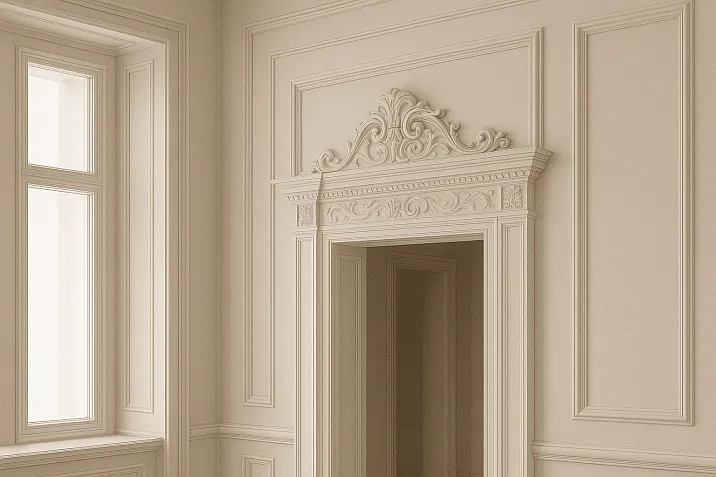
The greatness of architecture lies not in the scale of the building, but in the perfection of its details. Framing Doorway Openings This is the interior element that can transform a simple passage into a majestic arch, and an ordinary room into a Renaissance palace. In the world of modern design, where every millimeter of space must contribute to harmony, portals serve as architectural punctuation marks, setting meaningful accents.
When great masters of the past created their masterpieces, they understood: the entrance group is the first note in the architectural symphony of the building. Today, in the era of technological possibilities and diverse materials, we have a unique opportunity to recreate this magic in any interior — from a modest apartment to a luxurious residence.
But what distinguishes professional Framing Doorway Openings from amateur self-made work? What secrets lie behind the apparent simplicity of classical forms? And most importantly — how to achieve that very effect of 'expensive and tasteful,' which any visitor instantly perceives?
Portal as Architectural Philosophy
In architectural terminology, a portal is not merely a door opening, but a complete compositional system including framing, decorative elements, and spatial solutions for transitioning between functional zones. Each element of this system carries a specific semantic load and performs concrete functions.




Historical Roots of Modern Portal Understanding
Ancient architects laid the foundations for understanding the portal as an architectural statement. Roman basilicas, Greek temples, Byzantine churches — everywhere the entrance group served not only functional purposes but also symbolic ones. The portal was the boundary between the profane and sacred space, between the external world and the inner sanctuary.
Gothic style — is a stone poem written in the language of architectural forms. door frame trim Gothic style — is a stone poem written in the language of architectural forms.
The Renaissance introduced mathematical precision of proportions and classical order systems into portal design. Palladio, Bramante, Michelangelo created a canon that still influences architecture today. Modern understanding of harmony in doorway design is largely based on principles developed by Renaissance masters.
Baroque and Rococo introduced theatricality and emotion into portal architecture. Curved lines, rich plasticity, play of light and shadow turned portals into true works of art. Ceiling molding Baroque interiors often echo portal decoration, creating a unified spatial solution.
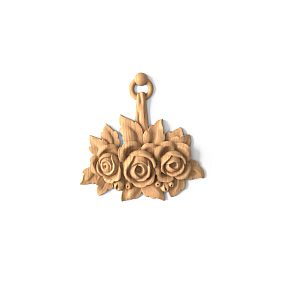
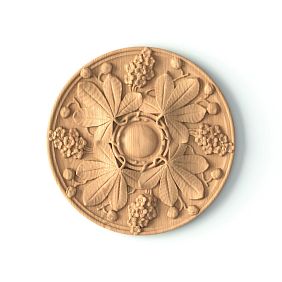
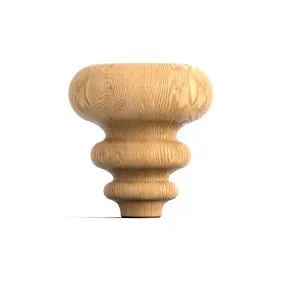
Our factory also produces:



Psychology of Perceiving Portal Compositions
Modern neuroarchitecture explains why certain proportions and forms are perceived as harmonious. The human brain evolved in a natural environment where specific geometric ratios were associated with safety and comfort. The golden ratio, the rule of thirds, modular systems — all reflect deep patterns of perception.
Framing Doorway Openings Affects the subconscious, creating a certain mood even before a person consciously perceives the details of the composition. A tall, narrow portal evokes a sense of solemnity and upward aspiration. A wide, low portal conveys stability and solidity. An ornate portal suggests luxury and status. A minimalist one implies modernity and functionality.
Color solutions also play an important psychological role. Light tones expand space and create a sense of lightness. Dark tones concentrate attention and add drama. Contrasting combinations attract attention, tonal ones soothe and relax.
Get Consultation
Constructive Foundations of Portal Architecture
Creating a quality portal requires a deep understanding of constructive principles and materials science. This is not merely a decorative overlay on a wall, but a complex engineering system that must ensure durability, functionality, and aesthetic perfection.
Structural Elements of a Classical Portal
The basic structure of a portal includes several key elements, each serving specific functions. The plinth or base provides visual support for the entire composition and ensures a transition from the floor to vertical elements. Its height is typically 10–15% of the portal’s total height.
Side pilasters or engaged columns establish the main rhythm of the composition and carry decorative loads. Their width is determined by proportional relationships and may vary from 1/7 to 1/5 the width of the opening. Corner decorative elements Often used for detailing joints and transitions between different planes.
The anta or finishing element crowns the portal and creates a horizontal emphasis. It may be simple — as a straight cornice — or complex — including an architrave, frieze, and cornice. The height of the anta is usually 1/4–1/3 the height of the side elements.
Architectural finishes require special attention to geometry and constructive solutions. The arch radius must correspond to the opening width and overall portal proportions. A too shallow arch appears low and grounded, while a too high arch appears unstable.
Material Aspects of Modern Portals
Material selection for portals is determined not only by aesthetic preferences but also by technical requirements. Natural stone provides maximum durability and prestige, but requires strong load-bearing structures and professional processing.
Solid wood — a traditional material for interior portals. Oak, beech, and ash possess the necessary strength to create large-scale elements. Coniferous species are more affordable but require careful protective treatment. Paintable Molding From quality wood, any color solution can be created.
High-density MDF has become a popular alternative to solid wood due to its dimensional stability and affordability. Modern MDF grades have sufficient strength to create complex profiled elements. The main advantage — a perfectly smooth surface ready for finishing.
Next-generation polyurethane has revolutionized architectural decor production. High-density compositions allow creating elements with detail unattainable with other materials in mass production. Polyurethane is resistant to moisture, temperature fluctuations, does not attract insects, and requires no complex maintenance.
Composite materials open new possibilities for designers. Glass-fiber concrete combines the strength of stone with the lightness of modern composites. Wood-plastic composites combine the beauty of wood with the practicality of plastic.
Production and Processing Technologies
Modern portal element production uses high-precision CNC equipment. CNC milling machines ensure perfect profile repeatability and minimal dimensional tolerances. This is critically important for high-quality element joints.
Laser cutting allows creating delicate decorative elements from various materials with jewel-like precision. The technology is especially effective for creating complex geometric patterns and botanical ornaments.
3D milling opens opportunities to create volumetric decorative elements based on digital models. The technology allows reproducing historical samples or creating entirely new forms with high detail.
Injection technologies for polyurethane enable mass production of complex elements. High-quality silicone molds allow obtaining items with perfect surfaces, requiring no additional finishing.
Stylistic Typology of Portal Solutions
The diversity of architectural styles has given rise to numerous approaches to portal design. Each style has its own distinctive features, proportional systems, and decorative motifs.
Classicism: The Mathematics of Perfection
A classical portal is the embodiment of architectural logic, where each element has its place and purpose. Door Frame Installation In the classical style, portals are constructed according to the principles of the order system, developed since antiquity.
The Doric order is characterized by strictness and simplicity. Simple geometric forms, minimal decoration, clear proportional relationships create a sense of reliability and solidity. The color palette is usually monochromatic — white, cream, gray.
The Ionic order allows for greater decorative detail. Characteristic volutes, more elegant proportions, plant motifs create a sense of refinement. Ceiling molding elements Often echo the decoration of Ionic portals.
The Corinthian order is the most decorative. An ornate capital with acanthus leaves, complex profiling, and abundance of decorative details require high craftsmanship. Such portals are suitable for grand interiors.
Baroque: Theater of architectural forms
A Baroque portal is an architectural spectacle, where each element plays its role in creating an emotional impact. Curved lines, dynamic plasticity, rich decorative elements transform the portal into a work of art.
Characteristic elements of Baroque style — cartouches, garlands, putti, shells, mascarons — create a sense of abundance and luxury. Ceiling molding for chandelier Baroque style often complements portal compositions, creating a unified spatial solution.
Color solutions for Baroque portals can be very rich. Gilding, silvering, multi-colored painting, imitation of precious materials — all means are suitable for creating an impression of luxury.
Modern: Natural forms in architecture
Modern style radically reinterpreted traditional approaches to portal design. Abandonment of classical orders, use of natural motifs, asymmetrical compositions created a completely new aesthetic.
Plant ornaments, stylized as irises, lilies, grapevines, became a characteristic feature of Modern. Flowing lines, smooth transitions, organic forms create a sense of growth and movement.
Modern materials are often combined in unexpected ways — wood with metal, stone with glass, ceramics with textiles. and frames create a home atmosphere, making it truly cozy and individual. This is an investment in beauty, which pays off every day through aesthetic pleasure from admiring the beautiful. Modern style requires a special sense of proportion and artistic taste.
Art Deco: Geometry of luxury
Art Deco of the 1920s-30s created a new language of architectural forms based on geometric stylization and luxurious materials. Portals in the Art Deco style are characterized by clear graphic design, use of expensive materials, and meticulous detailing.
Characteristic motifs — sun rays, zigzags, concentric circles, stylized plants and animals. The color palette is built on contrasts — black with gold, silver with blue, bronze with green.
ceiling molding rosette In the Art Deco style, it can become a central element of interior composition, complementing the portal solution.
Modern styles: Minimalism and High-Tech
Modern styles radically simplified portal solutions, reducing them to geometric abstractions. A minimalist portal may represent a simple frame of a strict geometric shape without any decoration.
But behind this apparent simplicity lies complex work on proportions, quality of materials, and perfection of execution. Buy ceiling molding Minimalist design means investing in material quality and manufacturing precision.
High-Tech introduces an industrial aesthetic into portal design. Metallic profiles, technological coatings, integration with "smart home" systems transform the portal into an element of modern architecture.
Designing and calculating portal systems
Creating a harmonious portal begins with careful design, taking into account numerous factors — from architectural features of the room to the individual preferences of the client.
Proportional systems and modular grids
The foundation of any quality portal is correct proportional relationships. The golden section, mathematically expressed as 1:1.618, is considered the most harmonious for human perception. Applying this ratio to portal elements creates a sense of natural beauty.
A modular system allows creating complex compositions from simple elements. The basic module is the minimal unit of measurement to which all portal dimensions are reduced. Usually, the width of the main profile or the diameter of the column is taken as the module.
Classical orders have strictly defined proportional relationships. The height of a Doric column is 8 diameters, Ionic — 9, Corinthian — 10. These ratios can be scaled to create modern interpretations of classical forms.
Adaptation to architectural features
Each room has its own features that must be considered when designing the portal. Ceiling height determines the maximum portal height. In standard apartments with 2.7 m ceilings, the portal height should not exceed 2.3–2.4 m.
The width of the opening affects the proportions of the side elements. Narrow openings require more delicate framing, while wide openings allow the use of massive elements. Polyurethane Ceiling Moldings can visually connect the portal with the ceiling composition.
Wall material determines mounting methods and load-bearing capacity of the structure. Brick and concrete walls allow mounting heavy elements, while gypsum board requires special mounting systems or frame reinforcement.
Room lighting affects the perception of the portal. With natural lighting, complex profiled elements that create light and shadow play look better. With artificial lighting, simple geometric shapes are more effective.
Digital technologies in design
Modern CAD systems allow creating detailed three-dimensional portal models with high precision. Parametric modeling enables quickly changing dimensions and proportions, adapting the project to specific conditions.
Virtual reality allows the client to 'walk through' the future interior and evaluate the portal within the context of the overall space. This eliminates misunderstandings and guarantees that the result meets expectations.
High-quality rendering allows viewing the portal under various lighting conditions, with different materials and finishes. Photorealistic images help make the final design decision.
Installation and mounting: professional secrets
The quality of installation largely determines the final result. Even the most beautiful portal can be ruined by improper installation, while skilled installation can conceal minor manufacturing flaws.
Preparation and planning
Preparation for installation begins with a detailed inspection of the object and checking the opening's conformity to project dimensions. Deviations exceeding 5 mm require adjustments to either the opening or portal elements.
Marking is a critically important stage, determining the geometry of the entire portal. Use laser levels, precise measuring tapes, and verified squares. All dimensions must be checked at least twice using independent methods.
Surface preparation includes cleaning from dust and contaminants, priming to improve adhesion, and, if necessary, leveling with plaster compounds. The quality of the base directly affects the durability of the mounting.
Technology for installing various elements
Portal installation begins with mounting base elements — the plinth or lower frame. These elements define the geometry of the entire structure, so their position must be perfectly aligned horizontally and vertically.
Side posts are installed strictly vertically with plumb check. Framing Doorway Openings requires special attention to the parallelism of side elements — even minor deviations will be noticeable and spoil the overall appearance.
Upper elements — entablature or arched finish — are installed after the final securing of side posts. The horizontal alignment of the upper element is critically important for the overall perception of the portal.
Decorative elements are installed last, after completing the main structure. Small details require special care and precision in positioning.
Fastening systems and their features
Modern portal element mounting systems combine adhesive and mechanical connections. Adhesive ensures even load distribution and eliminates point stresses. Mechanical fastening provides guaranteed connection strength.
Hidden mounting systems allow preserving the portal's aesthetics. Special grooves and protrusions in elements ensure precise positioning and secure fixation without visible fasteners.
Adjustable fasteners compensate for inaccuracies in building structures. The ability to adjust element positions within several millimeters allows achieving ideal geometry even with significant foundation deviations.
Chemical anchors provide maximum mounting strength in various wall materials. Two-component compounds create strong connections capable of withstanding significant loads.
Operation and maintenance of portal systems
Proper operation and timely maintenance significantly extend the portal's service life and preserve its original appearance.
Technical maintenance schedules
The portal should be inspected regularly, at least twice a year. Special attention should be paid to the condition of joints, fasteners, and finish coatings. Early detection of problems allows their resolution with minimal effort.
Portal cleaning should be performed using soft materials that do not damage the finish. Abrasive materials and aggressive chemical compounds may damage the finish. Use specialized products for specific types of coatings.
Preventive maintenance includes tightening fasteners, renewing sealants at joints, and, if necessary, local repair of coatings. Timely maintenance prevents serious problems from developing.
Repair and restoration
Minor damages — chips, scratches, scuffs — can be repaired locally without dismantling elements. For each material, there are special repair compounds that allow restoring the original appearance.
Serious damage may require replacing individual elements or entire portal sections. The modular construction of modern portals allows replacing damaged parts without completely reworking the entire system.
Restoration of historical portals requires a special approach and the use of traditional materials and technologies. Modern materials may be used for concealed structural elements, but visible parts must conform to the historical style and technology.
Economic aspects and market trends
The market for portal systems demonstrates steady growth, driven by increasing demands for interior quality and advancements in architectural decor production technologies.
Pricing factors
The cost of a portal is determined by multiple factors: material, design complexity, element sizes, batch volume, and production timelines. Natural stone and premium wood species cost significantly more than MDF and polyurethane, but they provide maximum durability and prestige.
Custom projects always cost more than standard solutions due to the need to develop unique forms and manufacture specialized tools. However, the individual approach allows creating a portal perfectly suited to a specific interior.
Installation complexity also affects the overall project cost. Simple constructions can be installed by home craftsmen, while complex portals require hiring highly qualified specialists.
Market development trends
Environmental requirements are becoming an increasingly important factor when selecting materials. Consumers prefer products made from renewable sources with minimal environmental impact during production.
Individualization is another important trend. Mass solutions are giving way to unique projects tailored to specific client needs. Modern production technologies allow creating single items without significant cost increases.
Integration with "smart home" systems opens new possibilities for functional use of portals. Built-in sensors, concealed communications, and automated control systems transform the portal into a high-tech interior element.
Conclusion: the art of creating portals in the modern world
Framing Doorway Openings — is an art requiring deep knowledge, professional skill, and refined artistic taste. In an era of mass production and standardization, it is especially important to preserve an understanding of quality, craftsmanship traditions, and execution culture.
Each portal is a unique story told through the language of architectural forms. It reflects culture, taste, and understanding of beauty. A properly designed and skillfully executed portal becomes not just an interior element, but a work of art capable of delighting the eye and inspiring for decades.
Investing in a quality portal is investing in the beauty of everyday life, in home comfort and prestige, in cultural heritage we leave for future generations. Every detail, every line must be thoughtfully designed and executed with maximum professionalism.
When choosing a partner to create a portal, pay attention not only to price, but also to experience, portfolio, and understanding of architectural principles. A quality portal is created not for one year, but for decades, and saving on professional execution may lead to disappointment in the future.
In the modern world of technological possibilities, it is especially important not to lose touch with classical traditions of architectural art. The best modern portals combine timeless principles of beauty with innovative materials and technologies, creating a new classic for future generations.
For more than two decades, the company STAVROS has been a leader in the Russian architectural decor market, embodying craftsmanship traditions in modern projects. By combining deep understanding of classical principles with the use of advanced technologies, STAVROS specialists create portals that become ornaments of the most discerning interiors.
From conceptual design to final finishing — STAVROS provides a full cycle of creating portal systems of any complexity. An individual approach to each project, use of premium materials, strict quality control at all production stages guarantee results surpassing the expectations of the most demanding clients.