












































































Article Contents:
- History and evolution of framing: from functionality to art
- Functional significance of framing in architecture
- Materials for framing: why wood remains unmatched
- Styles and directions in decorative framing
- Technical aspects and features of installation
- Decorative elements and carved details: from simple to complex
- Color solutions and finishing of wooden frames
- Integration of framing into various interior styles
- Economic Aspects: Investment in Quality and Longevity
- Conclusion: creating a harmonious space through details
In the world of architectural design, there are elements that, like a precious setting for a diamond, can highlight beauty and complete the composition of space. Framing door and window openings — it is precisely such an element that transforms an ordinary functional passage into an architectural statement filled with meaning and style. Over half a century of work in architectural decoration, I have observed how trends, materials, and technologies have changed, but one thing remained unchanged: quality framing has always been and remains a marker of a thoughtfully designed, cohesive interior.
History and evolution of framing: from functionality to art
When we turn to the history of architecture, it becomes clear that Framing door and window openings a long evolutionary path has been traversed. In antiquity, framing was primarily functional — reinforcing the structure, protecting against atmospheric influences, ensuring thermal insulation. However, already in ancient architecture, we see how practical necessity transformed into an aesthetic solution. Ancient Greek and Roman architects turned simple framing into complex architectural compositions with columns, pilasters, and pediments, laying the foundations of the classical approach to framing.
The Middle Ages introduced symbolism and mysticism into framing. Gothic portals of cathedrals and castles became not just entrances to buildings, but portals to another world, filled with complex symbolism and intricate carving. The Renaissance returned to ancient ideals but enriched them with a new understanding of proportions and harmony. Baroque and Rococo pushed decorative framing to its limits, creating lavish, theatrical compositions that captivate the imagination with their complexity and richness.
In Russia, the tradition of framing has its own unique history. Wooden architecture of the Russian North gifted the world with a remarkable phenomenon — carved lintels, which not only adorned windows and doors but also served as protective amulets, shielding homes from evil forces. Each element of such framing had its symbolic meaning, and together they created a unique appearance of Russian wooden houses.
The modern approach to framing combines respect for traditions with innovative solutions. Today, we have the opportunity to use both historical styles and modern materials and technologies, creating frames that meet not only aesthetic but also functional requirements of our time. Framing with wood, in particular, is experiencing a true renaissance, returning to modern interiors in a new quality — as an ecological, warm, living material that creates a unique atmosphere and energy in space.
What is particularly interesting to observe is the cyclical return to origins. After a period of minimalism and rejection of decorative elements that dominated architecture in the mid-20th century, we see a renewed interest in detailing and decorative framing. Modern architects and designers are once again turning to classical forms, but interpreting them anew, creating a synthesis of traditions and innovations that defines the appearance of modern interiors.




Functional significance of framing in architecture
When we speak of framing door and window openingsit is not only about aesthetics. It is an element that forms the architectural logic of space, connecting style, structure, and function. For more information about the products, visit STAVROS — a factory that set the standard in premium interior design.
The functional role of framing is multifaceted and extends far beyond simple decoration. First, properly designed framing protects the edges of openings from mechanical damage, prevents cracking and chipping at the junctions between walls and door or window frames. This is especially important in buildings with high traffic, where the risk of damage to walls around openings is significantly higher.
Secondly, framing plays an important role in ensuring thermal and acoustic insulation of the room. Quality framing minimizes heat loss through gaps and joints, prevents the formation of cold bridges, and reduces outdoor noise penetration. In wooden houses, framing has special significance — it compensates for the natural shrinkage of the log structure, preventing deformation of window and door blocks.
Particular attention should be paid to such an aspect as oksyačka or obсада — a special construction used in framing openings in wooden houses. This is not merely a decorative element, but an engineering solution that ensures the proper operation of windows and doors under natural shrinkage of the wooden log structure. Oksyačka is a box installed in the window or door opening and takes on the load from the upper logs of the structure, preventing deformation of the window or door frame.
Equally important is the visual-spatial function of framing. Properly selected framing can visually alter the proportions of an opening, making it appear taller or wider, emphasizing architectural features of the room or, conversely, hiding its shortcomings. In large rooms with high ceilings, heavy framing creates a sense of coziness and protection, while in smaller spaces, light, elegant framing helps avoid a feeling of confinement and clutter.
Finally, framing performs an important compositional function, linking various interior elements into a unified whole. It can serve as a transitional element between different materials and textures, creating a rhythmic structure of space, drawing attention to certain zones or objects. In this sense, framing can be considered as a kind of punctuation in the language of architecture, helping to structure space and make it more readable and understandable.
Our factory also produces:




Materials for framing: why wood remains unmatched
In the modern world, where synthetic materials and composites are increasingly used in construction and finishing, wood remains the unrivaled material for framing door and window openings. Why, despite technological progress and the emergence of new materials, wooden framing is still considered the benchmark of quality and style?
Firstly, wood is a living, breathing material that creates a unique atmosphere in a room. It possesses a unique energy that cannot be reproduced artificially. Each wooden item is unique due to its distinctive grain pattern, texture, and tone. This allows for truly individual solutions that reflect the character and taste of the home’s owner.
From a technical standpoint, wood has several advantages that make it an ideal material for framing. It has low thermal conductivity, which helps retain heat in the room and prevents condensation. Wood also has good sound insulation properties, absorbing sound waves and reducing noise levels. Moreover, wood is an eco-friendly material that does not emit harmful substances and creates a healthy microclimate in the room.
An important aspect is the longevity of wooden items. With proper care, wooden framing can serve for decades without losing its aesthetic or functional qualities. Moreover, over time, wood develops a noble patina that only adds to its charm and character. In case of damage, wooden elements are easily restorable, allowing their service life to be practically unlimited.
Various types of wood are used for framing, each with its own characteristics and applications. Oak, due to its strength and expressive texture, is ideal for creating massive, prestigious frames in a classical style. Ash, with its light tone and beautiful grain pattern, looks great in modern interiors. Pine, due to its accessibility and ease of processing, is often used for framing in country or Provence styles.
Exotic wood species, such as wenge, padauk, and teak, occupy a special place, allowing the creation of unique, luxurious frames with unusual texture and color. These species are typically used in premium interiors, where every detail matters and budget constraints do not apply.
In recent years, the use of aged or reclaimed wood for framing has gained increasing popularity. Such material has a special charm and character, evoking a sense of history and continuity. Moreover, using reclaimed wood is an environmentally responsible choice that helps reduce deforestation and gives a second life to material that would otherwise be discarded.
Get Consultation
Styles and directions in decorative framing
The world of decorative casings and framing is incredibly diverse and reflects the richness of cultural traditions and artistic styles. Each era and region contributed its own characteristics to the art of framing, creating unique stylistic directions that we can still use today to create expressive interiors.
Classical framing, tracing its roots to ancient traditions, is characterized by strict proportions, symmetry, and the use of an order system. Such framing typically includes casings with pilasters or half-columns, topped with capitals, and a cornice or sash molding completing the composition. Classical framing can be restrained and minimalist or richly decorated, using carved elements, modillions, dentils, and other decorative details.
Baroque framing is distinguished by its opulence, dynamism, and theatricality. It features complex curved forms, broken pediments, and abundant sculptural decoration. Baroque casings often take the form of a portal, with columns or pilasters on the sides and an elaborately decorated cornice on top. Such framing creates a sense of depth and spatial play, transforming the opening into a true architectural composition.
The modern style introduced organic, natural motifs into framing. It features smooth, flowing lines, asymmetry, and the use of plant ornaments. Modern-style casings often have complex, non-standard shapes with curved lines and decorative elements inspired by plant and flower forms. Such framing creates a sense of movement and life, introducing an element of surprise and originality into the interior.
Russian-style framing is represented by a rich tradition of carved casings, which are a true folk art. Russian casings are characterized by the use of solar symbols, plant motifs, depictions of birds and animals. Each region of Russia had its own features in casing design, creating unique local styles. Today, Russian motifs in framing are experiencing a new rebirth, seamlessly integrating into modern interiors and creating an atmosphere of national uniqueness.
Modern minimalism offers its own perspective on framing, rejecting excessive ornamentation in favor of the purity of lines and forms. Minimalist framing usually has a simple geometric shape, without unnecessary details or embellishments. Emphasis is placed on material quality, precision of execution, and proportionality. Such framing creates a sense of order and calm, highlighting the architectural purity of space.
Eclecticism and fusion allow for the free combination of elements from different styles, creating unique, personalized solutions. In such an approach, classical proportions and modern materials can be combined with traditional ornaments and innovative technologies. Eclectic framing reflects individuality and a creative approach, enabling the creation of interiors that do not fit within standard stylistic categories.
The choice of framing style depends on many factors: the building’s architecture, the overall stylistic solution of the interior, the owner’s personal preferences. It is important that the framing harmoniously integrates into the overall concept of the space, supporting its character and mood. At the same time, one should not be afraid of experimentation and non-standard solutions — it is precisely these that often become the accents that make an interior truly unique and memorable.
Technical aspects and installation features of framing
Creating Quality framing door and window openings This is not only a question of design and aesthetics, but also a serious technical task requiring a professional approach and understanding of construction technologies. Proper installation of framing ensures not only its aesthetic appeal, but also its durability, functionality, and safety.
The first and, perhaps, most important stage is precise measurement of the opening. Here, it is necessary to consider not only visible dimensions, but also possible wall irregularities, deviations from vertical and horizontal alignment, and the characteristics of the wall material. In wooden houses, it is especially important to account for possible shrinkage of the log structure, which may lead to changes in the opening dimensions over time. For this, a special technology called 'okoсяchka' is used, which involves creating compensatory gaps and using movable connections.
The choice of material for framing should take into account not only aesthetic preferences, but also technical characteristics: moisture resistance, temperature stability, strength, durability. For exterior openings exposed to atmospheric conditions, it is recommended to use more durable wood species, such as oak, larch, or teak, or to apply special protective coatings that will extend the service life of the framing.
The installation technology of framing depends on the type of opening and wall material. In stone and brick walls, framing is usually mounted using dowels or anchors, while in wooden walls — using self-tapping screws or special fasteners. It is important to ensure secure mounting that can withstand loads and not weaken over time, but without damaging the wall structure.
Special attention should be paid to the treatment of joints and connections. In classical framing, complex joinery techniques such as 'birdsmouth' or tongue-and-groove are often used, which ensure not only strength but also aesthetic appeal. In modern solutions, hidden fasteners may be used, which are not visible on the surface and do not disrupt the design integrity.
Final finishing of framing is not only an aesthetic issue, but also an important technical aspect ensuring protection of the material from external influences. For wooden framing, this may include varnishing, painting, waxing, or other treatments that protect wood from moisture, ultraviolet radiation, mold, and insects. The choice of finish depends on the conditions of use, the type of wood, and the desired visual effect.
In modern construction, questions of energy efficiency and eco-friendliness are gaining increasing importance. Framing can play an important role in ensuring room insulation, preventing cold bridges, and minimizing heat loss. For this, special constructions with insulation inserts, sealing materials, and 'warm mounting' systems may be used.
Equally important is the issue of maintenance and care for framing. Wooden elements require periodic renewal of protective coatings, checking of fasteners, and addressing possible damage. Proper care significantly extends the service life of framing and preserves its aesthetic appeal for many years.
Decorative elements and carved details: from simple to complex
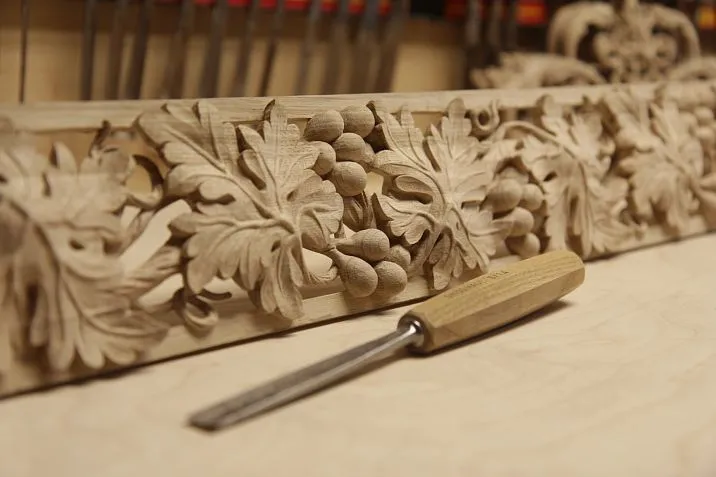
The art of wood carving has a thousand-year history and is one of the most expressive ways of decorating framing door and window openingsCarved elements for openings can range from simple geometric patterns to complex sculptural compositions, creating a unique interior appearance and reflecting the individuality of its owner.
Let's start with the simplest forms of carved decoration — geometric patterns and ornaments. These can be simple notches, rhombuses, circles, wavy lines, created using basic carpentry tools and requiring no high level of craftsmanship. Such patterns are often used in folk architecture of various countries and create a sense of handcrafted warmth and coziness. Despite their simplicity, geometric patterns can be very expressive and effective, especially if executed with precision and neatness.
The next level of complexity — plant ornaments and motifs. These can be stylized images of leaves, flowers, branches, grapevines, which require a higher level of skill and understanding of the plasticity of plant forms. Plant ornaments can be flat or relief, creating a play of light and shadow on the surface of the wood. Such patterns are especially characteristic of baroque, rococo, and modern styles, where natural motifs play a key role in decorative design.
An even more complex level — zoomorphic and anthropomorphic motifs, images of animals, birds, mythological creatures, human figures. Such elements require not only technical skill but also artistic talent, understanding of anatomy, and the ability to convey movement and character. In Russian woodcarving tradition, images of birds (especially roosters and swans), horses, and lions are often encountered, which had symbolic meaning and served as protective charms.
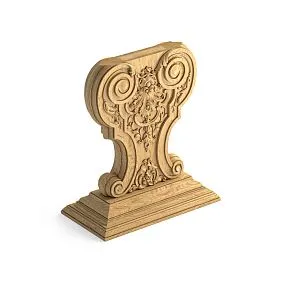
The highest expression of woodcarving art are sculptural compositions and bas-reliefs, which can decorate door frames, cornices, column capitals. These can be scenes from mythology, historical narratives, allegorical images, transforming the opening frame into a true work of art. Such works are executed only by highly skilled masters and are often unique, created specifically for a particular interior.
In modern design, non-traditional, avant-garde forms of carved decoration are increasingly used, which do not fit within the boundaries of historical styles. These can be abstract compositions, geometric forms inspired by contemporary art, unusual textures and finishes. Such solutions allow creating unique, memorable interiors that reflect current trends in design and art.
The technique of openwork or pierced carving deserves special attention, when the background is completely removed, creating a lace or filigree effect. Such a technique is especially effective in framing openings, as it creates a play of light and shadow, allows light to pass through, and visually lightens the structure. Openwork carving can be geometric or plant-based, creating various decorative effects.
It is important to understand that the choice of decorative elements for framing openings should correspond to the overall interior style, building architecture, and functional purpose of the room. Too complex and abundant decoration may look inappropriate in a minimalist modern interior, while too simple framing may get lost in a rich classical interior. The art lies in finding the right balance that creates a harmonious and cohesive impression.
Color solutions and finishing of wooden frames
The choice of color solution and type of finish for framing door and window openings is no less important aspect of design than the form and style of the frame itself. The right choice of color and texture can highlight the beauty of wood, emphasize architectural details, create a certain mood and atmosphere in the room.
The traditional approach to finishing wooden frames involves preserving and emphasizing the natural beauty of wood. For this, transparent varnishes, oils, and waxes are used, which protect the wood from external influences while maintaining its visible texture and grain pattern. This approach is especially suitable for using valuable wood species with beautiful grain — oak, walnut, mahogany, teak. Transparent finishing allows highlighting the nobility of the material, creating a sense of warmth and naturalness.
Color toning is a compromise between transparent finishing and full painting. During toning, semi-transparent pigments are used, which change the color of the wood while preserving its visible texture. This allows, for example, to give pine the appearance of a more expensive species such as walnut or mahogany, or to create unusual color effects while maintaining the sense of material naturalness.
Full painting of wooden frames is used when the color is important, not the wood texture. This may be appropriate in interiors in the Provence, shabby chic, or Scandinavian styles, where traditionally painted wooden elements are used. White color visually increases space, creating a sense of cleanliness and freshness. Pastel tones — blue, pink, mint — create a romantic, gentle mood. Bright colors can serve as accents, drawing attention to certain zones or elements of the interior.
Particular interest is presented by techniques of wood aging and patination, which create a vintage, historical effect, giving the frame character and depth. This can be artificial creation of scratches, cracks, traces of time, application of patina imitating metal oxidation or dust accumulation in carved recesses. Such techniques are especially suitable for interiors in rustic, country, shabby chic styles, as well as during restoration of historical interiors.
In modern design, contrasting combinations of colors and textures are increasingly used, for example, combination of natural wood with painted elements, or combination of different wood species in one frame. Such solutions allow creating dynamic, expressive compositions that become true accents in the interior.
The choice of finish coating depends not only on aesthetic preferences but also on the operating conditions of the frame. For rooms with high humidity, such as bathrooms, kitchens, and pools, water-resistant varnishes and paints are recommended, which will protect the wood from swelling and deformation. For rooms with intensive use, such as hallways, lobbies, and public spaces, the coating must be resistant to abrasion and mechanical damage.
The ecological aspect of choosing a finish coating is equally important. The modern market offers a wide range of eco-friendly, non-toxic water-based materials that do not emit harmful substances and are safe for health. This is especially important for residential spaces, children's rooms, medical, and educational institutions.
Integration of framing into various interior styles
Framing door and window openings is not just a decorative element, but also an important stylistic factor that can emphasize the character of the interior, strengthen its stylistic direction, create a certain mood and atmosphere. Let's consider how framing integrates into various interior styles and which solutions are most suitable for each.
In a classical interior, framing plays a key role, being one of the main elements of architectural decoration. Here, heavy, richly decorated casings, cornices, pilasters, executed according to the canons of the order system, are appropriate. The material is usually noble wood — oak, walnut, mahogany, often with gilding or patination. Classical framing creates a sense of solemnity, status, and emphasizes the architectural logic of space.
In a baroque or rococo interior, framing becomes even more lavish and theatrical. Here, complex curved forms, broken pediments, abundant carved decoration, moldings, gilding are used. Framing may include sculptural elements, cartouches, mascarons, creating an effect of luxury and abundance. Such a solution is suitable for spacious rooms with high ceilings, where it is possible to fully appreciate the richness and complexity of the decoration.
In a modern interior, framing acquires organic, natural forms. Here, smooth, flowing lines, plant motifs, asymmetrical compositions are used. The material can be wood, metal, glass, ceramic. Framing in the modern style creates a sense of movement, life, connection with nature, and introduces an element of surprise and originality into the interior.
In a minimalist modern interior, framing becomes more concise and functional. Here, simple geometric forms, clean lines, minimal decorative elements are used. Emphasis is placed on material quality, precision of execution, and proportionality. Such framing creates a sense of order and calm, emphasizing the architectural purity of space.
In a loft or industrial style interior, framing can be made of roughly processed wood, metal, or concrete. Here, the naturalness of the material, visible traces of processing, some roughness and incompleteness are valued. Framing may include elements of industrial aesthetics — rivets, bolts, metal plates. Such a solution creates a sense of authenticity, industrial aesthetics, and emphasizes the character of the former industrial space.
In a country or Provence style interior, framing is usually made of natural wood with visible texture or painted in pastel tones. Here, simple but expressive forms are used, often with elements of handcraft, light wear, traces of time. Such framing creates a sense of coziness, home warmth, connection with traditions and nature.
In an eclectic interior, framing can combine elements of various styles, creating unique, personalized solutions. Here, it is important to find a balance between different stylistic elements, create a harmonious composition that reflects the individuality of the owner while not appearing chaotic or overloaded.
Regardless of the chosen style, it is important that framing harmonizes with other interior elements — furniture, wall and ceiling finishes, lighting, textiles. It should support the overall concept of space, enhance its character and mood, creating a cohesive and harmonious impression.
Economic aspects: Investment in quality and longevity
When it comes to framing door and window openingsMany wonder: is it worth investing in high-quality, expensive solutions or can more economical alternatives suffice? This question has many aspects, and the answer depends on many factors: project budget, long-term plans for real estate, personal preferences and values.
First of all, it is important to understand that quality framing is not just a decorative element, but also a functional part of the interior that affects comfort, safety, and energy efficiency of the room. Investing in quality materials and professional execution provides not only aesthetic pleasure but also practical benefits: better thermal insulation, sound insulation, protection against drafts, and long-term durability of the structure.
From a long-term economic perspective, high-quality framing of openings made from natural wood may prove to be a more cost-effective solution than cheap synthetic alternatives. Solid wood interior elements, with proper care, can last for decades without losing their aesthetic and functional qualities. Moreover, they are restorable, allowing their service life to be extended practically indefinitely. In contrast, cheap materials often require replacement within a few years, ultimately leading to higher cumulative costs.
It is also important to consider the impact of high-quality framing on property value. Interior elements made from solid wood, crafted at a high artistic and technical level, enhance the status of the property and make it more attractive to potential buyers. This is especially relevant for the premium real estate segment, where the quality of finishes and uniqueness of details play a decisive role in pricing.
An important economic aspect is energy efficiency. High-quality framing, particularly in wooden houses, contributes to better thermal insulation, prevents cold bridges, and minimizes heat loss. This leads to reduced heating costs in winter and cooling costs in summer, which, in the long term, may offset the higher initial cost of quality framing.
The ecological aspect is equally important. Natural wood is a renewable resource that, with proper forest management, does not cause irreversible harm to the environment. Moreover, wooden interior elements create a healthy microclimate indoors, emitting no harmful substances, which positively affects the health and well-being of residents. These factors are difficult to quantify in monetary terms, but they undoubtedly have great significance for quality of life.
Of course, it is not always possible or necessary to invest in the most expensive and exclusive solutions. In such cases, compromise options can be considered: for example, using high-quality materials for the most visible and important framing elements, while selecting more economical solutions for less noticeable details. It is also possible to consider a phased implementation of the project, starting with the most essential elements and gradually enhancing the interior as financial resources become available.
In any case, when deciding on the framing of openings, one should not rely solely on short-term cost savings but also consider the long-term perspective, taking into account all aspects: functionality, durability, aesthetic value, impact on property value, and ecological considerations. Only such a comprehensive approach will allow for a truly justified and beneficial choice.
Conclusion: Creating a harmonious space through details
In the world of architecture and interior design, there is a golden rule: the whole is made up of details. And Framing door and window openings — this is precisely the detail that can transform an ordinary space into one with character, history, and soul. It is not merely a functional element protecting the edges of openings from damage, but also an important architectural accent that defines style, sets the tone, and creates atmosphere.
When choosing framing for your home or office, you are choosing a certain aesthetic and a certain lifestyle. Classical framing with pilasters and cornices indicates adherence to tradition, respect for history, and a desire for status and respectability. Minimalist framing with clean lines and simple forms reflects a modern approach to life, valuing simplicity and functionality. Ornate framing with carved elements and complex details indicates a love for art, attention to detail, and a desire for uniqueness and individuality.
But regardless of the choice, it is important that the framing harmonizes with the overall concept of the space, supports its character and mood. It should be part of a cohesive composition, where each element is in its proper place and contributes to the overall idea. Only then will the interior be perceived as a unified, harmonious space, pleasant to inhabit and worthy of showing to guests.
The quality of execution plays a special role in creating a harmonious space. Even the simplest and most minimalist detail, executed with attention to material quality, precision of proportions, and careful finishing, will appear dignified and noble. Conversely, the most luxurious and ornate decoration, executed carelessly and using inferior materials, will appear cheap and tasteless. Therefore, when choosing framing, attention should be paid not only to design, but also to material quality, craftsmanship, and manufacturer reputation.
An individual approach is equally important. Each interior is unique, as is the personality of its owner. Therefore, standard, generic solutions are rarely truly successful. The best results are achieved when the framing is specifically designed for a particular space, taking into account its architectural features, stylistic direction, functional purpose, and the owner’s personal preferences. Such an approach requires more time, effort, and possibly financial investment, but the result is worth it — an interior that reflects individuality and becomes a true home, rather than just a living space.
In conclusion, we would like to note that Framing door and window openings — it is not merely a decorative element, but also part of cultural heritage, reflecting the history of architecture and design. Choosing a particular style of framing means becoming part of this history, continuing traditions or creating new ones. And there is a special value and meaning in this, beyond mere functionality or aesthetics. It is an opportunity to touch the eternal, to become part of something greater than just furnishing a dwelling. And perhaps, this is precisely the main value of high-quality, thoughtfully designed, harmonious framing — it connects us with the past and future, making our lives part of a broader cultural tradition.


