Article Contents:
- The hidden architecture of beauty
- The philosophy of vertical lines in space
- Geometry of stability and elegance
- Poetry of wood material
- Living energy of natural wood
- Metallurgical innovations in support design
- Stylistic diversity: from baroque to futurism
- Classical tradition in modern interpretation
- Avant-garde solutions for bold interiors
- Engineering perfection in details
- Calculations for strength and durability
- Joints: the art of hidden fastening
- Production Technologies: From Craft to High Technology
- Digital revolution in woodworking
- Robotized metal processing
- Ecological aspect: responsibility toward the future
- Sustainable forestry and certification
- Metal recycling: closed production cycle
- Ergonomic principles in support design
- Anthropometric standards and individual solutions
- Humidity parameters
- Surface Treatment Technologies
- Protective coatings for wood
- Decorative metalworking techniques
- Trends in development: looking into the future
- Integration of smart technologies
- Biomimicry in furniture design
- Economic efficiency of quality solutions
- Long-Term Return on Investment
- Impact on the overall cost of furniture
- Individualization and Personalization
- Customization possibilities
- Designers' Exclusive Collections
- Care and Maintenance: Secrets of Longevity
- Preventive Measures
- Professional Restoration
- Global trends and regional specifics
- Influence of Cultural Traditions
- Climate adaptations
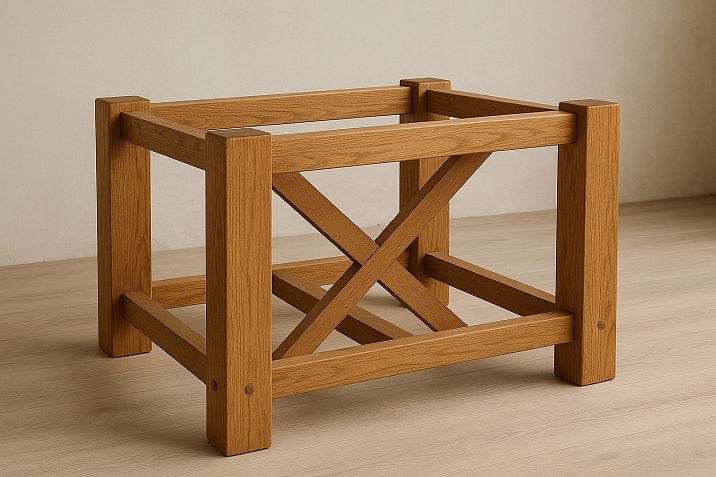
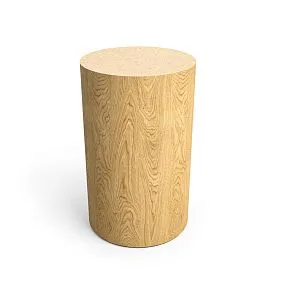
What turns an ordinary piece of furniture into a work of art? The secret lies in details that most people simply don't notice. legs for the base These are the very invisible heroes of the interior, who not only bear the physical weight of the tabletop, but also the entire aesthetic concept of the space. They are like dancers, gracefully supporting their graceful partner, making every movement light and natural.
In the modern world of design, furniture legs are experiencing a true renaissance. They have ceased to be simple functional elements and have become key details capable of radically changing the character of the entire interior. Each leg tells its own story — about style, about time, about taste, and about the craftsmanship of the one who created it.


The Hidden Architecture of Beauty




The Philosophy of Vertical Lines in Space
Imagine this: you enter a room, and your gaze involuntarily glides along the vertical elements of furniture. It is precisely the legs that create that rhythm, which either soothes, excites, or inspires. This is not chance — it is the result of millennia of furniture art development, where every line has its purpose and meaning.
Verticality in design is more than just a function. It is a psychological impact on the person within the space. Tall, slender legs visually raise the ceiling, creating a sense of lightness. Heavy, grounded supports, on the contrary, convey a sense of stability and reliability.
Our factory also produces:


Geometry of Stability and Elegance
Engineering thought in the creation of furniture legs has reached unprecedented heights. Modern base legs are designed using complex mathematical calculations, taking into account load distribution, resonant frequencies, and stability coefficients.
The golden ratio, the rule of thirds, principles of biomechanics — all of this finds practical application in creating ideal proportions. Every curve, every narrowing or widening of the profile has a scientific basis hidden behind the external beauty of the forms.
Get Consultation
Material Poetry of Wood
Living Energy of Natural Wood
Wood is not just a material — it is a living substance that continues to live and breathe even after becoming part of furniture. Each species possesses a unique character, manifested in texture, color, density, and behavior over time.
Oak legs — embodiment of eternity and strength. Oak density reaches 800 kg/m³, making it one of the strongest materials for furniture production. Oak legs can withstand loads of up to 300 kilograms each, maintaining perfect geometric forms for decades.
Ash constructions demonstrate a remarkable combination of strength and flexibility. Ash possesses natural elasticity, allowing legs to absorb loads and vibrations. The light wood texture with contrasting growth rings creates unique patterns, making each leg a unique work of art.
Walnut elegance brings aristocratic refinement to interiors. Rich color palette — from honey-gold to deep chocolate — allows creating legs of exceptional beauty. Walnut is easy to process, opening boundless opportunities for creating complex decorative elements.
Metallurgical Innovations in Design of Supports
Metal legs open completely new horizons in furniture design. Modern metal processing technologies allow creating structures of incredible complexity and beauty while maintaining functionality and durability.
AISI 316L stainless steel with molybdenum content provides exceptional corrosion resistance even in aggressive environments. Such legs are ideal for kitchens and bathrooms, where high humidity and chemically active substances create extreme operating conditions.
Aircraft-grade aluminum alloys combine lightness with high strength. Modern aluminum legs weigh three times less than steel counterparts, yet demonstrate comparable strength characteristics.
Stylistic Diversity: from Baroque to Futurism
Classical Tradition in Modern Interpretation
Classical Furniture legs have not lost their relevance in the era of technological revolutions. On the contrary, they have acquired a new sound, enriched by modern materials and production technologies.
Flutes — vertical grooves characteristic of ancient columns — find new embodiment in modern legs. Milled on high-precision equipment, they create a play of light and shadow, giving the item volume and expressiveness.
Capitals — decorative finials of legs — are today created using 3D modeling and CNC machining. This allows reproducing the most complex classical ornaments with perfect accuracy or creating entirely new decorative elements inspired by past traditions.
Avant-Garde Solutions for Bold Interiors
Modern avant-garde in leg design knows no boundaries. Biomorphic forms inspired by natural structures create a sense of organicness and naturalness. Asymmetric constructions challenge traditional notions of balance and harmony.
Parametric design allows creating legs with variable cross-sections, where thickness and profile shape change according to a mathematically precise algorithm. Such constructions are not only aesthetically appealing but also optimally distribute loads.
Engineering Perfection in Details
Calculations for Strength and Durability
Creating a quality leg is a complex engineering task requiring consideration of multiple factors. Static loads from the weight of the tabletop and items placed on it, dynamic impacts from table use, thermal deformations, humidity changes — all of this must be calculated with mathematical precision.
Modern finite element analysis programs allow modeling the behavior of legs under various loads even during the design stage. Virtual tests reveal weak points in the structure and enable optimization before production begins.
Joints: The Art of Hidden Fastening
The method of attaching legs to the tabletop largely determines not only the strength of the structure but also its aesthetic qualities. Modern technologies allow creating completely hidden joints, where fastening elements do not disrupt the purity of lines and forms.
Dovetail joints provide exceptional strength and durability. The conical shape of the joint eliminates the possibility of accidental disassembly even under variable loads.
Production Technologies: From Craft to Advanced Technologies
Digital Revolution in Woodworking
Modern production of furniture legs is a synthesis of traditional craftsmanship and advanced technologies. CNC machines allow processing wood with jewel-like precision, creating items of the most complex shapes.
Laser engraving opens new possibilities for decorating wooden surfaces. Complex ornaments, logos, and personalized inscriptions are applied with micron-level precision, creating effects unattainable by traditional methods.
Robotized Metal Processing
Robotized complexes for metal processing allow creating legs for the base the most complex geometric forms. Bending robots form smooth curves with perfect accuracy, while welding complexes ensure molecular-level joint strength.
Ecological Aspect: Responsibility Toward the Future
Sustainable Forestry and Certification
Modern production of furniture legs cannot be imagined without responsible attitude toward the environment. Certified wood from managed forests guarantees not only high material quality but also minimal impact on ecosystems.
Deep wood processing technologies allow using every cubic centimeter of raw material. Production waste is recycled into composite materials, fuel pellets, and cellulose.
Metal Recycling: Closed-Loop Production
Metal shavings and scraps are fully recyclable. Modern technologies allow obtaining materials from secondary raw materials that do not fall short in quality compared to primary ones. This is not only economically advantageous but also environmentally responsible.
Ergonomic Principles in Leg Design
Anthropometric Standards and Individual Solutions
Table height is largely determined by leg length. The standard working table height is 72-75 cm, but modern trends suggest personalizing this parameter. Adjustable legs allow adapting table height to the specific user's height.
The distance between legs affects chair placement convenience and movement freedom. The optimal distance from the tabletop edge to the leg is at least 60 cm, ensuring comfortable placement of a standard chair.
Psychology of form perception
Leg shape subconsciously influences the perception of furniture and space as a whole. Thin, elegant legs create a sense of lightness and airiness, while massive supports convey a feeling of stability and reliability.
Color also plays an important role in perception. Light-colored legs visually expand space, dark ones add solidity and respectability. Contrasting combinations create dynamic accents.
Surface Treatment Technologies
Protective Coatings for Wood
Modern lacquering materials not only protect wood from external influences but also highlight its natural beauty. Polyurethane lacquers create a strong, wear-resistant film while preserving the tactile sensation of touching wood.
Oil-and-wax coatings penetrate deeply into the wood structure, emphasizing its texture and imparting a matte, silk-like sheen. Such coatings 'breathe,' allowing wood to naturally respond to humidity changes.
Decorative Metal Processing Techniques
Patination of metal legs creates an effect of noble antiquity. Chemical treatment imparts the surface with complex color transitions—from greenish hues to deep brown tones.
Brushing—a technique for creating textured surfaces—transforms a smooth metal surface into a tactilely appealing one. Various abrasives create effects ranging from light roughness to deep relief.
Trends in development: looking toward the future
Integration of smart technologies
Legs of the future will become not just support elements, but intelligent components of furniture. Built-in sensors will monitor load, temperature, and humidity, warning of potential problems.
Wireless charging for mobile devices, integrated into table legs, will become a standard of the near future. Inductive coils hidden in the structure ensure convenient gadget use without compromising aesthetics.
Biomimetics in furniture design
Nature remains an inexhaustible source of inspiration for designers. Structures inspired by animal bone tissue, plant root systems, and mineral crystal lattices find expression in innovative furniture legs.
Economic efficiency of quality solutions
Long-term return on investment
Quality legs are an investment for decades. Initial costs for premium items are offset by longevity, minimal maintenance expenses, and preserved appearance over many years.
Cheap alternatives require frequent replacement, ultimately costing significantly more than purchasing a quality item once. Saving on quality is a false economy, leading to additional expenses in the future.
Impact on the overall cost of furniture
Quality legs significantly increase the overall value of furniture. They not only ensure functionality and durability but also add status and exclusivity to the furniture.
Individualization and personalization
Customization possibilities
Modern technologies allow creating unique legs fully matching individual preferences. Choice of wood species, profile, decorative elements, sizes — each parameter can be adapted to specific requirements.
3D printing opens new possibilities for creating prototypes and small-batch production of unique items. The client can see the future product in 3D even before production begins.
Designers' exclusive collections
Collaboration with renowned designers produces unique designer collections of legs. Each item becomes an artwork reflecting the author's creative style and brand philosophy.
Limited editions of designer works ensure exclusivity and status. Owning such furniture becomes a means of self-expression and demonstrating belonging to a circle of high-design enthusiasts.
Care and Maintenance: Secrets of Longevity
Preventive measures
Proper care of legs ensures preservation of their aesthetic and functional qualities for many years. Regular dust cleaning, use of specialized care products for different materials, monitoring of finish condition — simple procedures extending service life.
Wooden legs require periodic renewal of protective coatings. Timely treatment with oil or wax prevents wood drying and cracking.
Professional restoration
Even with the most careful handling, legs may require professional intervention. Modern restoration technologies allow restoring the original appearance even of severely damaged items.
Restoration is an art requiring deep knowledge of materials and technologies. Experienced masters can eliminate any defects, restoring legs to their original beauty.
Global trends and regional specifics
Influence of Cultural Traditions
Different cultures have their unique traditions in furniture making. Japanese minimalism, Italian elegance, Scandinavian functionality — each direction contributes to the global heritage of furniture design.
Modern designers skillfully combine various cultural influences, creating legs that seamlessly fit into interiors of different styles and directions.
Climate Adaptations
Regional climatic characteristics influence material and production technology selection. High humidity, sharp temperature fluctuations, intense ultraviolet radiation — all these factors are considered when designing legs for different geographic zones.
The art of creating ideal furniture legs combines thousand-year craftsmanship traditions with advanced technological achievements. Each table leg — is the result of meticulous work by designers, engineers, and craftsmen striving for perfection in every detail.
Choosing quality legs is not just buying furniture hardware — it is an investment in the beauty, comfort, and longevity of the interior. Properly selected supports can transform any space, giving it individuality and character.
STAVROS Company embodies decades of experience in creating furniture masterpieces. Each leg manufactured by STAVROS masters represents an ideal balance of traditional craftsmanship and modern technologies. Using premium materials and time-tested processing methods, STAVROS creates not just furniture components, but foundations for interior artworks. Choosing STAVROS means selecting quality that will serve generations, turning every piece of furniture into a family heirloom and a source of pride for the home.