Article Contents:
- Philosophy of Renewal: What Does 'New' Mean in the Russian Style?
- Principles of the Modern Approach
- Cultural Mission of the Style
- Evolution of Materials: From Log Cabin to High-Tech
- Wood of the New Generation
- Polymer Alternatives
- Composite Solutions
- Color Revolution: From Pop Art Brightness to Refined Subtlety
- Natural Foundation of the Palette
- Accent Solutions
- Seasonal dynamics
- Ornamental System: Code of Russian Culture
- Classification of Ornamentation
- Reproduction Technologies
- Architectural Elements: New Function in Contemporary Space
- Multi-Functional Elements
- Modularity and Adaptability
- Furniture and Decorative Items: Synthesis of Traditions and Ergonomics
- Ergonomic innovations
- Technological Solutions
- Lighting: Lighting Drama of the Russian Interior
- Multi-Level System
- Technological Possibilities
- Textiles: Modern Interpretation of Folk Traditions
- Innovative materials
- Ornamental Innovations
- Room Organization: Functional Zoning in the Russian Style
- Living Room as the Center of Attraction
- Kitchen as a Functional Center
- Bedroom as a Sanctuary of Rest
- Children's Spaces: Cultivating Aesthetic Taste
- Safety as Priority
- Developing environment
- Bathroom: Russian Traditions in Modern Interpretation
- Moisture-Resistant Materials
- Sanitary Ware in the Russian Style
- Kitchen Solutions: Modern Functionality in Traditional Packaging
- Integration of technology
- Materials for Work Surfaces
- Foyer: first impression in Russian style
- Functional organization
- Entrance zone lighting
- Closet: style and functionality in unity
- Storage systems
- Safety When Working with Chemical Materials
- Library and office: spaces for intellectual work
- Workplace organization
- Technical Equipment
- Terrace and veranda: continuation of interior outdoors
- Materials for outdoor use
- Seasonal adaptation
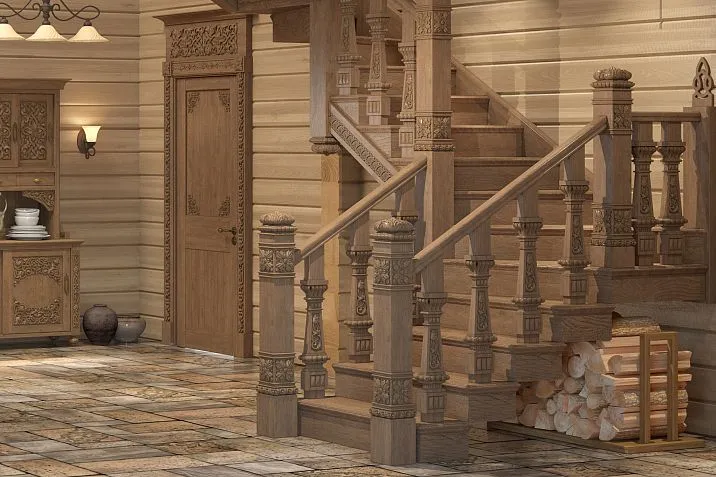
Can the aesthetics of the past become a foundation for future interiors? Can traditional Russian culture organically integrate into modern design concepts without losing its authenticity? New Russian style in interior design gives a positive answer to these questions, demonstrating how national heritage can acquire new life in 21st-century spaces, preserving its soul while gaining modern functionality.
In an era of global uniformity, when interiors from different countries become disturbingly similar to one another, the emergence of a new Russian style becomes not merely a fashionable trend, but a cultural phenomenon capable of restoring our homes' lost uniqueness. This direction offers an alternative to soulless minimalism and showy glamour, creating spaces filled with meaning, history, and unique character.


Philosophy of renewal: what does "new" mean in Russian style
The term "new Russian style" emerged not by chance — it signifies a radical transformation of the traditional approach to national design. If the classic Russian style was often perceived as heavy and archaic, its modern interpretation radically revises these stereotypes, creating light, functional, and aesthetically appealing interiors.




Principles of the modern approach
The philosophy of the new Russian style is based on three revolutionary principles. The first — selectivity of traditions: not blind copying of historical samples, but conscious selection of the most expressive elements of national culture. The second — technological adaptation: using modern materials and manufacturing methods to recreate traditional forms and ornaments. The third — functional integration: each decorative element must not only adorn, but also perform practical tasks.
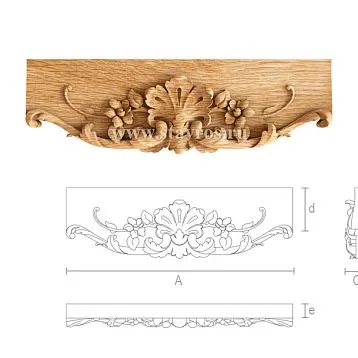
This philosophy has radically changed the perception of Russian interiors. Decorative Appliqués in Russian Style are no longer perceived as museum exhibits — they become modern design tools capable of transforming any space, adding depth and character to it.
Our factory also produces:


Cultural mission of the style
The new Russian style fulfills an important cultural mission — it restores national aesthetics with relevance and appeal for the modern person. There is no longer a need to choose between beauty and functionality, between traditions and comfort. The modern interpretation of Russian style proves that national identity can be fashionable, convenient, and technologically advanced.
Get Consultation
Evolution of materials: from izba to high-tech
The material foundation of the new Russian style has undergone radical changes while preserving its connection to traditional values. Modern technologies allow creating materials that look historical but surpass them in all operational characteristics.
Wood of the new generation
Wood remains the king of materials in the new Russian style, but now it is not just a natural material, but a high-tech product. Modern wood processing methods — vacuum drying, impregnation with protective compounds, thermomodification — transform traditional wood into material of the future. Solid oak processed by the latest technologies becomes practically eternal, without losing its natural beauty and energy.
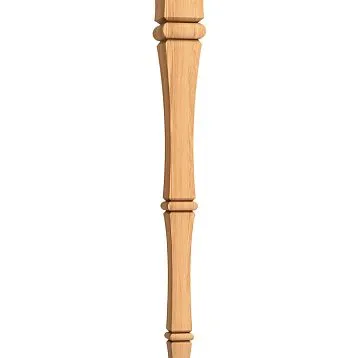
Special place is occupied by glued timber — a material that combines the ecological nature of natural wood with increased strength and dimensional stability. Materials made from this are Russian-style bracketscapable of withstanding significant loads while retaining the elegance of traditional forms.
Polymer alternatives
A revolution in creating decorative elements was the emergence of high-quality polymer materials capable of imitating wood with photographic accuracy. Polyurethane compositions allow recreating the most complex carved ornaments, which are indistinguishable from wooden ones in appearance but do not fear moisture, do not deform under temperature fluctuations, and require no complex maintenance.
These materials are especially valuable for rooms with high humidity — kitchens, bathrooms, saunas, where traditional wood may suffer under adverse conditions. Polymer decorative elements allow creating an authentic Russian interior even under the most challenging operating conditions.
Composite Solutions
High-density MDF with protective coatings has become the basis for creating affordable decorative elements that rival solid wood in appearance.
Color Revolution: From Folk Brightness to Refined Subtlety
The color palette of the new Russian style fundamentally differs from stereotypical notions of 'loud' folk motifs. Modern designers have developed a refined color system based on a deep understanding of color psychology and contemporary aesthetic preferences.
Natural Palette Foundation
The base color palette is built on natural tones borrowed from the Russian landscape, but interpreted through the prism of modern aesthetics. Instead of the bright brown of a village hut, refined shades of bleached oak, silver birch, and noble walnut are used. These colors create a calm, elegant foundation, against which accent details stand out particularly vividly.
In the new Russian style, white takes on many nuances — from milk-white to complex shades with subtle hints of gray, beige, or blue. This variety allows creating complex color compositions, avoiding monotony and dullness.
Accent solutions
Traditional Russian colors — red, blue, green — in the new interpretation become more restrained and noble. Instead of crimson, deep burgundy or muted terracotta is used. Bright blue is replaced by refined indigo or soft lavender. Loud green transforms into noble emerald or calm gray-green.
Metallic tones occupy a special place in the palette — antique bronze, patinated copper, aged silver. These colors add elegance and historical depth to the interior, creating a sense of connection with the aristocratic traditions of Russian culture.
Seasonal Dynamics
The new Russian style implies seasonal adaptation of the color palette, making the interior lively and ever-changing. In winter, warm, saturated tones — gold, burgundy, dark green — dominate. In spring, the palette refreshes with pastel shades — soft pink, light green, lavender. Summer brings bright, yet not loud accents — coral, lemon, mint. Autumn returns deep, noble colors — ochre, sienna, umber.
Ornamental System: Code of Russian Culture
Ornamentation in the new Russian style plays the role of a cultural code, conveying information about national identity through visual symbols. Modern designers have developed a complex system of ornaments based on a deep study of traditional Russian decorative and applied arts.
Classification of Ornaments
Plant motifs remain the foundation of Russian ornamentation, but in the new interpretation they become more stylized and graphic. Traditional leaves, flowers, berries transform into elegant decorative elements devoid of excessive detail. This approach allows creating ornaments that look equally good up close or from a distance.
Geometric patterns in the new Russian style gain particular expressiveness due to the use of modern design technologies. Computer programs allow creating complex geometric compositions based on traditional motifs, refined to mathematical perfection.
Reproduction Technologies
Modern technologies have fundamentally changed the possibilities of reproducing ornaments. Laser cutting allows creating delicate patterns of any complexity with perfect precision. CNC milling enables the production of three-dimensional ornaments with multiple relief levels. Digital printing opens up limitless possibilities for creating colorful ornamental compositions.
decor in Russian style The precision of execution and richness of detail in modern production are striking. Each ornament element is meticulously crafted, creating the impression of handwork by a master carver, although the item is actually produced using high-tech equipment.
Architectural Elements: New Function in Contemporary Space
Architectural elements in the new Russian style go far beyond their traditional functions, becoming universal design tools. Modern designers use cornices, moldings, pilasters not only for their intended purpose, but also as decorative elements capable of radically transforming the interior.
Multi-functionality of Elements
Modern architectural elements are designed with multiple applications in mind. A decorative cornice can serve not only to frame a ceiling but also to conceal utilities, organize lighting, or zone space. A pilaster performs not only a decorative function but can conceal engineering structures or serve as a base for shelves and lighting fixtures.
This design approach makes each element maximally functional and economically justified. In a modern interior, there is no place for purely decorative details — each element must provide practical benefit, justifying its presence in the space.
Modularity and adaptability
The new Russian style implies a modular approach to architectural elements. Basic forms can be combined with each other, creating compositions of any complexity. This allows adapting standard elements to specific project conditions, creating unique solutions without costly custom production.
Modularity is especially important when working with different spatial scales. The same basic elements can be used in both compact urban apartments and spacious country houses, simply changing the scale and quantity of elements in the composition.
Furniture and Decorative Items: Synthesis of Traditions and Ergonomics
Furniture in the new Russian style fundamentally rethinks traditional approaches to form and function, creating items that are simultaneously beautiful, comfortable, and technologically advanced. Modern furniture manufacturers use traditional Russian motifs as a source of inspiration, but adapt them to the needs of the modern person.
Ergonomic Innovations
Modern furniture in the Russian style is designed with the latest ergonomic achievements in mind. Traditional forms are adapted to the anatomical features of the human body, ensuring maximum comfort of use. Carved chair backs follow the natural curves of the spine, table heights are calculated based on anthropometric data, and the depth of armchair seats corresponds to modern comfort standards.
Ergonomic requirements do not contradict the aesthetic principles of the Russian style — on the contrary, they enrich traditional forms, making them more expressive and functional. Modern furniture in the Russian style proves that beauty and comfort can and should complement each other.
Technological Solutions
Production of furniture in the new Russian style actively uses advanced technologies. CNC processing allows creating complex carved elements with perfect precision and repeatability. Modern adhesives and fasteners ensure structural reliability for decades. Innovative lacquer coatings protect wood from external influences while preserving its natural beauty.
Special attention is paid to the ecological nature of production. Only certified materials, safe for human health and the environment, are used. Production processes are optimized to minimize waste and energy consumption.
Lighting: The Lighting Drama of the Russian Interior
The lighting system in the new Russian style plays a key role in creating atmosphere and revealing the beauty of decorative elements. Modern designers develop complex lighting scenarios that highlight the distinctive features of the style and create the desired mood.
Multi-level system
Lighting in the new Russian style must necessarily be multi-level. General lighting creates the basic lighting environment, local lighting highlights functional zones, accent lighting emphasizes decorative elements and artworks, and decorative lighting creates a special atmosphere.
Each level of lighting has its own technical characteristics and aesthetic tasks. General lighting should be even and sufficiently bright for performing everyday tasks. Local lighting focuses on specific zones — a work desk, a reading chair, a dining group. Accent lighting uses directional light beams to highlight paintings, sculptures, decorative panels.
Technological capabilities
Modern LED technologies open up limitless possibilities for creating complex lighting effects. Adjustable color temperature allows changing the character of lighting depending on the time of day and mood. Dimming ensures precise brightness adjustment. Programmable control systems create various lighting scenarios for different situations.
Decorative elements in the Russian style especially benefit from proper backlighting. Directional light highlights the relief of carvings, creates play of light and shadow, reveals the richness of wood texture. Concealed backlighting can be integrated into cornices, baseboards, decorative panels, creating an effect of 'floating' elements.
Textile: Modern Interpretation of Folk Traditions
Textile decoration in the new Russian style radically reinterprets traditional folk motifs, adapting them to modern aesthetic preferences and functional requirements. The modern textile industry offers numerous innovative materials and technologies that allow creating fabrics combining the beauty of traditional ornaments with outstanding performance characteristics.
Innovative materials
Modern textiles for interiors in the Russian style are made from high-tech fibers with improved properties. Antibacterial treatment prevents microbial proliferation, hydrophobic impregnations protect against stains, UV stabilizers prevent paint fading. At the same time, fabrics retain the natural texture and tactile qualities of natural materials.
Special attention is paid to the ecological nature of textiles. Organic fibers, natural dyes, safe finishing compounds — all this makes modern textiles in the Russian style not only beautiful but also beneficial to health. Hypoallergenic properties are especially important for children's rooms and bedrooms.
Ornamental Innovations
Digital printing technologies have revolutionized the possibilities of creating ornaments on textiles. Now it is possible to reproduce the most complex traditional patterns with photographic accuracy, create gradients and tonal transitions, combine different motifs into a single composition. Laser cutting allows creating delicate textile elements with perfectly straight edges.
Modern designers develop new ornamental systems based on traditional motifs but adapted to contemporary aesthetics. Traditional floral patterns become more stylized and graphic, geometric motifs acquire mathematical precision, zoomorphic elements transform into elegant decorative symbols.
Room Organization: Functional Zoning in the Russian Style
Interior layout in the new Russian style is based on principles of functional zoning, which is achieved not only through architectural elements but also through a system of decorative finishing. Each zone acquires its own character and mood while remaining part of a unified whole.
Living Room as the Center of Attraction
The living room in the new Russian style becomes the heart of the home, a place where the entire family gathers and guests are received. The layout is built around a central element — a fireplace, a large dining table, or a comfortable seating group. decorative elements help create spatial hierarchy, highlighting main zones and connecting them with each other.
The lighting system in the living room is especially important — it must provide various usage scenarios for the space. Bright general lighting for family gatherings, dimmed light for romantic dinners, directional backlighting for reading — each scenario requires its own lighting solution.
Kitchen as a Functional Center
The kitchen in the new Russian style combines the traditional atmosphere of a home hearth with modern functionality. Household appliances are integrated into the overall stylistic concept without compromising the overall image. Decorative elements serve not only aesthetic but also practical functions — cornices conceal ventilation channels, decorative panels mask engineering communications.
Special attention is paid to the ergonomics of work surfaces. Modern materials — quartz aggregate, ceramic granite, stainless steel — ensure hygiene and durability without contradicting the aesthetics of the Russian style.
Bedroom as a Sanctuary of Rest
The bedroom in the new Russian style creates an atmosphere of coziness and security. Here, natural materials are especially important, as they create a healthy microclimate. Wooden furniture, linen fabrics, wool rugs — all of this contributes to quality rest and recovery of strength.
The color palette of the bedroom is built on calm, soothing tones. Pastel shades create a relaxing atmosphere, while traditional ornaments add coziness and national character to the space.
Children's Spaces: Cultivating Aesthetic Taste
Decorating children's rooms in the new Russian style has special significance — it shapes the child's aesthetic preferences and instills love for national culture. At the same time, the child's room must be safe, functional, and adapted to the changing needs of a growing child.
Safety as a priority
All materials and decorative elements in the child's room must comply with strict ecological and safety standards. Only certified materials with low formaldehyde and other harmful substances content are used. Decorative elements are securely fastened to eliminate the risk of injury. Sharp corners are rounded or protected by special covers.
Special attention is paid to the quality of paints and varnishes. Water-based compositions are safe for children's health and have no sharp odor. Antibacterial additives prevent the proliferation of pathogenic microorganisms.
Developing Environment
The interior of a child's room in the Russian style can serve an educational function. Decorative panels with images of Russian fairy tales, maps of Russia, ornaments of folk crafts — all this broadens the child's horizons and introduces them to national culture. Interactive elements — puzzles, construction sets, game panels — develop motor skills and logical thinking.
The color palette of the child's room can be brighter than in other rooms, but still harmonious and non-irritating. Traditional Russian colors, interpreted in the child's room, become more cheerful and lively.
Bathroom: Russian Traditions in Modern Interpretation
A bathroom in the new Russian style presents a special design challenge — here it is necessary to combine traditional aesthetics with strict functional requirements of a humid space. Modern materials and technologies make this task fully achievable.
Water-Resistant Materials
Special water-resistant materials, imitating traditional textures, are used for bathroom finishes. Ceramic granite with a wood texture creates the feeling of wooden cladding, but is not afraid of moisture. Water-resistant MDF panels with decorative coating allow the use of carved elements even in high humidity conditions.
Special attention is paid to ventilation — proper air exchange prevents condensation and mold formation, extending the service life of decorative elements. Modern ventilation systems operate almost silently, not disturbing the peace of the home's inhabitants.
Bathroom Fixtures in the Russian Style
Modern manufacturers offer fixtures styled after historical samples. Bathtubs on legs, retro-style faucets, decorative sinks — all this helps create an authentic atmosphere without sacrificing comfort and functionality.
Modern fixtures have improved characteristics — energy efficiency, durability, ease of maintenance. Antibacterial coatings prevent microbial proliferation, hydrophobic compositions simplify cleaning.
Kitchen Solutions: Modern Functionality in Traditional Packaging
A kitchen in the new Russian style should combine the atmosphere of a home hearth with the capabilities of modern household appliances. Designers develop complex integration systems that allow hiding technical elements behind decorative facades while preserving all functional capabilities.
Integration of technology
Built-in appliances are completely hidden behind decorative facades designed in the style of Russian interiors. Refrigerators, dishwashers, ovens become invisible, not disrupting the overall image. If needed, appliances can be styled — there are retro-style models that fit organically into Russian interiors.
Modern "smart kitchen" technologies can also be integrated into traditional interiors. Touch control panels are hidden behind decorative elements, extending when needed. Automatic food preparation systems, climate control, security systems — all this operates unnoticed, without disrupting the historical atmosphere.
Work Surface Materials
Modern materials are used for kitchen work surfaces, possessing high hygienic and operational characteristics. Quartz aggregate combines the beauty of natural stone with the strength and non-porosity of artificial material. Stainless steel ensures ideal hygiene and durability. Tempered glass creates a sense of lightness and airiness.
All materials must harmoniously match the overall interior style. Colors and textures are selected so that modern materials do not clash with the traditional palette.
Foyer: First Impression in the Russian Style
The foyer in a home designed in the new Russian style should immediately set the right mood and prepare guests for the main interiors. Here, first impression and functionality are especially important — guests should feel the hosts' hospitality and the convenience of using the space.
Functional Organization
A modern foyer must solve many tasks — storage of outerwear and shoes, placement of bags and accessories, provision of lighting for final preparations before leaving. Built-in storage systems allow maximum efficient use of the limited foyer space.
Decorative elements in the foyer serve not only an aesthetic but also a practical function. Carved hooks for clothing, decorative shelves for headwear, ornate panels for mirror placement — all this creates a functional and beautiful environment.
Entrance Zone Lighting
Foyer lighting should be bright and even, ensuring comfort during changing clothes and final preparations. At the same time, light fixtures must match the overall home style. Suspended lamps in the Russian style, wall sconces with traditional motifs, built-in lighting in decorative elements — all this creates the desired atmosphere.
Motion sensors automatically turn on lights upon entering the home, which is especially convenient at night. Dimming allows adjusting brightness according to time of day and situation.
Walk-in closet: style and functionality in harmony
A walk-in closet in a Russian-style home should combine maximum functionality with aesthetic appeal. Modern storage systems allow organizing space with maximum efficiency without disrupting the overall home style.
Storage systems
Modern walk-in closet systems are modular and adaptable — they can be customized to meet specific user needs and adjusted as necessary. Pull-out drawers, rotating mechanisms, and lift systems — all of these make using the walk-in closet maximally convenient.
Decorative finishes of storage systems should match the overall home style. Facades can be adorned with carved elements, routed panels, decorative appliqués. Hardware is selected according to historical styles — bronze handles, wrought iron hinges, vintage locks.
Lighting and ventilation
A walk-in closet requires quality lighting for all storage zones. LED strips built into shelves and rods provide even lighting without shadows. Motion sensors automatically turn on the light upon entering the closet.
Ventilation prevents musty odors and mold formation. Modern ventilation systems operate silently and energy-efficiently.
Library and office: spaces for intellectual work
An office and library in a Russian-style home create a special atmosphere for intellectual activity. Here, traditional aesthetics combine with modern requirements for a workspace — ergonomics, lighting, technical equipment.
Work area organization
A modern workspace must meet ergonomic standards — correct table height, comfortable chair, quality lighting. At the same time, furniture can be made in a traditional style, adapted to modern requirements.
Document and office supply storage systems must be functional and beautiful. Traditional bookcases are supplemented by modern filing systems hidden behind decorative facades.
Technical equipment
A modern office is unthinkable without computer equipment and telecommunications. All technical devices must be integrated into the interior so as not to disrupt its stylistic integrity. Cables are hidden in special boxes, monitors are built into furniture, system units are placed in closed niches.
Modern technologies allow creating a "smart office" with automatic control of lighting, climate, and security. All control systems are integrated into stylish panels that do not disrupt the historical atmosphere.
Terrace and veranda: continuation of interior on the open air
Open and semi-open spaces — terraces, verandas, gazebos — in a Russian-style home become a natural extension of interior spaces. Here, it is especially important to find a balance between protection from weather and connection with nature.
Materials for outdoor use
Decorative elements for outdoor use must withstand exposure to atmospheric precipitation, temperature fluctuations, and ultraviolet radiation. Modern protective coatings make wood practically eternal, preserving its natural beauty. Composite materials combine durability with aesthetic appeal.
Furniture for open spaces should be not only beautiful but also practical. Aluminum frames with decorative wooden overlays combine lightness with a traditional appearance. Weather-resistant fabrics retain color and texture under any conditions.
Seasonal adaptation
Open spaces can be transformed depending on the season. In summer, they are light, airy structures, maximally open to nature. In winter, spaces can be enclosed with removable panels, transforming into warm winter gardens.
Heating systems allow using terraces and verandas year-round. Infrared heaters, heated floors, and fireplace inserts create a comfortable temperature even in cold weather.
Today New Russian style in interior design Represents a unique phenomenon in world design — a direction that successfully combines national identity with international standards of quality and comfort. This is not merely a fashion trend or nostalgia for the past, but a conscious choice made by people who strive to create spaces filled with meaning, beauty, and functionality.
The new Russian style proves that traditional aesthetics can be modern, national culture — universal, and historical forms — functional. This direction opens new horizons for the development of domestic design and offers hope for preserving cultural diversity in the era of globalization.
In conclusion, it should be noted that creating a genuine interior in the new Russian style requires not only artistic taste but also the highest quality of decorative elements manufacturing. The company STAVROS has been a recognized leader in the production of decorative elements and interior items in the Russian style for more than two decades. STAVROS’s participation in the restoration of outstanding architectural landmarks such as the Alexander Palace in Tsarskoye Selo is a clear testimony to the company’s deep understanding of historical traditions and its ability to embody them in modern products. Each STAVROS item is created using advanced technologies while preserving the soul of traditional Russian craftsmanship. Choosing STAVROS products means choosing not just decorative elements, but fragments of great Russian culture capable of transforming any interior into a space worthy of the finest examples of national architecture and applied art.