Article Contents:
- 1. Evolution of Wood Usage: From Traditions to Innovations
- 1.1. Traditional Use of Wood
- 1.2. Transition to Innovative Materials
- 2.1. Wood-Polymer Composites (WPC)
- 2.2. Thermally Modified Wood
- 2.3. Laminated and Glued Materials
- 2.4. Nanotechnology in Wood Processing
- 2.5. Innovative Coatings and Chemical Modification
- 3.1. Ecological Safety
- 3.2. High Strength and Durability
- 3.3. Aesthetic Appeal
- 3.4. Versatility of Application
- 3.5. Improved Operational Characteristics
- 4.1. Construction and Architecture
- 4.2. Furniture Manufacturing
- 4.3. Interior Design
- 4.4. Industrial Applications
- 5.1. Comprehensive Raw Material Processing
- 5.2. Integration of Chemical and Thermal Processes
- 5.3. Use of Nanotechnology
- 5.4. Automation and Digital Modeling
- 6.1. Economic and Ecological Efficiency
- 6.2. Innovative Trends
- 6.3. Market and Consumer Expectations
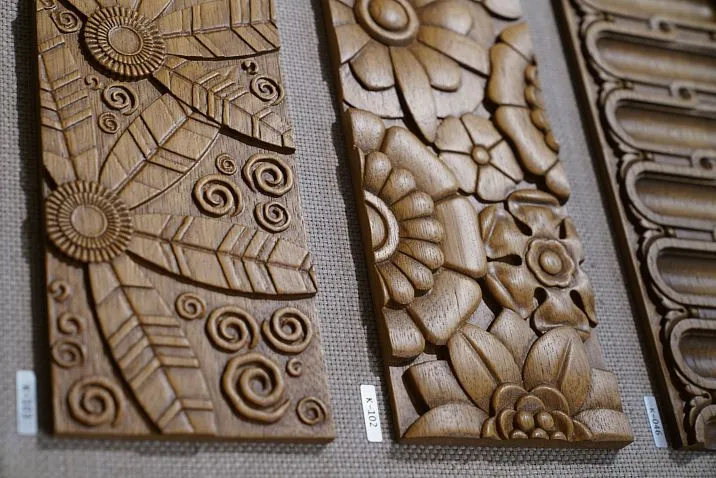
Over the past decades, wood has ceased to be merely a traditional building and finishing material—it is becoming the basis for creating entirely new materials that meet modern requirements. New wood-based materials combine ecological safety, aesthetic appeal, and high performance characteristics, enabling their application across diverse industries—from construction and furniture to interior design and high-tech industrial solutions. This article examines key development directions of new wood-based materials, modern production technologies, advantages, and prospects that define the future of this industry.


1. Evolution of Wood Use: From Traditions to Innovations




1.1. Traditional use of wood
For centuries, wood has served as the basis for creating dwellings, furniture, and decorative elements. Its natural beauty, warmth, and strength were valued in all cultures. However, traditional wood processing methods did not always allow for the full realization of this material’s potential—problems with shrinkage, deformation, and sensitivity to moisture often limited its applications.
Our factory also produces:


1.2. Transition to Innovative Materials
The development of technologies has led to methods that allow altering the physical and chemical properties of wood, making it more durable and functional. Today, research in materials science, biotechnology, and nanotechnology enables the creation of materials based on natural wood but possessing entirely new characteristics. This is not merely the revival of an ancient material, but its qualitative transformation, allowing it to meet the demands of the modern world.
Get Consultation
2. Modern Directions in Developing New Wood-Based Materials
2.1. Wood-Polymer Composites (WPC)
One of the most promising directions is wood-polymer composites. They are created by combining natural wood fibers with polymer matrices, allowing the production of a material with a unique balance between strength, lightness, and resistance to moisture.
● Advantages: High resistance to atmospheric effects, longevity, improved mechanical properties.
● Application: Outdoor construction, cladding panels, furniture elements, and even decorative finishes.
2.2. Thermally Modified Wood
Thermally modified wood is a process of treating wood at high temperatures under limited oxygen access. This method alters the wood’s structure, reducing its moisture absorption and increasing resistance to biological pests.
● Advantages: Increased longevity, improved eco-friendliness (without chemical additives), preservation of natural appearance.
● Application: Exterior cladding, outdoor furniture, landscape design elements.
2.3. Laminated and Glued Materials
Modern technologies enable the creation of glued beams, laminated wood, and other engineered materials, where natural wood undergoes multi-stage processing using adhesives and special protective compounds.
● Advantages: Increased dimensional stability, absence of internal defects, ability to create curved and complex structures.
● Application: Structural construction, building frames, furniture, decorative elements.
2.4. Nanotechnology in Wood Treatment
The introduction of nanotechnology significantly enhances wood properties. Adding nanoparticles (e.g., titanium dioxide or silica) enables the creation of protective coatings resistant to ultraviolet radiation, mechanical damage, and microbial effects.
● Advantages: Creation of self-cleaning surfaces, increased strength and durability, improved aesthetic qualities due to even distribution of protective layers.
● Application: High-tech finishes for furniture, architectural facades, interior elements.
2.5. Innovative Coatings and Chemical Modification
The use of modern chemical compounds not only protects wood from adverse external influences but also imparts new decorative properties. Lacquers, stains, and special compounds with antimicrobial and water-repellent properties provide additional material protection.
● Advantages: Preservation of wood’s natural beauty, extended service life, possibility of implementing the most daring design solutions.
● Application: Finishing materials, furniture, decorative panels.
3. Advantages of New Wood-Based Materials
3.1. Ecological Safety
One of the main advantages of new wood-based materials is their ecological safety. Natural wood and its derivatives, obtained with minimal use of harmful chemicals, contribute to creating a healthy microclimate. Moreover, wood is a renewable resource, aligning with modern requirements for sustainable development and ecological responsibility.
Not only in architecture and design, but also in industrial production, new-generation wood finds its application. These may be packaging elements, engineering structures, decorative elements for trade fairs and exhibition stands. High mechanical properties and resistance to environmental exposure make such materials in demand under demanding operational conditions.
Modern processing methods allow significantly improving the mechanical properties of wood. New materials exhibit high resistance to mechanical loads, temperature fluctuations, and moisture exposure, making them suitable for use in a wide range of conditions—from interior finishing to outdoor construction.
3.3. Aesthetic Appeal
The natural beauty of wood lies in its unique texture, warm tones, and distinctive grain. Modern technologies enable preserving and even enhancing these properties, making the material not only functional but also aesthetically appealing. Wood products of the new generation often become central elements of design solutions, highlighting the individuality of interiors or architectural projects.
3.4. Versatility of Application
New wood-based materials demonstrate high adaptability—they can be used across various industries. From construction and furniture manufacturing to decorative elements in interior design and architectural innovations—their applications are virtually limitless. The variety of forms, textures, and processing technologies allows creating products precisely tailored to the specifics of each project.
3.5. Enhanced Performance Characteristics
Combining traditional materials with modern processing technologies not only improves aesthetic qualities but also significantly enhances performance characteristics. Materials become less susceptible to shrinkage, deformation, and moisture exposure, allowing them to retain their original appearance and functionality for many years.
4. Application of New Wood Materials in Various Industries
4.1. Construction and Architecture
In construction, new wood-based materials are used in creating load-bearing structures, cladding panels, facade systems, and decorative elements. Their high strength and resistance to climatic influences allow their use in both residential and commercial buildings. The application of glued laminated timber and laminated materials contributes to the creation of large-scale and complex architectural forms.
4.2. Furniture Manufacturing
Modern furniture becomes true works of art when based on natural wood processed using the latest technologies. Wood-polymer composites, thermally modified wood, and innovative coatings allow creating furniture that not only offers high functionality but also a unique design. Such items are in demand both in home interiors and in public spaces such as restaurants, cafes, and offices.
4.3. Interior Design
New wood-based materials open up broad possibilities for designers. They enable creating exclusive panels, decorative elements, and unique solutions for wall and ceiling finishes. Thanks to improved aesthetic qualities and high strength, products made from processed wood fit perfectly into modern interiors, emphasizing harmony with nature and creating a cozy atmosphere.
4.4. Industrial Applications
Not only in architecture and design, but also in industrial production, next-generation wood finds its application. This can include packaging elements, engineering structures, and decorative elements for trade shows and exhibition stands. High mechanical properties and resistance to environmental impact make such materials in demand under strict operational requirements.
5. Technological Processes for Creating New Materials
5.1. Comprehensive Raw Material Processing
Production of new materials begins with careful selection and preparation of raw materials. Modern enterprises use high-precision technologies for drying, sorting, and primary wood processing to achieve maximum material homogeneity and purity.
5.2. Integration of Chemical and Thermal Processes
A key stage involves applying thermal modification and chemical treatment methods. These processes allow altering the wood’s microstructure, reducing its moisture absorption and increasing resistance to biological influences. The use of specialized resins and adhesive compositions ensures the formation of a strong and stable material capable of withstanding extreme operating conditions.
5.3. Use of Nanotechnology
Nanotechnological solutions integrated into the production cycle allow creating unique coatings and additives that enhance wood’s performance characteristics. Nanoparticles evenly distributed on the material’s surface contribute to improved strength, durability, and aesthetics, creating self-cleaning and antimicrobial effects.
5.4. Automation and Digital Modeling
Modern production lines are equipped with automation and digital modeling systems, enabling optimization of the technological process, minimizing waste, and ensuring high processing accuracy. CNC machines, laser cutting, and milling allow creating complex geometric shapes and decorative elements, meeting the most demanding market requirements.
6. Prospects and Challenges
6.1. Economic and Environmental Efficiency
New wood-based materials represent an economically attractive and environmentally safe solution. On one hand, processing natural raw materials reduces production costs and ensures high-quality end products. On the other hand, using renewable resources contributes to sustainable development and reduces the carbon footprint.
6.2. Innovative Trends
The future of the industry is linked to further integration of digital technologies, automation, and nanotechnology. The emergence of new formulations, innovative coatings, and processing methods will expand the application areas of wood-based materials and enable the creation of products capable of competing with synthetic analogs in terms of strength and aesthetics.
Modern consumers increasingly value the eco-friendliness, durability, and uniqueness of products. New wood-based materials meet these requirements, enabling the creation of unique solutions for various fields—from high-quality furniture to architectural masterpieces. However, the challenge remains the need for continuous improvement of technological processes and ensuring consistent product quality.
New wood-based materials are the result of merging age-old traditions with modern innovations. Technologies such as wood processing, thermal modification, polymer composites, and nanotechnology allow for significantly expanding the possibilities of using wood, overcoming its traditional limitations. Products of the new generation are characterized by high strength, durability, ecological safety, and aesthetic appeal.
Conclusion
These materials find application in construction, furniture manufacturing, interior design, and industrial production, opening up limitless possibilities for realizing the boldest ideas. Modern wood processing technologies enable the creation of products that not only meet strict quality standards but also embody refined aesthetics, harmoniously fitting into contemporary concepts of sustainable development.
In the context of global ecological challenges and continuously rising quality demands, new wood-based materials are no longer merely an alternative—they are a priority choice for those seeking to combine traditional values with advanced technologies. This material is already shaping the appearance of the modern world and will continue to radically transform industry in the future.
Thus, innovative solutions in the field of wood open new horizons for architects, designers, and engineers, enabling them to create products that serve both functionally and aesthetically, reflecting the connection between humans and nature in its purest and most refined forms.
Thus, innovative wood solutions open new horizons for architects, designers, and engineers, enabling them to create products that serve not only functionally but also aesthetically, reflecting the connection between humans and nature in its purest and most perfect forms.