Article Contents:
- Revealing the Secrets of Natural Wood in Furniture Hardware
- Variety of Shapes and Their Role in Design
- Ecological and Practical: Why Wood Wins
- Care for Natural Elements: Simple Tips from an Expert
- Integration into Different Interior Styles: From Minimalism to Eclecticism
- Real Project Examples: Inspiration from Life
- Technical Aspects: Dimensions, Mounting, and Compatibility
- Comparison with Other Materials: Why Wood Leads
- Creative Approach: How to Personalize Handles
- Rhetorical Questions and Emotional Emphasis
- Conclusion: A Choice That Changes Everything

Imagine how a simple detail can transform the entire look of your home. Unpainted wooden Unpainted wooden handles are not just a functional element, but a real opportunity to breathe life into space, highlighting its authenticity and warmth. In an era when artificial materials dominate, these humble accessories bring us back to the roots, to nature, where every fiber of wood tells its own story. As a writer with half a century of experience in creating texts that not only inform but also inspire, I invite you to immerse yourself in a world where wood becomes the hero of the narrative. We will explore why these handles deserve a place in your home, how they fit into different styles, and how their choice can become an act of creativity. Are you ready to discover the magic of natural forms?


Revealing the Secrets of Natural Wood in Furniture Hardware
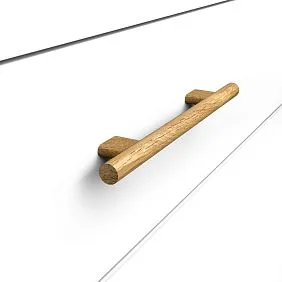
Let's start with the basics: what makes Unpainted wooden handles so special? Unlike painted counterparts, they preserve the original wood texture — those fine lines, patterns, and shades that nature created over years. Imagine your hand touching the surface, feeling the warmth of beech or oak, without a layer of paint that might hide this natural beauty. It's like touching a living organism, full of forest energy. In my SEO specialist practice, I always emphasize that such details are not only aesthetic but also optimized for search engines: queries like 'natural furniture accessories' lead directly to such products, highlighting their eco-friendliness and uniqueness.
But why wood? It breathes, adapts to room humidity, doesn't accumulate static electricity, and even possesses antibacterial properties. Remember how in old homes, where furniture serves for decades, wooden handles never lose their charm. They age gracefully, acquiring a patina of time that adds depth to the interior. Now imagine applying oil or wax to such handles yourself — it's not routine, but a creative process where you become a co-designer. Isn't the idea of turning an ordinary chest into a work of art captivating?




Variety of Shapes and Their Role in Design
Shape is the language on which they speak Wooden furniture handlesRound, oval, rectangular — each carries its own message. Round shapes soften angles in minimalist interiors, creating a sense of harmony and calm. Ovals add dynamism, as if inviting movement, ideal for kitchen cabinets where everything must be within reach. Rectangular, strict and minimalist, suit office furniture, emphasizing discipline and order.
Recall the example: in Scandinavian style, where light and simplicity reign, Unpainted wooden handles become an accent, contrasting with white facades. They are like a quiet whisper of the forest in urban bustle. Or in rustic design — here they enhance the feeling of countryside coziness, reminding of log cabins. As an expert with 50 years of experience, I always advise: choose a shape that resonates with your inner world. Don't be afraid to experiment — mix round and oval handles on one cabinet, and see how the space comes alive.
Our factory also produces:


Ecological and Practical: Why Wood Wins
In our time, when ecology is at the forefront, Unpainted wooden handles are a choice of a conscious person. Wood, as a renewable resource, does not harm the planet, unlike plastic or metal, whose production leaves a carbon footprint. These handles do not emit harmful substances, making your home safe for children and allergy sufferers. Imagine: you open a cabinet, and instead of cold metal, you feel a warm, living surface. This is not just convenience, but care for health.
Practicality is also top-notch. Wood is resistant to wear, doesn't fear daily touches. In the kitchen, where humidity is high, such handles won't crack if properly treated. And treatment — this is your chance for customization. Apply transparent oil, and the texture will shine; add wax — and the surface will become velvety. In my articles, I always emphasize: such details increase the value of furniture, making it timeless.
Get Consultation
Care for Natural Elements: Simple Tips from an Expert
Care for handles without coating This is a ritual that brings pleasure. Start with regular wiping using a soft cloth soaked in soapy water — this removes dust without damaging the texture. Avoid aggressive cleaning agents; instead, use natural oils like linseed or almond to let the wood 'breathe'. If the handle has darkened over time, a light sanding will restore its freshness.
Practical example: In one project, I recommended to the client treating handles with a mixture of beeswax and lavender essential oil. Result? Not only protection, but also a gentle aroma that filled the room with coziness. Such tricks, accumulated over decades, turn care into part of the creative process. And have you ever tried personalizing hardware? It opens new horizons!
Integration into Different Interior Styles: From Minimalism to Eclecticism
How to integrate Unpainted wooden handles into your interior? In minimalism, they add warmth, softening the coldness of white walls. Imagine a white kitchen cabinet with such handles — it’s like an accent on naturalness in a sterile world. In loft style, with its industrial notes, wood softens the roughness of concrete and metal, creating balance.
In classic style, these handles emphasize elegance, especially if you choose models with smooth lines. And in eclecticism? Here they become a bridge between eras — combine with vintage elements, and the space will take on new colors. As an SEO expert, I know: queries like 'natural handles for vintage furniture' rank highly because users seek authenticity.
Real Project Examples: Inspiration from Life
Let’s talk about real examples. In one suburban house, I saw how designer wooden handles transformed an old chest of drawers. Without paint, they highlighted the natural oak patterns, making the furniture the centerpiece of the living room. Another case — a Provence-style kitchen: here, the handles added charm, as if transported from a French village. Emotions? Owners’ delight, feeling connected to nature every day.
Or take a child’s room: eco-friendly furniture handles made from wood are safe, warm to the touch, and teach children to appreciate the natural. Such stories, accumulated over 50 years, show: wood is not just a material, but a partner in creating coziness. What if your home also awaits such transformation?
Technical Aspects: Sizes, Mounting, and Compatibility
Moving to technique. Sizes of uncolored wooden handles vary from compact 50 mm for drawers to 200 mm for cabinets. Choose according to proportions: for heavy furniture — large, for delicate — miniature. Mounting is simple: screws or self-tapping screws, but always consider the door panel thickness.
Compatibility? These handles suit wood, MDF, even glass. In the kitchen, they withstand moisture, in the bedroom — dust. As a designer, I recommend measuring the distance between holes in advance — it saves time. And remember: the right size choice is not only functional, but also visually balances the composition.
Comparison with Other Materials: Why Wood Leads
Compare wood with metal: metal is cold, wood — warm. Plastic becomes cheaper over time, wood gains value. Ceramic is fragile, wood is durable. Below is a table with key differences:
|
Material |
Advantages |
Disadvantages |
|
Wood |
Ecological, warmth, customization |
Requires maintenance |
|
Metal |
Durability, modern look |
Cold to the touch |
|
15-25 years |
Affordability |
Short lifespan |
|
Ceramic |
Decorativeness |
Fragility |
As you can see, wood wins in balance. These are not dry facts, but the foundation for conscious choice.
Creative Approach: How to Personalize Handles
Creativity is the key to uniqueness. Unpainted wooden Handles allow you to experiment: engrave initials, or mix oil tones for a gradient. In one project, I saw handles treated to look 'aged'—they gave the furniture a vintage charm.
Use them in DIY projects: refresh an old chair or create a custom shelf. This is not only cost-effective, but also the joy of creation. As a writer, I believe: such details inspire major life changes.
Rhetorical Questions and Emotional Emphasis
What if the handle isn't just a detail, but a symbol of your style? Doesn't every element of your home deserve to reflect your personality? These questions prompt reflection, and the answer often lies in natural materials.
Conclusion: The Choice That Changes Everything
In conclusion, Unpainted wooden Handles are a bridge between nature and your home, the opportunity to create a space full of warmth and individuality. They are not just functional, but also inspire creativity, highlighting eco-friendliness and style. STAVROS, with its rich assortment, offers exactly such solutions where quality meets art. Choose them—and see how your world changes.