Article Contents:
- Pros and cons of natural wood in interior design
- Wood finishing in the living room interior
- Use of wood in bathroom interior
- Use of wood in bedroom interior
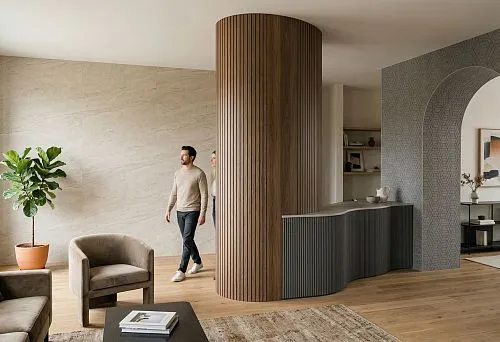
Today, designers are again using wood in interior design, as it is eco-friendly and natural, and also creates a cozy atmosphere.


Pros and cons of natural wood in interior design
This room decoration has both undeniable advantages and disadvantages.
The main advantages of wood are:
- Safety (this natural material is non-toxic, therefore suitable for decorating children's rooms or kitchens, it will not harm people suffering from allergies);
- Ease of processing;
- Rich variety of texture and color (it is precisely textured wood in interior design that gives the room a unique design, and the variety of shades will allow you to choose the most suitable option for any room size and lighting);
- Excellent aesthetic finish.
This material requires mandatory care. For example, lacquered wood in interior design requires immediate restoration if its coating is damaged; otherwise, after some time, deep cracks will appear, and the process of rotting will begin.
It should be known that natural wood has several disadvantages:
- Inability to resist moisture;
- Accumulation of dirt due to the complex surface profile;
- Difficulty in maintenance;
- Need to use special means to properly care for wooden surfaces.




Wood finishing in the living room interior
This room, finished with wood, looks great in a country house. Wood gives the space a neat appearance (less dust will accumulate), and also serves as an excellent insulating material. It can be combined with metal, glass, and plastic structures, creating a unique design.
Wood is used to finish walls, ceilings, or floors. It can last for several decades. Often, floors are finished with wood in interior design, as it looks very beautiful.
The material can be used to make doors and window frames. It is also used for elements, for example, it can be used to clad certain walls or make shelves, comfortable furniture, and other decor.
Our factory also produces:


Use of wood in bathroom interior
Wood is often used as a finishing material specifically for this room, thus giving it a natural look. However, it should be remembered that there is high humidity and temperature fluctuations here, so not all species are suitable. The material must have low deformation, resistance to mold and bacteria. These properties are found in linden, cedar, beech, ash, bamboo, and teak.
For bathrooms, wooden planks are often used, as they are aesthetically pleasing, hide fasteners well, have fixed dimensions, grooves, and tongues that create a secure lock. Today, ordinary boards treated with sanding, anti-mold agents, and lacquer or wax for moisture protection are also used.
Get Consultation
Use of wood in bedroom interior
Wood used for finishing the bedroom has the ability to fill the room with warmth and coziness. It is used to clad walls (either entirely or certain sections), install beams on the ceiling, and finish the headboard of the bed. Specialists claim that for walls, it is better to use untreated wood, which looks especially good if the room is white.
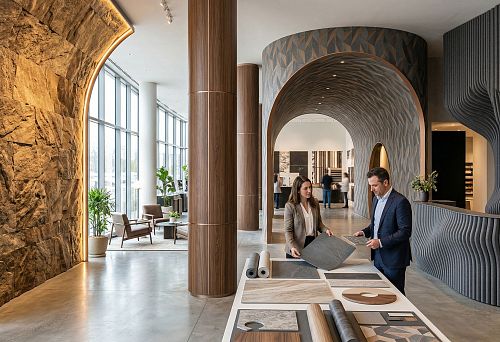
On the vast expanse of the World Wide Web, you can find various design solutions for finishing any room, including the bedroom. On the photo Natural Wood The interior clearly demonstrates the uniqueness of design and the organic integration of materials into the overall picture.