






































Article Contents:
- What is Wall Molding
- Which Elements Are Classified as Wall Molding
- How Wall Molding Differs from Ceiling Decor
- Where Wall Molding Is Used in Interior Design
- What Types of Wall Molding Can Be Used
- Wall moldings
- Decorative Frames and Panels
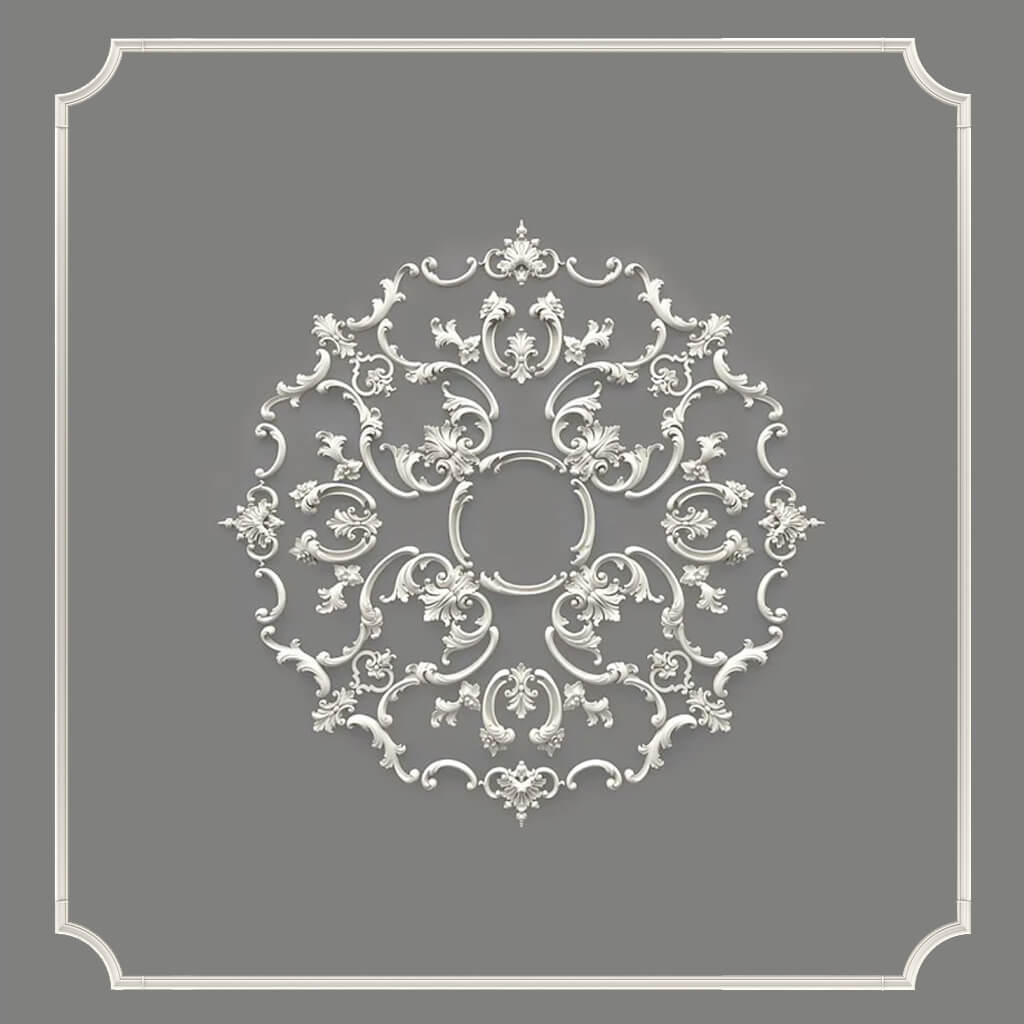
- Wall Rosettes and Inserts
- Molding for Accent Walls
- Comprehensive wall decoration with molding
- How to choose wall molding by room
- living room
- for the bedroom
- For the hallway
- For Office
- For the dining room
- For commercial interiors
- How to choose wall molding by interior style
- For classic style
- For neoclassical style
- For modern classic
- For a more subdued interior
- For an accent decorative solution
- What is important to consider when choosing wall decor
- Wall size
- Ceiling height
- Scale of elements
- Symmetry and Composition
- Combination with ceiling, doors, and furniture
- Where wall molding looks best
- On an accent wall
- In the sofa area
- In the bedroom at the headboard
- In the hallway and foyer
- In the fireplace or console area
- In offices and meeting rooms
- How not to overload the interior with wall molding
- When moldings are enough
- When more expressive elements are needed
- Why you shouldn't mix too many motifs
- How to maintain visual cleanliness
- What to combine wall molding with
- With ceiling cornices
- With door frames
- With sockets and decorative inserts
- With furniture, lighting, and textiles
- With the overall style of the room
- How to buy wall molding in Moscow without mistakes
- What to determine in advance
- What dimensions and zones to consider
- How to choose elements for the project
- Why it's important to look at the composition as a whole
- Common mistakes when choosing wall molding
- What to choose for different tasks
- For neat wall decoration
- For an accent wall
- For a classic composition
- For a neoclassical interior
- For small spaces
- FAQ: answers to key questions about wall molding
- STAVROS: wall molding in Moscow from the manufacturer
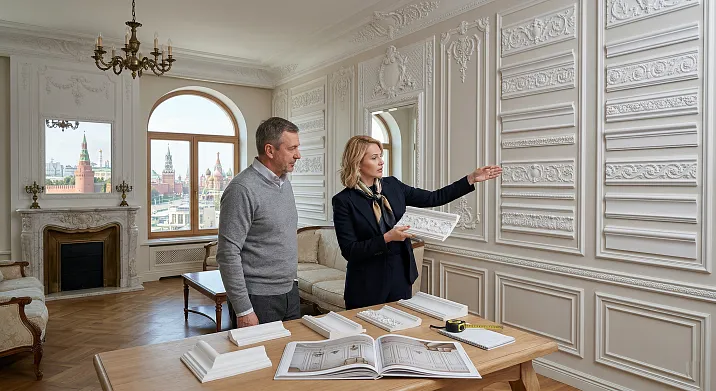
Walls are the largest surface of any room. And at the same time — the most underrated. While designers and owners think about furniture, lighting, and flooring, walls silently occupy 70–80 percent of the field of vision. It is they that create the first and main impression of a space. It is they that determine whether a room feels stylish — or simply lacks style.
Wall molding in Moscow is currently experiencing a steady renaissance. It is sought after by those renovating apartments, designers working with prestigious private homes, and commercial project outfitters. The reason is simple: decorative elements for walls can do what neither wallpaper, paint, nor plaster can — they add architectural volume, organize the plane, and give character to the interior.
But this immediately raises a question that almost everyone asks: how to choose correctly? How to avoid buying something 'beautiful' that later turns out to be 'inappropriate'? How to select the scale, avoid overloading the walls, and still achieve that very effect — where everything looks cohesive, thoughtful, and alive?
This is exactly what we will examine — in detail, without fluff and superficial advice.




What is wall molding




Which elements are classified as wall molding
Wall molding is a collective term for all decorative elements that are attached to vertical surfaces and serve an architectural-decorative function. Unlike ceiling decor, it works directly with what you see in front of you: the walls of the living room, hallway, bedroom, study.
Wall moldings include:
-
Moldings — linear profiles for creating frames, dividing zones, framing doors and mirrors.
-
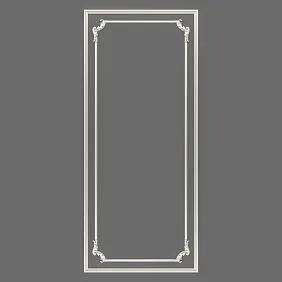
Decorative frames — closed contours on the wall formed by moldings.
-
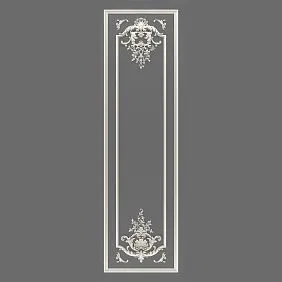
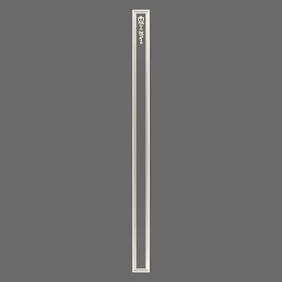
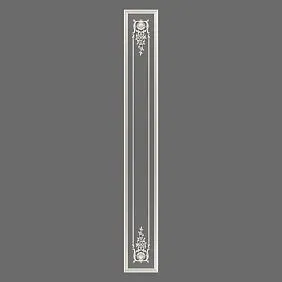
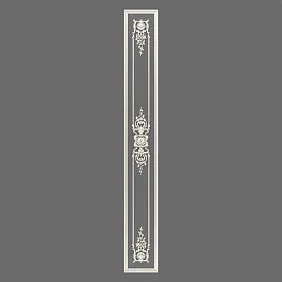
Panels — relief inserts for accent zones, usually within a frame system.
-
Wall rosettes — round or polygonal accent elements used not only on ceilings but also as wall medallions.
-
Friezes — horizontal ornamental bands running along the perimeter of the wall.
-
Overlays and inserts — separate ornamental elements: leaves, cartouches, medallions, corner decorations.
-
Borders — thin decorative strips dividing the surface horizontally.
-
Pilasters — flat decorative columns on the wall with a base, shaft, and capital.
Buy polyurethane wall decor— here you will find the entire range of STAVROS wall elements: from simple moldings to complex complete solutions for classical and neoclassical interiors.
Our factory also produces:


How does wall molding differ from ceiling decor?
The difference lies in the purpose and scale. Ceiling decor (cornices, rosettes, moldings) works with the horizontal plane and is typically perceived from a distance. Wall decor is right in front of you, at eye level. This means that the detailing here must be higher, and the scale must be more carefully calibrated to the actual dimensions of the wall.
Ceiling cornices are chosen based on the height of the room and its perimeter. Wall moldings are chosen based on the wall area, the placement of windows, doors, and furniture. These are fundamentally different tasks, although they are solved in relation to each other.
Get Consultation
Where is wall molding used in interiors?
Wall molding: zoning scenarios— this is precisely the principle underlying the modern application of wall decor. It is used:
-
on accent walls — behind the sofa, behind the headboard of the bed, opposite the entrance;
-
along the perimeter of the wall — as a border, divider, dado line;
-
around door and window openings — as framing, portal decor;
-
as continuous frame grids — for structuring a large plane;
-
as individual accent elements — a medallion, a cartouche, an ornamental insert.
What types of wall molding can be used
Wall moldings
Molding — the basic and most versatile element of wall decor. It is where most wall decorative systems begin. Horizontal moldings divide the wall vertically into zones: lower (baseboard), middle (main field), and upper (frieze). Vertical moldings create rhythm and structure. Frame moldings — closed contours — organize the plane, making it 'readable'.
Polyurethane wall moldings: installation, painting, creating frames— a detailed guide that helps understand not only what to choose but also how to apply it skillfully.
Key parameters when choosing wall molding:
-
profile width: from 20 mm (thin contour lines) to 120+ mm (wide dividers);
-
cross-section shape: flat, protruding, stepped, with ornament;
-
surface character: smooth, with relief, with molded ornament.
Decorative frames and panels
Frame systems are one of the main trends in wall decor in recent years. This is not a novelty: frames were used in European mansions back in the 16th–17th centuries. But today they have returned to mass use — because they work.
What a frame system looks like: moldings form rectangular or square outlines on the wall. Inside — a different color, texture, wallpaper, mirror. Outside — a unified background. Result: a structured wall with depth and volume.
Layout schemes for frames and panels for painting— ready proportional schemes that simplify planning a wall system. An indispensable resource for those designing independently or with a designer.
Wall rosettes and inserts
A wall rosette is an atypical but very effective solution. It can serve as: a medallion above a fireplace, an accent element in the center of a large wall, a frame for a wall lamp, a finishing touch for a decorative niche.Decorative Wall Finishing Elements: Overlays, Rosettes, Moldings— a breakdown of all types of wall decorative inserts with application recommendations.
Appliqués — ornamental elements in the form of leaves, cartouches, corner decorations — are most often used as accents inside frames or at the intersection of horizontal and vertical moldings. They transform a geometric grid into a living ornamental system.
Molding for accent walls
An accent wall is the one seen first and where the gaze lingers. For it, wall molding works to its full potential: large-format frames, a wider profile, decorative inserts, possibly a central medallion or a horizontal frieze.
An important rule: there is only one accent wall. If all four planes are decorated with the same intensity, the accent disappears, leaving chaos.
Comprehensive wall decoration with molding
A comprehensive system includes all levels of wall decor: baseboard at the bottom, a framing system in the middle field, a horizontal frieze or divider molding in the upper zone. Above them—a cornice at the transition to the ceiling.
Wall decor with polyurethane molding: moldings, panels and overlays— a complete breakdown of the comprehensive approach to wall decor with an illustration of principles and installation technology.
How to choose wall molding for a room
For the living room
The living room is the main space of an apartment or house. It is here that wall molding reveals its full potential. A basic scenario for a modern Moscow living room:
-
accent wall behind the sofa—a framing system made of 40–70 mm molding;
-
side walls—a horizontal dado divider or a full framing system;
-
above the fireplace or console—a decorative medallion or horizontal frieze;
-
Ceiling cornice — coordinated in profile with moldings.
For a living room of 20–30 m² with a ceiling height of 2.8–3.0 m, the optimal molding width for frames is 45–70 mm. For halls of 35–50 m² with ceilings 3.5+ m — 70–110 mm.
For the bedroom
A bedroom requires balance: decor is present but not dominant. The ideal solution is a frame behind the bed headboard. This creates a 'formal' backdrop for the main piece of furniture and accentuates the rest area.
For a bedroom, choose thin moldings of 30–50 mm with a soft pattern or a clean, smooth profile. A frieze — only if the ceilings are high. Wall inserts — minimally, only in the accent zone.
For the hallway
The hallway is the interior's calling card. The rule: the smaller the hallway area, the thinner the molding should be. For a hallway of 4–6 m², a cornice and a thin molding of 25–35 mm around the mirror are sufficient.
For a hall of 8–15 m² — you can already consider a framing system on one wall plus decorative framing of the doorway.
Neoclassical wall decor: moldings and stucco for a ready-made set— especially relevant for hallways with a classic or neoclassical design.
For an office
A study — a place for work and presentation. Here, strictness and weightiness are appropriate. Wooden moldings — solid oak, beech, MDF for painting — add warmth and solidity.
Wall Interior Decor: Overlays, Moldings, and Modern Solutions 2026— a relevant overview of how wall decor works in modern studies and meeting rooms.
For the study, it is recommended: wooden moldings 40–70 mm in a panel system on the main wall + vertical pilasters for a visual 'library' rhythm. Entirely in one color with the finish or with a soft contrast.
For the dining room
The dining room requires solemnity. Here, wall molding supports the 'serving' status of the space. A horizontal dado molding at a height of 90–110 cm, a panel system in the lower zone of the walls, and a cornice at the ceiling — a sufficiently complete and convincing system.
The accent is on the wall opposite the main table or on the one visible from the entrance.
For commercial interiors
In a restaurant, boutique, lobby — wall molding becomes part of the positioning. It conveys status: expensive, thoughtful, serious. For commercial interiors, systematicity is critically important: all elements from one manufacturer, in one style, proportionate to the space.
How to choose wall molding according to interior style
For classic style
Classical interior is the native environment of wall molding. Here it is appropriate and rich: wide panel systems with ornamented molding, a horizontal frieze with a plant motif, pilasters on accent walls, door portals with capitals and entablature.
The size of the elements is from medium to large. The relief is expressive. The interaction of elements is strict and symmetrical.
For neoclassical style
Neoclassicism speaks the language of classicism — but more restrained and cleaner. Here:
-
molding 30–60 mm with a geometric profile (meander, step, straight-line ogee);
-
panel system — geometrically precise, with clear proportions;
-
frieze — only with ceiling heights from 3 m;
-
all elements — in the same color as the wall or with minimal contrast.
Beautiful wall molding: transforming space through the art of decor— one of the most illustrative materials on the use of wall decor in a neoclassical context.
For modern classic
Modern classic — the most common request on the Moscow market. Here, wall decor is used selectively: one accent wall in a frame system, molding with a restrained profile, a cornice on the ceiling. No frieze, no pilasters, no additional inserts.
This is exactly the solution that looks 'expensive' in the understanding of the modern Moscow buyer: not flashy, but impeccable.
For a more subdued interior
If the interior is done in neutral tones and strives for quietness — wall molding can also be quiet. Profile 25–40 mm, relief no more than 5 mm, without ornament. Everything in the color of the wall. Such decor works as an architectural hint: structure is present, but it doesn't shout.
For an accent decorative solution
When an effect is needed — choose bolder: wide ornamented molding, deep relief, contrasting execution. Decor and wall in different tones. Large-format frames with rich corner inserts. This is a working solution for representative living rooms and halls.
What is important to consider when choosing decor for walls
Wall size
Wall length and height are the first technical parameters. Frames should be proportional to the wall: not too small (they fragment the surface) and not too large (the wall 'splits' into several heavy blocks). The optimal ratio is a frame width 1.3–2 times greater than its height for horizontal frames and 1.3–2 times higher than the width for vertical ones.
Ceiling height
Rule: the lower the ceiling, the thinner and less saturated the wall decor should be. Strict calibration:
| Ceiling height | Maximum molding width for walls |
|---|---|
| up to 2.7 m | 40–50 mm |
| 2.7–3.0 m | 50–70 mm |
| 3.0–3.5 m | 70–100 mm |
| Above 3.5 m | 100+ mm |
A horizontal frieze is appropriate only with ceilings from 3 m. In low rooms, it visually 'lowers' the ceiling.
Scale of elements
Scale is not just the width of the molding. It is also the size of the ornament, the depth of the relief, the complexity of the framing system. All these parameters should be proportionate to the wall area and the scale of the room.
A good check: imagine that all moldings became 30% wider. If in your mind it looks 'heavy' — then the current size is correct.
Symmetry and Composition
Symmetry is the foundation of wall decor. Frames should be positioned symmetrically relative to the central axis of the wall. Margins from the edges are equal. Distances between frames are equal.
Batten panels and stucco moldings: how to combine linear geometry— for those considering combining frame and linear systems in one room.
Combination with ceiling, doors, and furniture
Wall decor doesn't work in isolation. Three compatibility rules:
-
The profile of wall molding and cornice profile should belong to the same style.
-
Door frame moldings — from the same series as wall frames.
-
Furniture with rich decor is a reason for more restrained walls. Strict furniture is a reason for more expressive wall decor.
Where wall molding looks best
On an accent wall
The area behind the sofa, opposite the entrance, behind the dining table — these are three places where wall decor works with maximum impact. A frame system here creates a 'formal' backdrop and focuses the space.
In the sofa area
A sofa with wall molding behind it is a classic feature of modern classical interiors. The wall is structured, the space is organized, and an accent is placed. The distance from the top of the sofa to the lower frame should be at least 30–40 cm.
In the bedroom at the headboard
A framed accent behind the headboard is one of the most subtle uses of wall molding. It doesn't overwhelm the space but adds a sense of completeness. It works especially well with symmetrically placed bedside lamps on either side.
In the hallway and foyer
Wall Molding: Selection and Installation of Decorative Elements— a practical guide that separately covers the use of wall decor in hallways: choosing the scale, positioning frames, and combining with a mirror.
In the fireplace or console area
A fireplace or console is a natural architectural focal point on a wall. Wall molding around it creates a 'frame': a horizontal frieze above the mantel, vertical pilasters on the sides, and decorative molding outlining the mirror above the fireplace.
In studies and meeting rooms
In a study, wall decor functions as an argument: serious, thoughtful, and substantial. A strict frame system without ornamentation or with minimal relief is exactly what's needed in a business environment.
How to avoid overloading an interior with wall molding
Overload is the main risk, and it occurs more often than one might think. The reason is simple: decorative elements are beautiful individually, but together they can create visual noise.
When are moldings enough
One type of molding in a frame system on one wall—that's already enough to create an expressive decorative solution. Adding friezes, overlays, or inserts is only worth it when the first level is already installed and the interior 'asks' for more.
When more expressive elements are needed
Large spaces (from 30–40 m²), high ceilings (from 3.5 m), and a classic or formal style—these are the three conditions where a more saturated wall decor can and should be used. A small room with rich molding is not luxury; it's a scale error.
Why you shouldn't mix too many motifs
One room—one ornamental language. An acanthus leaf on one wall and a meander on another is not richness; it's a conflict. Choose one ornamental character for the entire system.
How to maintain visual clarity
Molding as decor: quick ways to 'assemble' interior architecture— about how the 'necessary minimum' principle works in wall decor.
Three simple rules:
-
A rich element — surrounded by simple surfaces.
-
Decor — in one zone, the other walls — neutral.
-
Ornament — one for the entire room, without variations.
What to combine wall molding with
With ceiling cornices
Wall moldings and ceiling cornices should be part of one system. The cornice profile is the main one, it sets the tone. Wall moldings are supporting, they should be softer and thinner. Ornaments — coordinated, but not identical.
With door trims
Wall molding and door trim are one architectural dialogue. If the wall frames are made of a profile with a Greek key — the trim should belong to the same classical family. A break in this pairing is immediately visible.
With rosettes and decorative inserts
Wall medallions and corner overlays inside frames add the final touch. They work as 'jewelry' details in the decorative system — noticeable up close, but do not interfere with the overall picture.
Wall Molding: Bringing Luxury Back to Modern Design— how rich wall decor combines with rosettes, cornices, and furniture.
With furniture, lighting, and textiles
Side lighting is the main ally of wall decor. With side lighting, the relief 'comes to life': shadows emphasize the depth of the pattern, the profile looks more expressive. Frontal uniform lighting 'kills' the molding—it becomes flat and loses its meaning.
Upholstered furniture with rich decor (carving, patterned fabric) requires more restrained wall decor. Minimalist furniture is a youthful option: you can allow the walls to be more expressive.
With the overall style of the room
Wall decor with molding: moldings, panels, and overlays— about how wall molding interacts with wallpaper, paint, and decorative plaster. Color on color—for a delicate effect. Contrast (white molding on a colored wall)—for a bold architectural statement.
How to buy wall molding in Moscow without mistakes
What to determine in advance
List of questions to answer before opening the catalog:
-
In which rooms is wall molding needed?
-
What interior style—classic, neoclassical, modern classic?
-
Ceiling height in each room?
-
Where exactly is decor needed: accent wall, all walls, door frames?
-
Preferred material — polyurethane, wood, MDF?
-
Overall budget for wall decor?
Without answers to these questions, the catalog becomes a source of beautiful but useless solutions.
What dimensions and zones to consider
Required measurements before ordering:
-
ceiling height;
-
width and height of each wall planned for decor;
-
location of windows and doors (they determine where frames can be placed and where not);
-
distance from the floor to the bottom edge of the frame (standard dado — 90–110 cm);
-
distance from the top of the frame to the cornice.
How to choose elements for the project
Systematic approach: first, the overall scheme is determined — how many frames, in what rhythm, with what gap. Then — the molding profile is selected for this scheme. Then — corner elements and overlays.
Stucco in Interior Design: The Art of Creating Luxury and Elegance— a practical guide that helps build a decoration system from general to specific.
Why it's important to look at the composition as a whole
Buying 'one beautiful molding' is the most common mistake. Decoration is not a product, it's a system. Molding without baseboard, cornice, and door framing in the same style looks like a foreign element. Systematic approach: one manufacturer, one line, one style.
Common mistakes when choosing wall molding
We say it straight — these are the mistakes that occur again and again.
Choosing elements without considering wall dimensions. An 80 mm molding in a 40×60 cm frame looks grotesque. The profile should be 1/10–1/15 of the frame width.
Creating too fragmented a composition. Small frames, frequent vertical divisions, many motifs — the wall 'falls apart' and creates anxiety instead of coziness.
They don't take ceiling height into account. A horizontal frieze in a room with a 2.6 m ceiling visually eats up the height. This is only acceptable with ceilings from 3 m.
They mix incompatible patterns. Different series, different relief characters, different historical sources — this is not eclecticism, it's a mistake.
They select decor separately from doors and ceilings. The wall and ceiling are a single system. The door is part of it. The decor should work on all three planes in a coordinated manner.
They overload the wall with too many details. More doesn't mean richer. Richness in an interior is appropriateness and proportionality.
They don't consider the interior style. Baroque relief in a Scandinavian space is not an experiment, it's a selection error.
What to choose for different tasks
For neat wall decoration
Thin molding 30–45 mm with a smooth or minimally ornamented profile. Frames on one accent wall. Everything in one color. Laconic, clean, professional.
For an accent wall
Molding 50–80 mm with ornament. Large-format frames. Possibly — corner decorative overlays. Contrasting color inside the frames. High effect with a moderate number of elements.
For a classic composition
Full system: baseboard + wall frames with ornamented molding + horizontal frieze + cornice. Ornament — floral or mixed. Sizes — proportionate to ceiling heights.
For a neoclassical interior
Geometric molding 35–60 mm. Strict symmetry. Without ornament or with minimal geometric relief. All in one tone. Cold elegance without unnecessary details.
For small rooms
Molding no wider than 35–40 mm. Frames — only on one wall. Relief — up to 5 mm. Without frieze and overlays. One level of decor for the entire room. This is enough — and this is what works.
FAQ: answers to the main questions about wall molding
Wall molding — decorative relief elements installed on walls to create architectural expression: moldings, appliqués, panels, bas-reliefs, pilasters, friezes. Made from plaster, polyurethane, or wood.
These are decorative elements for vertical surfaces: moldings, frames, panels, friezes, overlays, inserts and pilasters. They give walls architectural volume and style.
Which elements belong to wall molding?
Moldings, decorative frames, friezes, borders, corner overlays, wall medallions, rosettes in wall application, pilasters and molded panels.
Is wall molding suitable for an apartment?
Yes. Polyurethane elements are lightweight, do not require complex installation and work perfectly in standard apartments with the correct scale selection.
What to choose for walls: moldings or panels?
Moldings — for structuring the wall and creating frames. Panels — for accent-rich design of individual zones. In most cases, they start with moldings, adding panels as an accent.
Where is wall molding best used?
On accent walls in living rooms, bedrooms, hallways, and studies. Around fireplaces, consoles, mirrors. In door surrounds and framing systems.
How to avoid overloading walls with molding decor?
One type of ornament per room. Decor on one or two walls. Molding size proportionate to ceiling height. Accent in only one zone.
Is wall molding suitable for neoclassicism?
Yes — it is one of the main styles for its application. Here, choose geometric profiles, restrained relief, monochrome execution.
What does wall molding pair best with?
With a cornice in the same style, door trims from the same series, side lighting, and a neutral wall background.
Where to buy wall molding in Moscow?
Directly from the manufacturer — in the STAVROS catalog at stavros.ru. Own production, over 4,000 items, prices from 840 rubles per item.
How to choose decor according to wall size?
Molding width for frames — 1/10–1/15 of the frame width itself. Frieze — only with ceilings from 3 m. Ornament — the larger, the bigger the room.
STAVROS: wall molding in Moscow from the manufacturer
When it comes tobuy wall molding in Moscowwith confidence in the result — STAVROS is the manufacturer that professional designers and private buyers start with.
STAVROS is our own production of decorative elements from high-quality two-component polyurethane and solid natural wood. More than 4,000 items in a single catalog:wall and ceiling moldings, decorative wall overlays and rosettes, complete sets of molding decor for neoclassicism, frame layout schemes for painting.
Price range — from 840 rubles. Warehouse in Moscow and St. Petersburg. Shipment on the day of order. Delivery across all of Russia. Wholesale terms with confirmed discounts from 20,000 rubles. More than 246 real reviews with a rating of 5.0.
Select and order:www.stavros.ru