Article Contents:
- Oak — the aristocracy of wood in the world of building materials
- Visual characteristics of oak wood
- Varieties of oak baseboards
- Solid oak baseboard
- Glued oak baseboard
- Veneered skirting board in oak finish
- Geometric parameters and profiles
- Height of the baseboard and its impact on the perception of space
- Profiling and its functionality
- Surface treatment technologies and finishing coatings
- Lacquer systems
- Oil finishes
- Staining and patination
- Special structural solutions
- Baseboards with cable channels
- Baseboards with lighting
- Flexible baseboards
- Installation features of oak baseboards
- Preparation stage
- Joining technologies
- Corner and joint finishing
- Operation and Maintenance
- Daily care
- Protection against damage
- Restoration and repair
- Ecological Aspects and Safety
- Material naturalness
- Impact on room microclimate
- Coating safety
- Design solutions and stylistic compatibility
- Classic Interiors
- Modern styles
- Scandinavian Style
- Loft and Industrial Style
- Economic aspects of selection
- Cost of Ownership Analysis
- Impact on property value
- Innovative technologies and development trends
- Thermally modified wood
- Nanotechnology in coatings
- Smart baseboards
- Regional application specifics
- Humid climate
- Continental climate
- Northern Regions
- Conclusion
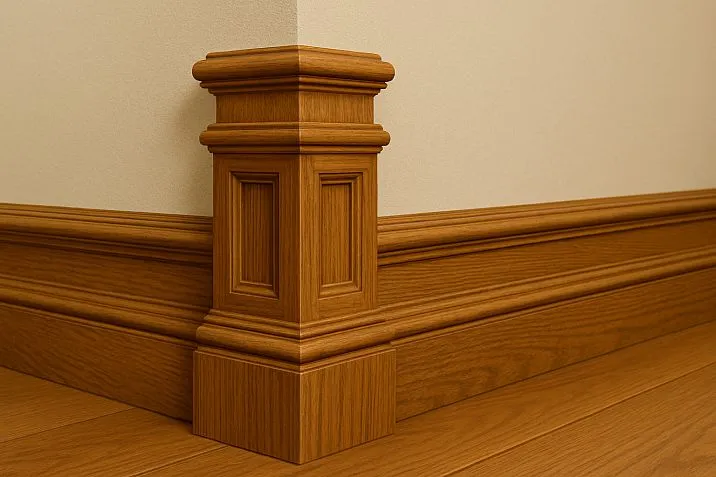
Any interior begins to speak the language of elegance and respectability when it features elements made of natural oak. Among all the finishing details, special attention is given to oak baseboard — that very finishing touch that transforms an ordinary dwelling into a home with character. In this article, we will delve into the wonderful world of oak baseboards, reveal the secrets of their selection, and show why these products become an investment in the long-term beauty of your home.


Oak — the aristocracy of wood in the world of building materials
When nature created oak, it seemed to know that centuries later, humans would find in this tree the ideal material for creating things intended to serve generations. Oak wood possesses a unique set of characteristics that make oak baseboards true works of art.
The density and hardness of oak wood is about 700-750 kg/m³, placing it in the category of exceptionally hard woods. This characteristic ensures exceptional resistance to mechanical impacts — impacts, scratches, dents. Imagine: your oak baseboard can withstand furniture rearrangement, active children’s play, pet claws, remaining practically undamaged.
Oak’s structural stability is manifested in minimal shrinkage and deformation of finished products. With proper drying, an oak baseboard retains its geometry for decades, without cracking, warping, or delaminating. This is especially important in the Russian climate, with its temperature fluctuations and humidity changes.
Natural moisture resistance is achieved due to the high content of tannins in the wood. These natural compounds create a natural barrier against moisture penetration and the development of fungal growth. Oak baseboards can be installed even in rooms with high humidity without the risk of deformation or biological damage.




Visual characteristics of oak wood
Oak’s texture is unique and instantly recognizable. Large pores, clearly defined annual rings, characteristic ray flecks create a picturesque pattern on the baseboard’s surface that cannot be imitated by artificial materials.
The color palette of natural oak ranges from light yellow to brownish-ochre with numerous transitional shades. The sapwood is usually lighter than the heartwood, creating a natural tonal contrast. Over time, oak wood develops a noble patina, acquiring richer and deeper hues.
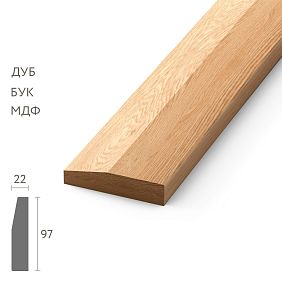
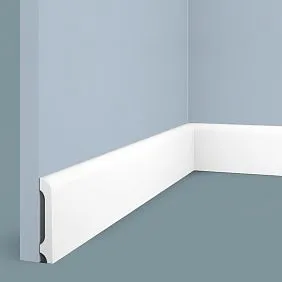
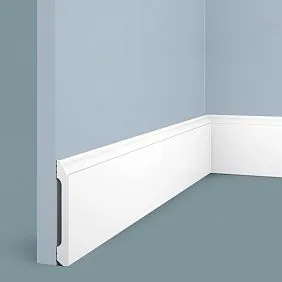
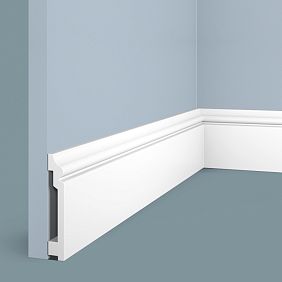
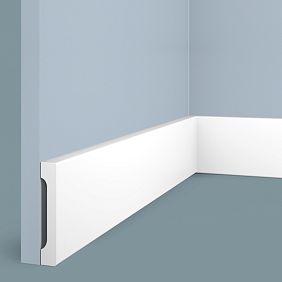
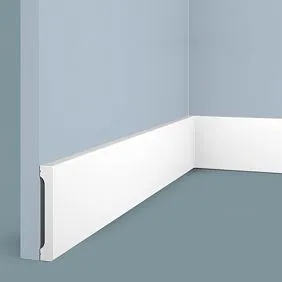
Our factory also produces:
Varieties of oak baseboards
The modern market offers several main categories oak baseboardEach has its own features and area of application.
Get Consultation
Solid oak skirting board
Premium product segment, where each item is made from a single piece of oak wood without gluing or composite additives. Such skirting boards are the pinnacle of quality and durability in their category.
The manufacturing process begins with careful selection of raw materials. For producing premium skirting boards, oak trees aged at least 80-120 years are used, when the wood reaches optimal density and stability of characteristics. Logs are selected from the central part of the trunk, where the wood is most uniform and free of defects.
Technical advantages of solid skirting board:
- Ability for multiple restoration and sanding
- Resistance to serious mechanical damage
- Ability to change profile during restoration
- Maximum ecological safety
- Unique texture of each item
The size range of solid oak skirting boards is impressive in its variety. Height can vary from 60 to 200 mm, thickness — from 15 to 30 mm. The length of planks is usually 1.8 to 3.0 meters, which allows minimizing the number of joints during installation.
Glued oak skirting board
Manufactured by gluing several oak wood laminates under high pressure. This technology allows eliminating internal stresses in the wood and obtaining a product with enhanced geometric stability.
The technological process includes pre-drying laminates to a moisture content of 6-8%, calibrating them by thickness, applying an environmentally safe glue, and pressing under 8-12 atmospheres of pressure. After the glue polymerizes, the blanks are profiled and finished.
Advantages of glued construction:
- Increased dimensional stability
- Ability to manufacture long-length items (up to 4 meters)
- Absence of internal stresses
- Optimal price-to-quality ratio
- Ability to use wood with minor defects
Veneered skirting board under oak
Economical solution, where the load-bearing base is made from coniferous species or high-density MDF, and the surface is veneered with natural oak veneer 0.6-4 mm thick.
The quality of the veneer plays a decisive role in the appearance of the finished product. Top manufacturers use planed veneer obtained on special machines, ensuring a perfectly flat surface without chips or cracks.
Characteristic features:
- Visual identity similar to solid wood
- Affordable cost while preserving aesthetics
- Wide range of toning options
- High stability of the base
Geometric parameters and profiles
Choosing the correct size and profile oak baseboard is critically important for creating a harmonious interior.
Height of skirting board and its influence on the perception of space
50-70 mm — compact skirting boards for small rooms with ceilings up to 2.7 meters. Create a sense of lightness and do not visually overload the space. Ideal for apartments in standard buildings, where every centimeter counts.
80-100 mm — universal size, optimal for most living spaces. Provides sufficient protection for walls against mechanical damage during cleaning and creates a balanced visual appearance.
110-140 mm — tall skirting boards for rooms with ceilings from 3 meters. Emphasize the grandeur of the interior and create a sense of spaciousness. Often used in classical and neoclassical interior styles.
150-200 mm and above — exclusive solutions for special design projects. Such skirting boards become a standalone decorative element and require a professional approach to interior planning.
Profiling and its functionality
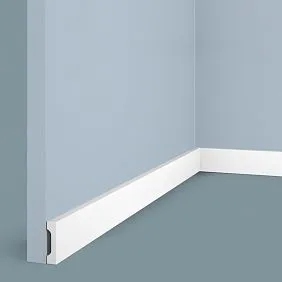
Rectangular profile — minimalist geometry, characteristic of modern minimalist interiors. The simplicity of the shape highlights the natural beauty of oak texture without distracting elements.
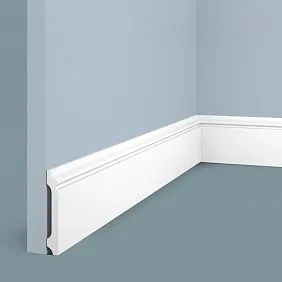
“Cuff” — classic profile with a distinctive curve at the bottom, ensuring tight fit to the floor even on minor unevenness of the base. The upper part may have various configurations — from simple beveled to complex decorative shapes.
Decorative profiles — complex multi-step forms with decorative elements: ridges, beads, grooves. Such skirting boards are characteristic of classical interiors and require high precision in manufacturing.
Corner skirting — special configuration for decorating exterior corners of rooms. May have a G-shaped cross-section of various proportions depending on specific application conditions.
Surface treatment technologies and finishing coatings
Surface treatment of oak skirting largely determines its operational characteristics and appearance.
Urethane coatings create a wear-resistant, high-strength finish for heavily used surfaces. Acrylic formulations provide an eco-friendly coating for residential spaces with children.
Polyurethane varnishes — the most common type of coating for oak skirting. Modern formulations provide excellent protection against moisture, abrasion, and ultraviolet radiation.
Characteristics of high-quality polyurethane finish:
- Hardness by Persoz: 0.15-0.25 mm
- Adhesion to wood: 2-3 points according to GOST
- Gloss: from deep matte (5-10%) to high gloss (80-90%)
- Abrasion resistance: class AC4-AC5
Water-based varnishes — an eco-friendly alternative with low volatile organic compound content. Virtually odorless, dry quickly, provide good protection while preserving the natural wood color.
Alkyd varnishes — traditional formulations based on natural resins. Deeply penetrate wood structure, enhance texture, but have longer drying time and are less resistant to abrasion.
Oil finishes
Hard oils — modern formulations based on natural vegetable oils with added hard waxes. Deeply penetrate wood, create an elastic coating that “breathes” with the wood.
Advantages of oil-based finish:
- Preservation of natural texture and tactile sensations
- Ease of local coating repair
- Antistatic properties
- Possibility of refreshment without full resanding
Oil-waxes — combined formulations combining the penetrating properties of oils with the protective characteristics of waxes. Create a semi-matte film with a slight gloss on the surface.
Staining and Patination
Staining treatment allows changing the color of oak wood without hiding its natural texture.
Popular staining shades:
- “Cognac” — noble brown with golden tones
- “Stained Oak” — deep dark brown, almost black
- “White Oak” — light tones with preserved texture contrast
- “Tobacco” — warm brown with reddish notes
- “Walnut” — rich dark brown with chocolate tones
Patina technology allows creating an effect of noble antiquity. The wood surface is artificially aged using special compositions and processing techniques, giving the item an antique patina.
Special structural solutions
Modern manufacturers offer oak baseboard with additional functional capabilities.
Baseboards with cable channels
Open cable channels are grooves in the back of the baseboard, covered by a removable plate. They allow for concealed installation of electrical wires, internet cables, and antenna cables.
Cable channel sizes:
- Small: 10×10 mm — for 2-3 wires
- Medium: 15×15 mm — for 5-7 wires
- Large: 20×20 mm — for multi-core cables
Integrated systems — baseboards with built-in guides for various types of cables. May include separate channels for power and low-voltage lines.
Skirting boards with lighting
An innovative solution for creating decorative lighting. An LED strip is embedded into a special groove in the baseboard, creating an eye-catching floor illumination.
Implementation options:
- Directional lighting on the floor
- Diffused lighting through a matte diffuser
- RGB lighting with color-changing capability
- Lighting with motion sensors for nighttime navigation
Flexible baseboards
For rooms with complex wall geometries, flexible oak baseboards are manufactured. The wood undergoes special steam treatment, allowing it to be bent to the required curvature without cracking.
Technical specifications of flexible baseboards:
- Minimum bending radius: 500-800 mm
- Maximum angle of turn per 1 meter of length: 15-20°
- Recovery of original shape: no more than 5%
Features of installing oak baseboards
Installation of a quality oak baseboard requires a professional approach and adherence to technical standards.
Preparation Stage
Acclimatization of the material — a mandatory procedure for all products made of natural wood. Oak baseboards must remain in the installation room for at least 48-72 hours to equalize moisture with the surrounding environment.
Acclimatization conditions:
- Temperature: 18-24°C
- Relative humidity: 40-60%
- No direct sunlight
- Good air circulation
Tool preparation includes checking and adjusting:
- Circular saw with a wood blade (100-120 teeth)
- Drill or impact driver for fastening
- Construction level at least 1 meter long
- Tape measure, square, pencil
- Miter block for precise corner trimming
Mounting technologies
Mechanical fastening with screws — traditional and most reliable method for solid oak baseboards.
Drill a hole in the step to a depth of 40-50 mm
- Marking mounting locations with 40-60 cm spacing
- Pre-drilling holes with diameter 3-4 mm
- Counterbore for screw head (diameter 8-10 mm, depth 5-8 mm)
- Screwing in the screw until the head is flush
- Filling holes with wooden plugs using glue
- Sanding and painting plugs to match the baseboard color
Hidden clip mounting — modern method for baseboards with special grooves.
Advantages of the system:
- No visible fasteners
- Ability to remove without damage
- Even load distribution
- Compensation for thermal deformations
Adhesive mounting is used for lightweight veneered baseboards on perfectly flat walls.
Requirements for adhesive:
- High adhesion to wood and mineral substrates
- Elasticity after polymerization
- Moisture Resistance
- Open time not less than 10-15 minutes
Corner and joint finishing
Internal corners are finished by precise 45° trimming using a circular saw or miter gauge. For achieving an ideal joint, it is recommended:
- Measure the actual room angle (may differ from 90°)
- Divide the measured angle in half
- Perform trimming according to actual geometry
- If necessary, manually refine the joint
External corners require special attention, as they are most noticeable to the eye:
- Trimming is done with a small allowance
- Final fitting is done on-site
- Joint is glued for additional strength
- Apply light pressure during adhesive polymerization
Pre-fabricated corner elements — modern solution eliminating complex trimming:
- Internal corners of various configurations
- External corners for standard profiles
- Joining elements for plank joints
- End caps for baseboards
Operation and Maintenance
Proper care ensures preservation of original characteristics oak baseboard throughout its entire service life.
Daily Care
Dry cleaning is performed weekly using:
- Soft microfiber cloth
- Vacuum cleaner with a delicate surface attachment
- Special brushes for profiled baseboards
- Antistatic agents to prevent dust accumulation
Wet cleaning is performed as needed:
- Use of slightly damp cloth
- Application of special wood care products
- Immediate removal of excess moisture
- Exclusion of aggressive cleaning agents
Protection against damage
Mechanical protection includes:
- Installation of protective pads on furniture legs
- Use of mats in high-traffic areas
- Careful handling of vacuum cleaners and other equipment
- Prevention of impacts from hard objects
Climate control includes:
- Maintaining relative humidity at 40-60%
- Avoiding sudden temperature changes
- Protection from direct sunlight
- Ensuring normal air circulation
Restoration and Rehabilitation
One of the main advantages of oak baseboard is the possibility of multiple restorations.
Local restoration includes:
- Removing scratches with wax pencils
- Touching up scratches with special markers
- Polishing minor defects
- Renewing protective coating on individual areas
Major restoration includes:
- Disassembly of damaged sections
- Complete sanding of the surface
- Filling deep defects with putty
- Recoating with varnish or oil
- Tint adjustment if necessary
Ecological aspects and safety
In modern conditions, ecological safety of construction materials assumes special importance.
Material naturalness
Oak as a renewable resource does not harm the environment when managed properly. Responsible manufacturers obtain FSC or PEFC certification, confirming that the wood originates from sustainably managed forests.
The carbon footprint of oak products is minimal compared to synthetic analogs. Wood sequesters carbon throughout the product's lifespan, helping to reduce atmospheric CO2 concentration.
Influence on room microclimate
Humidity regulation — a unique property of natural wood:
- Absorption of excess moisture during high humidity
- Release of stored moisture during low humidity
- Stabilization of room microclimate
- Creating comfortable living conditions
Oak's antibacterial properties are due to high tannin and other biologically active substance content:
- Suppressing pathogenic microflora development
- Air purification from harmful substances
- Creating a healthy indoor atmosphere
Coating safety
Ecological certifications of quality finishes:
- Compliance with European EN 71-3 standards
- Certification under the GREENGUARD system
- No formaldehyde or other harmful emissions
- Safe for children and allergy sufferers
Design solutions and stylistic compatibility
oak baseboard Versatile in application and harmoniously integrates into various stylistic directions.
Classic Interiors
In classic styles, oak skirting boards often become accent elements:
- High skirting boards (120-200 mm) with rich profiling
- Dark tones: stained oak, walnut, mahogany
- Use of gilding or patination
- Combination with moldings and cornices
Modern Styles
Minimalism and high-tech require simplicity of form:
- Simple rectangular profiles
- Natural or slightly tinted shades
- Matte or semi-matte finishes
- Visual lightness and clarity of lines
Scandinavian style
Scandinavian aesthetics prefer light tones:
- White oak or wood finished with white oil
- Low skirting boards (60-80 mm)
- Matte finishes
- Combination with other natural materials
Loft and industrial style
Contrast of natural wood with industrial materials:
- Weathered wood or intentionally rough finish
- Dark tint shades
- Combination with metal, concrete, brick
- Functional solutions are highlighted
Economic aspects of selection
When planning a budget, it is important to consider oak skirting as a long-term investment.
Analysis of ownership cost
Initial costs for high-quality oak skirting boards are significantly higher than alternatives, but are offset by longevity:
Comparative analysis by service life:
- PVC skirting: 5-8 years
- MDF with film: 8-12 years
- Veneered skirting: 15-20 years
- Solid oak skirting: 50+ years
Economic efficiency calculation shows the advantage of oak products:
- No need for replacement throughout the lifetime of several generations
- Possibility of restoration instead of replacement
- Increase in property market value
- Reducing operational costs
Impact on property value
Statistical data show that the presence of quality elements made of natural wood increases the assessed value of property by 8-15% compared to properties finished with budget materials.
Factors affecting assessment:
- Prestige of natural materials
- Durability and Reliability
- Aesthetic appeal
- Ecological safety
Innovative Technologies and Development Trends
The industry producing oak skirting boards is constantly developing, offering new technological solutions.
Thermally modified wood
Thermo-treatment at a temperature of 160-230°C changes the wood structure at the molecular level:
- Increase in dimensional stability by 50-80%
- Improved moisture resistance by 3-5 times
- Increased surface hardness by 15-20%
- Achieving uniform color throughout the cross-section
Nanotechnologies in coatings
Nanoparticles in lacquer composition provide:
- Self-Cleaning Surfaces
- Antibacterial Properties
- Enhanced resistance to abrasion
- UV protection for wood
Smart skirting boards
Integration of modern technologies:
- Built-in LED systems with smartphone control
- Motion and light sensors
- Wireless data transmission
- Climate control systems
Regional application specifics
Climate conditions in different regions affect the selection of oak skirting board characteristics.
Humid climate
In coastal and southern regions, special attention is paid to:
- Additional hydrophobic treatment
- Use moisture-resistant adhesives and coatings
- Ensure ventilation gaps
- Regular monitoring of the condition of items
Continental climate
Sudden temperature fluctuations require:
- Use stabilized wood
- Increase compensatory gaps
- Use elastic sealants
- Control humidity in rooms
Northern regions
Long heating season creates special conditions:
- Low air humidity in winter
- Risk of wood drying out
- Need for air humidification
- Use protective compounds
Conclusion
Oak baseboards are a solution that defines the character of the interior for decades ahead. Natural oak wood combines unmatched strength, noble beauty, and ecological safety. Modern processing technologies and a wide range of design solutions make oak baseboards a universal choice for any interior style.
Investments in quality oak baseboard They justify themselves not only by durability and practicality, but also by their ability to transform an ordinary room into a space radiating warmth and elegance. A properly selected and professionally installed oak baseboard becomes the very detail that gives the interior completeness and individuality.
STAVROS presents on the Russian market a wide range of premium oak baseboards, manufactured in accordance with all quality technological standards. STAVROS's long experience in working with natural wood guarantees the highest product quality and professional support for projects of any complexity. STAVROS specialists will help select the optimal solution based on the specific features of the interior and provide a full cycle of services — from consultation to final installation. Choosing STAVROS means choosing a reliable partner for whom quality and customer satisfaction are top priorities.