Article Contents:
- Architectural Anatomy: What Are Sash and Sash Trim?
- Material Embodiment of Traditions
- Solid Wood: The Living Breath of Nature
- Polyurethane: Revolution in Architectural Decoration
- MDF: Modernity and Practicality
- Stylistic diversity: from classic to avant-garde
- Classicism: eternal harmony of proportions
- Baroque: triumph of ornamentation
- Modern: Natural Plasticity
- Technological Nuances of Manufacturing
- Design and 3D modeling
- High-Precision CNC Machining
- Hand Finishing and Artistic Carving
- Installation Solutions and Structural Features
- Comparative Economic Analysis
- Compensation for thermal deformations
- Waterproofing and Sealing
- Color Solutions and Finish Coatings
- Traditional Approaches to Painting
- Modern Coating Systems
- Special Decorative Effects
- Stylistic Integration into the Architectural Environment
- Analysis of Architectural Context
- Creating Architectural Hierarchy
- Operational Aspects and Longevity
- Preventive maintenance
- Repair and restoration
- Innovative solutions and technologies of the future
- Composite materials of new generation
- Digital Production Technologies
- Intelligent systems
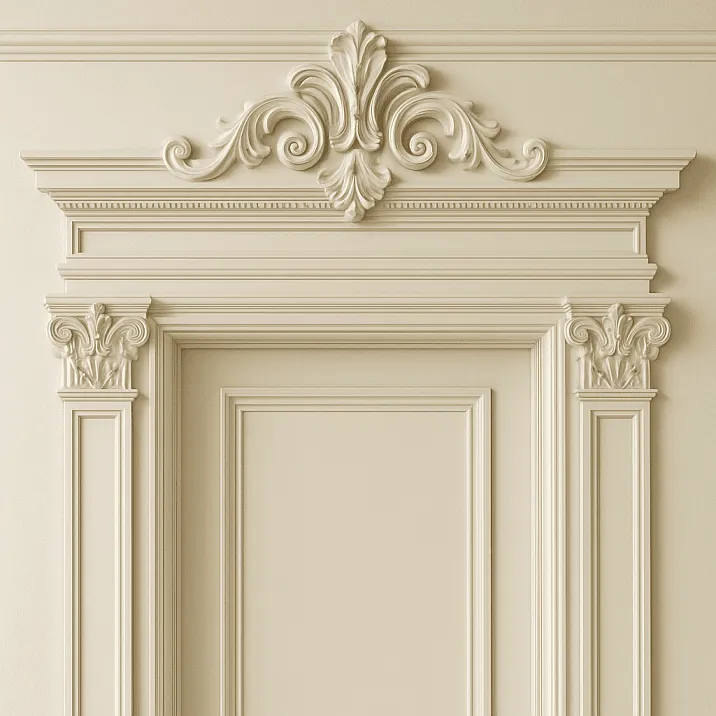
The entrance group of a house is the first thing guests and passersby see, forming an impression of the owner's taste and status. Sandrok moldings They are an exquisite architectural solution that transforms an ordinary door opening into a grand composition worthy of palace halls. This is not merely a decorative element — it is the philosophy of space embodied in wood, stone, or modern materials.


Architectural Anatomy: What Are Sash and Sash Trim?
The architectural composition of an entrance group using sash and sash trim is a complex system of interconnected elements, each serving both aesthetic and practical functions. The sash represents the vertical part of the frame, visually defining the boundaries of the opening, creating clear geometry and drawing attention to the entrance.
The sash trim, crowning the composition, serves as a horizontal finish that not only protects the entrance group from atmospheric precipitation but also creates visual weight for the entire structure. This horizontal line is psychologically perceived as a symbol of stability and reliability, which is especially important for the entrance group of a residential house.
The proportional relationships between the sash and sash trim are determined by classical architectural canons, which have been developed over centuries. The width of the sash typically ranges from 80 to 200 millimeters, depending on the size of the opening and the overall scale of the building. The height of the sash trim varies from 100 to 400 millimeters, creating a harmonious relationship with the vertical elements of the composition.
The relief depth of sash trim can vary significantly — from simple flat strips to complex multi-level profiles with rich play of light and shadow. Modern technologies allow creating sash trim with filigree, coves, rosettes, and other decorative elements, transforming a simple frame into a work of architectural art.




Material Embodiment of Traditions
Our factory also produces:


Solid Wood: The Living Breath of Nature
Wooden sash and sash trim remain a classic choice for those who appreciate the natural beauty and ecological properties of materials. Each wood species possesses unique characteristics that influence the appearance and performance of the finished product.
Oak, noble and durable, creates a sense of monumentality and prestige. Its dense texture and expressive grain pattern make each item unique. Larch, naturally resistant to rot, is ideal for outdoor use in high-humidity conditions. Pine and spruce, more cost-effective, also provide longevity and beauty in architectural decoration when properly processed.
Modern wood processing technologies include deep impregnation with antiseptic compositions, which protect the material from biological damage. Special wax and oil-based compositions highlight the natural beauty of wood while simultaneously creating a protective film against atmospheric effects.
Get Consultation
Polyurethane: Revolution in Architectural Decoration
Polyurethane Ceiling Moldings Proven effective in interiors, this same technology is successfully applied to the manufacture of exterior architectural elements. Polyurethane casings with sash brackets combine lightness, strength, moisture resistance, and the ability to create the most complex decorative forms.
The advantages of polyurethane are especially evident when creating carved elements with fine details. The material allows reproducing the finest nuances of historical samples, creating new original compositions impossible with traditional materials. The surface of polyurethane items is ideally suited for painting with any type of paint, opening up limitless possibilities for facade color decoration.
Operational characteristics of polyurethane include resistance to temperature fluctuations from -50 to +80 degrees Celsius, non-sensitivity to moisture, ultraviolet radiation, and chemical exposure. The material does not support combustion, does not emit toxic substances, and possesses high thermal insulation properties.
MDF: Modernity and Practicality
Moldings for painting MDF products represent an optimal combination of quality, aesthetics, and affordability. This material, made from medium-density wood fibers, has stable dimensions, smooth surface, and excellent decorative properties.
MDF production technology allows creating items with clearly defined profiles, free from knots, cracks, and other defects typical of solid wood. The surface of MDF casings does not require additional preparation before painting, significantly simplifying the finishing process and reducing the overall project cost.
Modern primers and paints for MDF ensure long-lasting coverage, resistance to fading, and mechanical damage. The ability to repaint allows changing the facade's color scheme without replacing decorative elements.
Stylistic diversity: from classic to avant-garde
Classicism: Eternal Harmony of Proportions
Classical Sandrok moldings Embodiment of principles of ancient architecture adapted to modern needs. Strict symmetry, mathematically precise proportions, use of order systems create a sense of stability and nobility.
Typical elements of classical casings include a base with a profiled plinth, smooth or fluted shaft, capital with details characteristic of the selected order. The sash bracket is supported by consoles in the form of volutes or modular units, creating an impression of constructive logic throughout the composition.
Color solutions for classical casings tend toward light, noble tones — white, ivory, light gray. Sometimes a contrasting solution is used, where casings stand out with a darker color against light walls, emphasizing the architectural structure of the facade.
Baroque: Triumph of Ornamentation
Baroque casings impress with ornamental richness and plasticity of forms. Plant motifs, putti, cartouches, garlands — all this creates a sense of festivity and grandeur. and frames create a home atmosphere, making it truly cozy and individual. This is an investment in beauty, which pays off every day through aesthetic pleasure from admiring the beautiful. Baroque casings require high craftsmanship and special attention to details.
A characteristic feature of baroque casings is asymmetry of individual elements within an overall symmetrical composition. Consoles may have different shapes, ornaments — different detailing, which creates vividness and dynamism throughout the composition.
Color solutions for baroque casings can be monochromatic or polychromatic. Traditional gilding of individual elements on white or cream backgrounds creates especially grand impressions, suitable for representative buildings.
Modern: Natural Plasticity
The modern style introduced a fundamentally new understanding of beauty in architectural decoration, based on natural forms and organic lines. Modern casings can imitate plant stems, waves, clouds, or abstract natural forms.
Asymmetry becomes not an exception but a rule in the composition of modern casings. Door Frame Trim May have different widths from different sides, sash bracket — irregular shape resembling natural objects.
Color solutions for modern casings often include natural shades — greens, browns, ochre tones, which harmoniously blend with the surrounding landscape and emphasize the connection between architecture and nature.
Technological nuances of manufacturing
Design and 3D modeling
Modern architectural decoration production begins with detailed design using computer technologies. Three-dimensional modeling allows visualizing the future product, assessing its proportions, and identifying potential issues even during the design stage.
CAD systems allow creating parametric casing models that easily adapt to various opening sizes while maintaining correct proportions. This is especially important in serial projects where numerous casings of different sizes are required.
Photorealistic visualization allows the client to evaluate the appearance of future casings in the context of a specific building, choose the optimal color solution, and make design adjustments before production begins.
High-precision CNC machining
CNC machines revolutionized architectural decoration production, ensuring the highest precision of processing and the ability to reproduce the most complex forms. CNC milling machines allow creating items with precision down to tenths of a millimeter, which is critically important for quality element fitting.
CNC turning machines are used to manufacture round elements — columns, balusters, rosettes. The ability to program complex profiles allows creating unique shapes not achievable through manual processing.
Laser cutting opens new possibilities for creating intricate elements, complex ornaments, precise slots for joining parts. This technology is especially effective when working with sheet materials — MDF, plywood, composite materials.
Hand finishing and artistic carving
Despite the high level of production automation, manual work remains indispensable for creating truly artistic items. Master carvers impart vitality and individuality to machine-made blanks, refine fine details, and create unique original elements.
Traditional woodworking carving techniques — flat relief, blind, and recessed carving — allow creating items of varying complexity and artistic expressiveness. Each technique has its own characteristics and application area in architectural decoration.
Modern hand tools — electric chisels, pneumatic routers, and drill machines — significantly speed up manual processing without compromising quality or artistic value of the items.
Mounting solutions and structural features
Hidden Fastening Systems
Modern mounting technologies sanding rails They involve using hidden fasteners that ensure secure fixation without any visible fastening elements. This is achieved through special grooves milled on the backside of the sills, into which clamps or mounting strips are installed.
Clamp mounting systems allow even load distribution along the entire length of the sill, eliminating stress concentration at individual points. This is especially important for long elements susceptible to thermal deformation.
Magnetic mounting systems using powerful neodymium magnets provide quick and precise element installation. This technology is especially convenient for temporary mounting, display purposes, and cases requiring periodic disassembly for maintenance.
Thermal deformation compensation
External architectural elements are subjected to significant thermal effects, causing linear expansion and contraction of the material. This is especially relevant for long horizontal elements — sills, cornices, and moldings.
Expansion joints, installed every 3–6 meters, allow the material to deform freely without generating internal stresses. These joints are filled with elastic sealant, ensuring airtight connections while preserving element mobility.
Telescopic connections allow elements to slide relative to each other during thermal deformation. Such connections are especially effective in corner zones where elements oriented in different directions meet.
Waterproofing and sealing
Quality waterproofing is critically important for the longevity of architectural decoration. Moisture penetration can lead to wood swelling, corrosion of fasteners, paint layer delamination, and mold growth.
Primary waterproofing is performed during the foundation preparation stage. Walls are treated with hydrophobic compounds creating a water-repellent barrier. Special attention is given to areas where sills meet the wall.
Secondary waterproofing includes sealing all joints and connections with weather-resistant sealants. Modern polyurethane and silicone sealants retain elasticity over a wide temperature range, ensuring long-term protection.
Color solutions and finishing coatings
Traditional approaches to painting
Classic color solutions for sills with sills are based on the principle of contrast or nuance relative to the main facade color. Contrast solutions emphasize the building's architectural structure, highlight the entrance area, and create a clear hierarchy of facade elements.
White sills against dark wall backgrounds — a classic solution that never goes out of style. Such a combination visually enlarges the opening, creating a sense of lightness and grandeur. The reverse solution — dark sills on a light background — creates a more strict, graphic impression.
Nuance color solutions involve using similar shades differing in saturation or lightness. This approach creates a more calm, harmonious impression, suitable for residential buildings and structures integrated into historic urban environments.
Modern paint systems
Modern exterior paints significantly surpass traditional compositions in durability, decorative properties, and eco-friendliness. Acrylic paints provide high coverage, resistance to fading, and breathability — especially important for wooden items.
Polyurethane enamels create exceptionally durable coatings resistant to mechanical damage, chemical exposure, and extreme temperatures. Such coatings are ideal for objects subjected to high operational loads.
Powder coatings applied in factory conditions ensure exceptional coating uniformity, absence of runs, and high resistance to atmospheric effects. This technology is especially effective for metallic elements of architectural decoration.
Special decorative effects
Corner decorative elements can be achieved using special decorative coatings that create the effect of patina, metallic, or pearl finishes. Such coatings allow imitation of expensive materials — bronze, copper, gold — when using accessible substrates.
The technique of artificial aging allows creating the effect of antique items on new door casings. Patination, craquelure, and wear marks are created using special compositions and application techniques requiring high skill from the craftsmen.
Textured coatings imitate the surface texture of various materials — stone, metal, leather. Modern compositions allow creating tactile textures indistinguishable from the original.
Stylistic integration into the architectural environment
Architectural Context Analysis
The selection of door casing designs with sandrik should be based on a thorough analysis of the architectural surroundings. Historical context, stylistic features of neighboring buildings, and landscape characteristics — all of these influence the optimal solution for a specific object.
In the historical centers of cities, requirements for architectural decoration may be regulated by special normative documents defining permissible materials, colors, and forms of elements. decorative doorway framing must harmoniously fit into the established architectural environment.
Modern construction provides greater freedom for creativity, but requires special attention to scale, proportions, and stylistic coherence of the architectural solution.
Creation of architectural hierarchy
Door casings with sandrik play an important role in creating the architectural hierarchy of the facade. The main entrance should stand out with richer decorative treatment, larger dimensions, and contrasting color solutions. Secondary entrances are styled more modestly, but in a unified stylistic context.
The rhythmic organization of the facade is achieved by repeating similar door casings on windows, varying their sizes according to the hierarchy of openings. Symmetrical placement of elements creates a sense of stability and order.
Vertical hierarchy implies different treatments of door casings on different floors of the building. The first floor may have a more massive decoration, while upper floors — lighter and more elegant.
Operational aspects and durability
Preventive maintenance
The durability of door casings with sandrik depends not only on the quality of manufacturing and installation, but also on proper operational maintenance. Regular inspections allow identifying initial stages of damage and timely measures to eliminate them.
Key control objects include the condition of the paint coating, sealing of joints, fastening elements. Special attention should be paid to moisture accumulation zones — horizontal surfaces of the sandrik, corners, and areas where it meets the wall.
Inspection frequency depends on climatic conditions, material of the items, and quality of initial installation. In harsh climatic conditions, inspections are recommended twice a year — in spring and autumn.
Repair and restoration
When damage is detected, it is important to use materials and technologies compatible with the original. Repair compositions should have similar physical and mechanical properties, coefficients of thermal expansion, and vapor permeability.
Local repair of the paint coating requires careful surface preparation, removal of peeled areas, priming, and application of paint in multiple layers. It is important to ensure the repair is not noticeable, which is achieved by proper selection of coating color and texture.
Replacement of individual elements may be required in case of serious mechanical damage or material destruction. New elements must exactly match the original in dimensions, profile, and material.
Innovative solutions and future technologies
New-generation composite materials
Advancements in materials science open new opportunities for architectural decoration. Composite materials based on polymer binders and various fillers allow creating items with specified properties — strength, lightness, resistance to external influences.
Carbon plastics provide exceptional strength at minimal weight, which is especially important for large-sized elements. Glass plastics combine strength, chemical resistance, and the ability to be colored in bulk.
Bio-composites based on natural fibers — flax, hemp, wood — combine the ecological properties of traditional materials with the operational advantages of modern technologies.
Digital Manufacturing Technologies
Additive technologies (3D printing) open revolutionary possibilities for creating architectural decoration. Large-format 3D printers allow manufacturing ready-made casings of complex shapes without mechanical processing, assembly operations, or tooling.
Advantages of additive manufacturing include the ability to create hollow structures to reduce weight, integration of various functions into a single item, and production of items with complex internal structures inaccessible to traditional technologies.
Product personalization is achieved through parametric design, where the base model is adapted to specific customer requirements by modifying parameters in the program.
Intelligent Systems
Integration of "smart" technologies into architectural decoration opens new functional possibilities. door frame trim may include built-in motion sensors, lighting, video surveillance systems, and intercoms.
Adaptive systems can change their properties depending on external conditions — temperature, humidity, lighting. Thermochromic coatings change color with temperature changes, creating a dynamic visual effect.
Self-diagnosis of structural condition is performed by built-in sensors that monitor element integrity, fastener condition, and material moisture. The warning system informs about the need for technical maintenance.
When we talk about We refer to a deep architectural tradition that continues to evolve and refine. Modern technologies do not negate classical principles of beauty and harmony, but provide new tools for their embodiment.Choosing sash trim with a sandrik is an investment in the long-term architectural value of a building. Well-executed elements not only adorn the facade but also protect structures from atmospheric influences, enhance the building's energy efficiency, and create a comfortable psychological environment for its occupants.
The modern market offers solutions for any architectural task and budget. From simple planks to complex carved compositions — every project can achieve its unique architectural expression through thoughtful use of decorative elements.
STAVROS Company offers a full spectrum of services for creating premium architectural decor. Our masters combine a deep understanding of classical traditions with proficiency in modern technologies, enabling the creation of exceptional quality and artistic value items. We understand that every detail is important for creating a harmonious architectural image, and we are ready to realize our clients' most daring design concepts.
STAVROS Company offers a full range of services for creating premium architectural decoration. Our masters combine a deep understanding of classical traditions with mastery of modern technologies, enabling us to create items of exceptional quality and artistic value. We understand that every detail is important for creating a harmonious architectural image, and we are ready to realize our clients' most daring design concepts.