Article Contents:
- Historical heritage: evolution of window decoration
- First steps: from protection to ornamentation
- Golden age of Russian window casing
- Architectural anatomy: structure and composition
- Constructive principles of window framing
- Joining and fastening techniques
- Ornamental system: symbolism and semantics
- The plant world in wooden carving
- Zoomorphic symbolism in architectural decoration
- Regional schools and stylistic directions
- Northern severity and monumentality
- Central traditions: richness and diversity
- Modern Technologies and Materials
- Innovations in wood processing
- Modern materials and finishes
- Design and Manufacturing: From Idea to Realization
- Architectural analysis and conceptual solution
- Artistic Design of Ornamentation
- Installation and operation: ensuring longevity
- Technology of Professional Installation
- Maintenance and care system
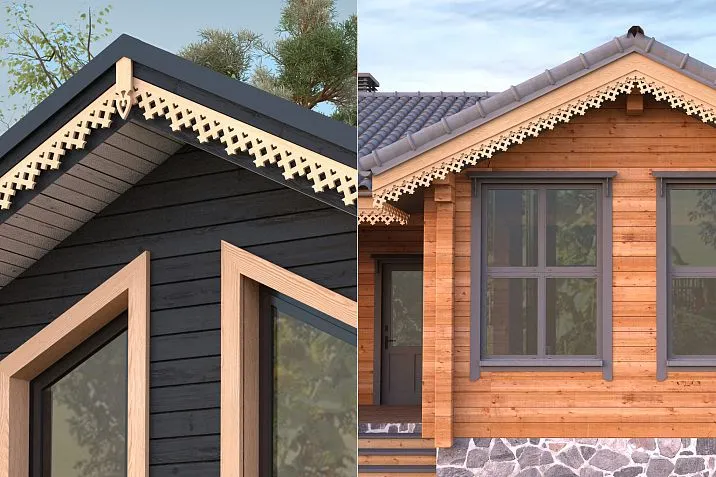
Have you ever encountered a house that it is impossible to pass by without emotion? A house that makes you stop, raise your head, and stand still in admiration? The secret of such magnetism often lies in the details — in how window casing in Russian style transforms a simple window into a work of art, creates a dialogue between architecture and human, tells the story of a family and an entire people.
In a world where standardization threatens to erase the last traces of individuality, Russian window decoration becomes a form of cultural resistance. Each carved swirl, each ornament — is a statement that beauty is not luxury, but necessity, that a home can and must reflect the soul of its inhabitants.
What makes Russian window casing special? Why are its forms instantly recognizable, and its symbolism intuitively understandable? The answer lies in the deep layers of folk culture, where each decorative element serves not only an aesthetic, but also a sacred function, protecting the home from evil forces and attracting prosperity.


Historical heritage: evolution of window decoration




First steps: from protection to ornamentation
The history of Russian window casing begins not with aesthetic pursuits, but with a harsh practical necessity. In wooden houses of Ancient Rus, windows were the most vulnerable parts of the structure — here, gaps formed, cold penetrated, moisture accumulated. The first Wooden casings appeared as functional elements, intended to solve these problems.
Carpentry masters quickly realized: if an element is needed functionally, why not make it beautiful? Thus, the tradition of decorating window frames was born, which later evolved into a true art. Simple planks became complex compositions, where each element had its own meaning and place within the overall system.
The development of craft techniques allowed masters to create increasingly complex and refined forms. Various methods of wood processing emerged — from simple roughing to delicate carving, from geometric patterns to intricate floral compositions. Each region developed its own characteristics, creating unique stylistic directions.
Social differentiation is also reflected in window decoration. The homes of wealthy peasants were adorned more lavishly, merchant mansions competed in the richness of ornamentation, and royal and boyar residences demonstrated the highest level of carvers' skill. Thus, the window casing became not only a protective and decorative element, but also an indicator of social status.
Climate conditions influenced the development of styles. Severe winters required special care to retain heat, affecting structural solutions. The short summer made every ray of sunlight precious, reflected in the symbolism of solar signs widely used in ornamentation.
Our factory also produces:


The Golden Age of Russian Moulding
The 19th century became a period of flourishing for carved window decoration art. The development of trade, growth of cities, emergence of new tools and technologies—all contributed to an unprecedented richness and diversity of mouldings.
The Industrial Revolution paradoxically stimulated the development of handcraft. The advent of railways made materials from remote regions accessible, expanded markets for woodcarvers. Steel tools enabled the creation of finer and more complex ornaments.
Education and literacy contributed to systematizing knowledge about decorative arts. The first ornament albums appeared, masters began studying and borrowing each other's best discoveries. This led to mutual enrichment of regional traditions.
Photography, appearing in the second half of the 19th century, allowed documenting and disseminating the best examples of folk art. Masters gained the opportunity to study works by colleagues from remote regions, stimulating creative exploration.
Urbanization created a new class of consumers—urban residents seeking to maintain ties with folk traditions. Demand for quality mouldings grew, enabling masters to refine their art and create increasingly complex works.
Get Consultation
Architectural Anatomy: Structure and Composition
Constructive Principles of Window Framing
Each window casing in Russian style Represents a complex compositional system, where each element performs a specific role in creating the overall artistic impression.
The upper part of the moulding—the ocher or kokoshnik—served as the architectural crown of the entire composition. Here, the most expressive decorative elements were placed: suns, birds, plant motifs, geometric patterns. The shape of the ocher could be highly varied—from a simple triangle to a complex multi-tiered composition.
The side rails—stiles—created a vertical frame for the composition, visually elongating the window and giving it elegance. They could be strictly straight or have slight curves echoing the ocher’s contours. Decoration of stiles was usually more restrained, but necessarily harmonized with the overall stylistic solution.
The lower part—the sill or apron—completed the composition and performed an important protective function, diverting rainwater from the wall. Its decoration required special attention to functionality, though this did not exclude artistic expressiveness.
Additional elements—sandricks, cornices, overlays—created a rich play of light and shadow, adding volume and complexity to the composition. Their placement and form adhered to general architectural compositional laws.
Proportional relationships of all elements followed principles of folk understanding of beauty, intuitively approaching mathematical laws of the golden section. These proportions created a sense of harmony and completeness, pleasing to the eye.
Joining and Fastening Techniques
Traditional methods of assembling mouldings were based on carpentry joints, proven by centuries of use. Dowel joints, mortise-and-tenon, hardwood pegs ensured structural strength without metal fasteners.
Corner joints required special craftsmanship. Oblique mortises, swallowtail joints, complex dovetail connections not only ensured mechanical strength but also served as decorative elements, demonstrating the woodcarver’s skill.
Fastening to the wall was accomplished in various ways depending on the building’s structure and the moulding’s weight. Light constructions were fastened with wooden nails or pegs. Heavy mouldings required more secure fastening with metal brackets or bolts.
Movable joints allowed compensating for thermal deformation of wood. Masters provided for the possibility of slight element movements without compromising the integrity of the decoration. This ensured the longevity of the structure under sharp temperature and humidity fluctuations.
Modern adaptation of traditional methods includes using new fastening materials, adhesives, sealants, while preserving fundamental constructive solutions. Stainless steel screws, polyurethane adhesives, silicone sealants enhance the reliability and longevity of joints.
Ornamental System: Symbolism and Semantics
The Plant World in Wooden Carving
Floral motifs formed the basis of the decorative language of Russian mouldings. Each plant carried its symbolic meaning, understandable to contemporaries and passed down from generation to generation.
Oak—symbol of strength, masculinity, longevity—was often depicted as stylized leaves and acorns. Oak motifs adorned main façade mouldings, emphasizing the solidity of the house and the strength of family foundations. Carved oak leaves could reach significant sizes and become the dominant feature of the entire composition.
Birch—tree of femininity and purity—was represented in ornamentation as delicate leaves, catkins, sometimes entire branches. Birch motifs created an atmosphere of lightness and elegance, often used in decorating windows of the female quarters of the house.
Rowan, with its bright clusters, symbolized protection from evil forces. Rowan motifs were frequently found in mouldings of northern regions, where this tree was considered especially powerful as a protective charm. Decorative Elements for Mouldings Often included rowan compositions.
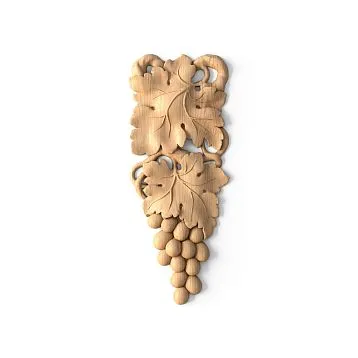
The grapevine, though not typical for northern latitudes, entered Russian ornamentation through Christian symbolism. Grapevine signified spiritual abundance, blessing, connection with the divine. Grapevine motifs especially often adorned mouldings of church buildings and homes of the clergy.
Roses and other garden flowers symbolized beauty, love, joy of life. Rose motifs could be either naturalistic, with detailed rendering of petals, or highly stylized, transformed into geometric rosettes.
Zoomorphic symbolism in architectural decoration
Animal images occupied an important place in the symbolic system of Russian window decoration, each carrying a specific semantic meaning.
The horse — the central image of the Russian beast style — embodied solar energy, movement, vital force. Horses in lintels could be either naturalistic or highly stylized, transformed into abstract symbols. Horse heads, manes, and full figures of galloping horses created dynamic, energetic compositions.
Birds — intermediaries between the earthly and heavenly worlds — had diverse symbolism depending on species. The rooster symbolized vigilance and courage, the owl — wisdom and secret knowledge, the swan — purity and faithfulness, the eagle — power and foresight.
Fish symbolized fertility, abundance, connection with the aquatic element. Fish motifs were more common in coastal areas where fishing was the main occupation. Stylized fish could transform into wave-like ornaments symbolizing the aquatic element.
The bear — master of the Russian forest — symbolized the power of nature, protection, and practicality. Bear paws, tracks, sometimes full figures served as powerful talismans, especially popular in forested regions.
Mythical creatures — dragons, phoenix birds, griffins — entered Russian ornamentation from Byzantine art, but received a unique interpretation here. They symbolized the victory of good over evil, mastery over elements, spiritual perfection.
Regional schools and stylistic directions
Northern severity and monumentality
Northern regions of Russia — Arkhangelsk, Vologda, Karelia — developed a special type of lintel, distinguished by strict forms and monumental proportions. The harsh climate discouraged excessive ornamentation — every element had to withstand extreme weather conditions.
Pomor traditions reflected in the predominance of geometric ornaments resembling sea waves, fishing nets, and ship rigging. Carving was deep and relief-like, creating expressive play of light and shadow even under northern lighting conditions.
Karelian masters were renowned for their skill in working with birch, creating astonishingly delicate and elegant compositions. Karelian birch, with its unique texture, became a standalone decorative element.
Arkhangelsk lintels were distinguished by their particular scale and expressiveness of silhouette. Large forms, clear contours, concise yet expressive ornaments created an impression of reliability and solidity.
The Vologda school developed its own distinctive style, combining northern severity with the elegance of central regions. Here, lace-like carving flourished, creating the effect of wooden lace while maintaining structural integrity.
Central traditions: richness and diversity
Central Russia — cradle of many craft traditions — gave the world the richest and most diverse window decoration art. Here, classical canons were formed, which later spread throughout the country.
Moscow school was distinguished by refinement and elegance of execution. The influence of capital culture manifested in the pursuit of representativeness, richness of decoration, and use of expensive materials. Moscow lintels were often adorned with gilding, polychrome painting, and inlay.
Vladimir masters were renowned for their art of creating complex multi-figure compositions. Here, narrative lintels developed, telling complete stories — from biblical scenes to everyday sketches.
Yaroslavl tradition combined rich decoration with high technical craftsmanship. Yaroslavl lintels were distinguished by exceptional attention to finish, perfect fitting of elements, and durability of construction.
Kostroma school brought a special festive and ornate character to Russian lintels. Painted lintels in Russian style reached here the highest artistic level, turning every house into a work of art.
Modern technologies and materials
Innovations in wood processing
Modern window lintel production uses advanced technologies, enabling quality surpassing the capabilities of traditional methods. Modern technologies for manufacturing lintels open new horizons for the creativity of artisans.
Computer-aided design allows creating precise three-dimensional models of future products, calculating loads, optimizing construction, and producing working drawings with perfect accuracy. CAD/CAM systems ensure direct linkage between design and production.
Numerically controlled machines can reproduce the most complex ornaments with mathematical precision. Milling centers create profiles of any complexity, ensuring perfect repeatability of elements in mass production.
Laser cutting has opened new possibilities for creating intricate elements. The laser beam allows cutting of the finest details inaccessible to traditional tools, creating ornaments of any complexity with perfect line clarity.
Quality control systems at all production stages guarantee compliance with the strictest standards. Control of wood moisture, geometric dimensions, and surface quality ensures consistently high product quality.
Modern materials and coatings
Advancements in materials science have provided manufacturers of casings with new opportunities to create items with enhanced durability and aesthetic appeal.
Glued timber from various wood species allows combining the best qualities of each species into a single item. Hardwoods are used for decorative elements, while softer woods are used for structural components. This ensures an optimal balance of beauty, strength, and cost.
Modern protective compositions provide long-term protection of wood against all types of destructive influences. Deep-penetrating antiseptics, UV filters, and hydrophobic agents create a multi-level protection system.
Finish coatings of the new generation combine protective functions with decorative capabilities. Lacquers with UV protection preserve the natural wood grain, while colored lacquers allow creating any color solutions.
Composite materials based on wood allow creating elements of complex shapes that are inaccessible to natural wood. Baseboards and cornices in Russian style made from modern composites combine traditional aesthetics with improved performance characteristics.
Design and manufacturing: from idea to realization
Architectural analysis and conceptual solution
Each window decoration project begins with a deep analysis of the building's architectural features, its historical context, stylistic affiliation, and surrounding environment.
Surveying work includes not only fixing window opening dimensions but also studying facade proportions, architectural element rhythm, and wall construction specifics. Surveying accuracy is critically important for creating a harmonious solution.
Stylistic analysis helps determine the most suitable type of decoration, select characteristic ornaments, and find proper proportions. Studying regional traditions, historical analogs, and museum collections provides material for creative interpretation.
Functional programming takes into account special requirements for decoration depending on the building's purpose, climatic conditions, and usage intensity. Residential buildings, public buildings, and architectural monuments require different approaches.
Conceptual solution unifies all factors into a single artistic idea, defines the overall character of decoration, its scale, color scheme, and degree of detail.
Artistic design of ornaments
Creating ornamental composition is a creative process requiring deep understanding of traditions and ability to interpret them in a modern context.
Studying historical analogs is the first stage of creative work. Analysis of museum collections, archival materials, and on-site inspections provides a foundation for understanding the logic of traditional ornament construction, their symbolic meaning, and technical execution methods.
Sketch development includes creating multiple compositional solutions, searching for optimal proportions, and developing details. The best artistic solutions often emerge during prolonged creative exploration.
Technical development translates the artistic idea into a structural solution. Methods of element attachment are developed, loads are calculated, materials are selected, and manufacturing processes are defined.
Mock-up creation allows checking the artistic solution in three dimensions, assessing ornament readability from various distances, and identifying necessary adjustments before production begins.
Installation and operation: ensuring longevity
Professional installation technology
Quality installation Russian-style window casing requires high skill level of installers and strict adherence to technical requirements.
Foundation preparation includes checking wall strength, identifying hidden defects, and reinforcing the structure if necessary. The surface must be cleaned of old coatings, dust, and contaminants.
Positioning of elements is performed using high-precision measuring equipment. Laser levels and electronic distance meters ensure the required positioning accuracy.
Element attachment is performed in a strictly defined sequence with control of tightening forces. Fasteners made of stainless materials are used, ensuring long-term reliable connections.
Joint sealing completes installation work. High-quality sealants protect the structure from moisture penetration and provide an aesthetically pleasing appearance of joints.
Proper care is the key to the longevity of wooden window casings. The scheduled maintenance system allows you to keep the items in perfect condition for many years.
Regular inspection is conducted at least twice a year — in spring and autumn. Special attention is paid to the condition of the protective coating, integrity of decorative elements, and reliability of fastening.
Preventive cleaning includes removing dust, dirt, and plant debris. Soft brushes, vacuum cleaners with brush attachments, and, if necessary, special cleaning agents are used.
Coating renewal is performed as needed depending on the condition of the protective layer and intensity of external influences. High-quality modern coatings last 5-7 years without renewal.
Repair of damage should be carried out immediately after its detection. Modern restoration materials allow restoring even serious damage without replacing the entire element.
In today's world, where standardization threatens to erase the last manifestations of cultural uniqueness,
decorative carving for windows becomes a form of cultural resistance, a way to preserve a connection with historical roots. Each window adorned with traditional decoration is a statement about the value of beauty, the importance of individuality, and respect for the craftsmanship of ancestors. Modern technologies do not replace traditional craftsmanship but serve as its continuation and development. Precision machines allow reproducing the most complex ornaments, modern materials ensure longevity, but the soul of the item is still infused by the craftsman — his understanding of beauty, knowledge of traditions, and love for craftsmanship.
Choosing Russian window casing is choosing quality over cheapness, beauty over functionality, tradition over trendy fads. It is an investment in creating an environment that will delight many generations, passing on the richness of national culture.
STAVROS Company holds leading positions in the production of decorative elements in Russian style, combining deep respect for traditions with the use of the most modern technologies. Each STAVROS product is created with an understanding of the historical significance of Russian decorative art and a sense of responsibility for preserving cultural heritage. Choosing STAVROS, you get not just high-quality decorative elements, but also the opportunity to become part of a great tradition that connects us with the wisdom of our ancestors and ensures the transmission of cultural values to future generations.
STAVROS Company holds leading positions in the production of decorative elements in Russian style, combining deep respect for traditions with the use of the most modern technologies. Each STAVROS item is created with an understanding of the historical significance of Russian decorative art and a sense of responsibility for preserving cultural heritage. Choosing STAVROS means you are not only acquiring high-quality decorative elements, but also becoming part of a great tradition that connects us with the wisdom of our ancestors and ensures the transmission of cultural values to future generations.