Article Contents:
- The Grandeur of Solid Oak: Natural Perfection
- Natural Protection of Oak Wood
- Technological Features of Producing Solid Mouldings
- Kiln Drying Process
- Mechanical Processing and Profile Milling
- Variety of Profiles and Architectural Solutions
- Decorative and Ornamental Profiles
- Dimensional Scale and Standards
- Application in various interior styles
- Classic Interiors
- Modern minimalism
- Scandinavian and Eco Styles
- Installation of Oak Mouldings
- Preparatory work
- Fastening technology
- Processing corners and joints
- Final Finishing and Protection
- Paint and Coating Materials
- Staining and patination
- Operation and Maintenance
- Regular Cleaning
- Periodic maintenance
- Repairing damage
- Economic aspects of selection
- Impact on property value
- Comparison with alternative materials
- Ecological advantages
- Renewability of resources
- Carbon footprint
- Innovations and modern technologies
- Digital technologies in production
- New Surface Treatment Methods
- Regional Characteristics and Traditions
- Northern traditions
- Central Areas
- Frequently Asked Questions
- Conclusion

When it comes to creating a truly luxurious and long-lasting interior, every detail matters. Among the wide variety of finishing materials, a special place is occupied byOak solid casing— a product that embodies the unparalleled beauty of natural wood and exceptional functionality. Choosing solid oak moulding becomes an investment in creating an interior that will delight with its elegance and flawless quality for many decades.
Solid oak mouldings are not just decorative elements, but true masterpieces of carpentry. Made from a single piece of oak wood, these items possess unique characteristics that make them practically eternal. The natural texture of oak, with its distinctive medullary rays, creates an incomparable pattern that cannot be imitated by artificial materials. Each plankmolding productspossesses its own uniqueness, which gives the interior individuality and an unmistakable character.


The Grandeur of Solid Oak: Natural Perfection
Oak is rightfully considered the king among all wood species used in producing luxury carpentry items. Its density reaches impressive 750-900 kg/m³, ensuring exceptional strength and longevity of finished products. The hardness of oak on the Brinell scale reaches 3.7-4.0 units, making it resistant to mechanical damage, scratches, and wear even under intensive use.
The structural features of oak wood are remarkable for their perfection. Medullary rays — radial formations penetrating the trunk from the heartwood to the bark — create the recognizable pattern that makes oak unique. Depending on the method of sawing, these rays appear differently: radial cuts produce parallel light stripes, while tangential cuts create oval spots, creating a rich palette of textural solutions.
Oak’s annual rings are clearly defined due to the contrast between early and late wood. Spring vessels are large and form a noticeable ring, while summer wood is denser and darker. This natural contrast creates a wavy pattern, which especially vividly appears after finishing solid oak mouldings.




Natural Protection of Oak Wood
A unique feature of oak is its high content of tannins — natural compounds that provide inherent protection against biological influences, preventing the growth of fungi, mold, and wood-boring insects. Thanks to tannins, oak products retain their aesthetic and functional qualities even under conditions of high humidity or temperature fluctuations.
Dimensional stability is another important advantage of solid oak. Properly dried wood with moisture content not exceeding 12% is practically immune to warping, cracking, or other forms of deformation. This is especially important for mouldings, which must maintain perfect geometry throughout their entire service life.
Our factory also produces:


Technological Features of Producing Solid Mouldings
Creating High-QualitySolid Oak Mouldingrequires deep knowledge of wood properties, modern equipment, and years of experience. The entire production process can be divided into several critical stages, each of which affects the quality of the final product.
Raw material selection begins even at the stage of wood harvesting. For producing luxury mouldings, only premium oak wood aged at least 80-120 years is used. Preference is given to trees with slow growth, grown under optimal climatic conditions, ensuring dense and uniform wood structure with minimal internal stresses.
Get Consultation
Kiln Drying Process
Kiln drying is one of the most critical stages of production. Oak blanks are placed in specialized drying chambers, where for 30-45 days a strictly controlled regime of temperature and humidity is maintained. The process is carried out in stages: first at 40-45°C for gentle removal of surface moisture, then the temperature gradually increases to 60-70°C for deep drying.
Modern drying complexes are equipped with automatic control systems that monitor not only overall moisture content but also its distribution across the thickness of the blank. This prevents the appearance of internal stresses that may manifest as cracks or warping even after the production of finished items. The final moisture content of the wood is 8-12%, which is optimal for producing mouldings.
Mechanical Processing and Profile Milling
After drying, the blanks are sent to planers to level surfaces and bring them to precise dimensions. Oak is a very hard wood, so special tools with hardmetal inserts, capable of withstanding high loads without losing sharpness, are used for its processing.
Profile milling is the most critical operation, requiring high operator skill. On special four-sided machines, the final threshold profile is formed with accuracy down to tenths of a millimeter. Material feed speed is carefully controlled to prevent burns and scratches on the surface.
Final grinding is performed in several stages with gradually decreasing abrasive grit. It begins with coarse abrasive P80-P100 to remove milling marks, then moves to P150-P180 for surface leveling, and concludes with fine grinding P240-P320 to achieve a perfectly smooth surface ready for final finishing.
Variety of profiles and architectural solutions
The modern assortment of solid oak thresholds impresses with its diversity. From minimalist rectangular profiles to complex multi-level compositions — everyone can find a solution ideally suited to a specific interior and architectural style.
Classic rectangular thresholds are distinguished by their versatility and ease of installation. Their clear geometric forms harmonize beautifully with modern interior styles — minimalism, Scandinavian, loft. The absence of complex profile elements allows full appreciation of the natural beauty of oak grain, which itself is sufficient as decoration.
Carved and decorative profiles
Thresholds with various protrusions, grooves, and rounded edges create a complex play of light and shadow on the surface. Such items are ideal for classical interiors, where detail and decorative quality of each element are important.Wooden moldingsComplex profiles may include elements imitating stucco, carving, or architectural orders.
Asymmetric profiles represent a modern interpretation of classical forms. They look especially striking in avant-garde interiors, where dynamism and unconventional solutions are important. Combining different profiles within a single room creates a complex architectural composition that highlights the design’s individuality.
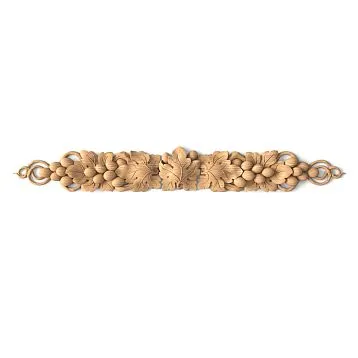
Carved thresholds are the pinnacle of carpentry craftsmanship. Hand carving transforms a functional element into a piece of decorative-applied art. Botanical ornaments, geometric patterns, stylized motifs — all of this requires the highest level of master’s skill and significant time to produce.
Size range and standards
The standard size grid of solid oak thresholds covers a wide range of needs:
| Width (mm) | Thickness (mm) | Application | Interior style |
|---|---|---|---|
| 50-60 | 12-15 | Small rooms | Minimalism, Scandinavian |
| 70-80 | 16-20 | Standard openings | Modern, transitional |
| 90-100 | 18-22 | Grand Entrances | Classic, neoclassical |
| 110-120 | 20-25 | Representational interiors | Baroque, empire |
Threshold lengths are typically 2400–2600 mm, allowing standard door openings up to 2100 mm in height to be fitted with minimal joints. For non-standard openings or special architectural solutions, custom-length items can be manufactured.
Application in various interior styles
VersatilitySolid Oak MouldingIts versatility is demonstrated by its ability to seamlessly fit into interiors of various styles. From classical palace halls to ultra-modern lofts — oak finds its place everywhere, highlighting the unique features of each style.
Classic Interiors
In classical interiors, oak thresholds become an indispensable part of architectural decoration. Wide profiled planks with patina or gilding emphasize the grandeur and formality of rooms. Combined withwooden cornicesand baseboards made of the same material, they create a unified composition demonstrating the owner’s impeccable taste.
Thresholds with hand-carved elements look especially striking. Botanical motifs — oak leaves, grapevines, laurel branches — not only decorate the item but also emphasize the connection to nature and the natural origin of the material. Such elements require the highest level of craftsmanship and significantly increase the item’s cost.
Modern minimalism
In minimalist interiors, oak thresholds play the role of an accent, highlighting the natural beauty of the material. Simple geometric forms, absence of decorative excesses, natural or slightly tinted surfaces — all of this creates an atmosphere of calm and harmony with nature.
Thresholds with matte finish are especially popular, emphasizing the tactile qualities of oak. The silky surface invites touch, creating a tactile connection with the natural material. Combined with other natural materials — stone, metal, glass — they create complex textured compositions.
Scandinavian and eco styles
Scandinavian interiors require a special approach to selecting oak thresholds. Light wood tones, bleached or coated with white lacquer with a translucent texture, create an atmosphere of northern purity and restraint. Simple profiles without excesses emphasize functionality and practicality, characteristic of this style.
In eco interiors, it is important to preserve the most natural appearance of the wood. Treatment with oils or waxes highlights the natural texture, not hiding the material’s inherent beauty.Wooden planksCombined with oak thresholds, they create complex geometric compositions imitating natural forms.
Installation of Oak Thresholds
Quality installationSolid Oak MouldingInstallation requires a professional approach and special tools. The hardness of oak wood imposes specific requirements on the mounting technology and excludes the possibility of using ordinary household tools.
Preparation Work
Quality preparation is the key to successful installation. First, the geometry of the door or window opening must be carefully checked. Deviations from vertical and horizontal alignment must be corrected, as solid oak casings do not have sufficient flexibility to compensate for significant irregularities.
Surfaces of walls at mounting points must be cleaned of dust, dirt, and loose materials. If necessary, priming is performed to improve adhesion. Special attention is paid to the corners of the opening — they must be strictly straight to ensure tight fitting of the casings.
Acclimatization of oak casings in the room where installation will take place takes at least 24-48 hours. This allows the wood to adapt to local humidity and temperature conditions, preventing deformation after installation.
Fastening Technology
Mounting solid oak casings is done using special stainless steel or galvanized finish nails. The fastener diameter is selected based on the casing thickness — typically 2-2.5 mm for screws and 1.5-2 mm for nails.
Pre-drilling holes is mandatory, as the hardness of oak can cause the plank to split if a nail is driven in without preparation. The drill bit diameter should be 0.5-1 mm smaller than the fastener diameter to ensure secure fixation. The drilling depth should be 2/3 of the fastener length.
The distance between mounting points should not exceed 300-400 mm for casings up to 20 mm thick and 250-300 mm for thinner items. The first mounting points are placed 100-150 mm from the corners to prevent edge lifting.
Corner and joint processing
The most critical stage of installation is corner processing. To achieve a perfect joint, use saws with carbide-tipped blades, ensuring a clean cut without chipping. The cut angle must be precisely 45°, verified with a square.
When joining profiled casings, special attention is paid to the alignment of profile elements. Even minor misalignments will be noticeable on the finished product and spoil the overall impression. For fitting complex profiles, special templates and coping tools are used.
After installation, all mounting points are filled with wood putty matched exactly to the casing color. Modern wood-based putties, after drying, are virtually indistinguishable from natural wood and are easily sanded and painted.
Finishing and protection
Final finishing of oak casings not only highlights the beauty of the natural material but also protects it from external influences. The choice of finish depends on interior style, usage conditions, and the owner’s personal preferences.
Paint and coating materials
Transparent varnishes remain the most popular finish for oak casings. Modern polyurethane varnishes provide excellent protection against moisture, mechanical damage, and UV radiation. Glossy varnishes emphasize wood texture, creating a sense of depth and dimension.
Matte and semi-matte varnishes create a more natural surface appearance, closer to untreated wood. They are especially popular in Scandinavian and eco-interiors, where material naturalness is important. Modern water-based varnishes have virtually no odor and dry quickly, which is important when working in living spaces.
Oil finishes penetrate deeply into the wood structure, highlighting its texture and creating a silky surface. Such a finish requires periodic renewal, but it is easily repairable in part. Wax-based compounds create a noble matte surface with a slight sheen.
Staining and Patination
Staining allows changing the natural color of oak to match a specific interior. Water-based stains provide even coloring without hiding wood texture. Alcohol-based stains dry quickly but require more careful application due to the risk of staining.
Patination is an artificial aging technique that looks especially effective on oak items. Contrast patina highlights the profile relief, creating an antique appearance. Gold or silver patina gives casings a majestic and luxurious look.
Brushing is a mechanical surface treatment in which soft fibers are removed while hard fibers remain, creating a textured surface. This technique is especially effective on oak due to clearly visible annual rings. Brushed surfaces can be stained further to enhance the effect.
Operation and Maintenance
Oak solid casingOak casings require minimal maintenance but to preserve their original appearance, simple care rules must be followed. Regular maintenance not only preserves the aesthetic quality of the item but also extends its service life.
Regular cleaning
Daily care involves removing dust with a dry soft cloth or a natural bristle brush. Special attention should be paid to textured recesses of profiled casings, where dust accumulates most intensely. For hard-to-reach areas, use specialized brushes or a vacuum cleaner with a soft attachment.
Wet cleaning is performed as needed using specialized natural wood care products. Ordinary cleaning agents with aggressive components may damage the protective coating and lead to loss of gloss or color change in the wood.
After wet cleaning, the surface must be thoroughly dried to prevent moisture from penetrating the wood. Prolonged moisture exposure may cause wood swelling and distortion of the item’s geometry.
Periodic maintenance
Every 6-12 months, oak casings should be treated with special compounds — polishes, waxes, or oils. These products nourish the wood, prevent drying out, and maintain the protective properties of the finish.
Wax-based compounds create an additional protective layer on the wood surface, repelling moisture and dirt. Applying wax requires certain skills — it must be evenly distributed over the surface and carefully polished to achieve a uniform gloss.
Oil-based compounds penetrate deeply into the wood structure, nourishing it from within. They are especially recommended for items with oil finishes, as they maintain the original appearance of the coating and prevent it from drying out.
Damage Repair
Minor scratches and scuffs, inevitably appearing during use, can be repaired yourself. Special wax pencils or strokes, matched to the wood tone, are used. After filling the scratch, excess wax is removed, and the repair area is polished with a soft cloth.
More severe damage requires professional repair using wood putty and subsequent painting or varnishing. It is important to remember that quality repair is possible only if the color and type of finish are precisely matched.
Dents from impacts can be attempted to be removed using steam. A damp cloth is placed on the damaged area, and a hot iron is placed on top. Steam penetrates the wood and causes compressed fibers to return to their original shape. This method is effective only for fresh damage and requires caution to avoid damaging the finish.
Economic aspects of selection
Investments in high-quality solid oak casings pay off in the long term due to their exceptional durability. Properly manufactured and installed items serve for decades without requiring repair or replacement, making them economically advantageous compared to cheaper alternatives.
Impact on property value
Finishing with natural materials positively affects the market value of real estate. Oak casings are perceived by buyers as a sign of quality and status, potentially increasing property value by 3-7%. This is especially relevant for premium real estate, where every detail affects the overall impression.
The versatility of oak casings is an additional economic advantage. When changing interior style, they easily adapt to new requirements through staining or changing the type of finish, eliminating the need for complete replacement.
Comparison with alternative materials
Compared to MDF or PVC casings, oak items have a higher initial cost but significantly outperform them in durability and aesthetic qualities. The service life of quality oak casings is 50-100 years, whereas items made of artificial materials require replacement every 10-15 years.
The ability to restore and renew the finish multiple times makes solid oak skirting boards practically eternal. Even after decades of use, they can be restored to their original appearance, which is impossible for composite materials.
Environmental advantages
In the era of growing environmental awareness, choosing materials for home finishing is not only an aesthetic question but also a responsibility toward the environment. Solid oak skirting boards represent an ideal solution in terms of ecological safety.
Renewability of resources
Oak is a renewable natural resource, making its use environmentally justified. Proper forest management following sustainable development principles ensures the regeneration of oak forests for future generations. FSC certification guarantees that the wood comes from responsibly managed forests.
The longevity of oak products plays an important role in ecological balance. Skirting boards that serve for decades without replacement reduce pressure on natural resources and decrease the amount of construction waste.
Carbon footprint
Using wood in construction and finishing contributes to carbon sequestration. Wood absorbs CO2 during growth and retains it throughout the product’s lifespan. This makes oak door casings not only carbon-neutral but also carbon-negative materials.
Local productionwood trimminimizes transportation costs and associated emissions. Shorter logistical chains make the product more environmentally friendly and economically accessible.
Innovations and modern technologies
Modern production of solid oak skirting boards is constantly improving due to the introduction of new technologies and materials. Innovations concern both manufacturing processes and methods of wood treatment and protection.
Digital technologies in production
The introduction of CNC machines revolutionizes skirting board production, enabling the creation of items with complex three-dimensional profiles with precision down to hundredths of a millimeter. This opens new possibilities for designers and architects striving to create unique interiors.
Three-dimensional modeling allows customers to see how skirting boards will look in their interior even before production begins. Virtual reality enables users to 'walk through' the future interior and evaluate all details. This eliminates errors in profile and color selection, making the purchasing process more comfortable and predictable.
New surface treatment methods
Laser texturing allows creating complex relief patterns on the surface of oak skirting boards, which are inaccessible through traditional processing methods. The laser can simulate various textures — from rough-sawn wood to delicate carving.
Plasma treatment alters the surface properties of wood, enhancing its adhesion to coatings and improving moisture resistance. This technology is especially effective for skirting boards intended for use in humid areas.
Wood thermal modification is performed in special chambers at temperatures of 180-220°C in the absence of oxygen. This process alters the structure of cellulose and lignin, increasing dimensional stability and resistance to biological influences. Thermally modified oak acquires a noble dark tone throughout the wood's thickness.
Regional characteristics and traditions
Russia has rich traditions in woodworking, especially in the production of oak products. Each region has contributed to the development of technologies and stylistic solutions, which is reflected in the modern assortment of oak skirting boards.
Northern Traditions
Northern regions of Russia are renowned for high-quality oak wood due to the harsh climate, which slows tree growth and makes the wood denser. Local craftsmen traditionally use minimal surface treatment, emphasizing the natural beauty of the material.
Scandinavian influence is evident in the preference for light wood tones and simple geometric forms. Bleaching oak with special compounds creates an effect resembling wood bleached by sea winds, which is especially popular in coastal regions.
Central regions
Central Russia, with its rich oak forests, became the center for producing elite oak products. Here, traditions of complex profiling and decorative skirting board treatment were formed. The Moscow school of woodworking is distinguished by special attention to details and high-quality execution.
The influence of European styles — Baroque, Rococo, Classicism — brought complex profiles and decorative elements into Russian woodworking art. Modern manufacturers successfully combine traditional techniques with innovative technologies.
Frequently asked questions
What is the difference between solid oak skirting boards and veneered ones?
Solid oak skirting boards are made from a single piece of oak wood, ensuring maximum strength and durability. Veneered products have a base of cheaper wood or MDF, covered with a thin layer of oak veneer 0.6-3 mm thick. Solid oak can be restored multiple times, whereas veneered boards require full replacement if damaged.
What is the optimal humidity for oak skirting boards?
The optimal humidity for oak wood skirting boards is 8-12%. This humidity ensures dimensional stability and prevents deformation during use. Exceeding this level may cause warping, cracking, or swelling of the wood.
Can oak skirting boards be installed in a bathroom?
Oak has natural resistance to moisture due to the presence of tannins, but for use in high-humidity areas, special protective treatment is required. Water-resistant lacquers or oils are applied, and adequate room ventilation is ensured.
How long do solid oak skirting boards last?
When properly manufactured, installed, and maintained, solid oak skirting boards can last 50-100 years or more. Their longevity depends on the quality of raw materials, adherence to production technology, correct installation, and regular maintenance.
What tools are needed to install oak skirting boards?
For installation, you will need: a circular saw with a carbide-tipped blade, a drill with a set of wood drill bits, a screwdriver or hammer, a level, a square, a tape measure, and a pencil for marking. Also required are fasteners — stainless steel screws or finish nails.
Can the color of oak skirting boards be changed after installation?
Yes, the color of oak skirting boards can be changed using stains and tinting agents. However, this requires prior surface preparation — removal of the old finish and sanding. It is best to entrust this work to professionals to achieve an even result.
Does oak require special acclimatization before installation?
Yes, oak skirting boards must remain in the room where they will be installed for at least 24-48 hours. This allows the wood to adapt to local humidity and temperature conditions, preventing deformation after installation.
Which skirting board profile is best for a classic interior?
For classic interiors, profiled door casings with various protrusions, grooves, and rounded edges are recommended. The width should be at least 80-100 mm to create a worthy frame for the opening. Profiles with architectural order or botanical motifs look great.
Are oak door casings compatible with doors made of other materials?
Oak casings are versatile and pair well with doors made of various materials — wood of other species, veneer, laminate, even metal doors. The key is to properly select the color and style of the profile to match the overall interior concept.
How to distinguish genuine oak door casings from fakes?
True oak has a distinctive texture with clearly visible annual rings and medullary rays. When examining the end grain, the natural wood structure should be visible without any glue seams. The density of oak is noticeable when lifting the item — it is noticeably heavier than analogs made from other species. The smell should be characteristic of wood, without any foreign chemical additives.
Conclusion
Choosing in favor ofSolid Oak MouldingThis is a choice in favor of quality, durability, and timeless beauty. In today’s world, where artificial materials increasingly replace natural ones, oak remains a symbol of authenticity, reliability, and craftsmanship. Each oak casing plank made from solid wood carries the history of the tree that grew for decades and the experience of artisans who transformed natural material into a work of applied art.
Investing in quality oak casings pays off not only economically but also emotionally. This is an investment in creating an interior that will delight its current owners and future generations with its appearance and quality. The natural beauty, strength, and longevity of oak make such a choice justified from any perspective.
Modern production and processing technologies allow us to fully unleash the potential of this remarkable material, combining traditional quality with innovative solutions. Ecological purity, long-term economic efficiency, and aesthetic value — all these qualities make solid oak casings an ideal choice for those who understand the importance of every detail in creating a harmonious space.
STAVROS, a company specializing in producing elite items from natural wood, offers a wide range of solid oak casings, manufactured in accordance with all technological requirements and quality standards. Years of experience, modern equipment, and high qualifications of specialists guarantee receiving products that will delight with their quality and beauty for many years.