Article Contents:
- Evolution of decorative techniques
- Materials science in 3D decoupage
- Technical aspects of 3D decoupage
- Compositional solution of the project
- Preparation Stage: The Foundation of Success
- Technique of multi-layered decoration
- Stylistic directions in 3D decoupage
- Victorian luxury
- Oriental exoticism
- Provencal charm
- Scandinavian minimalism
- Practical application of 3D decoration
- Kitchen furniture: functionality and beauty
- Bedroom furniture: intimacy and comfort
- Children's furniture: safety and imagination
- Economic aspects of 3D decoupage
- Cost of projects of varying complexity
- Return on creative investments
- Toolset for 3D decoupage artist
- Basic tools and accessories
- Basic skills for beginners
- Consumables and their selection
- Master classes and training
- Care and conservation of decorated items
- Advanced Techniques for Experienced Craftsmen
- Restoration of damaged elements
- Usage Rules
- Digital technologies in decoupage
- Modern Trends and Innovations
- Psychology of creativity in decoupage
- Eco-Friendly Materials
- Therapeutic effect of handicraft
- Social aspect of creativity
- Prospects for the development of 3D decoupage
- Integration with interior design
- Commercialization of hobbies
- Commercialization of hobbies
- Conclusion
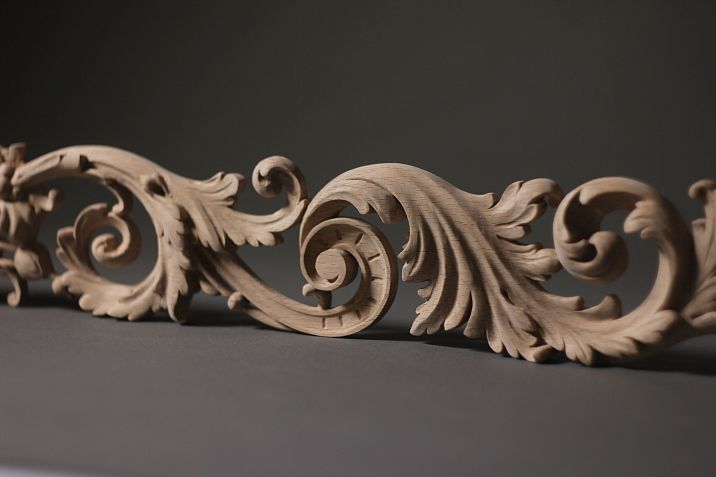
In the world of handicraft, there is an art capable of transforming an ordinary interior item into a piece of original design. Raised decorative appliqués for decoupage furniture It opens boundless opportunities for creative self-expression, allowing each person to become a designer of their own space. This wonderful synthesis of traditional French découpage art with three-dimensional decorative elements creates a unique aesthetic, where flatness acquires depth, and simplicity transforms into elegance.
Why exactly three-dimensional decor became a revolution in the world of decoupage? The answer lies in human perception psychology: our eyes crave texture, relief, play of light and shadow. Even the most exquisite pattern on a flat surface will always be inferior to a three-dimensional composition in emotional impact.


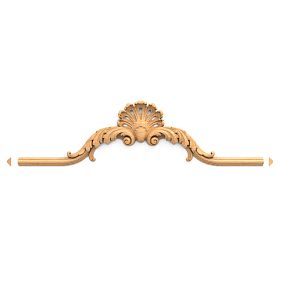

Philosophy of three-dimensional decoupage in modern handicraft




Evolution of decorative techniques
Traditional decoupage, originating in the 17th century as an imitation of expensive inlay, has undergone numerous transformations. Modern masters do not limit themselves to simple image pasting — they create multi-level compositions, where each element plays its role in the overall symphony of forms.
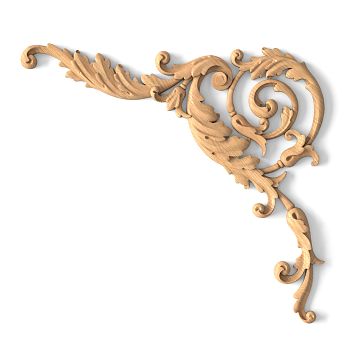
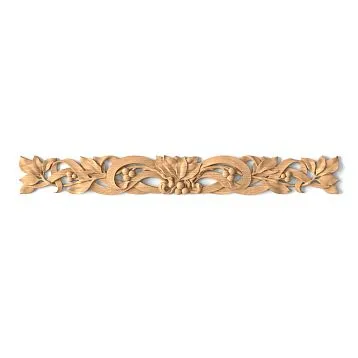
Carved appliqués for decoupage represent a logical development of this technique. They allow creating an illusion of deep relief where it physically does not exist. Thin wooden elements, skillfully carved by masters, become a bridge between two-dimensional imagery and three-dimensional reality.
Our factory also produces:


Material science in three-dimensional decoupage
Quality three-dimensional decorative elements made of wood determines the success of the entire project. Natural wood possesses unique properties: it 'breathes' with the base, not creating tensions in the structure. Birch, linden, oak — each wood species has its own character and area of application.
Birch is ideal for small details due to its dense, uniform structure. Linden is chosen for large elements; it is easy to process and accepts any type of finish. Oak is used in projects requiring maximum durability and status.
Polyurethane analogs offer an alternative solution for budget projects. Modern materials do not fall short of natural wood in detail, but surpass it in practicality: they are not afraid of moisture, do not deform, and require no special care.
Get Consultation
Technical side of three-dimensional decoupage
Preparation stage: the foundation of success
Professional decor for furniture restoration requires flawless surface preparation. Old coatings must be completely removed, the surface leveled and degreased. Any unevenness, scratches, dents will become visible after finishing and spoil the overall impression.
Priming is a critically important stage often underestimated by novice craftsmen. Quality primer ensures adhesion of all subsequent layers, prevents paints and varnishes from soaking into the base, and creates an even texture for work.
Compositional solution of the project
Placement of raised appliqués for creativity requires artistic sense and understanding of compositional laws. Symmetrical solutions create a sense of stability and classical beauty, while asymmetrical ones convey dynamism and modernity.
The golden ratio also works in decoupage: elements placed at division points of the plane in the 1:1.618 proportion look most harmonious. Central compositions suit square and rectangular surfaces, while corner elements emphasize the geometry of the object.
Technique of multi-layered decoration
Three-dimensional decoupage is always a multi-layer technique. The first layer — the base image, creating the main plot. The second — intermediate three-dimensional elements, forming the middle ground of the composition. The third — final accents, creating maximum depth and detail.
Wooden blanks for decoupage are applied layer by layer, from large to small. Each layer must be completely dry before applying the next. Patience is the main quality of a three-dimensional decoupage master.
Stylistic directions in three-dimensional decoupage
Victorian luxury
Victorian style in decoupage furniture implies using complex multi-level compositions with floral ornaments. Roses, peonies, grapevines, intertwined into whimsical patterns, create an atmosphere of aristocratic luxury.
The color palette of Victorian decoupage is built on contrasts: deep dark backgrounds are offset by bright floral motifs. Gilding of individual elements adds solemnity and emphasizes the status of the object.
Provencal charm
Provencal style in three-dimensional decoupage — this is the softness of pastel tones and the romance of French countryside. Lavender fields, sunflowers, olive branches become the main motifs of compositions.
Handmade furniture appliqués Provençal style is characterized by lightness and airiness. They do not overload the composition, but delicately highlight the main elements of the image.
Scandinavian minimalism
Northern restraint is reflected in minimalist compositions using geometric appliqués. Simple forms, natural colors, emphasis on material texture — the main principles of Scandinavian decoupage.
Three-dimensional elements in Scandinavian style serve not as decoration, but as functional accents. They emphasize the constructive features of an object, create tactile sensations, and invite touch.
Eastern Exotic
Eastern motifs in three-dimensional decoupage are a world of symbols and signs. Hieroglyphs, dragons, cherry blossoms, bamboo groves create an atmosphere of mystery and timeless wisdom.
The technique of Eastern decoupage requires special precision and attention to detail. Each element has symbolic meaning, and incorrect placement may disrupt the composition's energy.
Practical Application of Three-Dimensional Decoration
Kitchen Furniture: Functionality and Beauty
The kitchen is a special area in the home where practicality must combine with aesthetics. Three-Dimensional Decoration from Solid Wood Kitchen furniture requires special protection from moisture, grease, and temperature fluctuations.
Lacquers must be resistant to cleaning agents and mechanical impacts. Polyurethane lacquers provide maximum protection while preserving the decorative qualities of the finish.
The theme of kitchen decoupage is traditionally linked to culinary arts: fruits, vegetables, still lifes, scenes of rural life. Three-dimensional elements emphasize the realism of images, creating an illusion of real products.
Bedroom Furniture: Intimacy and Coziness
The bedroom is a place for rest and relaxation, so the decor here should promote tranquility. Pastel tones, smooth lines, romantic scenes create an atmosphere of calm.
Commodes, dressing tables, and headboards become objects for creative experiments. Three-dimensional floral compositions, angels, birds — traditional motifs for bedroom interiors.
Children's Furniture: Safety and Imagination
Children's furniture imposes special requirements for material safety and processing quality. All elements must be carefully sanded and coated with eco-friendly lacquers.
The theme of children's decoupage is limitless: fairy tale characters, animals, toys, space motifs. Three-dimensional elements make images more realistic and appealing to children's perception.
Economic Aspects of Three-Dimensional Decoupage
Cost of Projects of Different Complexity
The budget for a three-dimensional decoupage project depends on many factors: size of the decorated item, complexity of the composition, quality of materials used, and the skill level of the artisan.
Simple projects using ready-made appliqués are accessible even to beginners with limited budgets. Complex multi-level compositions with hand-carved elements require significant investments of time and money.
Return on Creative Investments
A well-executed three-dimensional decoupage significantly increases the artistic and commercial value of furniture. Unique original works are in high demand in the market for exclusive furniture.
Developing skills in three-dimensional decoupage can become the foundation for a personal business. Restoring antique furniture, creating exclusive interior items, conducting workshops — all these are potential income sources for an experienced artisan.
Tools of the Three-Dimensional Decoupage Artist
Basic Tools and Equipment
Quality tools are the guarantee of professional results. Sharp cutting knives, brushes of various thicknesses and stiffness, smoothing rollers, tweezers for working with small details — the basic set of the artisan.
Specialized tools include hot glue guns for quick element attachment, mini-drills for creating holes, and surface grinding machines for processing surfaces.
Consumables and their selection
Adhesives for dimensional decoupage must provide strong bonding while maintaining elasticity. PVA is suitable for simple projects, while polyurethane adhesives are for more demanding constructions.
Paints and varnishes are selected based on the operating conditions of the finished item. Acrylic compositions are universal and safe, while alkyd-based ones are more durable but require good ventilation during application.
Master classes and training
Basic skills for beginners
Learning dimensional decoupage begins with studying traditional techniques. The ability to properly prepare a surface, apply an image, and create a quality varnish finish — these are the foundations of craftsmanship.
Initial projects should be simple: decorating small items — boxes, frames, trays. As experience accumulates, one can move on to more complex objects.
Advanced techniques for experienced masters
Professional level implies mastery of complex compositional solutions, the ability to create original applied elements, and skills in restoring antique furniture.
Studying historical styles, understanding ornament symbolism, and knowledge of properties of various materials — these are essential components of professionalism.
Care and conservation of decorated items
Rules of Operation
Dimensional decoupage requires careful handling. Sudden temperature changes, direct sunlight, and mechanical damage may damage the decorative finish.
Regular dry cleaning with a soft brush removes dust from the recesses of the relief. Wet cleaning is performed using special compositions that do not contain aggressive solvents.
Restoration of damaged elements
Localized damage can be successfully repaired through spot restoration. Detached applied elements are re-adhered, and damaged areas of the varnish finish are restored layer by layer.
Preventive renewal of the protective coating is performed every 5–7 years depending on the intensity of use of the item.
Modern trends and innovations
Digital technologies in decoupage
Modern printers allow creating high-quality images on special decoupage paper. Digital photo processing opens new possibilities for personalizing projects.
3D printing of applied elements — a promising direction, enabling the creation of unique decorative details based on individual sketches.
Eco-Friendly Materials
Growing environmental awareness influences material choices for decoupage. Water-based paints, biodegradable varnishes, recycled paper — these are trends in modern crafting.
Using natural pigments and organic binders creates not only beautiful but also health-safe finishes.
Psychology of creativity in decoupage
Therapeutic effect of crafting
Dimensional decoupage is not only about creating beautiful items, but also a powerful tool for psychological relief. Monotonous brush movements, concentration on details, and joy of creation positively affect the nervous system.
Many psychologists recommend decoupage as an art therapy method to combat stress, depression, and age-related cognitive function decline.
Social aspect of creativity
Clubs of decoupage enthusiasts, master classes, and craft exhibitions create a unique social environment where people unite through shared interests and hobbies.
Skill transmission from master to apprentice, experience exchange, and mutual support form a unique culture of the creative community.
Prospects for the development of dimensional decoupage
Integration with interior design
Modern interior designers increasingly include items decorated using dimensional decoupage techniques in their projects. The uniqueness and emotional richness of such items make them desirable elements of exclusive interiors.
Collaborations between designers and decoupage artists give rise to new stylistic directions and expand the boundaries of traditional craftsmanship.
Online platforms for selling handmade items open up wide opportunities for monetizing creative skills. Masters of 3D decoupage can sell finished products, conduct online courses, and create original craft kits.
Franchise networks of decoupage workshops, corporate master classes, and children's developmental programs — commercial uses of skills are limitless.
Franchising networks of decoupage workshops, corporate master classes, children's developmental programs — the commercial applications of these skills are limitless.
Conclusion
Art 3D decoupage furniture decoration It represents a unique synthesis of traditional craftsmanship and modern possibilities. It is a world where anyone can become an artist, where ordinary objects acquire new life and emotional depth.
3D decoupage is not just a decorative technique — it is a philosophy of creative engagement with the surrounding world. There is no place for dullness or monotony here; every detail matters, and each element tells its own story.
Modern technologies do not replace handmade craftsmanship, but complement it, opening new horizons for creative self-expression. Digital printing and 3D modeling serve as tools in the master's hands, but the soul of the piece is still created by human hands and heart.
When choosing materials for your projects, remember quality and origin. STAVROS has remained a reliable partner for decoupage artists for many years, offering an extensive range of high-quality natural wood appliqués.
STAVROS understands the needs of creative people and offers not just materials, but a foundation for realizing the boldest artistic visions. Each element undergoes careful quality control, possesses precise geometry, and features flawless surface finishing.
Choosing STAVROS means choosing reliability, quality, and inspiration. It is the choice of those who are not willing to compromise on creativity, who understand that true art is born only from the finest materials and genuine passion for beauty.