Article Contents:
- What is Picture Molding and How It Differs from a Ready-Made Frame
- Molding as Profile: Building Material with a Decorative Function
- Bagette: Professional Term for Frame Profile
- Ready-Made Frame: Assembled Product
- Which Moldings and Bagettes Are Suitable for Framing a Picture
- Wooden Bagette: Natural Material with Character
- Profile for a Classic Frame
- Smooth Profile: Minimalism as an Architectural Choice
- Relief profile: classic decorative power
- Picture frame molding: professional level
- Wooden frame: why solid wood is better
- What to choose: molding, frame molding, or ready-made picture frame
- When molding (profile) is exactly what you need
- When it's better to buy a wooden frame molding
- When it's more convenient to take a ready-made frame
- How to choose molding for a picture based on interior style
- Classic: richness through relief
- Neoclassical: classic without excess
- Modern frame: geometry without ornament
- Calm profile: unified color scheme
- Carved decor: ornamental maximum
- How to choose picture molding by material
- Solid wood: benchmark material
- Profile from wooden molding
- Decorative profile for finishing
- Combination of frame and ornament
- What elements to buy together with picture molding
- Wooden ornament for corner accent
- Carved decor for frame reinforcement
- Decorative elements for framing
- Mirror frame as an adjacent solution
- Wooden moldings: full range of frame profiles
- Where to buy picture molding
- Frames section: ready-made wooden frames
- Solid wood frame: separate section
- Wooden moldings: profile for self-assembly
- Wooden overlays and ornament
- Mistakes when choosing picture molding
- Too heavy profile for a small painting
- Weak connection between the frame and the painting's character
- Random mix of classic and contemporary
- Incorrect frame width
- Ignoring wall surface material when choosing a frame
- FAQ: answers to popular questions about picture molding
- How does picture molding differ from a frame?
- What is better for a painting: molding or a ready-made frame?
- Which frame to choose for a painting?
- Where to buy a wooden picture frame?
- Can you assemble a picture frame from molding yourself?
- Is a mat needed for a painting?
- How to choose a wooden frame for a large canvas?
- Can molding for a painting be used as wall decor?
- How to properly match the frame color to the painting?
- What type of wood to choose for a picture frame?
- What to add to the frame for a richer look?
- How to distinguish a quality wooden frame from a cheap one?
- About the Company STAVROS

A painting without a frame is like text without punctuation. Formally, there is meaning, but perception suffers. It is the frame that is the border element that separates the artwork from the wall, gathers visual attention around it, and integrates it into the interior context. And here, at the intersection of painting and architectural decor, a question arises that is asked in different ways but means the same thing: what to choose —molding for a painting, Wooden moldingor ready-madea frame for a painting?
These three terms are often used as synonyms — and it is precisely this confusion that hinders making the correct choice. Molding is a profile from which a frame is assembled independently or a custom size is ordered. Bagette is essentially the same thing, but the term comes from a professional framing workshop. A ready-made frame is an assembled product of a standard format. All three paths lead to the same result: a framed artwork on the wall. But each has its own nuances.
There is no 'right or wrong' here without context. There is a task, scale, style, and budget — and based on these coordinates, the choice is built. This is precisely what this article is dedicated to: a professional and honest breakdown — what, when, and why.



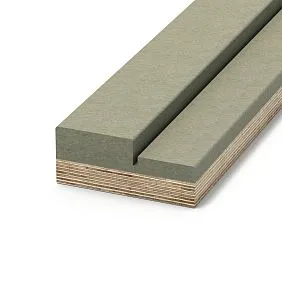
What is picture molding and how does it differ from a ready-made frame
Before choosing — you need to clearly understand what exactly you are dealing with. Three concepts create one semantic confusion, and understanding it is the first step to the right decision.




Molding as a profile: a building material with a decorative function
In an architectural sense, molding is a linear profile with a specific cross-section, used for linear decoration: framing openings, wall transitions, cornices, frames on walls. When the same profile is used to frame a painting, mirror, or panel — it performs the function of a frame.
Buy molding for a pictureas a linear profile — means buying not a ready-made frame, but the material from which the frame will be assembled. The profile is cut at 45°, joined at the corners, and forms a frame for a specific canvas size. This is a scenario for non-standard formats, large canvases, and situations when a ready-made frame of the required size is not available for sale.
Our factory also produces:


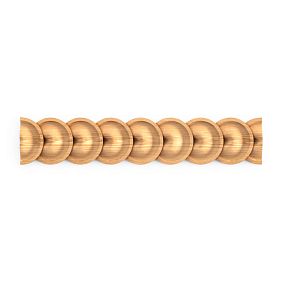
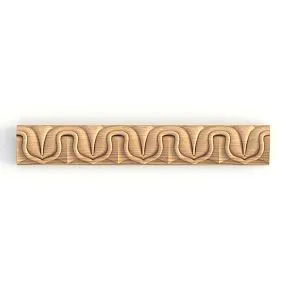
Bagette: a professional term for a framing profile
The word 'baguette' comes from French baguette craftsmanship and in professional circles refers specifically to the frame profile, not the finished product.Wooden Picture Frame— it is a linear profile with a characteristic cross-section: a wide front side, a beveled or stepped side, a back plane with a groove for glass, mat, and backing.
Essentially,picture profileand 'baguette' are the same item. The difference is only in terminology: in the circles of designers and frame makers, the word 'baguette' is used, while in the retail segment, it's 'picture molding' or 'frame profile'. This is important to understand when searching in catalogs.
Get Consultation
Finished frame: assembled product
frame for a painting— is already a finished product: a profile cut at 45°, assembled at the corners, fixed into a single structure of a standard or custom format. For most buyers, this is the most convenient option: choose a profile, choose a size, receive a ready-made frame.
| Option | What it is | For whom |
|---|---|---|
| Molding / profile | Linear material | Non-standard format, large volume |
| Molding | Professional term for frame profile | Frame workshop, DIY |
| Ready-made frame | Assembled product | Standard format, convenient choice |
Which moldings and frames are suitable for framing a painting
Not all profiles are created equal. Choosing the cross-section, width, and material is not a matter of taste; it's a question of stylistic compatibility and functional calculation.
Wooden frame: natural material with character
Buy wooden picture frame molding— means choosing a material with a living texture, tactile warmth, and authentic character. Wood is the historical and still the best material for framing paintings. Museum frames, frames for antiques, frames in classical and neoclassical interiors — always wood.
Wood species for frame profile:
-
Oak — maximum density and durability, expressive texture, takes stain, oil, and varnish excellently. Ideal for classic and hunting interiors;
-
Beech — uniform structure, fine grain, takes color well. A versatile option;
-
Pine — soft, lightweight, affordable. Suitable for small formats and frames for white paint or patina;
-
Exotic woods (ramin, ayous) — traditional material of Italian and Spanish frame workshops, uniform structure without knots.
Wooden profile with a ready-made groove for glass — exactly the option that allows you to independently assemble a frame of exact format for a canvas of any non-standard size.
Complete breakdown of wooden molding — histories, wood species, application in interiors — in the article Wooden Molding: How to Choose and Use in the Interior.
Profile for a classic frame
Classical frame profile — 'trough' in professional terminology: the top point of the cross-section is shifted to the outer edge, the inner part is concave. This creates a perspective effect — the gaze 'dives' inside the frame toward the canvas. A universal type for oil painting, watercolor, academic works.
Profile width for painting: 30–80 mm depending on the canvas format. Proportion rule: frame width ≈ 10–12% of the smallest side of the canvas. For a 50×70 cm painting — frame width of 55–70 mm.
Smooth profile: minimalism as an architectural choice
Smooth rectangular or beveled profile without ornamentation — a choice for photographs, posters, graphic works, and contemporary paintings in a neutral interior. Profile width: 20–40 mm. Finish: white, black, natural wood with oil or varnish.
A smooth frame does not compete with the artwork for attention. It defines the border — clearly and delicately — and recedes. This is precisely what is needed for photography and contemporary painting.
Relief profile: classic decorative power
Reliefmolding for a paintingwith ornamentation — egg-and-dart, acanthus frieze, pearl band, leaves, weaving — creates maximum interplay of light and shadow. With side lighting, each relief element casts its own shadow. The frame literally 'glows' around the canvas.
This is the choice for oil paintings in classic interiors: portraits, landscapes, still lifes in an academic style. A frame with relief ornamentation is an integral part of the artwork, not just a border.
Picture frame molding: professional level
Molded picture framemade from wooden molding — this is not a 'store-bought frame', it is an architectural object. It is assembled from wooden molding to the exact size of the canvas, taking into account the artwork's material (canvas, paper, board), the presence of a mat, and the hanging system.
Wooden picture frame molding is a material that allows for the creation of a frame in any non-standard format: from a 10×15 cm miniature to a monumental 200×300 cm canvas.
Wooden frame: why solid wood is better
wooden frameSolid wood is the only choice for works with real artistic value: antique paintings, original works, collectible graphics. Plastic and PVC frames deform over time, release volatile substances, and can damage the artwork. Solid wood is a stable, inert, and durable material.
Wooden picture frameSolid wood is an investment in the long-term storage and exhibition of a work. A properly chosen wooden frame outlasts the canvas itself.
What is better to choose: molding, baguette, or a ready-made picture frame
This is a key commercial question. We'll give three clear answers without vague 'it depends on the situation' — with specific selection criteria.
When you specifically need molding (profile)
Molding as a linear profile is chosen in four situations:
-
Non-standard format — a canvas sized 73×108 cm: a ready-made frame of this format is not available for sale. The profile is cut exactly to size, assembled by hand or in a workshop;
-
Large volume — framing a series of 10–20 works of the same size: buying profile by the meter is significantly cheaper than buying ready-made frames;
-
Built-in decor — molding is mounted on the wall and creates a frame around a canvas attached without a stretcher directly to the wall. The frame is part of an interior program, not a standalone item;
-
A specific finish requires a profile for custom finishing: threading, gilding, patina application, decorative grisaille technique. A 'white' wooden profile is purchased and finished by hand.
When is the best time to buy wooden molding
Buy wooden moldingand assemble the frame yourself or through a workshop is the optimal choice for artists, designers, and collectors. Self-assembly of a frame from a wooden profile provides:
-
Exact fit to the size of any non-standard canvas;
-
Freedom to choose the profile: classic, modern, neutral, relief;
-
The ability to select a profile from the same wood species as the wooden interior elements;
-
Professional results with minimal tools: miter saw, corner brackets, mounting adhesive.
The wide selection of molding profiles in the STAVROS wooden trim catalog allows you to choose a profile from a minimalist 20 mm to a rich classic 90 mm.
When it is more convenient to take a ready-made frame
Buy picture framesReady-made is convenient when:
-
Standard format (A3, A2, 40×50, 50×70, 60×80, etc.);
-
No tools or experience for self-cutting and assembly;
-
Need a quick result without waiting for assembly;
-
The painting is a gift, and you need a 'packaged' item, not a set of profiles.
A ready-made wooden frame in the STAVROS catalog is a professional solid wood product, assembled with precise miter joints and ready for immediate use.
How to choose a picture frame molding to match the interior style
A picture frame is not an isolated object. It works in the space: it interacts with walls, furniture, and light. And the style of the frame should be coordinated with the interior style no less than the painting itself.
Classic: richness through relief
Classic interior — high ceiling, molding,Frames for paintingswith a wide relief profile, gold or cream finish. Frame width: 50–100 mm. Relief: acanthus leaves, egg-and-dart, pearls, weaving. Finish: gilding, silver, patinated gold.
It is precisely such frames that 'hold' large canvases of academic painting: portraits, mythological scenes, still lifes with flowers and game. The frame here is not just a border; it is part of the artistic statement.
Neoclassicism: classicism without excess
A neoclassical interior implies a delicate yet recognizably architectural profile: 40–60 mm, soft relief, neutral finish — white, cream, light gray. The frame is present but does not dominate the artwork.
Neoclassicism is the most universal stylistic context for a wooden frame profile: it works well both in new apartments with high ceilings and in restored historical apartments.
Modern frame: geometry without ornament
A modern interior requires a smooth profile with clear, straight edges. Minimal relief or its complete absence. Width: 20–45 mm. Finish: white, black, natural wood without painting.
The rule of a modern frame: it should not be 'visible' as a decorative object — only as a boundary between the artwork and the wall. The more neutral the frame, the stronger the painting itself works.
Calm profile: a unified color scheme
A frame matching the wall color is a refined technique for interiors with a monochrome scheme. A white frame on a white wall. Gray on gray. After painting, the frame visually dissolves into the wall, leaving the artwork 'hanging in the air'. This is a museum technique — exactly how paintings hang in galleries with solid-colored walls.
Carved decor: ornamental maximum
Wooden carved picture frame— is an independent object of applied art. Deep manual or machine carving, three-dimensional ornaments, complex relief. Such a frame is suitable for particularly valuable works, antiques, formal interiors.
A carved wooden frame is not a 'picture frame' in the utilitarian sense. It is a pair: a work of art + framing as a work of decorative and applied art. A single, indivisible object.
How to choose a picture molding by material
The material of the frame is not only a matter of aesthetics. It is durability, dimensional stability, compatibility with the artwork, and the sensation of tactile contact.
Solid wood: the benchmark material
A solid wood frame is the only material that is fully compatible with painting on any base: canvas, board, paper, cardboard. Solid wood does not deform under normal storage conditions, does not release active chemicals, and provides stable mechanical protection for the edges of the artwork.
wooden frame— is the only correct choice for works with market and artistic value. For collectible works, family portraits, gift presentations.
Profile from wooden molding
Buy wooden picture frameAvailable as ready-made assembly or through purchase of wooden molding profile. Solid wood molding is an economical yet full-fledged option: same wood species, same finish, same joint quality.
Molding profile in catalogSTAVROS wooden molding— choice for those who assemble frames independently or work with a workshop. Metric calculation by linear meter allows precise purchase of required quantity without overpayment.
Decorative profile for finishing
«White» profile (unfinished, with factory primer) — material for independent decorative finishing: painting in chosen color, applying gold or silver powder to relief («antique»), patina imitation, white frame with gray relief.
This technique allows achieving unique, unrepeatable results: frame is created for specific artwork and specific interior. This is how professional framing workshops operate.
Combination of frame and ornament
Adding wooden applied ornament to standard smooth frame profile — an upsell that radically changes product character. Floral wooden ornament,buy wooden ornamentfor corner or central accent on the frame — this turns an ordinary frame into a decoration with individual character.
A wooden carved ornament is applied to a smooth frame at the corners or in the center of each side. After unified painting or gilding — the frame looks professionally made in a framing workshop.
What elements to buy together with picture molding
The frame itself is a container. A system of frame, mat, ornament, and proper mounting — that's a masterpiece.
Wooden ornament for corner accent
buy wooden ornamentfor decorating frame corners — the most popular upsell in the picture frame category. Overlay wooden ornament: floral motifs, acanthus leaves, scrolls, cartouches — mounted in the corner areas of the frame and creates the illusion of a carved professional frame.
Floral ornament in frame corners + central ornamental element in the middle of each side — a complete decorative program for a classic or neoclassical frame.
Carved decor for frame enhancement
Buy carved wood decor— decorative overlays of various sizes and patterns. Used to transform a standard smooth profile into a rich carved frame without working with a professional carver. Glued onto the finished frame surface — with PVA glue or mounting adhesive — after preliminary sanding.
Decorative overlays are especially valuable for framing large canvases: an enhanced frame with overlay ornament holds the scale of a large artwork significantly better than a smooth wide profile.
Decorative elements for framing
Decorative elements for frames— not just corner ornaments. The STAVROS catalog includes:
-
Decorative corner overlays — for classic programs;
-
Central ornamental elements — for frame sides;
-
Cartouches and rosettes — for large formats.
This is a complete set for upgrading a standard frame to a professional museum level.
Mirror frame as an adjacent solution
mirror frame— the closest relative of the picture frame in the catalog. Same profiles, same assembly, same solid wood quality. The only difference is the function: mirror instead of canvas. Convenient for those who simultaneously frame pictures and mirrors in a unified interior style program.
Wooden moldings: the full range of frame profiles
Full rangesolid wood moldings— it's not just frame profiles. It's baseboards, cornices, architraves, moldings. For those designing an entire interior — the ability to choose a picture frame profile from the same series as the wall trim. Unified material, unified finish, unified architectural language.
Where to buy picture molding
Frames section: ready-made wooden frames
Buy picture frames— a section of ready-made solid wood frames. Standard formats, several profile options: from delicate smooth to relief classic. A ready-to-use product. Solid wood construction, professional corner joints.
Solid wood frame: separate section
Wooden picture frame— a separate section for solid wood frames. Here profiles are specifically for painting and graphics, taking into account canvas thickness and glazing.
Wooden trim: profile for self-assembly
Molded picture frame— via wooden trim is the optimal path for non-standard formats and large volumes. Here you choose a profile by the meter, cut it to the required size, and assemble it yourself or through a workshop.
Wooden overlays and ornament
Carved wooden decoration— the entire range of decorative overlays, ornaments, and carved decor for enhancing a frame. Also here — floral ornament, corner decorative elements, cartouches.
Mistakes in choosing a picture frame molding
Mistakes in frame selection are discovered after installation—when changing it is already inconvenient and expensive. Study typical scenarios to avoid finding yourself in this situation.
Too heavy a profile for a small picture
An 80 mm wide frame around a 20×30 cm artwork—the profile 'eats up' the piece. The frame should frame, not dominate. Proportional guideline: frame width 10–15% of the smallest side of the canvas. For A4 (21×30 cm)—frame 25–35 mm. For a 60×80 canvas—frame 55–75 mm.
Weak connection between the frame and the character of the painting
A thin, smooth frame around a heavy, expressive 80×100 oil painting—a decorative dissonance. The frame should be proportionate to the work: light works—delicate frame, monumental works—rich frame. This is the rule most often broken.
Random mix of classic and contemporary
A relief gilded frame with acanthus leaves around a contemporary abstraction in a Scandinavian interior—eclecticism without logic. The frame should be stylistically coordinated both with the artwork and with the interior. A gilded carved frame—for academic painting in a classic space. A smooth frame made of natural wood—for contemporary painting and photography.
Incorrect frame width
Too narrow a frame for a large canvas—the effect of 'a painting without a frame'. Too wide for a small work—the effect of 'a stamp on a huge envelope'. Both options disrupt proportions and hinder the perception of the artwork. Calculating frame width is not an aesthetic intuition, but a mathematical proportion.
Ignoring the wall surface material when choosing a frame
A gilded frame on a dark green wall is expressive. The same frame on a brick wall is visual chaos. The frame interacts not only with the artwork but also with the surface it hangs on. Consider the color, texture, and style of the wall when selecting the profile and finish.
FAQ: answers to popular questions about picture molding
What is the difference between picture molding and baguette?
Essentially, nothing. Molding is a general term for decorative profile. Baguette is a professional term for a frame profile with a groove for glass and a picture. In the STAVROS catalog, both options are presented in the wooden molding section.
What is better for a picture: molding or a ready-made frame?
A ready-made frame is more convenient for standard formats. Molding (profile) is more cost-effective for non-standard sizes, large volumes, or self-assembly. In both cases, the material—solid wood—is the same.
Which baguette to choose for a picture?
Depends on the artwork. For academic painting—a wide, relief profile with a classic cross-section and ornament. For contemporary painting—a smooth profile 25–40 mm. For photography—narrow, smooth, black or natural wood.
Where to buy a wooden picture frame?
In the STAVROS catalog:Buy picture framesfrom solid wood — in the frame section. Woodenpicture profilefor self-assembly — in the wooden molding section.
Can you assemble a picture frame from molding yourself?
Yes. You will need: wooden profile by the meter, a miter saw (45° angle), corner brackets or hinges, mounting glue, glass cut to size (if needed). The instructions for cutting and assembly are standard and do not require professional skills.
Is a mat necessary for a painting?
A mat is a neutral field between the artwork and the frame. It creates distance, 'isolating' the work from its surroundings. It is especially necessary for watercolors, graphics, and photographs. For oil paintings on canvas, a mat is generally not used.
How to choose a wooden frame for a large canvas?
For a canvas from 80×100 cm: profile width at least 55–70 mm. Corner reinforcement is mandatory (metal corner hinges on the back of the frame for rigidity). Wood species: oak or beech — for maximum stability of large structures.
Can molding for a painting be used as wall decor?
Yes. Molding mounted on the wall in the form of a frame around the canvas creates an architectural program: painting + molding frame on the wall = decorative composition. This is a popular technique in neoclassical and classical interiors.
How to choose the right frame color for a painting?
Three rules: a frame matching the dominant color of the painting—a harmonious, neutral result; a frame matching the wall color—the artwork 'floats' without a border; a contrasting frame—a theatrical accent. Gold is universal for warm color palettes, silver—for cool ones.
What type of wood to choose for a picture frame?
Oak—for large and heavy frames in classic interiors. Beech—a universal option for any format. Pine—for lightweight frames of small format intended for painting.
What to add to a frame for a richer look?
buy wooden ornamentand stick in the corners of the frame—the quickest and most effective way to turn a simple profile into a rich decorative frame. After a unified finish (painting or gilding), the ornament becomes part of the frame and creates a handmade feel.
How to distinguish a quality wooden frame from a cheap one?
Signs of quality: absence of knots and resin pockets, even surface without dents or cracks, precise mitered joints without gaps, smooth primed layer for painting. Cheap profiles made of softwood with knots warp and crack when cut.
About the company STAVROS
A painting deserves a frame that does it justice. Not a random one—but a chosen one. Not a cheap PVC craft—but a wooden construction capable of lasting a century.
Buy molding for a picturemade of solid wood,Frames for paintingsready-made,Wooden Picture Framefor self-assembly,Decorative elements for framesandCarved wooden decoration— all this assortment is collected in the STAVROS catalog.
STAVROS is a manufacturer and supplier of wooden architectural moldings, frames, overlays, and decorative elements made from solid wood. Over 500 items in the assortment: from delicate smooth profiles for modern photography to rich carved frames for academic painting.
STAVROS works with private collectors, artists, design studios, and interior projects throughout Russia. Wooden profiles, ready-made frames, ornaments, and decor — all from one supplier. Uniform material, uniform quality level, uniform stylistic result.
Because a frame is not packaging. It is architecture around art. And STAVROS makes this architecture from real wood.