Article Contents:
- Evolution of Digital Modeling in the Furniture Industry
- From Drafting Board to Virtual Reality
- Integration with Production Processes
- Architecture of Modern Furniture Models
- Parametric Modeling
- Multi-Level Detailing
- Categories of Furniture 3D Models
- Structural elements
- Hardware and mechanisms
- Decorative Components
- Technologies for Creating 3D Models
- Scanning and Reverse Engineering
- Procedural Modeling
- Artificial Intelligence in Modeling
- Specialized Model Libraries
- Material Libraries
- Hardware Component Libraries
- Style Collections
- Technical Aspects of Working with Models
- File Formats and Compatibility
- Model Optimization
- Version Control
- Integration with Production Systems
- Integration with CNC Equipment
- Cutting Pattern Automation
- Model Quality and Standardization
- Geometric Quality Control
- Modeling Standards
- Visualization and Presentation of Projects
- Photorealistic Visualization
- Virtual and Augmented Reality
- Training and User Support
- Educational Programs
- Technical documentation
- Frequently Asked Questions
- What 3D model formats does Basis-Furniture Designer support?
- How are model libraries updated?
- Can I create my own models for the library?
- How to check the quality of a loaded model?
- Do complex models affect program performance?
- Can models be used for programming CNC machines?
- How to organize collaborative work with model libraries?

Modern furniture production is unthinkable without precise 3D modeling and detailed digital libraries of components.Models for the "Basis-Mebelshchik" baseThey represent the foundation of professional design, where each detail, each hardware component, and each material texture receives its exact digital embodiment. This technological revolution has fundamentally changed the approach to furniture creation, transforming the process from a craft into a high-precision engineering activity.
In the era of digital technologies, the success of a furniture enterprise directly depends on the quality of the 3D models used and the completeness of digital libraries. Each element — from the simplest screw to a complex transformation mechanism — must be represented as an exact mathematical model with a full set of technical characteristics.
What do modern digital models for furniture design represent? These are not just 3D images of components, but intelligent objects containing information about dimensions, materials, mounting methods, cost, and production-specific features. Each model becomes a carrier of knowledge accumulated by generations of furniture makers.


Evolution of digital modeling in the furniture industry




From drafting board to virtual reality
The history of furniture design has traveled an amazing path from charcoal drawings on birch bark to the most complex parametric models in modern CAD systems. The introduction of the "Basis-Mebelshchik" program became a turning point in the development of the domestic furniture industry, providing manufacturers with world-class tools.
The first digital models were simple geometric primitives without detail or technical specifications. ModernModels for the "Basis-Mebelshchik" basecontain multiple layers of information: from precise geometry to data on suppliers and logistical characteristics.
The development of computational power has enabled the creation of models of unprecedented complexity. Now, a single hinge model can contain information about dozens of different parameters: angle of opening, load capacity, adjustment method, compatibility with various door types.
Our factory also produces:


Integration with Production Processes
Modern 3D models do not exist in isolation — they are integrated into the entire production chain of the enterprise.Solid Wood Itemsare designed taking into account the specifics of woodworking equipment available at a particular production facility.
Each model contains technological information: what equipment is required to manufacture a part, how long the processing will take, what tools are necessary. These data are automatically transferred to production planning and resource management systems.
The link between design and actual production ensures high planning accuracy and eliminates errors related to human factors. The system automatically checks the feasibility of manufacturing the designed part on the available equipment.
Get Consultation
Architecture of modern furniture models
Parametric modeling
The foundation of the modern approach to creating furniture models is parametrization. Each element is described not by fixed dimensions, but by a system of parameters and relationships between them.Facade Decorationcan be easily adapted to different panel sizes thanks to the parametric approach.
Parametric models allow creating families of products based on a single base geometry. Changing key parameters automatically recalculates the entire model geometry, significantly speeding up the process of designing alternative solutions.
Relationships between parameters ensure model consistency. For example, changing the door thickness automatically adjusts the parameters of hinges, locks, and seals. This approach eliminates design errors and guarantees the functionality of the finished product.
Multi-level detailing
Modern furniture models have a multi-level structure of detail. At the top level, the model represents a simplified geometry for quick display and layout. As needed, the level of detail can be increased up to displaying wood texture and the finest hardware elements.
This approach optimizes program performance — simple models are used for general space planning, detailed models for precise design of joints and connections.Polyurethane Itemscan be displayed at different levels of detail depending on the designer's task.
Automatic switching between levels of detail occurs depending on the display scale. Simplified models are shown in the general view of the product, while maximum detail is activated upon zooming in on details.
Categories of furniture 3D models
Structural elements
The structural elements form the basis of any furniture item: panels, beams, profiles, connecting parts. These models must contain accurate geometry with machining tolerances, information about the material, and surface processing methods.
Panel models include data on the direction of wood grain, which is critically important for proper orientation during cutting. Automatic cutting systems use this information to optimize material usage.
Profiled elements are modeled taking into account the technological limitations of forming equipment. Minimum rounding radii, wall angles, surface junctions — all these parameters are embedded in the model's geometry.
Hardware and mechanisms
Furniture hardware represents the most complex category to model due to the variety of constructions and manufacturers. Each hardware element must be represented as an exact copy of the original, preserving all proportions and functionality.
Furniture frontsRequire detailed modeling of hinge systems, locks, handles. Each element must precisely match the real counterpart in dimensions, mass, and mounting methods.
Moving mechanisms are modeled with animation of operation. This allows checking for absence of collisions during movement, correctness of trajectories, and correspondence to the real mechanism's kinematic scheme.
Decorative components
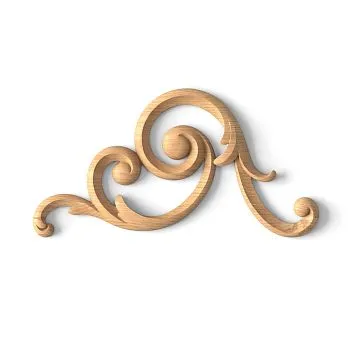
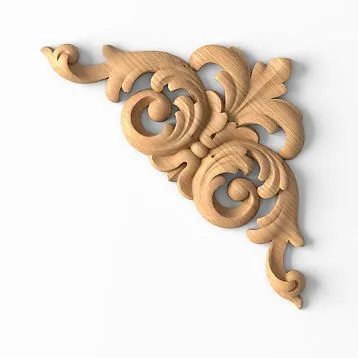
Decorative elements give furniture individuality and style.Decorative InsertsMust be modeled with maximum accuracy to convey all nuances of the artistic solution.
Carved elements require a special approach to modeling. Each facet, each ornament swirl must be precisely reproduced in the digital model. Modern scanning technologies allow creating highly accurate digital copies of artistic carving.
Texturing of decorative elements plays a key role in project visualization. Realistic rendering of material texture, play of light and shadow on relief surfaces is critically important for evaluating the aesthetic qualities of the product.
3D Modeling Technologies
Scanning and Reverse Engineering
Modern 3D scanning technologies allow creating accurate digital copies of existing items. Laser scanners, photogrammetry, structured light — the arsenal of technologies is constantly expanding.
Scanning is especially effective for complex decorative elements, artistic carving, unique hardware details.Models for the "Basis-Mebelshchik" baseMay include elements obtained by scanning rare furniture samples.
Reverse engineering allows creating parametric models based on scanned geometry. This is especially valuable for restoring lost documentation on historical furniture or creating modern interpretations of classic samples.
Procedural Modeling
Procedural modeling uses algorithms to automatically create complex geometric forms. This technology is especially effective for creating repeating elements: balusters, carved ornaments, textured surfaces.
Algorithmic approaches allow creating infinite variety of options based on basic rules. The system can generate unique variations of carving while maintaining stylistic unity.
Procedural models are easily scalable and adaptable to different product sizes. The ornament automatically adjusts to panel dimensions, preserving proportions and artistic integrity.
Artificial Intelligence in Modeling
Neural networks are used in automating the model creation process. A trained system can automatically generate furniture variants based on specified style, size, and functionality parameters.
Machine learning helps optimize models for specific manufacturing conditions. The system analyzes production statistics and suggests modifications that improve manufacturability.
Specialized Model Libraries
Material Libraries
Accurate reproduction of material appearance is critically important for high-quality project visualization.Carved decorative itemsRequire realistic rendering of wood texture, play of light on polished surfaces.
Each material is represented by a set of maps: diffuse, normals, reflection, transparency. Physically accurate materials ensure realistic visualization under various lighting conditions.
Parametric materials allow adjusting appearance over a wide range. A single base wood material can represent different species, degrees of processing, and toning variations.
Hardware Libraries
Furniture libraries represent the most extensive category of models. Each manufacturer strives to provide accurate models of their products for use in projects.
Furniture models include not only geometry but also functional characteristics: load capacity, opening angle, number of operating cycles. This information is used for automatic verification of compliance of the selected furniture with the technical specifications.
Standardization of model formats ensures compatibility between different design systems. Unified standards allow using models from different manufacturers in a single project.
Style collections
Thematic model collections group elements of a specific style or historical period.Architectural decorationClassicism, modern, baroque are represented by comprehensive libraries of interrelated elements.
Style collections ensure harmonious design solutions. All elements are consistent in style, have coordinated proportions, and compatible joining methods.
Historically accurate models are created based on museum samples, adhering to all stylistic canons. Such collections are indispensable for restoring architectural landmarks or creating stylized interiors.
Technical aspects of working with models
File formats and compatibility
The diversity of 3D file formats creates compatibility issues between different programs.Models for the "Basis-Mebelshchik" baseThey must be available in standard formats ensuring maximum compatibility.
CAD system-specific formats provide full functionality of parametric models but limit data exchange capabilities. Neutral formats such as STEP or IGES ensure compatibility at the cost of partial loss of parametric information.
Modern systems support multiple export formats, allowing selection of the optimal option for a specific task. Automatic converters simplify the process of converting between formats.
Model optimization
Model file sizes directly affect the performance of the design system. Optimizing geometry allows finding a balance between detail and performance.
Levels of detail (LOD) automatically select the optimal model depending on the context of use. Detailed models are used only when necessary, while simplified equivalents are applied otherwise.
Compression of geometric data reduces file size without loss of quality. Modern algorithms allow achieving high compression rates while preserving model accuracy.
Version control
Continuous improvement of models requires a version control system. Users must have access to current model versions, while the system must track changes and ensure backward compatibility.
Automatic library updates eliminate the need for manual tracking of changes. The system notifies users of available updates and offers them for installation.
Archiving older versions enables working with historical projects. Even if a model has been updated, older projects must correctly display using archived versions.
Integration with production systems
Link to CNC equipment
Modern models contain not only geometric information but also data for programming CNC machines. Toolpaths, cutting mode parameters, operation sequences — all of this can be directly embedded into the model.
CAM systems use 3D models to automatically generate control programs. This significantly reduces production preparation time and eliminates programming errors.
Post-processors adapt universal data to specific machine models. A single project can be manufactured on different equipment without additional preparation.
Cutting automation
Detail models contain information about cutting requirements: fiber direction, symmetry, placement priority.Solid Wood ItemsRequire special attention to the direction of wood fibers.
Optimal cutting systems use this information to minimize material waste. Algorithms take into account both economic and technological constraints.
Automatic placement of parts on a sheet optimizes not only material usage but also the processing sequence. This reduces equipment setup time and increases productivity.
Model Quality and Standardization
Geometry Quality Control
The quality of 3D models critically affects the reliability of design and production. Automatic control systems detect geometric errors: surface self-intersections, geometry breaks, incorrect normal orientations.
Topological analysis checks the correctness of the model's structure. All surfaces must be properly joined, the model's volume must be closed, and surface orientations must be consistent.
Dimensional control checks compliance with technical requirements. Manufacturing tolerances, fit dimensions, and critical distances are controlled automatically.
Modeling Standards
Unified modeling standards ensure consistency of libraries from different vendors. Standards define coordinate systems, measurement units, file structures, and naming conventions.
International ISO standards ensure global compatibility. Adhering to standards allows using models from foreign manufacturers without additional adaptation.
Industry-specific standards account for the specifics of the furniture industry. They define special requirements for modeling connections, hardware mounting methods, and standard dimensions.
Visualization and Presentation of Projects
Photorealistic Visualization
High-quality project visualization is critically important for client presentations and marketing.Models for the "Basis-Mebelshchik" baseThey must ensure the creation of images indistinguishable from photographs of real products.
Physically accurate materials precisely reproduce the optical properties of real substances. Lighting models account for all characteristics of light propagation in complex geometries.
Global lighting systems create realistic shadows, reflections, and light refraction. This ensures a natural appearance of visualized scenes.
Virtual and Augmented Reality
VR technologies allow clients to 'walk through' the future interior even before furniture production begins. Immersive experience provides a full understanding of space, proportions, and color combinations.
Augmented reality overlays virtual furniture models onto real space. Clients can see how new furniture will look in their existing interior.
Interactive presentations allow real-time modification of model parameters: color, texture, configuration. Clients participate in the design process, immediately seeing the results of their decisions.
Training and user support
Educational programs
Effective use of 3D models requires appropriate specialist qualifications. Training programs cover all aspects of working with models: from basic navigation skills to creating complex parametric constructions.
Practical seminars demonstrate best modeling practices using real examples. Participants gain hands-on experience with professional libraries under the guidance of experienced mentors.
Certification programs confirm specialist qualifications. Certified users gain access to advanced features and priority technical support.
Technical documentation
Detailed technical documentation simplifies mastering complex modeling systems. User guides, API references, and code examples help specialists maximize program capabilities.
Video tutorials demonstrate practical techniques for working with models. Step-by-step instructions allow quickly mastering complex operations.
Knowledge base contains answers to the most common questions, solutions to typical problems, and optimization tips. Searching the knowledge base helps quickly find needed information.
Frequently asked questions
What 3D model formats does Basis-Mebelshchik support?
The program supports a wide range of formats, including proprietary BASIS formats, as well as standard formats STEP, IGES, STL, OBJ. This ensures compatibility with most modern CAD systems and allows using models from various vendors.
How are model libraries updated?
Library updates occur automatically when connected to the internet. The system checks for new model versions and offers them for download. Critical updates containing bug fixes are installed automatically.
Can you create your own models for the library?
Yes, the system provides tools for creating custom models. Special wizards simplify the process of creating parametric models. Ready-made models can be saved in user libraries and shared with colleagues.
The system automatically checks the geometric correctness of loaded models. Built-in analysis tools detect potential issues: self-intersections, surface breaks, incorrect normals. Suspicious models are marked with special indicators.
Complex models may affect program performance.
Modern program architecture efficiently manages resources. The level-of-detail system automatically selects the optimal model for the current task. Simplified models are used during general planning, while detailed models are loaded only when necessary.
The modern architecture of the program efficiently manages resources. The level-of-detail system automatically selects the optimal model for the current task. Simplified models are used during general planning, while detailed models are loaded only when necessary.
Can models be used for programming CNC machines?
Many models contain technological information for automatic equipment programming. The CAM modules of the system use model geometry to generate control programs. This significantly speeds up production preparation.
How to organize collaborative work with model libraries?
The system supports network libraries accessible to all users in the local network. The administrator can configure access rights to different library sections. The versioning system tracks changes and prevents conflicts during simultaneous editing.
Models for the "Basis-Mebelshchik" baseModel libraries are a critically important element of modern furniture production, determining design quality, manufacturing process efficiency, and the competitiveness of finished products. Well-organized 3D model libraries become a strategic asset for the enterprise, ensuring technological superiority and the ability to quickly respond to market changes.
Advancements in virtual and augmented reality, artificial intelligence, and cloud computing open new horizons for using 3D models in the furniture industry. Companies that promptly adopt these technologies gain significant competitive advantages in the market.
STAVROS continues to remain a leader in providing quality solutions for the furniture industry. Our 3D model libraries are continuously updated with new elements aligned with the latest design and manufacturing technology trends. Choosing STAVROS solutions, furniture manufacturers gain access to the most modern design tools, professional technical support, and a guarantee of high-quality digital assets. We understand the industry’s needs and provide the tools necessary for successful operation in the context of digital transformation in furniture production.