Article Contents:
- Anatomy of Furniture Perfection
- Types of Profiles and Their Purpose
- Material Science: Choosing Wood Species for Furniture Molding
- Influence of Wood Species on Aesthetic Properties
- Technological Aspects of Furniture Molding Production
- Features of Processing Different Profiles
- Design Solutions with Furniture Molding
- Psychology of perception of decorative elements
- Application in various types of furniture
- Specifics of Application in Children's Furniture
- Installation and Mounting of Furniture Molding
- Joint Technology of Elements
- Finishing and Protective Coatings
- Modern Finishing Technologies
- Economic Aspects of Using Furniture Molding
- Impact on Product Competitiveness
- Trends and development prospects
- Innovations in Materials and Technologies
- Regional market characteristics
- Climate factors
- Quality Control and Standardization
- Certification and Marking
- Logistics and Storage
- Optimization of Logistics Processes
- Frequently Asked Questions
- Conclusion

Is there a magical formula to turn ordinary furniture into a work of art? Yes, and it's calledFurniture molding– that secret ingredient which distinguishes a master’s work from amateurism. In the world of carpentry, this material plays the role of an exquisite spice in cooking: without it, the dish may be edible, but it will never become a masterpiece.
Why do some kitchen sets look expensive and sophisticated, while others seem like mass-produced items? The answer lies in the details created by furniture molding. Every overlay, every cornice, every decorative strip tells a story about quality and attention to detail.
The furniture industry has long understood: success lies not in size or functionality, but in the ability to evoke emotion.Trimming Itemstransform standard cabinetry into a unique piece that reflects the owner’s personality and creates an irreplaceable atmosphere in the home.


Anatomy of Furniture Perfection
What is furniture molding from a technical standpoint? It is profiled items of various cross-sections, designed for decorating and functional enhancement of furniture structures. But behind this dry definition lies a whole philosophy of creating beauty.
Unlike architectural molding, furniture profiles feature more delicate dimensions and elegant shapes. If architectural moldings can be compared to powerful columns of classical architecture, then furniture elements are delicate lacework that gives the item completeness and nobility.
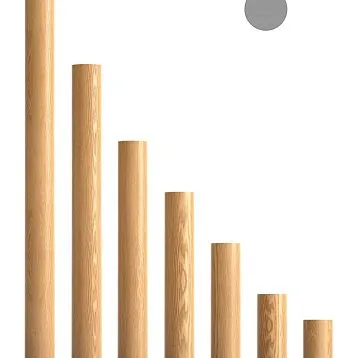
Cross-sections of furniture molding range from miniature 8x8 mm to impressive 50x25 mm, allowing solutions for any complexity. Small profiles create subtle accents, while larger ones form expressive architectural elements capable of radically changing the perception of furniture.




Types of Profiles and Their Purpose
Furniture corniceCloses furniture structures, creating a logical completion of vertical planes. Its task is not merely to cover the top of a cabinet, but to give the entire composition a sense of completeness, creating a visual connection with the room's ceiling.
Base trim pieces perform the opposite function, ensuring a smooth transition from furniture to the floor. They conceal technical gaps, hide adjustable supports, and create an impression of monolithic construction, as if the furniture grew out of the floor itself.
Surface profiles are used to create panels, imitating framed structures and zoning large surfaces. They transform smooth facades into complex architectural compositions, adding depth and play of light and shadow.
Corner elements solve the complex task of joining different planes, creating smooth transitions and concealing the technical features of the construction. Without them, any furniture appears unfinished, technically precise, but lacking soul.
Our factory also produces:


Wood Science: Choosing Wood Species for Furniture Trim
Choosing wood for furniture trim is an art of compromise between aesthetics, functionality, and economic feasibility. Each species has a unique character that must harmonize with the main material of the furniture.
Oak furniture trim is considered the standard of quality and prestige. Its wood density of 700-900 kg/m³ allows for the creation of extremely thin profiles without risk of chipping or deformation. Its Brinell hardness of 3.4-4.2 units enables it to withstand significant mechanical loads, which is critically important for furniture hardware.
Beech trim is distinguished by its particularly uniform structure and pleasant warm tone. The absence of a pronounced grain makes it ideal for modern minimalist interiors, where clean lines and forms are essential.
Pine profiles are attractive for their accessibility and ease of processing. The soft wood allows for the creation of complex shaped elements, but requires more careful handling during installation and use.
Get Consultation
Influence of Wood Species on Aesthetic Properties
The wood grain determines the character of the finished product. Oak, with its expressive annual rings, creates a sense of solidity and tradition. Each knot, each vein tells its own story, making the furniture alive and individual.
Beech demonstrates the opposite approach — its smooth, almost uniform structure creates an impression of craftsmanship and technical perfection. This is the choice for those who value precision and mathematical beauty of proportions.
Coniferous species bring a sense of lightness and informality. Their resinous aroma and distinctive annual rings create an atmosphere of a country house, closeness to nature, and relaxation.
Technological Aspects of Furniture Trim Production
Production of trim elementsFurniture industry imposes special requirements for precision and surface quality. While construction trim allows certain deviations that are compensated during installation, furniture profiles require flawless geometry.
Raw material preparation begins with careful sorting of wood. For furniture trim, boards of the highest grade with minimal knots and other natural defects are selected. The moisture content of the blanks must not exceed 8-10% — this ensures the stability of the finished products.
Wood drying is carried out according to special regimes, taking into account the small cross-sections of future products. Intensive drying regimes may cause cracking and warping of thin blanks, so the process requires special control.
Furniture profile milling is performed on high-precision equipment with tolerances no greater than ±0.02 mm. Such precision is achieved using carbide tools and strict requirements for machine setup.
Features of Processing Different Profiles
Simple rectangular profiles are processed on four-sided planers in one pass. This ensures perfect parallelism of edges and absence of steps at transitions between cutting knives.
Complex shaped profiles require multi-pass processing on specialized milling machines. Each profile element is formed by a separate tool in a strictly defined sequence.
Final processing includes sanding with special belts of varying grit. The final surface roughness should not exceed Ra 1.6 micrometers to ensure high-quality application of lacquer coatings.
Design Solutions with Furniture Trim
Thoughtful use of furniture trim can dramatically change the perception of furniture. A simple rectangular cabinet transforms into an elegant interior piece, worthy of the most refined apartments.
The classic approach involves using traditional profiles — grooves, beads, and quarter-rounds. These elements create play of light and shadow, add volume to flat surfaces, and establish rhythm and dynamics in the composition.
Modern design tends toward more minimalist forms, but here too furniture trim finds its application. Thin rectangular strips create geometric patterns, divide large surfaces into functional zones, and highlight the structural features of the furniture.
Psychology of Perception of Decorative Elements
Vertical trim elements visually increase the height of furniture, making it more slender and elegant. This technique is especially effective in low rooms, where every centimeter of height is precious.
Horizontal lines, on the contrary, widen furniture, making it more grounded and substantial. This solution suits high rooms, where it is necessary to create a sense of coziness and intimacy.
Diagonal elements introduce dynamism and modernity. They break the static nature of rectangular forms, creating a sense of movement and energy.
Application in various types of furniture
Kitchen furniture — a traditional area of application for furniture trim. Here it serves both decorative and functional purposes.Wooden moldingsOn kitchen facades, they create an imitation of classical louvered structures, giving modern built-in furniture a traditional charm.
Crown moldings conceal under-cabinet lighting, creating soft, diffused illumination. Baseboards mask adjustable legs and create a visual connection with the floor covering. Surface-mounted profiles zone large facade surfaces, making them more human-scaled.
Bedroom furniture uses molding to create a cozy, intimate atmosphere. Soft, rounded profiles eliminate hazardous sharp corners, creating a sense of safety and comfort.
Specific application in children's furniture
Children's furniture demands special safety requirements. All corners must be rounded, surfaces smooth and free of protruding elements. Molding here serves as a protective element, creating smooth transitions and eliminating sharp edges.
Color solutions for children's furniture require a special approach. Bright paints and enamels must be environmentally safe, resistant to mechanical impacts and frequent washing.
Children's furniture functionality is enhanced by molding elements that serve as handles, guides for pull-out components, and decorative overlays on safe locks.
Installation and mounting of furniture molding
Quality installation of furniture molding requires professional skills and specialized tools. Unlike construction molding, which can be corrected with putty and paint, furniture elements must be installed perfectly the first time.
Surface preparation includes thorough cleaning from dust and grease. Any particle under a surface-mounted element will create an unevenness visible after varnishing. The surface must be perfectly flat and smooth.
Marking is performed using a laser level or clamp guides. Marking accuracy is critically important — even a millimeter deviation will be noticeable on the finished furniture.
Mounting is performed in several ways depending on the size and configuration of elements. Small details are glued with carpentry glue, while larger ones are additionally secured with screws or dowels.
Technology of element joints
Corner joints are the most complex element of installation. They require perfect fitting and precise cutting. For furniture molding, a 45-degree bevel cut is used with precision down to the minute.
End joints are performed using special connecting elements or the tongue-and-groove method. Such joints ensure strength and eliminate visible gaps.
Compensatory gaps in furniture molding are not provided — all elements must fit tightly. This is possible due to stable humidity in rooms and high-quality material drying.
Finishing and protective coatings
Furniture molding requires a special approach to applying protective-decorative coatings. Unlike construction elements, which are often painted with covering materials, furniture profiles should highlight the beauty of wood grain.
Priming is performed with special compositions that not only ensure adhesion of the finish coating but also equalize the wood's absorption capacity. Different density of early and late wood may result in uneven tone of the finished product.
Sanding between coating layers is performed with abrasive grit 280-320. Coarser abrasive may leave scratches, while finer abrasive may not adequately prepare the surface for the next layer.
Finish coating is applied in multiple layers with intermediate drying. Each layer must be thin and even. Thick layers may lead to runs and uneven coating.
Modern finishing technologies
UV-curable lacquers provide the highest quality coating and significantly reduce production cycle time. Polymerization occurs in seconds under ultraviolet radiation.
Powder coatings open new possibilities for creating textured and color effects. They are environmentally safe and provide even coverage on complex profiled surfaces.
Nanocoatings provide furniture molding with additional properties — self-cleaning, antibacterial effect, increased resistance to contamination and mechanical impacts.
Economic aspects of using furniture molding
Investments in quality furniture molding pay off through increased consumer value of finished furniture. The price difference between standard built-in furniture and items with decorative elements can reach 200-300%, while molding costs account for only 15-20% of the item's price.
Automation of molding production reduces its cost and increases quality stability. Modern machining centers allow manufacturing complex profiles with minimal labor input.
Standardization of profiles ensures interchangeability of elements and simplifies warehouse logistics. Furniture factories can maintain minimal stock levels, replenishing them as needed.
Impact on product competitiveness
Furniture with high-quality profiles is positioned in a higher price segment and attracts more price-sensitive buyers. This is especially important under the growing competition in the furniture market.
The ability to customize products using various profiles allows furniture manufacturers to offer individual solutions without significant cost increases.
The recognizable style created by branded profiles forms customer loyalty and promotes repeat sales.
Trends and development prospects
Modern trends in furniture design influence the development of the furniture profile industry. The growing popularity of eco-friendly materials stimulates demand for products made from natural wood.
Minimalism in design does not mean abandoning decorative elements, but rather requires them to be more concise and functional. Modern furniture profiles become more geometric, with clear lines and simple shapes.
Mass customization technologies allow manufacturers to offer unique profiles for each project without significant cost increases. 3D printing and CNC machining open new possibilities for creating complex decorative elements.
Innovations in materials and technologies
Composite materials based on wood fibers combine the advantages of natural wood with increased stability and moisture resistance. They are especially relevant for kitchen furniture used in high-humidity conditions.
Hybrid technologies combine traditional wood processing methods with modern digital solutions. Laser engraving allows creating complex ornaments and textures on profile surfaces.
Biotechnologies open prospects for creating wood materials with specified properties. Genetically modified wood may have increased density, stability, or decorative qualities.
Regional market specifics
The Russian furniture profile market is characterized by a high share of imports from European and Southeast Asian countries. European manufacturers offer premium products with high performance characteristics.
Asian suppliers mainly compete on price, offering mass-market products with acceptable quality. Logistics costs partially offset the price advantages of Asian manufacturers.
Domestic manufacturers occupy an intermediate position, offering an optimal price-to-quality ratio. Proximity to consumers and the absence of customs barriers are their main competitive advantages.
Climate factors
The Russian climate imposes special requirements on the stability of furniture profiles. Significant fluctuations in temperature and humidity during the heating season may lead to deformation of products.
Adapting imported products to Russian conditions includes additional stabilization treatment and modification of the wood's moisture parameters.
Domestic manufacturers have an advantage in understanding climatic specifics and can offer optimally adapted products.
Quality control and standardization
The quality of furniture profiles is controlled at all stages of production — from incoming raw material inspection to final inspection of finished products. The quality management system must comply with international ISO 9001 standards.
Geometric parameters are controlled using precision measuring tools. Tolerances for dimensions are ±0.1 mm for critical parameters and ±0.2 mm for non-critical ones.
Surface quality is visually assessed under 1000 lux lighting at a 45-degree angle. Scratches, chips, tool marks, color changes, and other defects are not permitted.
Strength characteristics are tested selectively on special samples. Tests include determining bending, compression, and impact strength.
Certification and labeling
Voluntary certification confirms product compliance with declared characteristics and safety of use. A quality certificate is an important marketing tool.
FSC ecological certification guarantees that the wood originates from responsibly managed forests. This is becoming an increasingly important factor for environmentally conscious consumers.
Product labeling must include information about the manufacturer, wood species, dimensions, quality class, and usage conditions.
Logistics and storage
Furniture profiles require special transportation and storage conditions. Long items must be transported horizontally with sufficient support points to prevent bending.
Packaging must protect against mechanical damage and moisture. Special cardboard boxes with soft padding or shrink wrap with protective corners are used.
Storage is conducted in dry, heated rooms with relative humidity of 45–65%. Direct contact with concrete floors is not allowed — wooden pads are used.
Inventory rotation should follow the FIFO principle (first in, first out) to prevent product aging. The maximum storage period without packaging should not exceed 6 months.
Logistics process optimization
Centralized warehouses allow reducing storage costs and providing a broader assortment for consumers. Automated warehouse management systems increase shipping accuracy and reduce losses.
Consolidating orders from small consumers into large batches reduces logistics costs and makes products more accessible for small furniture manufacturers.
Regional distribution centers bring products closer to consumers and reduce delivery times. This is especially important during the construction season, when time plays a critical role.
Frequently asked questions
Which sizes of furniture molding are the most versatile?
The most in-demand profiles are 16x16 mm, 20x10 mm, and 25x12 mm. These sizes suit most furniture types and provide an optimal balance between expressiveness and proportionality. Profiles of 30x20 mm and larger are used to create more pronounced accents.
Can molding from different wood species be combined?
Combining different species is possible and often used to create interesting design effects. It is important to consider compatibility by density, coefficient of expansion, and color palette. A classic combination is light and dark species, for example, maple with wenge or beech with walnut.
How to calculate the required amount of molding for a project?
Calculation is based on the perimeters of decorated surfaces with an additional 10-15% for trimming and possible defects. For complex profiles, the reserve coefficient increases to 20%. It is necessary to consider the length of standard blanks and optimize cutting to minimize waste.
Does furniture molding require special treatment before installation?
High-quality furniture molding is supplied ready for installation with final surface finishing. Additional preparation may be required only for cutting to size and creating joints. Ends after trimming must be processed with fine-grit sandpaper.
What is the difference between furniture and construction molding?
The main differences lie in dimensions, manufacturing accuracy, and surface quality. Furniture molding has smaller cross-sections, stricter tolerances, and requires a flawless surface. Construction molding is larger, allows greater dimensional deviations, and may have a less refined surface that is concealed by finishing.
How long does natural wood furniture molding last?
When properly installed and maintained, high-quality wood furniture molding lasts for decades. Service life depends on wood species, processing quality, usage conditions, and care. Oak and beech molding can last 50–100 years, while coniferous species last 20–30 years.
Can damaged furniture molding be restored?
Minor damage—scratches, chips, or wear—can be restored using wood putty, sanding, and re-coating. Severe damage requires replacing the affected section. Restorability depends on the nature of the damage and accessibility of the element for treatment.
Does air humidity affect the stability of furniture molding?
Natural wood reacts to air humidity changes by expanding and contracting. Proper drying and stabilizing treatment minimize these changes, but they cannot be completely eliminated. Optimal indoor air humidity is 45–65% at a temperature of 18–24°C.
Conclusion
Furniture moldingIt is a delicate tool in the hands of a master, capable of transforming ordinary furniture into a work of art. Its role in shaping the aesthetic appearance of interiors is difficult to overestimate—the details create that elusive atmosphere of quality and refinement that distinguishes professional craftsmanship.
The modern furniture industry is impossible without high-quality molding. It serves as a bridge between functionality and beauty, between production technology and handcrafted individuality. Each element, each profile carries a part of craftsmanship and attention to detail.
Choosing high-quality furniture molding is an investment in the longevity and aesthetic value of furniture. Cutting corners on details inevitably affects the overall perception of the product, while thoughtful use of decorative elements can significantly enhance the perceived value of the product.
Technological progress opens new opportunities for improving furniture molding, but fundamental principles remain unchanged—material quality, manufacturing precision, attention to detail. These principles form the philosophy of the company STAVROS.
For many years, the company STAVROS has specialized in producing high-quality furniture molding, combining traditional carpentry craftsmanship with advanced production technologies. Our products are used by leading furniture manufacturers and private craftsmen who value the reliability, beauty, and functionality of our items.
Each STAVROS molding element undergoes strict quality control at every stage of production. From selecting the finest wood grades to final surface finishing—we do not compromise on quality. Our clients receive not just decorative elements, but tools for creating furniture that will delight owners with its beauty and functionality for decades.
Choosing STAVROS means choosing a partner who understands the importance of every detail in creating perfect furniture and is ready to ensure the highest product quality to realize the most ambitious design ideas.