Article Contents:
- The Anatomy of the Ideal Furniture Handle
- Materials: From Classics to Innovations
- Shapes and Sizes: Ergonomics and Aesthetics
- Stylistic Choices: From Classic to Avant-Garde
- Handle-Clips: The Classic of the Genre
- Handles for Hinged Doors
- Handles for Drawer Pulls
- Handles for Sliding Doors
- How to Choose the Perfect Furniture Handles
- Matching Decorative Elements with Furniture and Interior Style
- Ergonomics and functionality
- Quality and durability
- Price-to-Quality Ratio
- Where to Buy Furniture Handles: Overview of Options
- Specialized stores for furniture hardware
- Online Stores: Convenience and Wide Selection
- Construction Markets and DIY Hypermarkets
- Manufacturers and Distributors: Direct Access to the Source
- Installation and Care of Furniture Handles
- Tools and materials for installation
- Step-by-step installation guide
- Maintenance and care
- Modern Trends in Furniture Hardware Design
- Modern design trends
- Technological Innovations
- Ecological aspect
- Practical Tips for Choosing Furniture Handles
- How to Refresh Your Interior with New Handles
- How to Avoid Common Mistakes
- Professional recommendations from designers
- Conclusion: The Art of Choosing Furniture Handles

Imagine a cabinet without handles. Elegant, stylish... and completely useless. Or a kitchen set with uncomfortable, cheap handles that constantly wobble and try to detach. A familiar scene? Furniture handles are not just a functional element. They are the finishing touch that can either highlight the elegance of your furniture or completely ruin the impression of it.
In the world of interior design, details make all the difference. And furniture handles are a vivid example of this. They can transform even the simplest furniture, giving it character and individuality. But how to choose the perfect handles among thousands of options? And where to buy furniture handles, price which will match their quality? Let's figure it out together.


The Anatomy of the Ideal Furniture Handle




Materials: From Classic to Innovations
Choosing the material for a furniture handle is not just an aesthetic question. It's a question of practicality, durability, and tactile sensations. Each material has its unique properties that determine not only the appearance of the handle but also its functional characteristics.
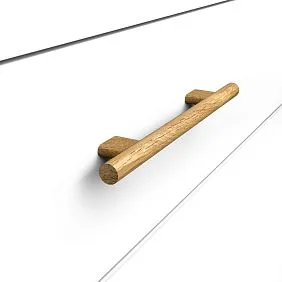
Solid wood is classic, tested over centuries. Wooden handles have an incomparable texture, are pleasant to the touch, and create a sense of warmth. They are ideal for furniture in country, Provence, Scandinavian, or eco styles. Each wooden handle is unique due to the natural wood grain pattern.
Oak, beech, walnut, cherry - each wood species has its own character. Oak is distinguished by strength and expressive texture, beech by uniformity and soft light tone, walnut by noble dark color, and cherry by warm reddish tone. Uncoated wooden handles are especially valued for their naturalness and eco-friendliness. They allow you to feel the true texture of wood, its natural warmth.
Metal is synonymous with strength and durability. Metal handles can be made of brass, stainless steel, aluminum, or zinc alloy. They are characterized by high strength, resistance to mechanical damage, and long service life. Metal handles can have various finishes - chrome, nickel, bronze, copper, gold - which determine their appearance and resistance to corrosion.
Glass and crystal are embodiments of elegance and luxury. Glass and crystal handles create light play and add sparkle and elegance to the interior. They are ideal for furniture in classic, neoclassical, or glamorous styles. Modern technologies allow creating glass handles of various shapes, colors, and degrees of transparency.
Ceramic and porcelain are a combination of tradition and bright colors. Ceramic handles can be decorated with painting, glaze, or relief patterns. They add individuality and character to furniture, especially suitable for interiors in Provence, country, or shabby chic styles.
Composite materials are innovations and boundless possibilities. Modern technologies allow creating handles from high-strength polymers that imitate natural materials but surpass them in practical characteristics. They are resistant to moisture, temperature fluctuations, mechanical damage, do not fade, and require no special care.
Our factory also produces:


Shapes and Sizes: Ergonomics and Aesthetics
The shape and size of a furniture handle determine not only its appearance but also its ease of use. Ergonomics is a key factor often underestimated when choosing handles.
Handle Hooks - this is a classic option, represented by a curved or straight bar with two mounting points. They provide a secure grip and are convenient to use. Hooks can vary in length - from miniature (3-5 cm) to impressive (20-30 cm), covering the entire facade width. They can have straight, curved, or decorative shapes, be flat or three-dimensional.
Button handles are compact elements with a single mounting point. They take up minimal space and are ideal for small drawers, cabinets, and chests. Handles can be round, square, oval, multi-faceted, with flat or convex shapes. Despite their compact size, they can be very expressive and become a striking accent in furniture design.
Inset handles (or sink handles) are an elegant solution where the handle is recessed into the furniture's facade. They create a minimalist, restrained look and are especially suitable for modern interiors. Inset handles do not protrude beyond the facade, eliminating the risk of clothing getting caught — an important advantage for narrow passages and hallways.
Profile handles are aluminum or plastic profiles mounted along the entire length of the facade. They create a unified line, visually elongate furniture, and give it a modern appearance. Profile handles are especially popular in minimalist and high-tech style kitchen sets.
The handle size should match the furniture size. Large, expressive handles suit massive cabinets and chests, while compact, elegant models are better for small drawers and chests. It's also important to consider proportions — small handles on large facades will look awkward, and bulky handles on miniature furniture will appear disproportionate.
Get Consultation
Style: from classic to avant-garde
The style of furniture handles should harmonize with the overall style of the furniture and interior. This does not mean handles should be inconspicuous — on the contrary, they can become a striking accent, emphasizing the uniqueness of the space.
Classic style implies using elegant, refined handles made of brass, bronze, or wood. They may be adorned with floral motifs, scrolls, or imitation of antique patterns. The color palette is predominantly restrained — gold, bronze, antiqued silver.
Modern style is characterized by minimalist forms, functionality, and use of innovative materials. Geometric shapes — rectangles, squares, cylinders — are popular, with minimal decorative elements. The color palette is diverse — ranging from classic silver and chrome to black, white, and colorful models.
Provence and country styles lean toward natural materials, pastel shades, and botanical motifs. Handles may be wooden, ceramic, painted, or patinated to create an aged effect.
Industrial style and loft imply using rough, heavy metal handles, often with a rusted or unfinished surface effect. Popular are handle rails that imitate industrial elements.
Scandinavian style favors natural materials, light shades, and minimalism. Handles are often wooden, simple geometric shapes, without excessive decoration.
Eco-style implies using natural materials — wood, stone, leather — with minimal processing that highlights their natural beauty.
Functional types of furniture handles
Handles for hinged doors
Hinged doors are the most common type of furniture doors. Various handle types are suitable for them, chosen based on furniture design, frequency of use, and door weight.
Button handles are the optimal choice for hinged doors. They provide secure grip and are convenient to use. For vertical doors, vertical buttons are recommended; for horizontal doors, horizontal buttons. The button size should match the door size — the larger and heavier the door, the more substantial the handle should be.
Button handles are a compact solution for small doors or doors used infrequently. They take up minimal space and can be very decorative. However, for heavy doors or frequently opened doors, buttons are less convenient than buttons.
Inset handles are an elegant solution, especially for modern furniture. They do not protrude beyond the facade, eliminating the risk of clothing getting caught. However, they require more complex installation and are not suitable for all types of materials.
Handles with latch or magnetic mechanisms are a convenient solution for doors that must close tightly. They provide secure door fixation in the closed position and prevent accidental opening.
Handles for drawers
Drawers require a special approach to handle selection, as they experience different loads compared to hinged doors.
Horizontal handles are the optimal choice for drawers. They ensure even load distribution when opening and prevent facade deformation. The handle size should match the drawer width — the wider the drawer, the longer the handle should be.
Button handles are suitable for small, light drawers. For wide drawers, it is recommended to install two buttons at equal distances from the center to ensure even load distribution.
Profile handles are a modern solution for drawers. They are mounted along the entire width of the facade and allow opening at any point. This is especially convenient for wide drawers.
Push-to-open systems are an innovative solution allowing drawers to be opened with a simple tap on the facade, without visible handles. This creates a minimalist, modern look and is especially popular in high-tech and minimalist interiors.
Handles for sliding doors
Sliding doors require specific handles that ensure easy opening without protruding elements that could interfere with door movement.
Inset handles are the ideal solution for sliding doors. They do not protrude beyond the facade and do not interfere with door movement. Inset handles can be of various shapes — round, oval, rectangular — and can be made from various materials.
Profile handles are mounted along the top or side edge of the door and provide convenient grip along the entire length. They are especially convenient for tall doors.
End handles are mounted on the end of the door and are not visible when the door is closed. This creates a minimalist, restrained look.
Surface-mounted handles with minimal protrusion are a compromise solution when inset handles are not suitable for any reason. They should have minimal protrusion to avoid interfering with door movement.
How to choose ideal furniture handles
Matching the style of furniture and interior
Choosing furniture handles should begin with analyzing the overall style of the furniture and interior. Handles should harmonize with other hardware elements, the material and color of the furniture, and the overall style of the room.
For classic wooden furniture, traditional handles made of brass, bronze, or wood with decorative elements characteristic of the chosen style are suitable. For modern furniture with glossy fronts, minimalist geometric metal handles, chrome or matte finishes, are appropriate. For furniture in the Provence or country style, ceramic handles with painted designs or wooden handles with a distressed finish are suitable.
It is also important to consider other hardware elements in the room - hinges, locks, light fixtures, switches. All these elements should create a unified ensemble and support the overall interior style.
Ergonomics and Functionality
Ergonomics is a key factor when choosing furniture handles. Handles should be comfortable to use, conform to the anatomy of the hand, and have no sharp edges or protrusions that could cause discomfort.
The size of the handle should correspond to the size of an average user's hand. Too small handles are inconvenient to grip, while too large handles may be uncomfortable for people with smaller hands. The shape of the handle should provide a secure grip without excessive strain on the wrist.
The placement of handles is also important for ergonomics. For hinged doors, the optimal handle height is at 2/3 the height from the bottom edge of the door. For drawers, handles should be placed in the center of the front or in the upper third. For tall cabinets, multiple handles at different heights may be required to ensure ease of use for people of different heights.
Special attention should be paid to the ergonomics of handles for children's furniture. They should be safe, without sharp edges or small parts that could detach. The size and shape of the handles should correspond to a child's hand.
Quality and durability
The quality of furniture handles is determined not only by their appearance but also by the materials they are made of, the manufacturing technology, and the quality of the finish.
Wooden handles should be made from well-dried wood, free of cracks, chips, or uneven texture. The finish (if any) should be even, without streaks, bubbles, or roughness.
Metal handles should have an even finish, without signs of corrosion, scratches, or wear. Welds should be neat and inconspicuous. The threading for fastening should be clean, without burrs.
Ceramic and glass handles should be free of cracks, chips, uneven color or texture. The glaze should be even, without bubbles or streaks.
Fastening elements (screws, bolts, nuts) should be made of quality material, match the size and type of the handle, and provide secure fastening.
The durability of handles depends not only on the quality of materials but also on the conditions of use. For humid areas (bathrooms, kitchens), handles made of moisture-resistant and temperature-stable materials such as stainless steel, brass with protective coating, or specially treated wood are recommended. For furniture used intensively, handles made of strong materials with secure fastening are recommended.
Price-to-quality ratio
Furniture handles: price Price may vary from several tens to several thousand rubles per piece. The cost depends on the material, design, brand, and country of manufacture.
Budget handles (up to 200 rubles) are usually made from inexpensive materials - plastic, zinc alloy with simple coating, MDF. They may have a simple design, basic functionality, and limited service life.
Mid-range handles (200-1000 rubles) offer optimal price-to-quality ratio. They may be made from quality materials - brass, aluminum, solid wood, have good finish, interesting design, and secure fastening.
Premium handles (from 1000 rubles) are distinguished by exceptional material quality, unique design, flawless execution. They may be handcrafted, have complex shapes, decorative elements, exclusive finish.
When choosing handles, it is important to match their cost with the overall cost of furniture and interior. For expensive, exclusive furniture, premium handles are appropriate to emphasize its status. For budget, functional furniture, handles from the mid-range segment can be chosen to ensure necessary functionality without unnecessary expenses.
Where to buy furniture handles: overview of options
Specialized furniture hardware stores
Specialized furniture hardware stores offer a wide variety of handles in different styles, materials, and price categories. Here you can find both mass-market models and exclusive designer solutions.
Advantages of specialized stores:
- Ability to see and touch the product before purchasing
- Professional consultation from specialists
- Availability of samples and demonstration stands
- Possibility to purchase everything needed for installation in one place
- Guarantee of product authenticity
Specialized stores often feature collections from leading furniture hardware manufacturers, regularly updated according to the latest design trends. Here you can receive professional consultation on selecting handles that match a specific furniture and interior style.
Online stores: convenience and wide selection
Online stores offer a vast assortment of furniture handles from manufacturers around the world. Here you can find both mass-market models and rare, collectible items that are difficult to find in regular stores.
Advantages of online purchases:
- Access to catalogs 24/7 without needing to visit a physical store
- Ability to quickly compare prices and features
- Delivery of the order to your home or pickup point
- Access to reviews from other customers
- Often lower prices due to absence of retail space maintenance costs
When choosing an online store, it is important to pay attention to the seller's reputation, presence of detailed product descriptions and high-quality photos, delivery and return conditions, as well as availability of technical support that can advise on handle selection and installation.
Many online stores offer the option to order samples before purchasing a large batch of handles. This is especially important when assessing how the handle will match specific furniture and interior design.
Construction markets and DIY hypermarkets
Hardware markets and large DIY hypermarkets (Leroy Merlin, OBI, Castorama) offer a wide range of basic furniture handle models at affordable prices. This is the optimal option for standard solutions and budget projects.
Advantages of DIY hypermarkets:
- Affordable prices
- Availability of product "here and now"
- Ability to purchase complementary items (tools, fasteners)
- Convenient location in different city districts
- Extended operating hours, often 24/7
These stores typically offer handles in the mid-price segment, aimed at the mass consumer. It is difficult to find exclusive designer solutions or specialized hardware for non-standard projects here, but for most standard tasks, the assortment is quite sufficient.
Manufacturers and distributors: direct access to the source
For professionals in the furniture industry and large projects, the optimal solution may be direct cooperation with manufacturers of furniture handles or their official distributors.
Advantages of working with manufacturers:
- Guarantee of product authenticity
- Access to the full assortment, including novelties and specialized solutions
- Ability to receive technical support from the manufacturer
- Optimal prices without intermediary markups
- Ability to order custom solutions
Many furniture handle manufacturers have their own showrooms or online stores where their assortment is presented. Here, you can obtain comprehensive information about the products, learn about new arrivals and special offers.
Installation and care of furniture handles
Tools and materials for installation
Installing furniture handles is a process that may seem simple, but requires certain skills and tools to achieve an ideal result.
Required tools:
- Drill or screwdriver
- Drill bit of the appropriate diameter
- Ruler or tape measure
- Pencil or marker
- Template for marking holes (can be purchased ready-made or made yourself)
- Screwdriver or bits for a drill driver
- Level for checking horizontal/vertical alignment
Materials:
- Handles with mounting hardware included
- Additional screws or self-tapping screws (if the included ones are not the right length)
- Washers or gaskets (if needed)
- Wood glue or silicone sealant (for additional fixation)
Before installation, it is important to check the completeness of the handles, the presence of all necessary mounting elements, and the correspondence of dimensions and design to the ordered models.
Step-by-step installation instructions
- Preparation
- Determine the optimal position of the handle on the front. For hinged doors, handles are usually placed on the side opposite the hinges, at a height of 2/3 from the bottom edge. For drawers - centered on the front or in the upper third.
- Using the template and pencil, mark the locations for drilling holes. The template will help ensure uniform handle placement on all fronts.
- Check the accuracy of the markings using a level.
- Drilling Holes
- Select a drill bit corresponding to the diameter of the handle's mounting elements.
- Drill holes at the marked locations. It is recommended to start with a smaller diameter hole and then gradually enlarge it to the required size.
- If the facade is made of MDF or particleboard, drill carefully to avoid damaging the material or causing delamination.
- Installing the handle
- Insert the mounting elements (screws, bolts) into the handle's holes.
- Align the handle with the facade, matching the mounting elements with the drilled holes.
- Secure the handle from the inside of the facade by tightening the nuts or screwing in the bolts.
- Do not tighten the mounting hardware too much to avoid damaging the facade or the handle.
- Checking and adjusting
- Check the reliability of the handle's mounting, ensuring there is no play or wobbling.
- Check functionality — opening and closing should be smooth, without sticking.
- If necessary, adjust the handle's position by tightening or loosening the mounting elements.
Care and Maintenance
Proper care of furniture handles extends their service life and maintains their attractive appearance.
Wooden handles require careful handling. They should be wiped with a slightly damp cloth, avoiding excessive moisture. It is recommended to periodically treat them with special waxes or wood oils that protect the surface and enhance the natural beauty of the wood grain.
Metal handles should be wiped with a soft dry cloth. For removing dirt, a mild soap solution can be used, followed by thorough drying of the surface. Avoid abrasive cleaning agents that may damage the finish.
Glass and ceramic handles can be washed with mild cleaning agents, avoiding strong pressure that may cause breakage. After washing, they should be thoroughly dried.
Handles with decorative finishes (gold, patina, enamel) require especially careful care. They should only be wiped with a dry soft cloth, avoiding contact with water or cleaning agents.
Periodically check the reliability of the handle mounting and tighten screws if necessary. This will prevent loosening and potential damage to the facade.
Trends and Innovations in the World of Furniture Handles
Modern design trends
The design of furniture handles, like the entire interior design, is subject to fashion trends. Here are some current trends:
Minimalism and geometry — popular are sleek handles in geometric shapes — rectangular, square, cylindrical. They are characterized by clean lines and the absence of decorative elements.
Integration into furniture design — handles that visually blend with the facade or become its continuation. These may include cutouts in the facade, hidden handles, or integrated profiles.
Contrasting combinations — popular is the technique when handles contrast with the facade in color or texture — black handles on light furniture, matte on glossy surfaces.
Return to nature - an ecological trend is manifested in the use of natural materials - wood, stone, leather, as well as natural forms and textures.
Retro motifs - renewed interest in mid-20th century design - handles in Art Deco, modernist, and Scandinavian styles of the 1950s-60s.
Style mixing - modern designers boldly combine elements from different styles and eras, creating unique, eclectic solutions.
Technological Innovations
Technological progress has not bypassed furniture hardware. Innovative solutions emerge, making furniture use more comfortable and functional:
Push-to-open systems - mechanisms allowing furniture to be opened with a light press on the facade, without visible handles. This creates a minimalist, modern look and is especially popular in high-tech and minimalist interiors.
Electronic opening systems - mechanisms that allow opening furniture using remote control, smartphone, or voice commands. Particularly relevant for kitchen cabinets and tall wardrobes.
Integrated lighting - handles with built-in lighting that activates upon touch or proximity of the hand. This is not only functional but also decorative, creating dramatic lighting and simplifying furniture use in dark conditions.
Biometric locks - systems that grant access to furniture contents via fingerprint, eye scan, or facial recognition. Ideal for storing valuables or confidential documents.
3D printing - a technology enabling the creation of handles with complex shapes and unique designs. This opens new possibilities for personalizing furniture and creating exclusive interiors.
Ecological aspect
Ecological awareness is becoming an important factor when choosing furniture hardware:
Use of recycled materials - more and more manufacturers use recycled raw materials to produce handles, thereby reducing the ecological footprint of the product.
Elimination of harmful coatings — modern technologies allow creating protective and decorative coatings without using heavy metals or other harmful substances.
Energy-efficient production — leading manufacturers implement technologies that reduce energy consumption during hardware production.
Biodegradable materials - innovative polymers based on plant raw materials are gradually finding application in the production of certain types of hardware.
Durability as an ecological principle - the longer an item serves, the fewer resources are required to produce new ones. High-quality handles made from durable materials with secure mounting can last for decades, reducing overall environmental impact.
Practical tips for choosing furniture handles
How to refresh your interior with new handles
Replacing furniture handles is one of the simplest and most effective ways to refresh your interior without major renovation. New handles can completely transform the look of old furniture, giving it a modern appearance or, conversely, a vintage charm.
Define the style - decide what style you want to give to your furniture and interior as a whole. This could be modern minimalism, classic elegance, rustic coziness, industrial brutality, or an eclectic mix of styles.
Choose a color palette - handles can either harmonize with the main color of the furniture, creating a cohesive look, or contrast with it, becoming a striking accent. In modern design, contrasting combinations are popular - black handles on light furniture, gold elements on dark facades.
Consider existing holes - if you are replacing handles on already installed furniture, it is important to consider the center-to-center distance (distance between mounting hole centers). Choose handles with the same center-to-center distance to avoid the need to drill new holes and patch old ones.
Create a unified ensemble - handles should harmonize with other hardware elements in the room - hinges, locks, light fixtures, switches. All these elements should support the overall interior style.
Experiment with combinations - don't be afraid to combine different types of handles in one room. For example, use compact buttons for upper kitchen cabinets and convenient knobs for lower ones. The key is that they should be consistent in style and color palette.
How to avoid common mistakes
When choosing and installing furniture handles, common mistakes are often made, which can spoil the furniture's appearance and reduce its usability comfort:
Style mismatch - handles must harmonize with the overall style of the furniture and interior. Modern minimalist handles will look out of place on a classic buffet, and ornate bronze handles with patina will look inappropriate on modern glossy furniture.
Incorrect size - small handles on large furniture look disproportionate, and bulky handles on miniature furniture look awkward. The handle size must match the facade size.
Uncomfortable placement - handles should be positioned to ensure maximum ease of use. Handles placed too high or too low create discomfort when opening.
Poor installation - unevenly installed handles, visible drilling marks, protruding mounting elements spoil the furniture's appearance and reduce usability comfort.
Cutting corners on quality - cheap handles made from low-quality materials quickly lose their attractive appearance, may break or loosen, leading to replacement and additional costs.
Professional designer recommendations
Professional interior designers have extensive experience in selecting furniture hardware and can provide valuable recommendations:
Invest in quality - high-quality handles made from durable materials with secure mounting will last for years and maintain their attractive appearance. This is especially important for furniture used daily.
Consider tactile sensations - handles should not only be beautiful but also pleasant to the touch. Pay attention to surface texture, material temperature, and grip comfort.
Create accents - handles can become a striking accent, drawing attention and defining the character of the entire interior. Don't be afraid to choose unusual, expressive models if they harmonize with the overall design concept.
Maintain balance - if the interior already has bold accents, handles can be more restrained to avoid overloading the space. Conversely, in a neutral, minimalist interior, expressive handles can become the element that adds individuality.
Think about the future - design trends change, but high-quality handles with classic design will always remain relevant. If you do not plan to frequently change your interior, choose timeless models that will not go out of style within a season.
Conclusion: The Art of Choosing Furniture Handles
Furniture handles are not just a functional element, but also an important design detail capable of transforming the appearance of furniture and the entire interior. Properly selected handles emphasize the style of the furniture, reflect the owner's taste, and create a harmonious atmosphere in the room.
The modern market offers a vast variety of furniture handles — from classic to avant-garde, from budget-friendly to exclusive designer models. Everyone can find an option that suits their taste, needs, and financial possibilities.
When choosing furniture handles, it is important to consider not only their appearance but also functionality, ergonomics, material quality, and manufacturing. Handles should be not only beautiful but also comfortable to use, durable, and suitable for the purpose of the furniture.
If you are wondering, where to buy furniture handles, price For those who wish to match their choice with quality, pay attention to specialized furniture hardware stores, which offer a wide range and professional consultations. Online stores also provide the opportunity to choose from thousands of models from manufacturers around the world.
Remember that replacing furniture handles is one of the simplest and most accessible ways to refresh your interior without major renovation. New handles can completely transform the look of old furniture, giving it a modern appearance or, conversely, a vintage charm.
Pay attention to this small but important detail, and your interior will take on new colors, becoming more harmonious and functional. Furniture handles are the case where small changes lead to significant results.