Article Contents:
- Evolution of Furniture Hardware Through Centuries
- Cultural Characteristics of Furniture Hardware in Different Countries
- Metal Handles: Strength and Elegance
- Variety of Materials: From Classic to Innovations
- Wooden Handles: The Warmth of Nature in Your Home
- Glass and Ceramic Handles: Refinement in Details
- Stylistic Diversity: Handles for Any Interior
- Innovative materials: looking toward the future
- Classic Furniture Handles: Beyond Time and Trends
- Modern Furniture Handles: Functionality and Minimalism
- Vintage and Retro Handles: Nostalgia and Character
- Ethnic Motifs: Exoticism in Details
- Functional Types of Furniture Handles
- Handle-Clips: The Classic of the Genre
- Button Handles: Compactness and Style
- Inset Handles: Elegant Simplicity
- Profile Handles: Innovative Solution
- Furniture Handle Rails: Industrial Chic
- Ergonomics and Functionality: How to Choose the Perfect Handle
- Anatomy of Comfort: Ergonomic Aspects
- Innovative Mechanisms: Push-to-Open and Soft-Close
- Technical Specifications: What to Pay Attention To
- Where to Buy Furniture Handles: A Guide to Choosing a Supplier
- Furniture Hardware Manufacturers: Direct Contact
- Specialized Stores: Advantages of a Professional Approach
- Online Purchases: Convenience and Wide Selection
- Practical Tips for Choosing and Installing Furniture Handles
- Criteria for Choosing a Reliable Supplier
- How to Match Handles to Furniture and Interior Style
- DIY Installation: Step-by-Step Guide
- Replacing Furniture Handles: Refresh Without Repair
- Maintenance and Care: Extending Service Life
- Trends and Innovations in the World of Furniture Handles
- Modern Trends in Furniture Hardware Design
- Modern Trends in Furniture Hardware Design
- Technological Innovations: Smart Handles and Innovative Materials
- Ecological Aspect: Sustainable Development in Furniture Hardware Production
- Conclusion: A Small Detail with Great Significance

In the world of interior design, details decide everything. It seems that nothing could be simpler than a furniture handle? Yet, precisely this detail can transform the appearance of furniture, give it character and completeness. Imagine an elegant cabinet without handles or a kitchen set with unsuitable hardware — the impression will be incomplete, and functionality will suffer. Today, we will dive into the fascinating world of furniture handles, reveal their significance in interior design, and, of course, tell you, where to buy furniture handles highest quality for your home or office.


History of Furniture Handles: From Function to Art




Evolution of Furniture Hardware Through the Centuries
Furniture handles have undergone a long evolution, transforming from a simple functional element into a true work of art. In ancient times, people used primitive protrusions made of wood or bone to open chests and cabinets. With the development of metallurgy, the first metal handles appeared, distinguished by their strength and durability.
The Renaissance gifted the world with exquisite bronze and brass handles adorned with intricate patterns. Baroque and Rococo brought opulence and ornamentation — handles were gilded and inlaid with precious stones. The Victorian era was marked by massive, richly decorated handles made of cast iron and bronze.
The 20th century, with its pursuit of functionality and minimalism, changed the approach to furniture hardware design. Simple geometric shapes and new materials — aluminum, stainless steel, plastic — emerged. Today, furniture handles are a symbiosis of technology, ergonomics, and aesthetics, reflecting modern interior design trends.
Our factory also produces:


Cultural Characteristics of Furniture Hardware in Different Countries
It is interesting to observe how national traditions are reflected in the design of furniture handles. Italian manufacturers are renowned for refined, elegant models with smooth lines. German hardware is distinguished by impeccable quality, thoughtful ergonomics, and restrained design. Scandinavian handles embody minimalism and natural aesthetics, often crafted from natural materials.
Eastern cultures introduce philosophy and symbolism into the design of furniture handles. Japanese handles are characterized by simplicity and functionality, while Chinese handles feature rich ornamentation and symbolic motifs. Russian tradition combines practicality with decorative appeal, often incorporating folk art motifs.
Get Consultation
Variety of Materials: From Classic to Innovations
Metal Handles: Strength and Elegance
Metal furniture handles remain unmatched in popularity and versatility. Metal handles They are available in an extensive range — from classic models to avant-garde designer solutions.
Brass handles bring a sense of luxury and warmth to interiors. Over time, brass develops a noble patina, making each handle unique. Chrome-plated models feature a mirror-like shine and resistance to corrosion, perfectly fitting modern interiors. Bronze handles, with their deep, rich color, give furniture an aristocratic appearance, especially suitable for classic interiors.
Stainless steel is synonymous with durability and practicality. Handles made from this material are resistant to moisture, temperature fluctuations, and mechanical damage. They pair beautifully with modern furniture in high-tech, minimalist, and loft styles.
Aluminum handles are characterized by lightness, which is especially important for hanging cabinets and drawers. Modern anodizing technologies allow creating aluminum handles in various shades, from classic silver to black and gold.
Wooden Handles: The Warmth of Nature in Your Home
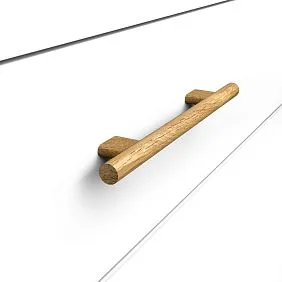
Wooden furniture handles bring natural warmth and coziness to interiors. They look especially harmonious on solid wood furniture, emphasizing its naturalness and eco-friendliness.
Oak, beech, maple, walnut, cherry — each wood species has its unique grain and tone. Modern wood processing technologies allow creating handles of various shapes and sizes, protecting them from moisture and mechanical damage.
Exotic wood species — rosewood, wenge, ebony — impart furniture handles with special elegance and status. Such models become true ornaments of furniture, attracting attention with their unique texture and deep color.
Glass and Ceramic Handles: Refinement in Details
Glass furniture handles are embodiments of elegance and lightness. They can be transparent or colored, matte or glossy, with decorative inclusions or solid colors. Handles made of Murano glass have gained particular popularity, each being a unique work of art.
Ceramic handles feature a variety of shapes and colors. They can be decorated with painting, glaze, or relief patterns. Such handles become a striking accent in interiors, giving furniture individuality and character.
Innovative materials: looking toward the future
Modern technologies are not standing still, and innovative materials are emerging in furniture handle production. Composite materials combine the strength of metal with the lightness of plastic. Acrylic and polycarbonate allow creating transparent handles with a glass effect, but stronger and lighter.
Silicone handles have become popular in children's rooms due to their safety and tactile comfort. Bioplastics derived from renewable resources meet modern ecological requirements.
Stylistic Diversity: Handles for Any Interior
Classic furniture handles: timeless and unfashionable
Classic furniture handles never go out of style. They are characterized by restrained elegance, harmonious proportions, and high-quality materials. Such handles perfectly complement furniture in the styles of Classicism, Empire, and Neoclassicism.
Characteristic features of classic handles include symmetry, smooth lines, and the use of traditional materials (brass, bronze, hardwoods). They are often adorned with floral ornamentation, geometric patterns, and motifs imitating antiquity.
Handles with curved shapes, button-style handles with decorative inserts, and handles with porcelain inserts are suitable for classic interiors. The color palette is predominantly restrained—gold, bronze, antiqued silver.
Modern furniture handles: functionality and minimalism
Modern design of furniture handles is characterized by minimalist forms, functionality, and the use of innovative materials. Such handles fit perfectly into interiors in the styles of minimalism, high-tech, and contemporary.
Geometric shapes—rectangles, squares, cylinders—predominate in the design of modern handles. Models with matte surfaces are popular, as they not only look aesthetically pleasing but are also practical—fingerprints do not remain on them.
The color palette of modern handles is diverse—ranging from classic silver and chrome to black, white, and colorful models. Handles in the shades of 'graphite' and 'black chrome' have gained particular popularity, harmonizing well with modern dark-toned furniture.
Vintage and retro handles: nostalgia and character
Vintage furniture handles bring a touch of nostalgia and romance to interiors. They can be authentic antique pieces or modern replicas styled to resemble vintage items.
Characteristic features of vintage handles include artificially aged surfaces, patina, and intricate decoration. Models imitating styles of past eras—Baroque, Rococo, Modern, Art Deco—are popular.
Special metalworking techniques—blackening, brushing, patination—are used to create a vintage effect. Such handles become not just functional elements but also decorative accents, giving furniture character and history.
Ethnic motifs: exotic details
Ethnic furniture handles reflect the cultural traditions of various peoples around the world. They become a striking accent in interiors, giving furniture an exotic flair.
Moroccan motifs are embodied in handles with arabesques and geometric patterns. Indian traditions are reflected in vibrant, richly decorated models with floral ornamentation. Scandinavian style is expressed in minimalist forms and natural materials.
Ethnic handles are often handmade, making each piece unique. They can be crafted from traditional materials for a specific culture—ceramics, wood, wrought metal.
Functional types of furniture handles
Handle-pulls: genre classic
Handle-pulls are the most common and versatile type of furniture handles. They consist of a curved or straight bar secured to furniture with two screws. This construction ensures a secure grip and ease of use.
The modern market offers a vast variety of handle-pulls—from miniature models just a few centimeters long to substantial bars covering the entire facade width. They can be made from almost any material—metal, wood, plastic, glass.
Handle-pulls are especially convenient for drawers and hinged doors. They evenly distribute load, preventing facade deformation during intensive use.
Button handles: compactness and style
Button handles are characterized by compactness and minimalism. They are small protruding elements secured to furniture with a single screw. Such handles are ideal for small drawers, cabinets, and side tables.
Despite their modest size, button handles can be quite expressive. They come in round, square, oval, and multi-faceted shapes. Their surface can be smooth or textured, decorated with patterns or inlays.
Button handles in shabby chic and Provence styles—with ceramic or porcelain inserts decorated with floral motifs—have gained particular popularity. In modern interiors, minimalist metal buttons with geometric shapes are in demand.
Inset handles: elegant restraint
Inset handles (or sink handles) are mounted into a specially prepared recess in the furniture facade. This construction ensures a flat facade surface, which is especially important in spaces with limited room.
Inset handles are ideal for minimalist interiors where clean lines and simplicity are valued. They are also practical to use—clothing cannot catch on them, which is relevant for narrow passages and hallways.
Modern manufacturers offer inset handles in various shapes and sizes—from classic semicircular to rectangular and shaped ones. They can be made of metal, plastic, wood, or composite materials.
Profile Handles: Innovative Solution
Profile handles are aluminum or plastic profiles mounted along the entire facade length. They create a unified line, visually expanding the space and giving furniture a modern look.
Such handles are especially popular in minimalist and high-tech style kitchen cabinets. They can be integrated into the facade structure or mounted on its surface. Profile handles are often complemented by LED lighting, creating an eye-catching illumination and simplifying furniture use at night.
Advantages of profile handles include ergonomic design, full facade opening capability, and a modern appearance. They are available in various color options — silver aluminum, black, white, stainless steel imitation.
Furniture handles-railings: industrial chic
Railings are metal tubes secured to the facade with two posts. They introduce industrial style elements into the interior, creating a sense of reliability and solidity.
Such handles are especially suitable for kitchens — they are not only functional but can also serve as towel holders. Railings are primarily made of stainless steel, aluminum, or brass, ensuring their durability and resistance to moisture.
Modern manufacturers offer railings of various thicknesses and lengths, with straight or curved posts, in different color options — from classic silver to black, bronze, and gold.
Ergonomics and functionality: how to choose the perfect handle
Anatomy of comfort: ergonomic aspects
Ergonomics of furniture handles is a crucial aspect that directly affects the comfort of using furniture. An ideal handle should fit comfortably in the hand, not cause discomfort when grasped, and have no sharp edges or protrusions.
The handle shape should correspond to the natural hand position during opening. For hinged doors, vertical handle-eyes are optimal; for drawers, horizontal handles are preferred. The handle size should be proportional to the facade size and match the physiological characteristics of users.
Special attention should be paid to handles for children's furniture — they must be safe, free of sharp edges and small parts that may detach. Soft materials or rounded-edge models are preferred.
Technical Specifications: What to Pay Attention To
When choosing furniture handles, it is important to consider not only their appearance but also technical specifications. The center-to-center distance (distance between mounting hole centers) must match existing holes in the furniture or planned construction.
The handle material determines its durability and resistance to various influences. For kitchen furniture, handles made of stainless steel or with anti-corrosion coating are recommended, resistant to moisture and temperature fluctuations. For bathroom furniture, water resistance and ease of maintenance are crucial.
The mounting method of the handle affects its secure fixation and longevity. Most handles are mounted using screws, which must be made of high-quality material and have the appropriate length for the specific facade.
Innovative mechanisms: push-to-open and soft-close
Modern technologies offer an alternative to traditional furniture handles — push-to-open (press-to-open) systems. Such mechanisms allow opening facades with a simple press, which is especially convenient when hands are occupied or dirty.
Soft-close (gentle closing) systems prevent noisy slamming of doors and drawers, extending the lifespan of furniture. They can be used in combination with traditional handles or push-to-open systems.
Innovative mechanisms are especially in demand in modern minimalist interiors, where clean lines and absence of visible hardware are valued. They are also practical in use — they eliminate the risk of pinching fingers and reduce stress on hinges and guides.
Where to buy furniture handles: a guide to choosing a supplier
Specialized stores: advantages of a professional approach
Specialized furniture hardware stores offer a wide range of furniture handles in various styles, materials, and price categories. Here, you can expect professional consultation and the opportunity to see and touch the product before purchasing.
Advantages of such stores include quality guarantees, presence of compliance certificates, and the ability to select all necessary hardware in one place. Often, installation services or mounting consultations are also offered.
In specialized stores, you can find not only standard models but also exclusive designer handles, collector's series, and handmade items. This is especially important if you are creating a unique interior and want each detail to be special.
Online purchases: convenience and wide selection
Online stores offer a vast selection of furniture handles from manufacturers around the world. Here, you can find both mass-market models and rare, collector's items that are difficult to find in regular stores.
Advantages of online shopping include the ability to compare prices from different suppliers, read customer reviews, and order products at any convenient time. Many online stores offer detailed photos, video reviews, and product specifications, helping make an informed decision.
If you decided to purchase furniture handles onlinePay attention to the store's reputation, availability of contact information, delivery and return conditions. It is advisable to choose verified suppliers with positive reviews and transparent pricing policies.
Furniture Hardware Manufacturers: Direct Contact
Purchasing furniture handles directly from the manufacturer has several advantages - absence of intermediary markup, guarantee of authenticity, possibility to order non-standard models or large batches.
Many furniture hardware manufacturers have their own showrooms or online stores where their product range is presented. Here you can get comprehensive information about the products, learn about new arrivals and special offers.
Direct contact with the manufacturer is especially important if you are involved in furniture production or large-scale renovation and require a significant quantity of identical handles. In this case, you can expect wholesale prices and individual cooperation terms.
Criteria for selecting a reliable supplier
When choosing a supplier of furniture handles, pay attention to the following criteria:
- Reputation and experience in the market. Reliable suppliers value their reputation and strive for long-term cooperation with clients.
- Product range. A wide selection of models in various styles, materials, and price categories indicates a professional approach to product assortment.
- Product quality. Furniture handles must meet stated specifications, have quality certificates, and be made from safe materials.
- Cooperation terms. Transparent pricing policy, clear delivery and return conditions, professional consultations - signs of a reliable supplier.
- Additional services. The ability to order samples, installation services, and technical support increase the value of cooperation.
Practical tips for choosing and installing furniture handles
How to choose handles to match furniture and interior style
Choosing furniture handles should be harmoniously aligned with the overall interior style and furniture design. Here are some recommendations:
- For classic interiors, handles made of brass or bronze with patina, decorative elements imitating antique motifs or floral ornamentation are suitable.
- In modern minimalist interiors, sleek metal handles in geometric shapes, profiled handles, and push-to-open systems are appropriate.
- For Provence or shabby chic styles, choose handles with ceramic inserts decorated with floral motifs, or metal handles with artificially aged surfaces.
- In loft or industrial style interiors, large metal rail handles, raw metal handles, or handles with rust effect look natural.
- Scandinavian style is characterized by simple wooden handles or light-colored metal handles with minimal decoration.
Remember that furniture handles must match not only the overall interior style but also other hardware elements - hinges, locks, and furniture legs.
DIY installation: step-by-step guide
Installing furniture handles is a simple process that can be done independently with a minimal set of tools. Here is a step-by-step guide:
- Prepare necessary tools: drill, drill bit of appropriate diameter, screwdriver, ruler, pencil, template for marking holes (can be made yourself or purchased ready-made).
- Determine the optimal position of the handle on the front. For hinged doors, handles are usually placed on the side opposite the hinges, at a height of 2/3 from the bottom edge. For drawers - centered on the front or in the upper third.
- Using the template and pencil, mark the locations for drilling holes. The template will help ensure uniform handle placement on all fronts.
- Drill holes of the required diameter. It is recommended to start with a smaller diameter hole and then gradually enlarge it to the desired size.
- Install the handle by securing it with screws from the inside of the front. Do not tighten the screws too much to avoid damaging the front.
- Check the secureness of the mounting and functionality of the handle.
If you are installing handles on existing furniture, first measure the center-to-center distance of the old handles to select new ones with similar parameters or prepare to drill new holes.
Care and maintenance: extending service life
Proper care of furniture handles extends their service life and maintains their attractive appearance. Care recommendations depend on the handle material:
- Metal handles should be wiped with a soft dry cloth. For removing dirt, a mild soap solution can be used, followed by thorough drying. Avoid abrasive cleaning agents that may damage the finish.
- Wooden handles require careful handling. Wipe them with a slightly damp cloth, avoiding excess moisture. Periodically treat them with special waxes or wood oils to protect the surface and enhance the natural beauty of the wood texture.
- Glass and ceramic handles can be cleaned with mild cleaning agents, avoiding strong pressure that may cause breakage. After cleaning, they should be thoroughly dried.
- Handles with decorative coatings (gold, patina, enamel) require especially careful care. It is recommended to wipe them only with a dry, soft cloth, avoiding contact with water and cleaning agents.
Periodically check the secure attachment of handles and tighten screws as needed. This will prevent loosening and potential damage to the facade.
Replacing Furniture Handles: Updating Without Repair
Replacing furniture handles is one of the simplest and most effective ways to refresh your interior without major renovation. New handles can completely transform the look of old furniture, giving it a modern appearance or, conversely, a vintage charm.
When replacing handles, it is important to consider the center-to-center distance — the distance between the centers of mounting holes. If you select handles with the same center-to-center distance as the old ones, the replacement process will be as simple as possible. Otherwise, you will need to fill the old holes and drill new ones.
To fill old holes, you can use wood putty matched to the furniture’s color, or special plugs. After the putty dries, sand the surface and repaint if necessary.
If you want to radically change the style of the furniture, consider replacing knob handles with button handles or vice versa. This may require more significant changes, but the result often exceeds expectations.
Trends and Innovations in the World of Furniture Handles
Modern Trends in Furniture Hardware Design
The world of furniture handles, like interior design as a whole, is subject to fashion trends. Here are some current trends:
- Minimalism and Geometry. Simple geometric-shaped handles — rectangular, square, cylindrical — are popular. They feature clean lines and lack decorative elements.
- Integration into furniture design. Handles that visually blend with the facade or become its continuation. These may include cutouts in the facade, hidden handles, or integrated profiles.
- Contrasting Combinations. It is popular to use handles that contrast with the facade in color or texture — black handles on light furniture, matte on glossy surfaces.
- Return to Nature. The ecological trend is reflected in the use of natural materials — wood, stone, leather — as well as natural forms and textures.
- Retro Motifs. Interest is being revived in mid-20th century design — handles in Art Deco, Modernist, or Scandinavian styles of the 1950s–60s.
- Style Mixing. Modern designers boldly combine elements from different styles and eras, creating unique, eclectic solutions.
Technological Innovations: Smart Handles and Innovative Materials
Technological progress has not bypassed furniture hardware. Innovative solutions are emerging that make furniture use more comfortable and functional:
- Touch-sensitive opening systems that respond to hand contact or movement near the facade.
- Integration of LED lighting into handle construction, making furniture easier to use at night and creating additional decorative effects.
- Antibacterial coatings, especially relevant for kitchen furniture and furniture in medical facilities.
- Use of new composite materials combining the strength of metal with the lightness of plastic and the aesthetics of natural materials.
- 3D printing technologies enabling the creation of handles with complex shapes and unique designs.
- Electronic access control systems integrated into furniture handles — biometric scanners, RFID tags, coded locks.
Ecological Aspect: Sustainable Development in Hardware Production
Ecological awareness is becoming an important factor in furniture hardware production. Manufacturers strive to minimize negative environmental impact:
- Use of recycled materials — aluminum, plastic, glass — to manufacture new handles.
- Implementation of zero-waste production technologies that allow for maximum resource efficiency.
- Development of biodegradable materials that do not harm nature after their service life ends.
- Product certification according to ecological standards, confirming the absence of harmful substances and compliance with sustainable development principles.
- Localized production, reducing the carbon footprint from product transportation.
- Durability as an ecological principle — the longer an item serves, the fewer resources are needed to produce new ones.
Conclusion: a small detail with great significance
Furniture handles are not just a functional element, but also an important design detail capable of transforming the appearance of furniture and the entire interior. Properly chosen handles emphasize the style of the furniture, reflect the owner's taste, and create a harmonious atmosphere in the room.
The modern market offers a vast variety of furniture handles — from classic to avant-garde, from budget-friendly to exclusive designer models. Everyone can find an option that suits their taste, needs, and financial possibilities.
When choosing furniture handles, it is important to consider not only their appearance but also functionality, ergonomics, material quality, and manufacturing. Handles should be not only beautiful but also comfortable to use, durable, and suitable for the purpose of the furniture.
If you are wondering, where to buy furniture handles High-quality and uniquely designed handles — pay attention to specialized furniture hardware stores, which offer a wide selection and professional consultations. Online stores also provide the opportunity to choose from thousands of models from manufacturers around the world.
Remember that replacing furniture handles is one of the simplest and most accessible ways to refresh your interior without major renovation. New handles can completely transform the look of old furniture, giving it a modern appearance or, conversely, a vintage charm.
Pay attention to this small but important detail, and your interior will take on new colors, becoming more harmonious and functional. Furniture handles are the case where small changes lead to significant results.