Article Contents:
- 1. Why proper selection of materials and hardware matters
- 2. Wood-based furniture materials
- 2.1. Laminated chipboard (MDF)
- 2.2. MDF (fine particle board)
- 2.3. Plywood
- 2.4. Solid wood
- 2.5. Veneer
- 3.1. Plastic (HPL/CPL) and acrylic
- 3.2. Glass
- 3.3. Metal
- 4.1. Hinges
- 4.2. Drawer guides
- 4.3. Lift mechanisms
- 4.4. Furniture handles
- 4.5. Feet, dampers, and fasteners
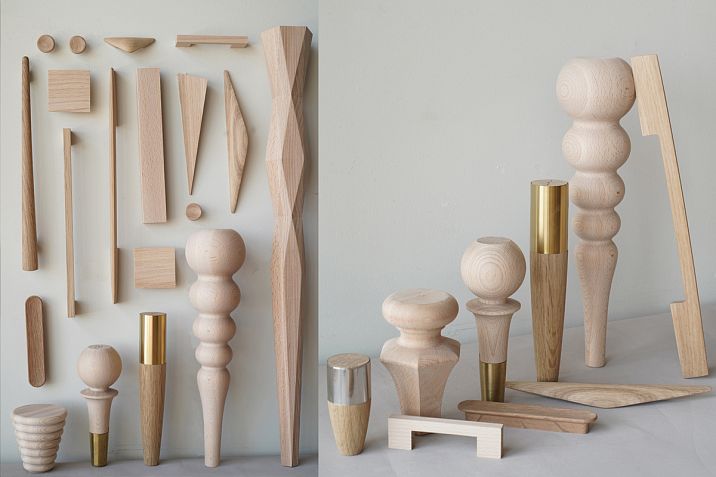
Modern furniture is the result of harmonious combination of diverse materials and hardware, which determine its appearance, durability, comfort, and service life. Whereas in the past, wood solid and simple metal parts were mostly used, today the range of possibilities has expanded manyfold. Furniture materials include dozens of options based on wood, plastic, metal, glass, and hardware has long gone beyond ordinary hinges and handles. Such a wide range of options requires careful consideration: one must take into account the purpose of the furniture, usage conditions, budget, style, and much more.
In this article, we will thoroughly examine which furniture materials are commonly found on the market, their qualities, and also discuss various types of furniture hardware — from hinges and guides to handles and lift mechanisms.


1. Why proper selection of materials and hardware matters
- Durability: the better the base (panels, solid wood, metal) and fastening elements, the longer the furniture will last without breakdowns or squeaks.
- Appearance: it is the materials (their texture, color, finish) and hardware (style of handles, hinges, frames) that form the aesthetic appearance of the item.
- Ease of use: smooth door opening, quiet drawer closing, resistance to moisture or heat — all of this is achieved through proper selection of hardware and material.
- Ecological safety: wood-based panels may emit formaldehyde, and metal coatings — harmful VOCs (volatile organic compounds). Proper selection reduces health risks.
- Cost: price varies significantly depending on the type of base (MDF, particleboard, solid wood, veneer) and hardware mechanisms used (from simple roller guides to expensive systems with soft-close mechanisms).
When you think about a new kitchen, a sliding wardrobe, a sofa, a bed, or office furniture, you are actually choosing a material (or combination thereof) and the corresponding set of hardware. We will explain each aspect in detail.




2. Wood-based furniture materials
Our factory also produces:


2.1. Particleboard (laminate particleboard)
Description: Composed of wood shavings impregnated with resins, pressed into panels, and covered on top with laminate or melamine film.
● Advantages: affordable price, vast variety of decorative options, ease of maintenance, good moisture resistance if the edge is of high quality.
● Disadvantages: screws do not hold well with repeated removal, weak strength at ends, difficulty in shaping or cutting.
● Application: cabinet furniture (cabinets, shelves, drawers), office furniture, budget sets.
Get Consultation
2.2. MDF (fine particle board)
Description: Panel made of fine wood fibers, densely pressed under pressure with the addition of safe resins.
● Advantages:
○ High density and strength.
○ Capability for routing (fronts, panels).
○ Better holds fasteners compared to MDF.
Disadvantages:
○ More expensive than MDF.
○ Heavier at larger sizes.
● Application: kitchen fronts (especially with PVC, enamel, or acrylic film), cabinet doors, children's rooms.
2.3. Plywood
Description: Layered material where veneer layers are glued perpendicularly to each other.
● Advantages:
○ Excellent rigidity, shape stability.
○ Lightweight (compared to solid wood).
○ Can be used as a decorative material (with quality veneer).
● Disadvantages:
○ Requires additional finishing (varnish, paint).
○ In cheaper grades, voids and unevenness may occur.
● Application: back panels, side panels, children's furniture, Scandinavian and eco-design.
2.4. Solid Wood
Description: Solid boards or glued-up beams made from natural wood (oak, beech, ash, pine, birch, etc.).
● Advantages:
○ Luxurious appearance, natural texture.
○ High durability (with proper care).
○ Capability for restoration and sanding.
Disadvantages:
○ High cost.
○ Susceptibility to humidity fluctuations (cracks, warping).
Heavy weight.
● Application: classic furniture (commodes, tables, cabinets), items in country-, Provence-, chalet-style, expensive designer solutions.
2.5. Veneer
Description: Thin wood slice (0.3–0.6 mm), glued to a base (MDF/DSP/veneer).
● Advantages:
○ Appearance of natural wood.
○ Lower cost compared to solid wood.
○ Wide variety of species (oak, ash, exotic).
● Disadvantages:
○ Thin layer, vulnerable to impacts and scratches.
○ Requires careful finishing (varnish, oil).
● Application: kitchen, living room, bedroom facades, premium office furniture.
3. Other materials: plastic, acrylic, glass, metal
3.1. Plastic (HPL/CPL) and acrylic
● HPL plastic: thick-laminated surface, resistant to scratches, moisture, and temperature. Often used for kitchen countertops, as it withstands mechanical impacts.
● CPL (Continuous Pressure Laminate): slightly thinner than HPL, but similar in properties.
● Acrylic: provides glossy or matte finish, looks deep and luxurious, but may scratch with careless handling.
Used in: mainly kitchen and bathroom cabinets, where durability and moisture resistance are needed. Acrylic facades are also popular in modern living rooms.
3.2. Glass
● Tempered glass (strong, safe when broken) used for shelves, display case doors, countertops.
● Advantages: visual “lightness”, light reflection, space expansion.
● Disadvantages: require careful handling (especially corners), fingerprints are visible.
3.3. Metal
● Aluminum (lightweight, does not rust) — profiles, facade frames, handles;
● Steel (strong, heavy) — frames, table and chair legs, decorative elements.
● Pros: strength, modern look, durability.
● Cons: may be prone to corrosion, “cold” aesthetics, requires good protection (powder coating, chrome plating).
4. Furniture hardware: hinges, guides, handles, and more
Hardware is like the “skeleton” and “joints” of furniture, ensuring functionality. Without quality hinges and guides, any facades and carcasses will quickly start to squeak, jam, or sag.
4.1. Hinges
● Surface-mounted: fully attached from the outside, classic option for swing doors.
● Semi-surface-mounted: when the door is closed, part of the carcass is partially visible, often used when two doors are on one partition.
● Inset: the door is fully “set into” the carcass, the hinge is practically invisible.
Options:
- Soft-close hinges: smooth closing, no slamming or impacts.
- Quick-installation systems (clip-on): simplify mounting and removal of doors for repair or cleaning.
4.2. Drawer guides
- Roller-type: simplest and cheapest, may squeak, not always smooth.
- Ball-bearing (telescopic): withstand greater weight, silent operation, can be extended to full depth.
- With soft-close mechanisms: the drawer gently extends to the last centimeters and closes quietly.
The choice of guides significantly affects the convenience of storing items in drawers, the lifespan, and overall comfort level.
4.3. Lift Mechanisms
In kitchens and cabinets, upward-opening facade systems are increasingly used. Gas-lifts, spring mechanisms, and electric drives are employed. They allow easy opening of doors and secure them in the upper position.
4.4. Cabinet Handles
The most noticeable part of the hardware. Handles come in various types:
● Hooks: curved or straight, universal.
● Rails: long bars, ideal for modern kitchens and cabinets.
● Buttons: small "buttons," suitable for classic or country styles.
● Inset/recessed: for sliding doors or minimalist design.
● Wooden handles: pair well with eco, scandinavian, and classic styles, adding warmth to tactile sensations.
In addition to shape, it is important to pay attention to material (metal, wood, plastic, ceramic) and finish quality (chrome, nickel, patina, paint) — this affects durability and aesthetics.
4.5. Feet, Dampers, and Fasteners
● Feet (legs, casters): necessary for height adjustment or easy mobility of furniture.
● Dampers: adhesive rubber rings or mechanisms that soften the impact of doors hitting the frame.
● Confirmers, euro screws, eccentric fasteners: parts for hidden connections during furniture assembly.
5. How to Combine Materials and Hardware Depending on Style
- Classic interior: solid wood or veneered facades, decorative or panel doors, bronze or brass handles, carved elements. Hinges may be surface-mounted, handles — buttons or hooks with patina.
- Minimalism/High-Tech: glossy acrylic or plastic facades, metal, glass. Rail handles or push-to-open (no handles), hidden hinges, telescopic guides with soft-close mechanisms.
- Loft: rough wood texture (solid wood or laminate "aged"), metal frame, black hardware, open shelves, glass inserts.
- Scandinavian style: light plywood, light-colored laminate/MDF, wooden handles, simple shapes, lightweight legs, minimal decor.
- Country/Provence: solid wood (pine, birch) or MDF with routed patterns, patina, button handles with ceramic inserts, soft pastel shades.
6. Factors Affecting Cost
- Material type: solid oak is more expensive than laminate, and MDF with acrylic coating is more expensive than standard laminate panels.
- Manufacturer: well-known brands (Egger, Kronospan, Blum, Hettich) guarantee quality but cost more.
- Configuration: soft-close mechanisms, lift mechanisms, and unusual handles add to the price.
- Design complexity: decorative routing, curved facades increase cost.
When planning your budget, consider not only the cabinet material, but also facade finish, hardware, and possible services for cutting and assembly.
7. Eco-aspects: emission class, safe finishes
Formaldehyde and other volatile organic compounds may be present in laminate materials (Laminate, MDF) and finishes for solid wood. For residential spaces, it is better to choose emission class E0/E1. Reputable manufacturers provide certificates. Solid wood requires lacquer or oil finish — preferably water-based compositions with no strong odors.
Humidity control: ideally 40–60% at a temperature of 18–25 °C. Avoid direct contact with radiators and extreme temperature fluctuations.
- Humidity control: ideally 40–60% at a temperature of 18–25 °C. Avoid direct contact with radiators and extreme temperature fluctuations.
- Correct cleaning:
○ For laminate/MDF with film — use a soft, damp cloth, and wipe dry immediately.
○ For solid wood/veneer — use special polishes, oils, and handle water with care.
- Hardware adjustment: hinges may slightly loosen over time, guides may require cleaning from dust.
- Surface protection: hot pads, countertop mats.
9. Purchase or order: what to look for when choosing ready-made furniture
- Cabinet material: Laminated Particle Board, MDF, solid wood? Confirm thickness (16–18 mm is common, 22–25 mm for countertops).
- Front panel material: if it’s Laminated Particle Board, ask about the manufacturer (Egger, Kronospan, domestic laminate brands). If MDF with film — check for absence of bubbles and wrinkles. If solid wood — check for smoothness, presence of knots, defects.
- Hardware: don’t hesitate to open doors and pull out drawers. Hinges should operate smoothly, drawers — without sticking, handles — should be comfortable to hold.
- Edge banding: especially relevant for Laminated Particle Board, must be evenly glued without gaps; poor execution causes edges to “peel” and quickly absorb moisture.
- Certificates: emission class E1/E0, optionally — confirmation of ecological safety of wood (FSC, PEFC).
10. DIY or collaboration with professionals
● "Do it yourself": if you enjoy DIY, small furniture items (a cabinet, a small shelf, a table) can be made by purchasing Laminated Particle Board/MDF sheets, required hardware, and furniture handles from a hardware hypermarket. However, skills in working with tools, precise calculations, careful cutting, and edge banding are required.
● Working with masters: if you want a complex item with milling, lift mechanisms, and lack the desire or skills — a designer/carpenter/furniture maker will not only help you choose materials but also ensure professional assembly.
● Hybrid approach: design furniture using specialized programs (SketchUp, PRO100), order cutting of Laminated Particle Board/MDF, edge banding from a store, and assemble it yourself.
11. Conclusion: a choice that affects the entire life of the furniture
Choosing furniture materials and hardware is always a balance between budget, aesthetics, functionality, and durability. There are many options: from simple Laminated Particle Board for budget projects to solid wood with exclusive hardware for luxurious interiors. Remember:
- The quality of the base (Laminated Particle Board, MDF, plywood, solid wood) determines reliability.
- The outer layer (veneer, plastic, acrylic) forms the style and level of protection against moisture and impacts.
- Hardware (hinges, guides, handles) ensures ease of use.
- Ecology: emission class E0/E1, safe adhesives and coatings preserve health.
Whether you are a designer, carpenter, or client, understanding the properties of different wood materials, the ability to recognize quality hardware, and knowledge of basic styles will help create furniture that will delight and serve for many years.
When you open a cabinet door or quietly close a drawer with a soft-close mechanism, remember: behind this ease and beauty lies the correct selection of materials and mechanisms. May this article serve as a foundation for making informed decisions, whether purchasing ready-made furniture or making it yourself.