Article Contents:
- 1. Panel materials: an affordable and practical solution
- 1.1. MDF: the market leader in price-to-quality ratio
- 1.2. MDF: the 'golden middle' in terms of strength and aesthetics
- 1.3. Plywood: strength and lightness
- 4.1. Plastic (HPL, CPL)
- 4.2. Acrylic
- 4.3. Laminate/Melamine
- 6.1. Why hardware matters
- 6.2. Choosing handles
When it comes to buying or making your own furniture, the main question becomes choosing the right materials. The appearance, durability, ease of use, and even the ecological safety of the final product depend directly on the materials you decide to buy. At the same time, finding the optimal balance between price and quality is not always easy, as the market offers dozens of variations: from budget plywood to premium solid wood and exotic finishes. How to avoid getting lost in the assortment and make the right choice? This article will tell you about the most common materials for furniture production and what to pay attention to when purchasing.


1. Panel materials: an affordable and practical solution




1.1. MDF: the market leader in price-to-quality ratio
MDF (medium-density fiberboard) – the most popular option for producing cabinet furniture. It consists of pressed wood chips with a glue base, covered on top with a decorative film (laminate).
● Advantages: low cost, wide range of decorative options (from wood grain to fantasy patterns), low maintenance requirements.
● Disadvantages: relatively low resistance to chipping, risk of swelling if the edge is damaged.
● Where to buy: MDF sheets can be purchased at home improvement hypermarkets (e.g., Leroy Merlin, OBI) and specialized furniture stores. Often, they also offer cutting and edge banding services.
Our factory also produces:


1.2. MDF: the 'golden middle' in terms of strength and aesthetics
MDF (medium-density fiberboard) – a board made of wood fibers pressed under pressure with minimal addition of binding resins.
● Advantages: more robust and dense structure, possibility of intricate facades milling, high resistance to moisture with proper finishing.
● Disadvantages: more expensive than MDF, heavier, requires quality hardware.
● Application: ideal for kitchen facades (especially if finish is enamel, PVC film, acrylic), as well as doors, cabinets, and decorative panels.
● Where to buy: specialized bases (PlitTorG, EGO-polymer), furniture manufacturers (sometimes sell to private customers), large construction centers.
Get Consultation
1.3. Plywood: strength and lightness
Plywood – thin veneer layers glued together. Layers are arranged perpendicular to each other, providing high rigidity.
● Advantages: strength with less weight, easy to process, eco-friendliness (when adhesive norms are followed).
● Disadvantages: internal voids possible in cheap grades, requires finish coating (lacquer, paint).
● Where to use: children's furniture, Scandinavian style, eco-design, back panels of cabinets, shelves.
2. Solid wood: noble material for status furniture
If you value natural aesthetics, 'breath of nature,' and long service life, then buying solid wood is worth it. Common species – oak, beech, ash, pine, birch. For premium segment, walnut, redwood, and other exotic species are used.
● Pros: beautiful natural wood grain, possibility of restoration (sanding, new lacquering), high strength.
● Cons: sensitivity to humidity fluctuations, heavy furniture weighs a lot, price is relatively high.
● Where to buy: specialized sawmills, wood processing plants, furniture stores offering solid wood blanks and elements (legs, frames). Can be ordered to custom sizes.
3. Veneered materials: wood beauty without high price
Veneer – thin layer of natural wood glued onto a base (MDF, particleboard, plywood). Results in a surface imitating solid wood, but the item weighs less and costs less.
● Advantages: 'wood-like' appearance, wide selection of species (oak, ash, alder, wenge, exotic).
● Disadvantages: requires care, veneer may chip or delaminate upon impact.
● Where to use: kitchen, living room, bedroom facades, countertops for dining and writing tables.
● Where to buy: furniture factories and stores specializing in cutting and finishing. You can also buy ready veneer sheets and order application onto MDF/Particleboard in a specialized workshop.
4. Plastic, acrylic and laminate: bright and practical finishes
4.1. Plastic (HPL, CPL)
Plastic laminate (high or continuous pressure) is glued onto a panel base. This makes facades and countertops very resistant to moisture, heat, and mechanical damage.
● Pros: durability, wide color palette, practicality (kitchens, bathrooms).
● Cons: difficult to process (require good edge banding machines), higher price than standard particleboard.
● Where to buy: manufacturers of furniture components (Egger, Arpa, FunderMax) and their official dealers. Often offer edge banding services (edge forming).
4.2. Acrylic
Facades with acrylic coating have deep gloss. Colors can be very bright or, conversely, pastel, but in any case – visually striking.
● Pros: 'mirror' gloss, fairly high resistance to minor scratches, easy maintenance.
● Cons: higher cost than standard laminate, may chip under strong impact.
● Where to buy: companies specializing in acrylic facades (e.g., furniture factories producing custom kitchen sets).
4.3. Laminate/Melamine
The simplest laminate finish (melamine paper) is a thin layer protecting the panel from minor damage. Usually used in the budget segment.
● Pros: low price, decent selection of decorative options.
● Cons: wears out quickly, may chip upon impact, afraid of moisture on edges.
● Where to buy: home improvement stores (in the form of ready-made sheets), furniture workshops.
5. Metal and glass components
If you need a table frame, chair legs, or a loft element, metal is indispensable. Steel (more durable) or aluminum (lighter but more expensive) profiles and tubes are offered. Glass is often used for doors and shelves (must be tempered).
● Where to buy: construction markets (angles, profiles), "metal bases", glassware stores. You can order glass cutting to your specified dimensions.
6. Furniture hardware and handles
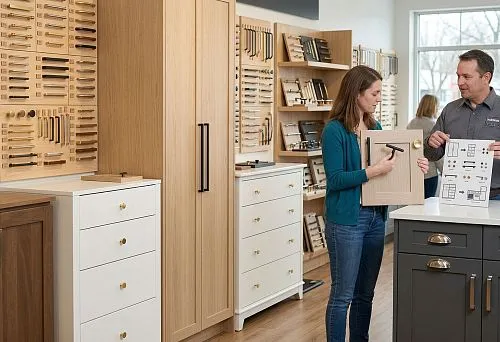
Even the best materials won't reveal their potential without quality hardware: hinges, guides, locks, and of course, furniture handles.
6.1. Why hardware matters
● Functionality: proper hinges and guides provide smooth opening and closing without sticking.
● Durability: cheap hardware quickly fails and requires constant adjustment.
● Aesthetics: hinges andFurniture Handles can become a design accent or, conversely, be hidden for a minimalist effect.
6.2. Choosing handles
● Hooks: universal, well-suited for any cabinet furniture.
● Buttons: popular in classic and country styles.
● Rails: long, elongated handles, popular in modern kitchens.
● Inset: in sliding systems, minimalist styles.
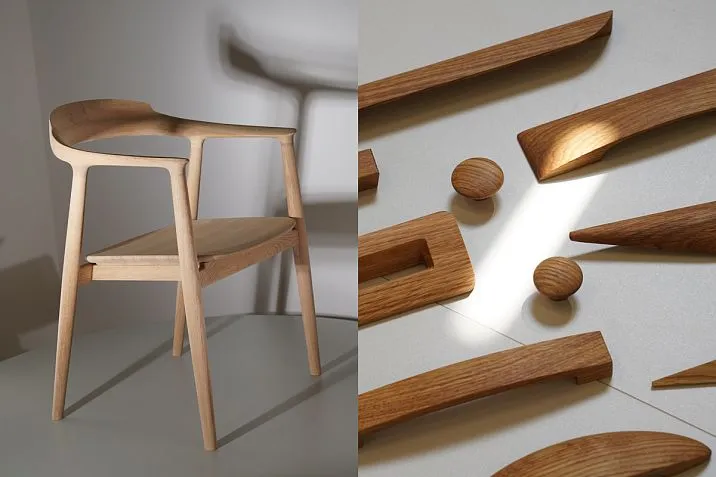
● Wooden handles:Solid wood handles appear "warm" and naturally fit eco- or Scandinavian interiors.
Where to buy: specialized hardware stores (Blum, Hettich, GTV), home improvement hypermarkets, furniture markets. Pay attention to the materials used and finish (galvanization, lacquer, enamel).
7. Where to buy furniture materials: useful sources
- Home improvement hypermarkets (Leroy Merlin, Castorama, OBI). Suitable for small purchases and "DIY" projects. Assortment is often limited, prices are average.
- Specialized warehouses and bases. You can find a wide selection of panels (MDF, plywood, particleboard), often offer cutting and edge banding services. Prices are lower than retail, but sold wholesale or in specific sheets.
- Online stores. Offer convenient search and delivery, but be prepared for shipping costs, especially if the material is bulky.
- Furniture manufacturers. Some factories or workshops sell leftover materials and can perform custom cutting. Prices are often more favorable, but you need to search for contacts and confirm terms.
- Carpentry and woodworking workshops (for solid wood). You can also order blanks for legs, rails, and frames there.
8. How to check quality when purchasing
- Inspect the panels. Check for flatness, absence of chips, and surface defects.
- Sniff (especially MDF): a strong chemical odor may indicate high formaldehyde content. Ask about emission class (E0, E1).
- Specify the brand. Known manufacturers (Egger, Kronospan, Swiss Krono, Pfleiderer) guarantee more stable quality.
- Certificates: request documents confirming compliance with GOSTs, European standards (FSC, PEFC), formaldehyde emission levels.
- When purchasing veneer, pay attention to color uniformity and absence of cracks.
9. Material and Interior Style Combination
● Classic: solid wood, veneered fronts, bronze or wooden handles.
● High-tech, minimalism: smooth glossy surfaces (acrylic, plastic), push-to-open systems.
● Loft: combination of rough wood (or MDF 'under concrete') and metal, exposed frames.
● Scandinavian style: plywood, light wood,Wooden handlessimple shapes.
10. Finishing
To buy furniture materials wisely, you must define the style, budget, and usage conditions. Choose the appropriate base (MDF, particleboard, solid wood, plywood), select the finish (veneer, plastic, acrylic), and don't forget about quality hardware, including reliableFurniture Handles. Such a comprehensive approach will ensure you a reliable and aesthetically pleasing piece of furniture that will serve you for many years and become an organic part of your interior.