Article Contents:
- Psychological Foundations of Perceiving Furniture Advertising
- Emotional Triggers in Furniture Advertising
- Cognitive Processes in Perceiving Advertising
- Visual Strategies in Furniture Advertising
- Photography Techniques for Furniture
- Compositional solutions
- Color Strategies
- Textual Components of Furniture Advertising
- Headlines and Slogans
- Product Descriptions
- Call to Action
- Channels of Furniture Advertising Distribution
- Traditional Media
- Offline Points of Contact
- Audience Targeting and Segmentation
- Demographic Segmentation
- Psychographic Segmentation
- Behavioral Segmentation
- Measuring Effectiveness of Furniture Advertising
- Quantitative Metrics
- Qualitative Metrics
- Digital Analytics
- Innovative Formats of Furniture Advertising
- Augmented Reality
- Virtual Reality
- Interactive Technologies
- Ethical Aspects of Furniture Advertising
- Honesty in Advertising
- Ecological responsibility
- Social Responsibility

The furniture industry develops under the conditions of fierce competition, where every manufacturer fights for consumer attention using sophisticated marketing strategies. Understanding how furniture advertising influences purchase decision-making becomes critically important for the success of any brand in this field. Effective furniture advertising does not merely inform about the product — it creates an emotional connection, forms desire, and turns a potential buyer into a loyal customer.
Modern furniture advertising represents a complex multi-level communication system, where visual images combine with psychological triggers, and rational arguments intertwine with emotional appeals. In the era of information overload, consumers have become more demanding and selective, forcing advertisers to seek new ways to attract attention and maintain interest.


Psychological foundations of furniture advertising perception
Furniture occupies a special place in a person's life — it is not just functional items, but elements that shape the space for living, working, and resting. Therefore, furniture advertising should appeal not only to practical needs but also to deep psychological motivations.




Emotional triggers in furniture advertising
The sense of comfort and coziness is the primary emotional driver when choosing furniture. Advertising campaigns successfully exploit images of happy families gathering around the dining table, children playing in a cozy bedroom, or romantic evenings in an elegant living room. These visual scenarios create a dream of a perfect home.
The status component plays a significant role in the perception of furniture advertising. Expensive designer furniture is positioned as a symbol of success and good taste. Advertising for premium brands often uses images of luxurious interiors, celebrities, and exclusive materials.
Safety and reliability are especially important in advertising for children's furniture and products for the elderly. Advertisers emphasize attention to the ecological nature of materials, structural strength, and compliance with international quality standards.
Our factory also produces:


Cognitive processes in advertising perception
Visual perception dominates when evaluating furniture. Consumers primarily focus on appearance, color, shape, and proportions. Advertising images must be of high quality and accurately reflect the real appearance of the product.
Functionality and practicality become decisive factors after the initial visual impression. Advertising must clearly demonstrate the advantages of use, structural features, and applicability in various interiors.
Comparative analysis inevitably arises in consumers' minds when choosing furniture. Advertising materials must position the product relative to competitors, highlighting unique advantages and superiority in key characteristics.
Get Consultation
Visual strategies in furniture advertising
Furniture imagery requires a special approach to photography and graphic design. The quality of visual content directly affects the perception of the product and the readiness to purchase.
Photography techniques for furniture
Lighting plays a critical role in presenting furniture. Professional photographers use a combination of natural and artificial light to highlight material textures, reveal volume, and create an appealing atmosphere. Soft diffused lighting hides defects, while directional light emphasizes details.
Shooting angles should fully represent the product. Classic views include frontal projection, profile, and three-quarter views. Additional angles show construction details, hardware, and design features. Interior shots demonstrate furniture in the context of use.
Image post-processing allows achieving the ideal appearance of the product. Color correction ensures accurate rendering of material tones, retouching removes minor defects and dust, and compositing enables creating ideal interior scenes.
Compositional Solutions
The rule of thirds is applied to create harmonious compositions in furniture advertising. Placing key elements at the intersections of lines creates visual tension and draws attention to important details.
Symmetry and asymmetry are used to create various emotional effects. Symmetrical compositions create a sense of stability and order, while asymmetrical compositions add dynamism and modernity.
Scale and proportions must correspond to the actual dimensions of furniture. Incorrect scaling may mislead consumers about the product's dimensions and lead to disappointment upon receiving the order.
Color strategies
Color psychology is actively used in furniture advertising to create specific associations and emotions. Warm tones (red, orange, yellow) evoke feelings of coziness and energy, while cool tones (blue, green, purple) convey calmness and elegance.
Color schemes must correspond to the target audience and brand positioning. Monochromatic palettes create a sense of elegance and modernity, while contrasting combinations attract attention and create vivid, memorable images.
Cultural associations of colors must be considered when developing advertising campaigns for different regions. What is perceived positively in one culture may have negative connotations in another.
Textual components of furniture advertising
Words in furniture advertising should complement visual images, creating a holistic perception of the product and brand. Well-crafted texts can transform interest into a desire to purchase.
Headlines and slogans
Emotional headlines appeal to consumers' feelings. Phrases such as 'Your dream home begins here' or 'Feel the difference in quality' create an emotional connection with the brand and product.
Functional headlines emphasize practical advantages. 'Furniture that serves generations' or 'Maximum functionality in minimal space' highlight specific benefits for the consumer.
Provocative headlines attract attention with unconventional phrasing. 'Furniture you simply can't afford not to buy' or 'Why designers choose us?' create intrigue and compel readers to continue.
Product descriptions
Technical specifications should be presented in a form understandable to the consumer. Instead of simply listing materials, better explain the benefits they offer — eco-friendliness, durability, moisture resistance.
Benefits are described from the buyer's perspective. Instead of just 'adjustable legs', say 'adaptation to any floor unevenness for maximum stability'.
Emotional descriptions create images of product use. 'Imagine a Sunday morning at this table with your family' sounds more convincing than technical specifications.
Call to Action
Clear instructions guide the consumer to the next step. 'Order today with 20% discount' or 'Visit our showroom for a personal look at the collection' specify actions.
Creating urgency stimulates quick decision-making. 'Only until the end of the month' or 'Last units available' activate the fear of missing out on a good opportunity.
Reducing purchase barriers removes obstacles on the path to buying. 'Free shipping', 'Interest-free installment', 'Money-back guarantee' make the purchase less risky.
Channels for furniture advertising
Choosing the right communication channels determines the effectiveness of the advertising campaign. Each channel has its own features and requires content adaptation.
Traditional media
Print advertising in specialized magazines on interior design and construction reaches an audience interested in furniture and home furnishing. High print quality allows accurate depiction of the product's appearance.
Television advertising is effective for building brand recognition and emotional impact. Moving images better demonstrate furniture functionality — pull-out drawers, transformation mechanisms, assembly process.
Radio advertising is limited in showcasing visual furniture features, but effective for informing about promotions, new arrivals, and contact information.
Offline contact points
Furniture exhibitions provide direct contact with the product and allow assessing material quality. Professional exhibitions attract designers and architects who influence purchasing decisions.
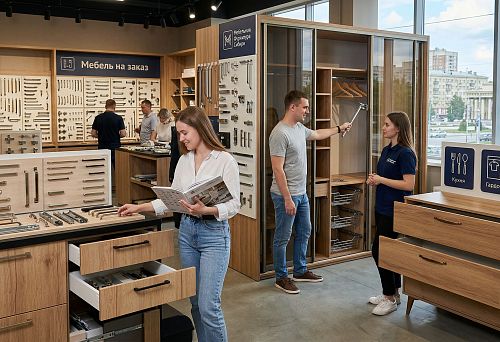
Showrooms and boutiques create a complete impression of the brand and products. Thoughtfully designed space enhances advertising impact and helps visualize furniture in home interiors.
Outdoor advertising is effective for increasing brand recognition, especially in areas with concentrated furniture stores and shopping centers.
Audience targeting and segmentation
Effective furniture advertising requires deep understanding of the target audience and their needs. Different consumer segments require different communication approaches.
Demographic segmentation
Young families with children are interested in functional and safe furniture at affordable prices. Emphasis is placed on practicality, transformability, and eco-friendly materials.
Middle-aged individuals with established income value quality and durability. For them, brand reputation, warranties, and after-sales service are important.
Senior buyers focus on ease of use, ergonomics, and classic design. Ease of maintenance and reliability become key selection factors.
Psychographic segmentation
Status-oriented consumers choose furniture from well-known brands and designers. For them, exclusivity, prestige, and the ability to highlight their social status are important.
Practical buyers are guided by the price-to-quality ratio. They carefully study product features and compare offers from different manufacturers.
Aesthetes value beauty and design harmony. For them, visual characteristics, compatibility with interior design, and adherence to fashion trends are important.
Behavioral segmentation
Impulsive buyers make decisions quickly, often under emotional influence. Bright visual imagery, limited offers, and simple purchasing methods are effective.
Rational buyers carefully study information before purchasing. For them, detailed descriptions, technical specifications, and reviews from other buyers are important.
Loyal customers prefer established brands and are willing to pay a premium for familiar quality. Loyalty programs and personalized offers are effective for this segment.
Measuring the effectiveness of furniture advertising
Evaluating advertising campaign performance allows optimizing marketing investments and increasing ROI. Furniture advertising requires specific metrics that account for industry-specific characteristics.
Quantitative metrics
Reach shows how many potential customers saw the advertising message. In the furniture industry, it is important to consider the quality of reach — reaching the target audience is more important than overall numbers.
Conversion into sales is a key performance indicator. However, in the furniture business, the purchase cycle may be long, so it is important to track intermediate actions — catalog requests, showroom visits, price inquiries.
Customer acquisition cost should be aligned with average order value and customer lifetime value. In the premium segment, higher acquisition costs are acceptable.
Qualitative metrics
Brand awareness is measured through regular research among the target audience. Spontaneous and prompted awareness indicate brand strength and advertising communication effectiveness.
Perception of quality and brand associations influence purchase readiness. Regular qualitative research helps track changes in perception.
Customer satisfaction and willingness to recommend are indicators of long-term success. Satisfied customers become brand ambassadors.
Digital analytics
Website behavior reveals visitor interests. Time spent on product pages, viewed categories, actions before purchase help optimize the user experience.
Social metrics show audience engagement. Likes, comments, shares reflect emotional response to content and willingness to interact with the brand.
Attributing sales to different channels helps understand the contribution of each touchpoint to conversion. Multi-channel attribution is especially important in the furniture business with a long decision cycle.
Innovative furniture advertising formats
Advancements in technology open new opportunities for presenting furniture and interacting with consumers. Innovative formats help stand out among competitors.
Augmented Reality
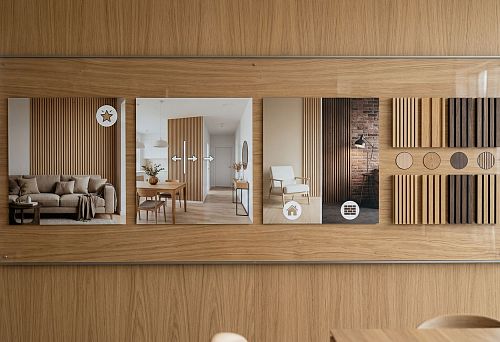
AR applications allow virtually placing furniture in real interiors through smartphone cameras. Customers can assess how a sofa will look in their living room without leaving home.
Virtual furniture fitting rooms reduce barriers to online purchases. The ability to see the product in one’s own interior significantly increases confidence in the right choice.
QR codes in print advertising link offline and online experiences. Scanning the code can unlock AR features, additional information, or special offers.
Virtual Reality
VR showrooms create a fully immersive experience of product discovery. Visitors can examine furniture in detail without leaving home or the office.
Virtual factory tours increase brand trust by showcasing manufacturing quality and technologies used.
VR consultations with designers provide professional assistance in selecting furniture and designing interiors in virtual space.
Interactive technologies
Touchscreen displays in showrooms provide access to full catalogs, product configuration options, and instant pricing calculations.
Voice assistants can answer questions about furniture features, assist with selection, and help with ordering.
Chatbots provide 24/7 customer support, answering common questions and routing complex inquiries to live consultants.
Ethical aspects of furniture advertising
Responsible advertising considers not only commercial goals but also societal and environmental impact. Ethical principles become part of branding.
Honesty in advertising
Accuracy of images is critically important in furniture advertising. Excessive retouching or incorrect scaling may lead to customer disappointment.
Accuracy of descriptions includes correct presentation of information about materials, dimensions, functionality. Exaggeration of features undermines trust in the brand.
Transparency in pricing requires indicating the total cost including delivery, assembly, and other additional services.
Ecological responsibility
Promoting sustainable materials and manufacturing technologies responds to consumers' growing environmental awareness.
Informing about programs for disposing of old furniture demonstrates care for the environment and the product's full life cycle.
Certifications and eco-labels confirm compliance with environmental standards and help consumers make informed choices.
Social Responsibility
Inclusivity in advertising imagery reflects the diversity of real society. Representing people of different ages, nationalities, and social groups in advertising creates a positive brand image.
Accessibility of information for people with disabilities includes alternative content formats.
Supporting social initiatives and charity strengthens the positive perception of the brand and creates an emotional connection with consumers.
Furniture advertising is a complex area of marketing communications requiring a deep understanding of consumer psychology and the specific characteristics of the product category. Successful campaigns combine emotional appeal with rational arguments, creating persuasive messages.
The visual component plays a decisive role in the perception of furniture advertising. High-quality images, proper color palette, and thoughtful composition form the first impression of the product and brand.
Modern advertising's multi-channel approach requires adapting content to the specific features of each platform. Integrating online and offline channels creates a cohesive user experience.
Innovative technologies open new possibilities for showcasing furniture and interacting with customers. Augmented and virtual reality revolutionize the selection and purchasing process.
Ethical principles in advertising are becoming an important factor in brand differentiation. Honesty, environmental and social responsibility influence the perception of the company.
Measuring advertising effectiveness requires a comprehensive approach, considering both quantitative and qualitative metrics. Long-term metrics are often more important than short-term results.
STAVROS understands the importance of effective marketing support for the success of furniture brands. Our industry experience allows us to provide not only high-quality materials for furniture production, but also expert advice on positioning and promoting products. We help our partners create persuasive advertising campaigns highlighting the advantages of using our materials. Partnering with STAVROS is not only a guarantee of product quality, but also support in building a successful brand in the furniture market.