Article Contents:
- Why Choosing Hardware Determines the Quality of Your Furniture
- The Impact of Hardware on Furniture Durability
- Comfort in Use: Unseen Luxury
- Aesthetic Component: When Details Make All the Difference
- Main Types of Furniture Hardware: What to Know Before Buying
- Opening Systems: Hinges, Dampers, and Lift Mechanisms
- Extension Systems: Guides and Dampers for Drawers
- Fastening Hardware: The Foundation of Reliability
- Decorative Hardware: The Final Touch
- Where to Buy Furniture Hardware: Review of Best Sources in 2025
- Specialized Online Stores: Advantages of Online Shopping
- Wholesale Suppliers: Favorable Terms for Professionals
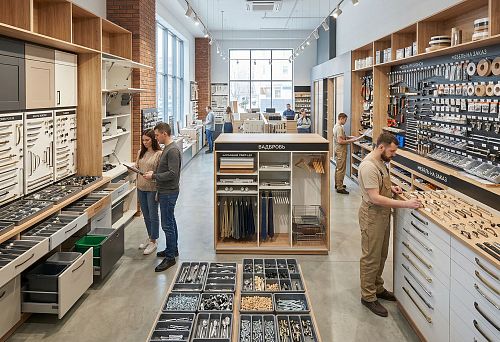
- Specialized Retail Stores: When Personal Contact Matters
- Construction Hypermarkets: Accessibility and Basic Assortment
- Furniture Factories and Manufacturers: Direct Access to Components
- Criteria for Choosing Quality Furniture Hardware
- Materials and production technologies
- Functional Characteristics and Load Parameters
- Brands and Manufacturers: Who to Trust in 2025
- Warranties and Certification: Legal Protection for Buyers
- Innovations in Furniture Hardware: What's New in 2025
- Smart Hardware: Integration with "Smart Home" Systems
- Eco-friendly materials and sustainable production
- Ergonomic Innovations: Comfort at a New Level
- Design Trends: From Minimalism to Personalization
- Practical Tips for Choosing and Buying Furniture Hardware
- How to Calculate Required Quantity and Type of Hardware
- How to Avoid Counterfeits and Low-Quality Alternatives
- Budget Optimization: What You Can and Cannot Save On
- Holistic Approach: Compatibility and Unified Style
- Installation and Maintenance of Furniture Hardware: Secrets of Professionals
- Tools and Equipment for Professional Installation
- Step-by-Step Instructions for Installing Common Types of Hardware
- Adjustment and Setup for Optimal Performance
- Maintenance and Preventive Care
- Conclusion: Invest in Quality That Pays Off

Imagine an ideal cabinet: doors open silently, drawers glide smoothly, and every detail flawlessly performs its function. Behind this perfection lies not only the craftsmanship of the maker, but also high-quality furniture hardware—the invisible hero that transforms ordinary furniture into a work of functional art. Over 50 years in the industry, I’ve seen how properly selected hardware literally transforms furniture, making it not just beautiful, but truly comfortable. But where can you find these small wonders of engineering thought? where to buy furniture hardwareWhich will last for years and not disappoint? Let’s figure it out together.


Why Choosing Hardware Determines the Quality of Your Furniture
Do you know that up to 70% of comfort when using furniture depends on the quality of hardware? These small details bear the main load during operation. Hinges open and close thousands of times, guides support the weight of dishes or books, lift mechanisms operate with heavy fronts. It’s no wonder professionals pay as much attention to hardware selection as to the material of the frame or the design of the fronts.




The impact of hardware on furniture longevity
Imagine you bought a luxurious solid oak kitchen set. The material is excellent, the finish is flawless, but after half a year, drawers start to stick, and doors become misaligned. Why? Because you saved money on hardware. Quality hinges and hinges can withstand up to 80,000 open-close cycles without losing functionality. Their cheap counterparts may fail after just 5,000–10,000 cycles.
Investment in quality hardware is an investment in the longevity of the entire furniture.
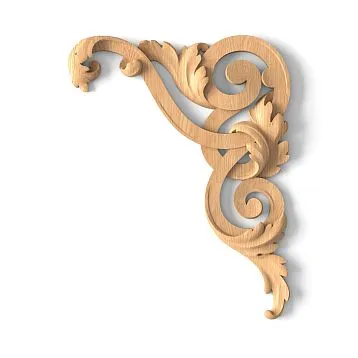
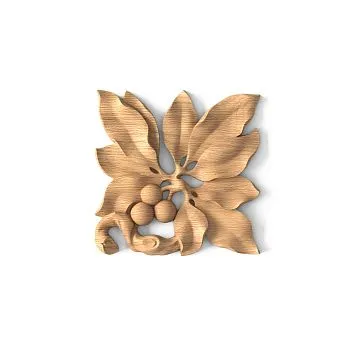
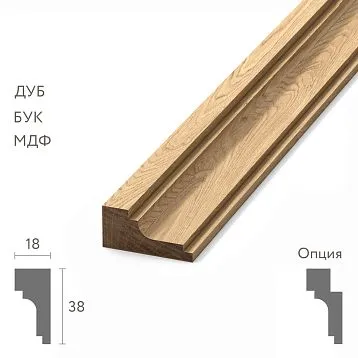
Our factory also produces:


Comfort of use: invisible luxury
Have you ever noticed how doors in premium cars close with a pleasant, quiet sound? Quality furniture hardware creates the same effect. Dampers smoothly and silently close doors, push-to-open systems allow you to open cabinets with a light touch, and drawers glide so smoothly they seem to float in the air.
This comfort of use is not just a pleasant bonus, but a daily necessity. Imagine returning home late at night when everyone is already asleep. Thanks to quality dampers, you can open and close a cabinet without waking anyone with a loud door slam.
Get Consultation
Aesthetic component: when details decide everything
Front hardware — handles, buttons, decorative elements — are like jewelry for furniture. They can either accentuate the interior style or completely ruin the designer concept.
Modern trends offer a vast variety of design solutions: from minimalist hidden handles to vintage brass overlays. Properly selected front hardware can transform even the simplest furniture, giving it individuality and character.
Main types of furniture hardware: what you need to know before purchasing
Before deciding, where to buy furniture hardwareIt is important to understand its variety. Over half a century of work in the industry, I have witnessed the evolution from the simplest metal hinges to high-tech systems with electronic control. Let’s examine the main categories and their features.
Opening systems: hinges, dampers, and lifting mechanisms
Furniture hinges are the foundation of the foundation. The modern market offers several types:
- Surface-mounted hinges — installed on the surface of the door and cabinet. Easy to install, but visible from the outside.
- Semi-surface-mounted hinges — partially hidden, used when the door partially overlaps the cabinet.
- Inset hinges — completely hidden when the door is closed, creating an effect of a seamless surface.
- Specialized hinges — for corner cabinets, glass doors, folding constructions.
Key features when choosing hinges:
- Opening angle (from 95° to 175°)
- Presence of damper (smooth closing)
- Load capacity (from 3 to 20 kg per hinge)
- Material and finish (affects longevity)
Lift mechanisms transform ordinary hinged doors into elegant lifting systems. They are indispensable for upper cabinets in kitchens and living rooms, providing easy access without the risk of hitting an open door.
Main types:
- Swing hinges — door opens downward
- Vertical hinges — door lifts upward
- Folding hinges — door folds when opening
- Parallel hinges — door moves parallel to the cabinet
When choosing, pay attention to:
- Compatibility with the weight and size of the facade
- Presence of intermediate position locking
- Smooth operation and presence of a soft-close mechanism
- Force required to open
Extension systems: guides and soft-close mechanisms for drawers
The quality of drawers is primarily determined by the guides. The modern market offers three main types:
- Ball-bearing guides - budget solution with partial extension (75-80% of drawer depth). Withload capacity up to 25-30 kg.
- Ball-bearing guides - provide full drawer extension and support up to 45-50 kg. Operate smoothly and silently.
- Hidden guides - installed under the drawer base, invisible from the outside. Provide full extension and load capacity up to 60-70 kg. Often come with soft-close mechanisms and push-to-open systems.
When choosing guides, consider:
- Expected load on the drawer
- Need for full extension
- Design requirements (visible or hidden)
- Presence of soft-close and push-to-open systems
Hardware: the foundation of reliability
Hardware is rarely considered when choosing furniture, but it ensures the strength and longevity of the structure. Main types:
- Conformers and euro screws - primary fasteners for connecting particleboard and MDF panels.
- Eccentric clamps - provide strong connection with hidden fasteners.
- Furniture corners and plates - reinforce the structure at critical points.
- Shanks and anchors - used for precise positioning and strengthening connections.
- Specialized hardware - for glass elements, mirrors, heavy facades.
The quality of hardware directly affects the strength of the furniture. Saving money on these components may lead to structural loosening within a few months of use.
Decorative hardware: the final touch
Decorative hardware - the face of your furniture. It includes:
- Handles and knobs - from minimalist to sophisticated designer models
- Decorative overlays and moldings - highlight style and conceal technical elements
- Furniture legs and feet - affect both aesthetics and functionality
- Decorative grilles and inserts - for creating a unique design
When choosing decorative hardware, it is important to consider:
- Compatibility with the overall interior style
- Ergonomics (ease of use of handles)
- Quality of materials and finishes
- Durability against damage and contamination
Where to buy furniture hardware: review of the best sources in 2025
Now that we've covered the types of hardware, let's discuss, where to buy furniture hardware high-quality options. Over 50 years of experience, I've worked with hundreds of suppliers and can confidently say: the source of purchase is no less important than the product itself.
Specialized online stores: advantages of online shopping
In 2025, online stores have become the primary channel for purchasing furniture hardware, both for professionals and private buyers. Their advantages are obvious:
- Extensive assortment — tens of thousands of items in one place
- Convenient search and filtering - ability to quickly find exactly what you need
- Detailed descriptions and technical specifications - all information at your fingertips
- Reviews from real customers — help make an informed decision
- Delivery to any point in the country - no need to spend time traveling to stores
- Competitive prices - absence of costs for maintaining physical stores allows offering more favorable terms
Among market leaders, STAVROS stands out, offering an exceptional selection quality furniture hardware from leading global manufacturers. Their online catalog includes more than 15,000 items with detailed technical specifications, installation instructions, and video reviews.
Features of purchasing from online stores:
- Pay attention to the presence of quality certificates
- Study reviews about the store and specific products
- Clarify delivery, return, and warranty terms
- Check compatibility of the selected hardware with your furniture
Wholesale suppliers: advantageous conditions for professionals
For furniture manufacturers and large projects, wholesale suppliers are the optimal solution. They offer:
- Significant discounts on large orders - savings of up to 30-40% off retail price
- Direct deliveries from manufacturers - guarantee of product authenticity
- Professional consultation - assistance in selecting optimal solutions
- Stable inventory availability - no delays in the production process
- Technical support - assistance with installation and operation
Working with wholesale suppliers requires a certain minimum order volume, but for professionals in the furniture industry, this is not an issue. Many wholesalers offer special conditions for regular customers, including payment deferrals and personal account managers.
Specialized retail stores: when personal contact matters
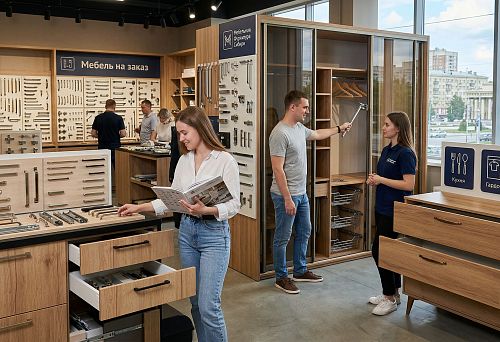
Despite the growth of online trade, specialized retail stores maintain their niche. Their advantages:
- Ability to see and test hardware - evaluate material quality, mechanism smoothness
- Personal consultations with experienced sales staff - assistance in choosing the optimal solution
- Immediate product receipt - no need to wait for delivery
- Demonstration stands - a visual representation of how mechanisms work
Retail stores are especially useful for beginners who need detailed consultation, or when selecting complex mechanisms, where it is important to evaluate performance in person.
Construction hypermarkets: accessibility and basic assortment
Construction hypermarkets offer a basic assortment of furniture hardware. Their advantages:
- Wide network of stores - available almost in every city
- Convenient operating hours - many operate 24/7
- Ability to purchase complementary items - tools, materials, fasteners
- Regular promotions and sales - opportunity to purchase items at a discount
However, the assortment of such stores is usually limited to basic, mass-market items. For specific or premium solutions, it is better to contact specialized suppliers.
Furniture factories and manufacturers: direct access to components
Some furniture factories offer purchasing components directly. This may be advantageous if:
- You need exactly the same elements as in your existing furniture
- You need to replace faulty hardware in branded furniture
- You want to obtain hardware that perfectly matches a specific furniture model
However, the assortment of such offers is usually limited to what is used in the production of a specific factory.
Criteria for selecting quality furniture hardware
Regardless of the fact, where you purchase furniture hardwareIt is important to be able to distinguish quality products from counterfeits and cheap imitations. Over the years of my work, I have developed a set of criteria that help accurately identify a worthy product.
Materials and production technologies
Material quality - the first and most important indicator of hardware durability:
- For hinges and guides, the optimal material is cold-rolled steel with a thickness of at least 1.5-2 mm and a zinc or nickel coating. Premium models are often made of stainless steel.
- Decorative elements use various materials: from zinc alloys with electroplating to natural wood, glass, and ceramics. The quality of processing and the durability of the coating against wear are important.
- Plastic elements must be made from high-strength polymers (nylon, polycarbonate) resistant to UV radiation and mechanical stress.
Manufacturing technologies also play a key role:
- Accuracy of casting and stamping
- Quality of welded connections
- Uniformity of protective coating application
- Accuracy of assembly of multi-component mechanisms
Functional characteristics and load parameters
The functionality of hardware is determined by several key parameters:
- Load capacity - the maximum weight an element can support. For guides, this is usually 25-80 kg, for hinges - 3-20 kg per hinge.
- Cyclic durability - number of opening/closing cycles until failure. Quality hardware withstands from 50,000 to 100,000 cycles.
- Smooth operation - absence of jerks and sticking during movement.
- Positioning accuracy - ability of the mechanism to accurately lock in specified positions.
- Noise characteristics - minimum noise level during operation.
When selecting, always consider safety margin - choose hardware with a load capacity reserve of at least 20-30% above the calculated load.
Brands and manufacturers: who to trust in 2025
On the market for furniture hardware, a clear rating of manufacturers by price-to-quality ratio has formed:
Premium segment:
- Blum (Austria) - benchmark quality in manufacturing hinges, lift mechanisms, and drawer systems. Innovative solutions, flawless quality, lifetime warranty on many products.
- Hettich (Germany) - one of the largest manufacturers of comprehensive solutions for furniture. Broadest assortment, high quality, innovative technologies.
- Grass (Austria) - specializes in high-tech drawer systems and hinges with unique characteristics.
- Hafele (Germany) - comprehensive solutions for furniture and interiors, including specialized hardware for complex projects.
Mid-range segment:
- FGV (Italy) - optimal price-to-quality ratio, wide range of basic solutions.
- GTV (Poland) - quality European-made hardware at affordable prices.
- Boyard (Russia/China) - one of the leaders of the Russian market, offering solutions adapted for domestic consumers.
- Firmax (Russia) - Russian manufacturer with good price-to-quality ratio.
Budget segment:
- Numerous manufacturers from China, Turkey, and Southeast Asia.
When choosing a brand, consider not only price, but also availability of spare parts, technical support, and warranty service.
Warranties and certifications: legal protection for the buyer
Quality hardware is always accompanied by a manufacturer's warranty:
- Leading brands provide warranties ranging from 5 years to lifetime for mechanical components.
- Quality certificates confirm compliance with international standards.
- Technical documentation includes detailed installation and operating instructions.
When purchasing, be sure to keep the warranty card and receipt - they will be needed in case of warranty service.
Innovations in the world of furniture hardware: what's new in 2025
The world of furniture hardware is constantly evolving, offering increasingly advanced solutions. In 2025, we observe several key trends that define the industry's future.
Smart hardware: integration with "smart home" systems
Modern hardware is becoming part of the "smart home" ecosystem:
- Remote-controlled electric actuators allow opening and closing cabinets using a smartphone or voice commands
- Biometric access systems provide security for valuable items without the need for keys
- Integrated lighting automatically turns on when a cabinet is opened or a drawer is pulled out
- Content monitoring systems help track inventory of kitchen products or medicines in a first-aid kit
These technologies not only enhance the comfort of furniture use but also make it more accessible for people with disabilities.
Eco-friendly materials and sustainable production
The ecological trend has also affected hardware production:
- Biodegradable polymers replace traditional plastic in non-critical components
- Recycled metals are used to produce casing parts
- Non-toxic coatings are replacing plating with heavy metals
- Energy-efficient manufacturing processes reduce the carbon footprint of products
Leading manufacturers are adopting circular economy principles, offering programs for recycling old hardware and using recycled materials.
Ergonomic innovations: comfort at a new level
Ergonomics of furniture hardware reaches a new level:
- Adaptive opening systems adjust to the force of press and speed of movement
- Ultra-quiet mechanisms reduce noise to practically undetectable levels
- Tactile-pleasing materials for handles and other contact elements
- Antibacterial coatings for frequently used surfaces
These innovations make furniture use more intuitive and comfortable for all age groups.
Design trends: from minimalism to personalization
Several key trends are evident in hardware design for 2025:
- Minimalism and hidden solutions - hardware that is practically invisible or fully integrated into furniture design
- Natural materials and textures - returning to wood, stone, leather combined with metal
- Matte finishes instead of glossy - more practical and visually calm
- Personalization - the ability to create unique elements using 3D printing and other personalization technologies
Modern hardware is no longer just a functional element, but also an important part of the furniture and interior design concept as a whole.
Practical tips for choosing and purchasing furniture hardware
Over decades of work, I have developed a set of practical recommendations that will help you make the right choice and avoid common mistakes when purchasing hardware.
How to calculate the required quantity and type of hardware
Correct calculation is the foundation of a successful project:
- Create a detailed furniture plan indicating all elements requiring hardware
- Specify the type and quantity of hinges:
- For standard doors up to 800 mm - 2 hinges
- From 800 to 1600 mm - 3 hinges
- From 1600 to 2000 mm - 4 hinges
- More than 2000 mm - 5 or more hinges
- For heavy facades, the number of hinges increases
- Calculate the drawer guides:
- Guide length = drawer depth + 10-15 mm
- Load capacity is selected with a 30-40% safety margin from the expected load
- Determine the required fasteners:
- For connecting panels at a 90° angle - confirmers or eccentric bolts
- For attaching back panels - confirmers, self-tapping screws, or nails
- For attaching facades - hinges, return plates, mounting hardware for handles
- Add a 10-15% reserve for defects or installation errors
Remember, insufficient hardware can stop the entire project, while a small surplus will always be useful for future repairs.
How to avoid counterfeits and low-quality analogs
The market for furniture hardware is flooded with counterfeits of well-known brands. How to protect yourself:
- Purchase from authorized dealers - check the seller's status on the manufacturer's official website
- Pay attention to packaging - quality hardware comes in branded packaging with protective elements
- Check the labeling - original products always have the manufacturer's logo and technical specifications
- Compare weight - counterfeits are usually lighter than originals due to the use of cheaper materials
- Assess the finish quality - original products have no burrs, unevenness, or signs of poor casting
- Check the smooth operation of mechanisms - original hardware operates smoothly, without jerks or sticking
Too low a price - the main sign of a counterfeit. Remember, saving 20-30% on hardware may result in replacing the entire furniture set within one or two years.
Budget optimization: where you can and cannot save
Reasonable savings are possible if you know where the boundary between optimization and risk lies:
You can optimize spending on:
- Decorative elements for hidden areas (internal drawers, shelves)
- Hardware for rarely used elements (seasonal storage)
- Fasteners for non-critical connections
- Purchase during seasonal sales and promotions
Cannot save on:
- Guides for frequently used drawers
- Hinges for heavy and large doors
- Lift mechanisms (risk of injury in case of failure)
- Fastening elements for load-bearing structures
The optimal strategy is to use premium hardware for critical and frequently used elements, and for secondary components, choose mid-range solutions from reputable manufacturers.
Comprehensive approach: compatibility and unified style
A professional approach to selecting hardware implies a comprehensive solution:
- Technical compatibility - all elements must be compatible with each other and with the furniture materials
- Stylistic unity - visible elements must conform to a unified design concept
- Functional consistency - all mechanisms must provide a similar level of user comfort
- Durability of all components - the service life of all elements must be comparable
The ideal solution is to use integrated systems from a single manufacturer, where all elements are originally designed to work together.
Installing and servicing furniture hardware: secrets of professionals
Even the highest quality hardware will not function properly if it is incorrectly installed or not properly maintained. Over the years, I have collected a collection of professional secrets that will help you get the most out of your hardware.
Tools and equipment for professional installation
Correct tools - guarantee of quality installation:
- Templates for marking - ensure accurate positioning of hinges and other elements
- Drill guides - ensure correct angle and depth of holes
- Specialized bits and attachments - designed for specific types of fasteners
- Precision screwdrivers and wrenches - allow precise adjustment of mechanisms
- Measuring tools - tape measure, square, level for accurate positioning
Investing in quality tools pays off multiple times due to work speed and result quality.
Step-by-step instructions for installing main types of hardware
Installing cup hinges:
- Mark the position of hinges on the door (usually 100-150 mm from edges and evenly along height)
- Drill a hole for the cup hinge using a 35 mm Forstner bit to a depth of 12-13 mm
- Drill holes for mounting screws
- Secure the hinge to the door
- Install the hinges on the cabinet frame
- Snap the hinges onto the hinge plates
- Adjust the door position for height, depth, and tilt
Ball-bearing guide installation:
- Mark the guide positions on the side walls of the cabinet frame
- Mount the guides on the frame, ensuring parallelism and equal height
- Mark the hinge plate positions on the drawer
- Mount the hinge plates on the drawer
- Insert the drawer into the frame
- Check the smooth operation and adjust if necessary
Lift mechanism installation:
- Determine the mechanism type based on the facade's weight and size
- Mount the cabinet-side mechanism part inside the cabinet
- Mount the facade-side part onto the door
- Connect both parts
- Adjust the lift force according to the facade's weight
- Test the mechanism's operation throughout its full range of motion
Adjustment and setup for optimal performance
Most modern mechanisms feature fine-tuning capabilities:
Hinge adjustment:
- By height (±2 mm) - to align doors vertically
- By depth (±2 mm) - to align facade surfaces
- By tilt (±1.5 mm) - to correct misalignment
Guide adjustment:
- By height - to align drawer facades
- By tilt - to ensure facade parallelism with the frame
- Dovetail force adjustment - for optimal closing speed
Lift mechanism adjustment:
- Lift force - adjusted to match the facade's weight
- Opening angle - limits the maximum lift angle
- Opening and closing speed - regulates the smoothness of opening and closing
Correct adjustment not only ensures the perfect appearance of furniture, but also significantly extends the lifespan of mechanisms.
Care and preventive maintenance
Regular maintenance extends the lifespan of hardware several times:
- Cleaning from dust and dirt - clean guides, hinges, and other mechanisms from dust and dirt at least every 6 months
- Lubrication of moving parts - use special lubricants recommended by the manufacturer (usually silicone or Teflon-based)
- Checking and tightening fasteners - vibrations and loads may cause loosening of fasteners
- Mechanism adjustment - adjustments may be needed over time
Preventive maintenance is better performed regularly, rather than waiting for squeaks, sticking, or other problems to appear.
Conclusion: invest in quality that pays off
Choosing furniture hardware is not just a technical question, but a strategic decision that determines how functional, durable, and aesthetically pleasing your furniture will be. After 50 years in the industry, I’ve learned: saving on hardware is the most expensive kind of saving, as it leads to constant repairs, replacements, and daily discomfort.
Quality hardware is an investment that pays off multiple times:
- Durability of furniture that serves for decades without losing functionality
- Comfort of use that you experience every day
- Safety for you and your loved ones
- Aesthetic pleasure from flawless appearance
- Preservation of furniture value over time
When choosing, where to buy furniture hardwareWhen choosing, prefer proven suppliers with reputation and quality guarantees. STAVROS has been a reliable partner for both professionals in the furniture industry and private clients for many years. A wide range of products, professional consultations, quality guarantees, and competitive prices make STAVROS the optimal choice for those who value quality and reliability.
Remember: furniture hardware is not a place for savings, but a smart investment in the comfort and longevity of your furniture. Choose quality that pays off every day!