












































































Article Contents:
- Furniture as the compositional center of interior design
- Scale and proportions: furniture defines the perception of volume
- Functional dominants: furniture organizes activity
- Visual mass: furniture as anchors of space
- Oak and beech: natural foundation of prestigious furniture
- Oak: hardness, durability, expressiveness
- Beech: lightness, uniformity, workability
- Furniture construction: solid wood, veneer, combinations
- Polyurethane: decorative refinement without excess
- Inlays: imitation of carving at an affordable price
- Legs and supports: architectural logic
- Crown moldings and bases: completion of silhouette
- Texture combinations: multi-layered perception
- Wood and polyurethane: harmony or contrast
- Wood and upholstery: tactile contrast
- Wood and glass: transparency and mass
- Wood and metal: warm and cold
- Care and durability: investment in centuries
- Daily care: prevention of damage
- Regular maintenance: updating protection
- Restoration: returning to original appearance
- Durability: comparative analysis
- Conclusion: furniture as a long-term investment

Oak furnitureandbeech furniturewithfurniture with polyurethane decorFurniture is not just decorative items, but architectural elements that define the character of space. A massive oak dining table becomes the semantic center of the dining room, around which the family gathers. A beech cabinet with elegant polyurethane inlays transforms a flat wall into a sculptural composition.Wooden facadesof kitchen sets determine the style of the entire room. Furniture sets the scale of the interior, creates visual and functional dominants, influences movement through space. Proper selection of materials, combining the natural texture of wood with the relief of polyurethane details, understanding the durability of different species creates furniture that serves generations, remaining relevant, accumulating history, becoming part of family heritage.


Furniture as the compositional center of interior design
In the hierarchy of interior elements, furniture occupies a key position — more significant than wall color, but not overpowering the architecture of the space itself. Understanding the role of furniture is critical for creating harmonious interiors.




Scale and proportions: furniture determines the perception of volume
Large furniture visually reduces space but creates a sense of coziness, security, and solidity. A massive 200x100 cm oak dining table in an 18 sq. meter dining room occupies significant floor space, yet it is precisely this piece that defines the room as a dining room, not merely as a space. Without it, the space feels empty, undefined, lacking functional identity.
Compact furniture leaves space free, creating an airy feel, but may appear temporary, incidental, and fail to establish character. A small four-person table in the same 18 sq. meter dining room leaves much emptiness, making the room seem unoccupied and unfinished. The balance between furniture size and room volume determines perceptual comfort.
Furniture height affects the perception of verticality. Tall bookshelves reaching the ceiling visually elongate the space upward, emphasizing the room’s height. Low furniture — sofas, coffee tables, chests at 80-100 cm — accentuates the horizontal, making the room visually wider but lower. For standard ceilings of 2.5–2.7 meters, tall furniture compensates for relatively low height.
Furniture proportions align with room proportions. A narrow, elongated room requires furniture that does not exacerbate its elongation — square tables, wide sofas across the long side. A square room accepts any furniture, but a round table centered creates a focal point, emphasizing centrality. Irregular room shapes are corrected by furniture — corner cabinets soften sharp angles, rectangular furniture structures amorphous space.
Our factory also produces:


Functional dominants: furniture organizes activity
Every room has a functional dominant — the main piece of furniture around which activity is organized. In a dining room, it’s the dining table; in a living room, it’s the sofa or fireplace with chairs around it; in an office, it’s the desk; in a bedroom, it’s the bed. The dominant is placed at an optimal point — the dining table under the chandelier at the geometric center of the dining room, the sofa opposite the fireplace or TV, the bed with its headboard against the wall, often the central wall.
The quality of dominant furniture determines the status of the room. A cheap plastic table degrades the dining room, even if walls and ceiling are luxuriously finished. A massive oak table elevates a simple room. Investing in quality dominant furniture pays off in the perception of space as prestigious, stable, and worthy.
Secondary furniture supports the dominant. Chairs around the table, a coffee table in front of the sofa, bedside tables. Their style, material, and color harmonize with the dominant. An oak table requires oak or beech chairs, possibly upholstered, but with wooden frames. Mixing materials — an oak table with plastic chairs — destroys stylistic unity, creating dissonance.
Passages between furniture define movement through the room. Minimum passage width: 60 cm for one person, 90 cm for comfortable movement, 120 cm for two people side by side. Furniture arrangement is planned with movement trajectories in mind — from door to window, from door to table, around the table for seating. Furniture blocking natural trajectories creates discomfort and constant irritation from having to navigate around it.
Get Consultation
Visual mass: furniture as anchors of space
Dark, heavy furniture visually feels heavy, creating anchors — points to which the eye is drawn, around which spatial perception is organized. A dark oak buffet against the wall becomes a visual anchor of the dining room, a point of reference from which other elements are measured. Its monumentality calms, creating a sense of stability.
Light furniture visually feels lighter, dissolving into space, especially if walls are also light. A beech table with a natural rose-gold hue in a white dining room is almost invisible from afar, becoming visible only up close. This invisibility frees up space, making it feel airier, but at the cost of clear reference points.
The number of visual anchors determines the complexity of perception. One large anchor — a massive table or cabinet — creates a simple, clear composition with a defined center. Several medium-mass anchors — table, buffet, chest — create a multi-centered composition, more complex and dynamic. Excess anchors — many dark, large items — overload, creating visual chaos.
Balancing visual mass vertically and horizontally creates stability. Heavy dark furniture at the bottom — chests, side tables, tables — light, light-colored furniture at the top — open shelves, light wall-mounted cabinets. Vertical gradation from dark to light is perceived as natural and stable. Inversion — dark wall-mounted cabinets above light lower ones — creates visual instability and discomfort.
Oak and beech: natural foundation of prestigious furniture
Choosing wood species for furniture determines not only appearance but also durability, functional capabilities, and ownership cost. Oak and beech are optimal species for creating furniture that serves generations.
Oak: hardness, durability, expressiveness
Oak furniture— classic, tested over centuries. Oak wood density 690–750 kg/m³, hardness 3.7–4.0 on Brinell scale, classifies oak among the hardest hardwoods. An oak tabletop withstands daily use for decades without losing its appearance — surface scratches are superficial, impact dents are minimal, edges remain sharp.
An oak dining table top 40 mm thick, on which bread is cut, hot pots are placed, and wine is spilled, after 20 years appears patinated, elegantly aged, not worn out. Softer woods — pine, birch — in the same 20 years accumulate deep scratches, dents, lose edge definition, requiring resanding or replacement.
Oak’s biostability — tannin content 6–8% — creates natural protection against mold, fungi, insects. Even with insufficient treatment, oak furniture does not rot in humid conditions. For kitchen countertops, where water contact is regular, and for furniture in country homes with variable humidity, oak is optimal.
Oak’s texture with large vessels creating contrasting dark stripes on a light background turns each board into a unique natural artwork. Radial sawing reveals medullary rays — characteristic shimmer, especially beautiful under side lighting. For prestigious furniture — conference tables, office tables, dining sets — radial oak is the only choice.
Oak color ranges from golden-brown to dark brown (when stained), creating a warm, cozy atmosphere. Natural darkening over time — after 10–20 years, oak becomes 2–3 tones darker — is perceived as patina, adding value. Oak furniture does not become outdated, but rather becomes more refined, becoming antique while the owner lives.
Application of oak in furniture — dining, writing, coffee tables, cabinet, buffet, chest facades, chair and sofa frames, bed headboards, shelves, consoles. Everything requiring hardness, durability, and prestigious appearance. Oak furniture costs 2–3 times more than beech, 4–6 times more than pine, but its service life exceeds in the same proportions.
Beech: lightness, uniformity, workability
beech furniture— choice for light, airy interiors where texture uniformity is important. Beech density 710–730 kg/m³, slightly higher than oak, hardness 3.5–3.8 sufficient for most applications. Beech tabletops last as long as oak tabletops, at a lower cost.
Natural rose-gold beech color is 3–4 tones lighter than oak, creating lightness and visual expansion of space. For compact rooms, northern rooms with insufficient natural light, Scandinavian and modern interiors, beech is preferable to dark oak. Uniform texture without contrasting elements provides a calm visual background, not overloading space with pattern.
Beech workability is excellent — fine-grained, uniform structure allows achieving perfectly smooth surfaces when sanded, intricate carving without chipping. Viennese bent beech chairs — classic, tested over 1.5 centuries of use. Beech bends after steaming to a radius of 30 cm, retaining strength. Oak bends worse, often cracks.
Oak staining is uniform due to its homogeneous structure. Oak furniture stained white, light gray, pastel tones while preserving visible texture is a popular solution for Provencal, Scandinavian, and modern interiors. Ash stains less uniformly — large vessels absorb more, creating unevenness.
The drawback of oak is higher hygroscopicity compared to ash, absence of tannins. Oak reacts more actively to humidity changes — it swells when humidity increases, shrinks when it decreases. This requires high-quality drying to 8-10 percent moisture and thorough protective treatment. With proper preparation, it lasts as long as ash.
Use of oak in furniture — countertops for dry zones, furniture facades (especially stained), chairs and stools (classic and bent), headboards, carved decorative elements, shelves, frames. Oak furniture costs 30-40 percent less than ash furniture at comparable quality, making oak an optimal choice for the mid-price segment.
Furniture construction: solid wood, veneer, combinations
Solid wood furniture — countertops, facades, frames made entirely of solid wood or glued laminates — most prestigious, durable, but also expensive. A 40 mm thick oak table costs 80,000–150,000 rubles depending on size and complexity. It lasts for centuries, can be restored multiple times — scratches are removed by sanding, and the appearance is renewed by re-finishing.
Veneered furniture — base of MDF or plywood, covered with thin veneer of valuable wood 0.6–1.5 mm — visually similar to solid wood but costs 2–3 times less. Quality veneer with thickness 1–1.5 mm allows one or two resanding, lasts 20–30 years. Thin veneer 0.6 mm cannot be restored, but is cheaper.
Combined construction optimizes budget without loss of quality. Tabletop — 40 mm thick oak solid wood (visible, contact surface). Table base — veneered or painted MDF (invisible structural part). Saves 40–50 percent while preserving visual quality and functionality of the tabletop.
Frame-and-panel facade construction — thick frame of oak or ash, thin panel of plywood or MDF inserted into frame grooves with a gap — classic technology allowing wood to react to humidity changes without deformation. Panel expands/contracts within the gap, frame remains stable. For kitchen furniture, where humidity fluctuates, frame-and-panel facades are more reliable than solid ones.
Polyurethane: decorative elegance without excess
Polyurethane furniture decorAdds an additional level of detail, classic decor, elegance without the labor and cost of wooden carving. Lightness, accessibility of complex forms, water resistance make polyurethane ideal for furniture decor.
Appliances: imitation of carving at affordable price
Polyurethane appliques on furniture facades create the illusion of carved wood at 5–10 times lower cost than real carving. A 150 mm diameter floral ornament from polyurethane costs 500–1500 rubles, sticks in minutes, weighs 50–100 grams. Wooden carving of similar complexity costs 5000–15000 rubles, requires days of carver’s work, weighs 300–500 grams, requires mechanical fastening.
For MDF kitchen furniture with painted facades, polyurethane appliques are the only realistic option to achieve decorative effect. A simple flat facade 600x400 mm becomes a classic panelled facade using a polyurethane molding frame and central applique. Everything is glued with standard mounting glue and painted together with the facade. Visually indistinguishable from traditional carved facade from a distance over one meter.
Applique types — round and oval rosettes 80–200 mm diameter centered on facade, corner elements 50x50, 80x80 mm at frame corners, ornamental strips 30–80 mm wide for framing, oval cartouches 100–200 mm for accents above doors. Ornament ranges from simple geometric patterns to elaborate floral compositions — leaves, flowers, scrolls, interweavings.
Mounting appliques on furniture facades — surface is degreased, glue (special for polyurethane or liquid nails) is applied in dots to the back of applique, applique is pressed onto facade, secured with painter’s tape until drying (12–24 hours). After painting facade with appliques in one color, appliques are perceived as part of facade, not separate elements.
Legs and supports: architectural logic
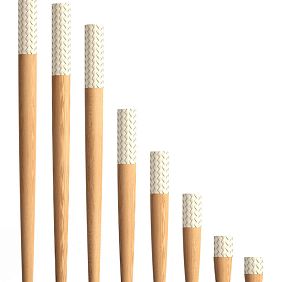
Polyurethane legs for tables and sideboards imitate turned wooden legs with more complex decoration. Balusters with transitions from square base to round stem with ornamental grips, back to square top — classic shape. Leg height 60–80 cm for dining tables, 40–60 cm for coffee tables, 15–25 cm for sideboards and chests.
Advantage of polyurethane legs — low weight does not overload structure. Four wooden turned legs weigh 4–8 kg, create load on joints. Four polyurethane legs weigh 1–2 kg, connected with screws through metal plates without risk of cracking. For lightweight MDF furniture, polyurethane legs are optimal.
Staining legs to resemble wood — multi-layered paint with texture imitation — creates visual illusion of wooden legs. Base layer of wood color (golden-brown, dark brown), brush strokes with darker paint to simulate stripes, matte varnish finish. Result from a distance over one meter is convincing.
Consoles and brackets under countertops, shelves, protruding furniture elements made of polyurethane imitate load-bearing architectural details, adding visual logic. Console 15–20 cm high under hanging countertop creates illusion that it supports the console, though it is actually decorative. Such elements add authenticity to classic furniture.
Crown mouldings and bases: silhouette completion
Top of tall cabinets, buffets finished with crown molding — projecting profiled element creating architectural completion. Wooden crown moldings weigh 2–5 kg per meter, create load on top of cabinet, require strong mounting. Polyurethane crown moldings weigh 0.5–1.5 kg, glued with standard glue without risk of detachment.
Crown molding width 8–15 cm depending on cabinet height. For 200 cm tall cabinets, 10–12 cm crown molding is proportional. For 250+ cm cabinets — 12–15 cm. Profile ranges from simple single-oval for modern furniture to complex multi-step for classic. Painted to match cabinet body or contrast.
Base at bottom of cabinet, chest — profiled base 10–15 cm high, creating visual transition between cabinet body and floor. Polyurethane base is lightweight, water-resistant (critical for kitchens where floor is washed), easy to install. Painted to match cabinet body or darker to create visual stability.
Pilasters at cabinet corners — vertical decorative elements imitating columns, create rhythmic structure, classic order. Height equals cabinet height, width 6–10 cm. Base and capital of pilaster — separate polyurethane elements — create architectural logic. For classic buffets, vitrines, cabinets, pilasters are mandatory.
Texture combinations: multi-layered perception
Successful furniture combines different textures, creating tactile and visual richness. Smooth wood, relief polyurethane, soft upholstery, cold metal — each texture plays its own role.
Wood and polyurethane: harmony or contrast
Monochromatic solution — polyurethane elements painted in color close to wood color. Oak cabinet in natural golden-brown tone with polyurethane appliques painted in same tone. Relief of appliques is readable through shadows, no color contrast. Elegant solution for classic interiors where form matters more than color contrast.
Contrasting solution - polyurethane is painted in contrast to wood. Dark oak facade, white polyurethane overlays - classic contrast. Light beech body, dark gray polyurethane details - modern contrast. Overlays stand out, attract attention, become active accents. For furniture where expressiveness and decorativeness matter.
Wood imitation on polyurethane - multi-layer paint with texturizing additives creates a convincing wood illusion. Base layer of wood color, then passes with darker/lighter paint simulating growth rings, finished with matte varnish. At a distance over one meter, it's hard to distinguish from real wood. Economical solution - the effect of carved wood at the cost of polyurethane.
Patina - applying contrasting tone to raised parts of overlays, followed by partial sanding - creates an effect of noble aging. Base white, patina gold or dark brown. Wood is also patinated similarly - visual unity of materials despite their different nature. For interiors with historical references, patina adds an atmosphere of time.
Wood and upholstery: tactile contrast
Chairs with wooden frames and upholstered seats/backs combine the hardness of wood and the softness of textiles/leather. Oak or beech frame creates structural strength and prestige of natural material. Upholstery provides seating comfort, visual softness, and color accents.
Upholstery color matches wood color or contrasts. Dark oak frame with natural tone upholstery - beige, gray-brown, dark green - classic harmony. Light beech frame with bright upholstery - red, blue, green - modern contrast. Upholstery allows changing the character of furniture without altering the frame - reupholstering every 10-15 years refreshes chairs.
Upholstery texture adds textural variety. Smooth leather creates cool elegance, easy care. Velvet provides tactile softness, visual depth of color, luxury. Linen and cotton - natural simplicity, suitable for Scandinavian and eco-interiors. Wool fabric - warmth, coziness, suitable for country homes.
Wood and glass: transparency and mass
Countertops with glass inserts in wooden frames combine the mass of wood with the lightness of glass. Oak frame 15-20 cm wide around the perimeter, glass insert in the center. Frame creates visual mass, structure, prestige of wood. Glass adds lightness, allows seeing table legs, floor under the table, visually expands space.
Display cases and buffets with glass doors showcase contents, create visual depth. Wooden door frames 5-8 cm wide with polyurethane overlays frame the glass. Shelves inside are wooden or glass with lighting. For collectors of tableware, books, decorative objects, glass furniture is functional - protects from dust, showcases contents.
Wood and metal: warm and cold
Metal legs on tables combined with wooden tops create an industrial aesthetic. Black steel legs, top made of natural tone oak solid wood. Contrast of cold metal and warm wood, industrial and natural creates a modern character, popular in lofts and industrial interiors.
Metal hardware - handles, hinges, locks - on wooden furniture can be accent or inconspicuous. Large bronze handles in Art Deco style on oak chests create luxury and retro feel. Minimalist recessed handles from matte steel on beech facades - modern restraint. Hardware choice significantly affects furniture character.
Care and longevity: investment in centuries
Quality furniture made of oak or beech with polyurethane decor serves generations with proper care. Understanding material characteristics, regular maintenance prolongs life and preserves appearance.
Daily care: preventing damage
Wooden surfaces are wiped with dry or slightly damp soft cloth daily or every few days. Dust does not penetrate finish if removed regularly. Old dust mixes with skin oils, penetrates, requires aggressive cleaning damaging finish.
Spilled liquids are removed immediately - water, wine, coffee should not remain on wooden surfaces more than a minute. Even with quality finish, prolonged contact with moisture may cause darkening, swelling. Countertops are wiped after each use - a habit preserving furniture.
Hot dishes are placed on stands, not directly on wooden countertops. Even heat-resistant finish has limits - a pot at 150+ degrees may leave a white spot on varnish, darkening on oil. Cork, silicone, ceramic stands prevent damage.
Food preparation is done on cutting boards, not on countertops. Knives scratch any finish - small scratches are initially unnoticed but accumulate, and over years countertops lose shine, look worn. Board protects, wears out, and is replaced as needed.
Regular maintenance: updating protection
Oil finish on wooden furniture requires renewal every 1-2 years depending on usage intensity. Surface is cleaned with special wood cleaners, dried. Oil is applied generously with clean cloth, excess removed after 20-30 minutes. Surface ready for use after 24 hours. Procedure takes 30-60 minutes, done independently, costs 500-1500 rubles per oil. Renewed surface looks fresh, protection restored.
Lacquered furniture requires less maintenance - lacquer film lasts 5-8 years without renewal. Cleaning with damp cloth and neutral cleaners weekly or monthly. Periodic polishing with furniture polishes restores shine. Lacquer renewal requires full recoating - sanding old lacquer, applying new in 2-3 layers. Professional procedure, costs 5000-15000 rubles depending on furniture size.
Polyurethane elements require almost no maintenance. Wiping with dry cloth from dust weekly. Wet cleaning monthly. Raised areas cleaned with soft brush or vacuum cleaner attachment. Colored surface does not require renewal for decades if no mechanical damage occurs.
Hardware - hinges, drawer guides, locks - requires periodic lubrication. Door hinges lubricated with silicone grease annually - a drop at hinge point prevents squeaking and wear. Drawer guides cleaned from dust, lubricated with dry silicone grease. Locks checked for smooth operation, lubricated with graphite grease if needed.
Restoration: returning original appearance
Scratches on wooden surfaces are removed locally or globally. Surface scratches on oil finish are sanded with fine-grit sandpaper 320-400, area re-oiled. Deep scratches on lacquer require sanding down to wood, re-lacquering. For furniture with many scratches, full resanding and re-finishing returns a new look.
Dents from impacts on oak are minimal due to hardness, but if they occur, they are removed by steaming. Wet cloth on dent, hot iron on top for 10-20 seconds - steam softens fibers, which restore volume. Procedure repeated 2-3 times. Deep dents cannot be fully removed, but visually significantly reduced.
Scratches on polyurethane elements are filled with acrylic putty, sanded, and touched up. Repair quality depends on skill - professional repair is invisible, amateur repair is visible. Serious damage to large elements is easier to fix by replacement - polyurethane overlay costs 500-3000 rubles, replacement takes an hour.
Wood fading from UV light is inevitable for furniture near windows. After 5-10 years, natural color becomes dull, gray. Coloring with stain followed by lacquering or oiling restores color. Or accepted as natural patina - silver-gray faded oak has its own aesthetic, popular in Scandinavian interiors.
Durability: Comparative Analysis
Oak furniture made from solid wood lasts 100+ years with proper care. Antique oak furniture from the 18th-19th centuries is still in use and highly valued by collectors. After 50 years, an oak table does not become outdated aesthetically, does not physically wear out, but develops a patina and becomes a family heirloom, an antique.
Veneered furniture lasts 20-40 years depending on the thickness of the veneer. Thick veneer (1-1.5 mm) allows for 1-2 restorations; thin veneer (0.6 mm) is not restorable. Quality veneered furniture lasts through one generation, is passed down to children, and serves them until mid-life.
MDF furniture with laminate lasts 10-20 years. The laminate cannot be restored—scratches and chips are irreversible. After 10 years of active use, the furniture loses its aesthetic appeal and requires replacement. However, its low cost makes it accessible, allowing for changes when changing styles or moving.
Polyurethane decor on furniture remains unchanged for decades—does not rot, warp, or fade (with quality paint containing UV protection). After 20 years, polyurethane appliqués look as new. Limitation: lower mechanical strength compared to wood, possible chips upon impact. However, replacing a damaged element is simple and inexpensive.
Polyurethane furniture trim lasts for decades without changes - does not rot, warp, or fade (with quality UV-protective paint). After 20 years, polyurethane inserts look as new. Limitation - mechanical strength is lower than wood, and chipping may occur upon impact. However, replacing a damaged element is simple and inexpensive.
Conclusion: Furniture as a long-term investment
Oak furnitureandbeech furniturewithfurniture with polyurethane decor— not just decorative items, but a long-term investment that shapes the character of space for decades.Wooden facadesKitchen sets, oak dining table tops, beech chairs create the material foundation of interior design—strong, beautiful, and long-lasting.
Polyurethane appliqués, moldings, legs add decorative refinement while maintaining affordability. Carved decoration, which would cost tens of thousands in wood, is available for thousands in polyurethane. The visual effect is comparable from a distance, functionality is sufficient, and durability is high.
Proper care—regular cleaning, timely renewal of protective coatings, careful use—extends the life of furniture for decades. An oak table where a family gathers today will gather grandchildren in 50 years and great-grandchildren in 100. This is not fantasy—antique oak furniture demonstrates the reality of such longevity.
Proper care - regular cleaning, timely renewal of protective coatings, and careful use - extends the life of furniture for decades. An oak table where a family gathers today will gather grandchildren in 50 years and great-grandchildren in 100. This is not fantasy - antique oak furniture demonstrates the reality of such longevity.
The economics of quality furniture is paradoxical—the high initial cost is offset by longevity. An oak table costing 120,000 rubles, lasting 100 years, costs 1,200 rubles per year. An MDF table costing 20,000 rubles, lasting 15 years, costs 1,333 rubles per year. At comparable annual costs, the oak table provides prestige, texture beauty, restoration possibility, and emotional value as a family heirloom.
Furniture with character: how oak and polyurethane change the perception of space | Company Stavros


