Article Contents:
- Historical retrospective: how Russian-Italian furniture traditions were formed
- Roots of cooperation: from imperial times to the present
- Modern stage: technological symbiosis
- Technological revolution: how Russian manufacturers adopt Italian methods
- Adaptation of equipment and processes
- Innovations in materials science
- Quality control: Russian precision meets Italian perfection
- Design philosophy: synthesis of aesthetic traditions
- Italian elegance in Russian interpretation
- Functionality as priority
- Regional adaptation of design
- Material science: Russian resources processed by Italian methods
- Unique properties of Russian wood
- Innovative Processing Methods
- Ecological aspects of production
- Production processes: symbiosis of technologies
- Modern equipment and traditional methods
- Quality control at every stage
- Market positioning: unique offering
- Competitive advantages of hybrid production
- After-Sales Service and Warranties
- Technological innovations and future prospects
- Digitalization of Production Processes
- Ecological innovations
- Personalization and customization
- Cultural aspect: influence on lifestyle
- Formation of new interior trends
- Social aspects
- Economic prospects for industry development
- Import substitution and export potential
- Investment attractiveness
- Conclusion
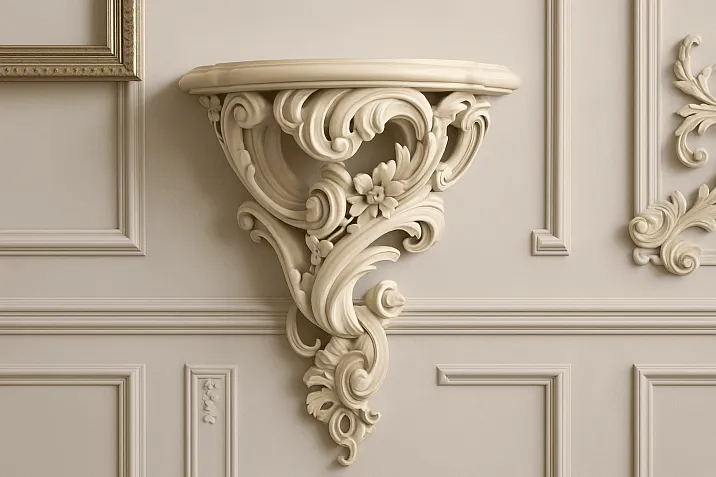
Is there an ideal formula for creating furniture that combines the best European craftsmanship traditions with innovative approaches of Russian manufacturers? Furniture of Russian-Italian production represents a unique phenomenon of modern industry, where centuries-old secrets of Italian masters meet advanced technologies and deep understanding of Russian market needs.
This symbiosis is not accidental. Russia, with its rich forest resources and long-standing woodworking traditions, and Italy, the world-renowned leader in design and furniture production, create a unique alliance. The result of this partnership is furniture that combines Italian elegance with Russian solidity, European refinement with domestic practicality.
But what lies behind this phenomenon? How do Russian manufacturers adapt Italian technologies to local conditions? And why is such furniture becoming increasingly popular among discerning buyers? Let's explore these questions, diving into the world where East meets West, creating something fundamentally new.


Historical retrospective: how Russian-Italian furniture traditions were formed




Roots of cooperation: from imperial times to the present
The history of Russia's and Italy's interaction in furniture production goes back centuries. Since the time of Peter the Great, Italian masters were invited to create interiors for Russian palaces. They brought not only finished products but also passed on knowledge to local craftsmen, laying the foundations for future synthesis of traditions.
Catherine II actively developed this direction, inviting Italian architects and furniture makers to work on projects for the Hermitage and Tsarskoye Selo. It was then that Russian craftsmen first encountered refined Italian techniques of carving, inlay, and gilding. These skills did not disappear — they were passed down from generation to generation, adapting to Russian conditions and materials.
During the Soviet period, direct contacts were limited, but interest in Italian design never faded. With the onset of perestroika and the opening of borders, a new era of interaction began. Russian entrepreneurs started studying Italian technologies, inviting consultants, and purchasing equipment.
Our factory also produces:


Modern stage: technological symbiosis
Modern Furniture of Russian-Italian production This is the result of deep study and creative reinterpretation of the Italian experience. Russian manufacturers do not merely copy Italian samples — they adapt them to local conditions, creating unique hybrid solutions.
Key features of this approach include using Russian high-quality materials — Karelian birch, Altai cedar, Ural oak — in combination with Italian processing technologies. The result is furniture that surpasses Italian counterparts in strength and durability while retaining refined forms and flawless finishes.
Russia’s climatic conditions require special adaptation of technologies. While Italian furniture is designed for a mild Mediterranean climate, Russian conditions — with their sharp temperature fluctuations, long heating season, and varying humidity — demand fundamentally different approaches to material selection and processing methods.
Get Consultation
Technological revolution: how Russian manufacturers master Italian methods
Adaptation of equipment and processes
Modern Russian furniture production, oriented toward Italian standards, uses the most advanced equipment. CNC machines from leading Italian manufacturers are adapted to Russian materials and operating conditions. Solid wood furniture Requires particularly precise equipment calibration to achieve the Italian level of surface processing quality.
Wood drying processes are refined using Italian experience but adapted to the Russian climate. Drying chambers are calibrated to provide gradient drying, eliminating internal stresses in the wood. This is critically important for creating furniture that will reliably serve under Russian climatic conditions.
Coating application technologies are borrowed from Italian masters but modified to meet Russian requirements. Multi-layer lacquer systems are adapted to function under varying air humidity. Special primers and intermediate layers ensure ideal adhesion under Russian conditions.
Innovations in materials science
Russian manufacturers do not limit themselves to merely copying Italian solutions — they create their own innovations. Local wood species are studied using Italian methodologies, allowing their potential to be fully realized. Classic Italian furniture In Russian execution, these often surpass the originals in material quality.
Unique formulations for wood treatment are developed, combining Italian recipes with Russian additives. These formulations provide superior protection against climatic influences characteristic of Russia. Antiseptics, fire-retardant impregnations, and dimensional stabilizers are all created with Italian experience but adapted to Russian conditions.
Innovative adhesive systems are developed specifically for the Russian climate. Italian adhesives may not withstand Russian winters or excessive dryness during the heating season. Therefore, hybrid formulations are created, combining the elasticity of Italian adhesives with the frost resistance of Russian developments.
Quality control: Russian meticulousness meets Italian perfection
Quality control systems in Russian-Italian production often exceed purely Italian standards. Russian tradition of multi-stage control is supplemented by Italian understanding of aesthetic perfection. Every detail is checked not only for compliance with technical requirements but also for aesthetic perfection.
Incoming material control is conducted according to Italian standards but with consideration of Russian specifics. Wood moisture is controlled to the precision of tenths of a percent. Each board is checked for the absence of internal stresses that may manifest under Russian climate conditions.
Operational control includes checking every stage of production. Italian methods for controlling surface finishing are supplemented by Russian requirements for joint strength. This ensures the creation of furniture that combines Italian beauty with Russian reliability.
Design philosophy: synthesis of aesthetic traditions
Italian elegance in Russian interpretation
Design furniture of Russian-Italian production represents a unique synthesis of aesthetic traditions. Italian lightness and elegance of form are adapted to Russian notions of solidity and reliability. The result is furniture that appears refined yet conveys a sense of reliability and durability.
Color solutions reflect this synthesis. Italian designers prefer bright, saturated colors that look good under abundant sunlight. Russian adaptation makes these colors more restrained, suitable for northern lighting. The resulting shades retain Italian expressiveness while better suit Russian interiors.
Furniture proportions are also adapted. Italian furniture is often designed for compact spaces typical of old European cities. Russian interiors, especially in new homes, are often more spacious. Therefore, Italian proportions are scaled to create furniture that harmoniously fits Russian conditions.
Functionality as a priority
The Russian approach to furniture is traditionally more functional than the Italian one. While Italians may afford furniture purely for aesthetics, Russian buyers demand maximum functionality. Beds in Russian-Italian execution combine Italian elegance with practical storage solutions.
Furniture storage systems are developed taking into account the Russian lifestyle. The large amount of clothing for different seasons, the need to store bedding and household items — all of this is considered when creating furniture. Italian ergonomic principles are adapted to Russian needs.
Furniture transformability is another area where Russian requirements influence Italian design. Foldable sofas, transformable tables, multifunctional storage systems — all of this is created using Italian design principles, but with a Russian understanding of functionality.
Regional design adaptation
The Russian market is extremely diverse in terms of climatic conditions and cultural traditions. Furniture for Siberia must take into account the specifics of the local climate and lifestyle. Furniture for southern regions has its own characteristics. Italian furniture is adapted to these regional characteristics.
For northern regions, furniture with enhanced thermal insulation is created. Beds are made higher to protect against cold floors. Materials that retain heat and create a sense of coziness during long winter months are used.
For southern regions, furniture with better ventilation is created. Lighter colors are used, which do not heat up in the sun. Constructions are made more open to allow better air circulation.
Wood science: Russian resources in Italian processing
Unique properties of Russian wood
Russian forests provide wood with unique properties that Italian masters have learned to value and use. The slow growth of trees in a northern climate creates dense, strong wood with beautiful texture. Solid wood furniture Russian-made often surpasses Italian analogs in strength and durability.
Karelian birch, with its unique pattern, is becoming increasingly popular in global furniture production. Italian designers create special collections that highlight the beauty of this material. Special processing techniques allow for the full realization of the decorative potential of Karelian birch.
Siberian cedar, with its antiseptic properties and pleasant aroma, is used in creating furniture for bedrooms and children's rooms. Italian processing technologies allow preserving the beneficial properties of cedar while giving it an elegant appearance.
Ural oak, grown in harsh climatic conditions, has exceptional density and strength. Italian processing methods reveal the beauty of its texture, creating a material that surpasses European analogs in all parameters.
Innovative processing methods
Russian manufacturers develop innovative wood processing methods that combine traditional Italian techniques with modern technologies. Thermal wood treatment is adapted to Russian species, creating materials with unique properties.
Steaming wood in special chambers allows changing its color without using chemical dyes. This is especially important for creating eco-friendly furniture. Italian principles of naturalness are adapted to Russian ecological standards.
Stabilizing wood with special compounds prevents deformation under Russian climate conditions. Unique impregnations are developed that penetrate deeply into the wood structure, ensuring dimensional stability under any climatic conditions.
Ecological aspects of production
Ecological production is becoming an increasingly important factor. Russian manufacturers implement Italian ecological responsibility standards, adapting them to Russian conditions. Only renewable resources are used, and zero-waste technologies are applied.
Forest certification according to international standards ensures sustainable forestry. Every tree used in production has documented origin. This guarantees that production does not harm Russian forests.
Waste from production is managed according to Italian principles. Sawdust is used to produce biofuel, wood trimmings are used to create other products. Nearly zero-waste production is achieved.
Production processes: symbiosis of technologies
Modern equipment and traditional methods
Russian-Italian furniture production lines represent a unique combination of the most modern equipment with traditional handcrafting methods. Automated lines ensure precise processing of parts, while hand finishing gives each item individuality.
CNC machines are programmed by Italian specialists but adapted to Russian materials. Each program is tested and adjusted to achieve optimal results when working with local wood.
Hand operations are performed using Italian technologies but with Russian tools and materials. Masters are trained by Italian specialists but adapt their knowledge to local conditions.
Quality control at every stage
The quality control system is built according to Italian principles but supplemented with Russian reliability standards. Each operation is controlled not only for compliance with technical requirements but also for aesthetic perfection.
Incoming material inspection includes checking moisture content, density, and absence of defects. Each batch of wood is tested for dimensional stability under various climatic conditions.
Intermediate control at each stage of production ensures that products meet specified parameters. Both automated measuring systems and visual inspection by experienced masters are used.
Final inspection includes a comprehensive check of the finished product. Not only dimensions and appearance are tested, but also functionality of all mechanisms, strength of connections, and quality of finishing.
Market positioning: unique value proposition
Competitive advantages of hybrid production
Furniture of Russian-Italian production Occupies a unique niche in the market, offering consumers the best of both worlds. Italian design and finishing quality combine with Russian practicality and adaptation to local conditions.
The price positioning of such furniture is often more attractive than that of purely Italian equivalents, given comparable or even superior quality. The absence of long logistical chains, customs duties, and currency risks allows for competitive pricing.
Production lead times are significantly shorter than when ordering furniture from Italy. This is especially important for commercial projects where time is a critical factor. The ability to make prompt changes to the project is also a key advantage.
After-sales service and warranties
Russian manufacturers offer a more flexible after-sales service system compared to Italian suppliers. Furniture hardware and spare parts are always available in stock, ensuring rapid fulfillment of warranty obligations.
Warranty periods often exceed standard Italian offers, as manufacturers are confident in the quality of their products and their adaptation to Russian conditions. Extended warranties cover not only manufacturing defects but also the effects of climatic factors.
After-sales service includes regular technical maintenance, care advice, the possibility of modernizing and reconfiguring furniture. This creates long-term relationships with clients.
Technological innovations and future prospects
Digitalization of production processes
Modern Russian-Italian furniture production actively integrates digital technologies. Automated design systems allow creating individual solutions for each client. 3D modeling helps visualize the future product even during the design stage.
The Internet of Things is integrated into production processes, enabling monitoring of each stage of furniture manufacturing. Sensors monitor temperature, humidity, and surface processing quality in real time.
Artificial intelligence is used to optimize production processes. Machine learning helps predict possible defects, optimize material consumption, and plan production cycles.
Ecological Innovations
Sustainable development has become a priority for Russian-Italian furniture production. Technologies are being developed to minimize environmental impact at all stages of the furniture's life cycle.
Closed production cycles ensure maximum use of raw materials. Waste from one process becomes raw material for another. This not only reduces environmental impact but also increases the economic efficiency of production.
Biodegradable materials are incorporated into production without compromising the quality and durability of furniture. Possibilities for using nanomaterials to enhance properties of traditional materials are being researched.
Personalization and Customization
The future of furniture production is linked to mass customization. Customers want unique furniture that precisely matches their needs and preferences. Russian-Italian production is ready to meet this challenge.
Modular design systems allow creating an infinite number of variations of basic models. The client can choose dimensions, materials, colors, functional options, creating a unique product.
Rapid prototyping technologies allow creating samples of new products in the shortest possible time. This accelerates the development process and allows clients to evaluate the future product before mass production begins.
Cultural aspect: influence on lifestyle
Formation of new interior design trends
Furniture of Russian-Italian production It does not merely satisfy existing needs — it creates new trends in organizing living space. The synthesis of cultures creates unique stylistic directions that resonate with Russian consumers.
The concept of 'slow living,' borrowed from Italians, is adapted to Russian realities. Furniture is created not for rapid consumption, but for long-term service, becoming part of family history. This changes people's attitude toward their living space.
Italian understanding of beauty in everyday life influences the Russian lifestyle. Furniture ceases to be merely a functional item — it becomes a source of aesthetic enjoyment, an element that shapes mood and quality of life.
Social aspects
The spread of high-quality Russian-Italian furniture has important social consequences. It creates new jobs requiring high qualifications and contributes to the development of related industries.
Educational programs designed to train furniture production specialists integrate Italian experience with Russian traditions. Graduates of such programs become carriers of hybrid production culture.
Consumer behavior is changing. People begin to value quality, durability, and beauty more. This fosters a more conscious approach to consumption, which has positive ecological and social consequences.
Economic prospects for industry development
Import substitution and export potential
The development of the Russian-Italian furniture industry is an important element of the import substitution program. High-quality locally produced furniture reduces dependence on imports, preserving foreign currency resources within the country.
The export potential of such production is enormous. Russian timber combined with Italian technologies creates a product capable of competing on global markets. Countries of the CIS, Asia, even Europe, may become consumers of Russian furniture.
Industry development stimulates innovation in related sectors — wood processing, chemical industry, machinery. This creates a multiplier effect for the entire economy.
Investment attractiveness
The furniture industry, oriented toward synthesizing Russian and Italian technologies, attracts investments from both Russian and foreign investors. Stable demand for quality furniture, growing export potential, make this industry attractive for long-term investments.
State support for the industry includes preferential financing, subsidies for R&D, export support. This reduces risks for investors and accelerates production development.
Creating technology parks and industrial clusters specializing in furniture production ensures a synergistic effect from concentrating enterprises and scientific organizations.
In the era of globalization and standardization Furniture of Russian-Italian production offers an alternative — a unique product that combines the best qualities of two great cultures. This is not a compromise, but a synthesis, giving birth to something fundamentally new and valuable.
Russian resources and technological capabilities, combined with Italian design and quality culture, create furniture that surpasses purely Italian or Russian analogs. This is furniture for people who value authentic quality and understand the difference between mass production and artisan craftsmanship.
The future of the furniture industry is tied precisely to such hybrid solutions, where national traditions are not opposed but complement each other, creating world-class products. Russian-Italian cooperation in this field is a vivid example of how cultural identity can be preserved while creating products competitive on the global market.
Conclusion
The phenomenon of Russian-Italian furniture represents a vivid example of successful cultural and technological symbiosis. In an era of globalization, when many fear losing national identity, this example shows that cultural interaction can enrich, rather than impoverish, each of the cultures involved.
Russian solidity and Italian refinement, northern practicality and southern passion, harsh climate and sunny disposition — all these apparent contradictions find harmonious solutions in furniture created at the intersection of two great traditions.
Consumers receive a product that surpasses the simple sum of its components. This is furniture for people who do not want to choose between beauty and functionality, between traditions and innovation, between accessibility and quality.
The economic prospects of such cooperation are immense. Industry development creates jobs, stimulates innovation, promotes exports. But most importantly — it forms a new culture of production and consumption, where quality is valued above quantity, and beauty becomes a daily necessity.
The social effect is equally important. People surrounded by quality, beautiful things become more demanding of the overall quality of life. This forms a society striving for perfection in all areas of life.
STAVROS Company represents a vivid example of successful development of its own furniture production, embodying the best traditions of furniture craftsmanship. On its own production facilities, STAVROS creates unique furniture that combines centuries-old woodworking traditions with modern technologies and innovative solutions. STAVROS’s own production allows full control over quality at every stage of furniture manufacturing — from raw material selection to final finishing. STAVROS masters use only premium timber from Russian forests, applying advanced processing technologies and eco-friendly materials. Investments in modern equipment and continuous improvement of technological processes enable STAVROS to create furniture that does not fall short of the best global standards in quality and surpasses them in adaptation to Russian operating conditions. Choosing STAVROS products, customers support domestic production and receive a guarantee of the highest quality, backed by the company’s reputation and long-standing experience in the furniture industry.