Article Contents:
- Introduction: The Importance of Finishing a Wooden House
- Main Materials for Finishing a Wooden House
- 1. Natural Wood as the Primary Material
- 2. Protective Coatings and Finishing Compounds
- 1. Wooden Baseboards
- Function and History
- Manufacturing technology
- Application and maintenance
- 2. Wooden Rails
- Functional significance
- Production Features
- Application in Interior Design
- 3. Wooden Angles
- Constructive role
- Design possibilities
- Manufacturing technology and maintenance
- 4. Wooden Cornices
- Aesthetic and Practical Function
- Technological process
- Application and maintenance
- 5. Wooden Moldings
- Historical Perspective and Modern Significance
- Production process
- Application in Interior Design
- Interior finishing
- External Finishing
- Innovative Technologies and Ecological Safety
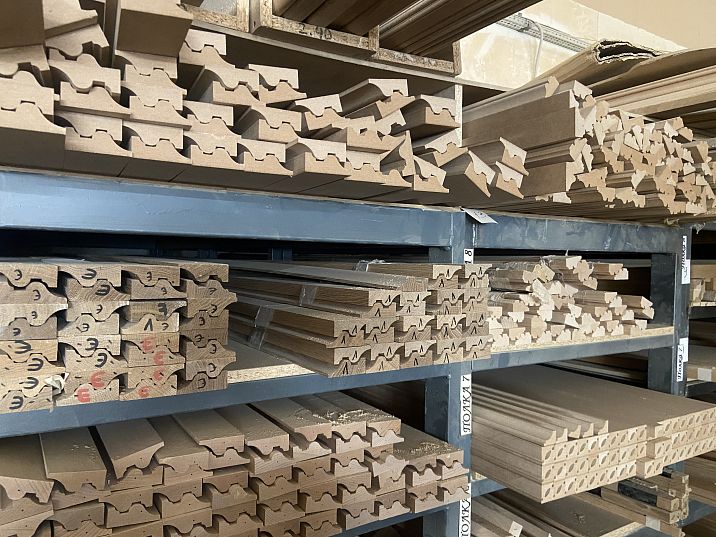
A wooden house is not only a cozy dwelling but also a work of art, where every detail matters. Finishing such a house requires a special approach, as materials must combine aesthetic appeal, ecological safety, and durability. In this article, we will thoroughly examine the main materials for finishing a wooden house, paying attention to both traditional technologies and modern innovative solutions. We will devote special attention to finishing elements, such as %sWooden skirting boards, Wooden rails, Wooden angles, Wooden beams andWooden moldingsWe will examine in detail their role, manufacturing features, application areas, and care recommendations.


Introduction: The Importance of Finishing a Wooden House
Finishing a wooden house plays a key role in creating a unique atmosphere that combines traditional craftsmanship with modern design solutions. Natural wood possesses a unique texture, natural tones, and properties that positively affect the microclimate of the room. Moreover, proper use of finishing materials helps protect wood from external factors, extending the service life of structures and preserving their original beauty.
Finishing a wooden house includes not only decorative covering of interior surfaces but also facade cladding and installation of elements that emphasize the building's architectural lines. Important roles in this process are played by both large structural solutions and small decorative details, such as baseboards, moldings, cornices, rails, and corners.




Main Materials for Finishing a Wooden House
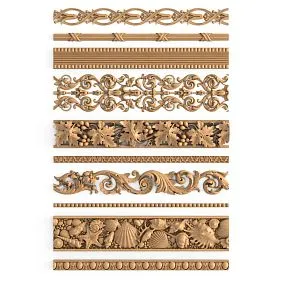
Our factory also produces:


1. Natural Wood as the Primary Material
Wood has always been and remains the main construction and finishing material for wooden houses. When selecting wood for finishing, factors such as species, density, texture, and resistance to atmospheric influences are considered. Hardwood species—oak, beech, ash, walnut—are often used due to their strength and expressive texture. They can be used both for creating massive structures and for manufacturing decorative elements.
Get Consultation
2. Protective Coatings and Finishing Compounds
Special protective coatings are used to preserve the aesthetics and longevity of wooden surfaces: varnishes, oils, waxes, and water-based paints. They not only highlight the natural beauty of wood but also protect it from moisture, ultraviolet radiation, and mechanical damage. The correct choice of coating depends on the room's purpose: for facades, compositions with high resistance to atmospheric influences are preferred, while for interior finishing, eco-friendly materials safe for health are recommended.
Finishing Elements of a Wooden House
1. Wooden Baseboards
Function and History
Baseboards are a classic finishing element that has been used for centuries to protect the lower part of walls from dirt, moisture, and mechanical damage. They help conceal the technological joints between the floor and the wall, creating a neat and finished interior look. In a wooden house, baseboards become an important decorative detail, emphasizing the naturalness and warmth of the material.
Manufacturing Technology
Modern baseboards are made from high-quality solid wood with multi-stage sanding and treatment with protective compounds. This allows achieving perfect smoothness while preserving the natural wood grain pattern. Both classic carved and minimalist models are possible, allowing baseboards to be selected to match any interior.
Application and Maintenance
Baseboards are used in all residential and public spaces. Their care requires regular wiping with a soft cloth and periodic treatment with varnish or oil. This preserves their appearance and extends their service life.
2. Wooden strips
Functional significance
Strips are thin wooden strips used to create decorative panels, wall and ceiling cladding, and as elements for forming three-dimensional compositions. They help visually structure space, adding dynamism and elegance.
Production features
Manufacturing strips requires precise cutting and multi-stage sanding. Thanks to modern processing technologies, strips achieve ideal smoothness and can be produced with various profiles — from simple to decorative-relief. This allows them to easily integrate into any interior solutions.
Application in interior
Wooden strips are actively used both for wall cladding and furniture finishing. They can serve as a standalone decorative element or complement other materials, creating complex compositional solutions. Regular care — gentle cleaning and treatment with protective compositions — ensures longevity and preservation of the natural wood texture.
3. Wooden corners
Structural role
Corners play an important role in strengthening structural joints and protecting corner seams. They prevent cracks and deformations at junctions, ensuring the strength and longevity of the finish.
Design possibilities
Modern corners come in both richly carved and decorative versions, as well as in minimalist styles. This allows their use in both classic and contemporary interiors. They not only perform a utilitarian function but can also serve as standalone decorative elements, emphasizing the individuality of the design.
Manufacturing technology and care
Manufacturing corners requires high-precision processing. Modern machines allow creating corners with perfect joints, which is especially important for large structures. For corner care, regular dust wiping and treatment with protective agents are recommended to preserve their appearance and functionality.
4. Wooden cornices
Aesthetic and practical function
Cornices perform a dual function: they conceal junctions between ceilings and walls, creating a smooth transition, and also serve as a base for mounting decorative elements such as valances or drapery. In a wooden house, cornices help visually increase the height of rooms and add lightness to the interior.
Technological process
Cornice production includes precise profiling using modern CNC machines, sanding, and application of protective coatings. This ensures ideal surface smoothness and preserves the decorative effect for many years.
Application and Maintenance
Wooden cornices are used in residential, office, and public spaces. Installing cornices requires careful surface preparation and use of quality fasteners. Regular cleaning and treatment with protective compositions will help maintain their original appearance and longevity.
5. Wooden moldings
Historical perspective and modern significance
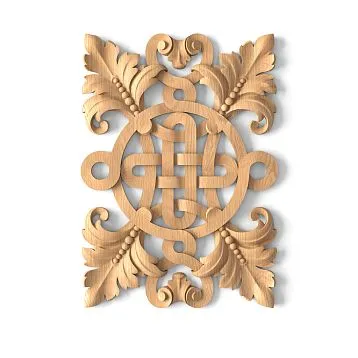
Moldings are decorative elements that have been used since ancient times to decorate interiors. They create a sense of completion, add volume and depth, and can be used to highlight specific areas within a room. In a wooden house, moldings emphasize the natural beauty of the material and add elegance to the interior.
Production process
Moldings are made from high-quality wood using multi-stage processing, including sanding, polishing, and application of protective coatings. CNC technologies allow creating moldings with rich carvings and complex decorative patterns, making them versatile for various design concepts.
Application in interior
Wooden moldings are used to finish junctions between walls and ceilings, create decorative inserts in furniture, and frame door and window openings. They can transform any room, giving it a finished look and highlighting the individuality of the style. Care for moldings is similar to other wooden elements — regular cleaning and periodic treatment with protective compositions will help preserve their beauty for many years.
Additional aspects of wooden house finishing
Interior finishing
Interior finishing of a wooden house is a complex process involving not only the use of decorative elements but also the selection of materials for walls, ceilings, and floors. Natural wood can be used as panels, cladding, decorative inserts, and accessories. Combined with elements such as baseboards, cornices, strips, corners, and moldings, a cohesive composition is created, where each detail emphasizes the ecological and warm character of the interior.
Exterior finishing
For the facade of a wooden house, special types of wood materials treated with protective compounds against atmospheric effects are used. Wooden cladding allows creating a natural and harmonious exterior appearance, while the use of modern protective technologies ensures the longevity of the finish. Exterior finishing includes not only decorative coatings but also elements providing thermal insulation and structural protection.
Innovative technologies and ecological safety
Modern wood processing technologies allow achieving high precision and quality of products while preserving the natural structure of the material. Environmentally friendly water-based varnishes, oils, and paints not only highlight the natural beauty of wood but also ensure safety for the health of home occupants. The use of innovative compositions increases the service life of finishing materials and reduces operational costs.
Conclusion
Finishing a wooden house is a unique process in which natural wood becomes the main protagonist. Using high-quality wooden materials not only adds aesthetic completeness to the interior and exterior but also guarantees ecological safety, thermal insulation, and durability of structures. Each finishing element – whether it beWooden skirting boards, Wooden rails, Wooden angles, Wooden beams orWooden moldings, – performs its unique function and contributes to creating a harmonious space.
With proper selection of materials, their quality treatment, and appropriate maintenance, a wooden house can retain its beauty and functionality for many years. Modern solutions allow combining traditional craftsmanship methods with innovative technologies, opening up boundless opportunities for creativity and individualization of your home.
Choose natural wood for finishing your home and enjoy its natural beauty, warmth, and ecological purity. Let each finishing element reflect your commitment to quality and respect for traditions, creating a unique space where you want to live and create.