Article Contents:
- 1. General Requirements for Furniture Materials
- 2. Plywood Materials Based on Wood
- 2.1. Laminated particle board (MDF)
- 2.2. MDF
- 2.3. Plywood
- 3.1. Advantages and Disadvantages
- 3.2. Where Solid Wood is in Demand
- 5.1. Plastic
- 5.2. Acrylic
- 5.3. Laminate and Melamine
- 6.1. Metal
- 6.2. Glass
- 7.1. Quality and Functionality
- 7.2. Furniture Handles
- Key Points:
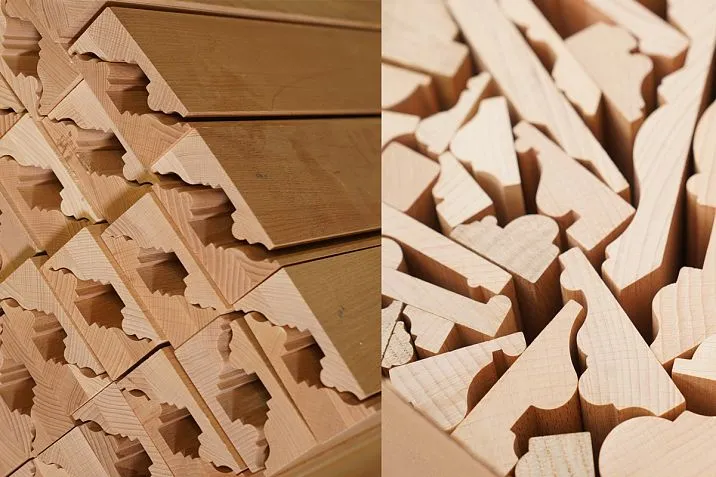
Modern furniture can combine beauty, functionality, and durability — provided it is made from quality materials and using proper technologies. Materials for furniture production play a decisive role: the choice of materials affects not only the appearance of the product, but also its usability, reliability, and ecological safety. In this article, we will examine the most common raw materials and components, their features, and areas of application.


1. General Requirements for Furniture Materials
- Strength and durability. Furniture experiences daily loads: it is opened and closed, moved, sat on, or objects are placed on it. The material must not lose its properties over time.
- Resistance to external factors. Changes in humidity and temperature, exposure to sunlight, possible mechanical damage — all of this can affect the condition of the surface and internal structure of the product.
- Aesthetics. The appearance is important: texture, color, compatibility with other interior elements. Forclassic furniture characteristic are noble wood tones, for high-tech — metallic or glossy surfaces, for Scandinavian style — light wood.
- Ecological safety. Norms for formaldehyde and other substances affecting health are strictly regulated. The lower the emission (E0, E1), the safer it is for living spaces.
- Cost. Material selection is often determined by budget: solid wood is more expensive than MDF, and metal is more expensive than plastic.




2. Plywood materials based on wood
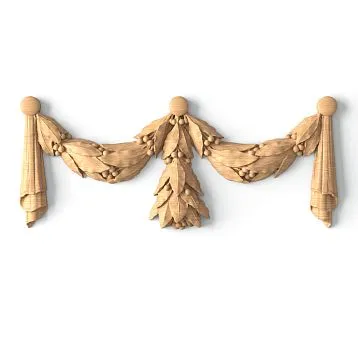
Our factory also produces:


2.1. Laminated particleboard (Laminated MDF)
MDF (medium density fiberboard) — one of the most popular materials, created by pressing wood chips with adhesive compositions. Laminated MDF is MDF covered with decorative and protective film (laminate).
● Advantages:
○ Low cost;
○ Numerous decorative options: from wood imitation to solid and fantasy patterns;
○ Easy maintenance, water-repellent properties of the laminate layer.
● Disadvantages:
○ Low resistance to chipping, especially at edges;
○ May swell from moisture if the edge is poorly sealed;
○ Limitations in complex milling — typically Laminated MDF is used for flat geometric facades and casework.
Most often, Laminated MDF is used for furniture: cabinets, chests, shelves, wardrobes, as well as office desks and drawers. Quality Laminated MDF should have an emission class no lower than E1 (otherwise formaldehyde content is higher).
Get Consultation
2.2. MDF
MDF (medium density fiberboard) — a board made of fine wood fibers pressed with minimal amounts of binder. This gives a more uniform structure than MDF.
● Advantages:
○ Higher density and strength;
○ Ability to mill facades and shaped elements;
○ Good resistance to moisture when properly coated (enamel, film).
Disadvantages:
○ Higher cost compared to MDF/Laminated MDF;
○ Heavy weight (furniture with large dimensions may be bulky).
Used for: kitchen and cabinet facades, carved elements, doors, decorative inlays. MDF is often covered with veneer, plastic, acrylic, or enamel.
2.3. Plywood
Veneer — a material obtained by gluing thin layers of wood veneer. Each layer is placed perpendicular to the previous one, giving the board high rigidity and stability.
● Advantages:
○ Strength, resistance to deformation;
○ Low mass with high load-bearing capacity (especially birch veneer);
○ Can be used as a decorative material, covered with transparent lacquer or paint.
● Disadvantages:
○ With low manufacturing quality, internal voids and delamination may occur;
○ Requires additional finishing (lacquering, painting) to enhance appearance and provide protection.
Veneer is often used in Scandinavian style, eco-style, for making beds, chairs, children's furniture, as well as back panels of cabinets and niches.
3. Solid wood
3.1. Advantages and disadvantages
Solid wood — a classic option, always appreciated for its naturalness and beauty. This includes solid boards or glued-up beams made from one type of wood (oak, beech, ash, birch, pine).
● Advantages:
○ Elegant appearance (unique wood grain pattern);
○ Longevity (properly treated solid wood lasts for decades);
○ Possibility of restoration, sanding, repainting.
Disadvantages:
High cost (especially valuable species: oak, walnut, redwood);
Sensitivity to humidity and temperature fluctuations (cracks, warps);
Heavy weight.
3.2. Where solid wood is in demand
Solid wood is widely used for manufacturingclassic furniture (commodes, display cabinets, tables, carved wardrobes), as well as in styled interiors (country, Provence, eco). Solid wood is often combined with other materials (glass, metal) to achieve a unique design.
4. Veneer and its variations
Veneer — a thin layer of natural wood (usually 0.3–0.6 mm), which is glued onto a panel base (MDF, particleboard, plywood). This results in a material with visible wood texture at a lower cost than solid wood.
● Advantages:
○ Natural wood effect;
○ Wide selection of species (oak, beech, ash, exotic varieties).
○ Lighter than solid wood (simplified transportation).
● Disadvantages:
○ Prone to scratches if subjected to sharp mechanical impacts;
○ Requires careful edge treatment and lacquering/oil.
Veneered facades are used in kitchens, living rooms, bedrooms — in this case, the price is usually higher than for MDF, but lower than for solid wood.
5. Plastic, acrylic, and laminate for facades
5.1. Plastic
A plastic layer (HPL, CPL) is glued onto the panel (MDF, particleboard), creating a wear-resistant coating. Often used in kitchens or bathrooms — where resistance to moisture and temperature is important.
● Advantages:
○ High resistance to mechanical damage, hot objects, and moisture;
○ Wide range of colors and textures.
Disadvantages:
○ Can be difficult to recycle (edges, joints);
○ Highly glossy surfaces show fingerprints.
5.2. Acrylic
Acrylic facades create a deep glossy surface that reflects light. With acrylic, it is easy to achieve bright, saturated colors or classic glossy white/black.
● Advantages:
○ Mirror-like gloss, "depth" of color;
○ More scratch-resistant surface than PVC film.
● Disadvantages:
○ Minor scratches may occur with rough handling;
○ Higher cost than laminate facades.
5.3. Laminate and melamine
Laminating with laminate or melamine film — one of the forms of "lamination" for panels. Suitable for the budget segment, but quality and durability depend on the coating thickness.
6. Metal and glass in furniture manufacturing
Metal (steel, aluminum) is often used for frames, supports, table and chair legs, furniture hardware. Popular in loft and high-tech styles.
Metal (steel, aluminum) is often used for frames, supports, table and chair legs, furniture hardware. Popular in loft and high-tech styles.
● Advantages:
○ High strength, durability;
○ Possibility of thin constructions.
● Disadvantages:
○ Can rust (if coating is damaged);
○ Cold, 'industrial' look may not fit warm classical interiors.
6.2. Glass
Glass inserts, display cabinet doors, countertops — add lightness and elegance to furniture sets. Tempered glass is used for safety.
● Advantages:
○ Visual lightening of space;
○ Easy cleaning (especially with special glass sprays).
Disadvantages:
○ Fingerprints, reflections, possible chips from impacts;
○ Requires careful installation and handling.
7. Role of furniture hardware and handles
In addition to primary structural materials, attention should be paid to hardware: hinges, guides, handles, locks, lifting mechanisms. Even the highest quality panel or solid wood won't save if doors squeak or drawers jam.
7.1. Quality and functionality
● Hinges. There are surface-mounted, inset, and semi-inset types. Quality brands (Blum, Hettich) equip hinges with soft-close mechanisms to prevent loud slams when closing.
● Guides. Ball-bearing (telescopic) guides are considered the best option, providing smooth operation, greater travel, and load capacity.
● Push-to-open systems. Allow for handle-free operation (especially relevant in minimalism).
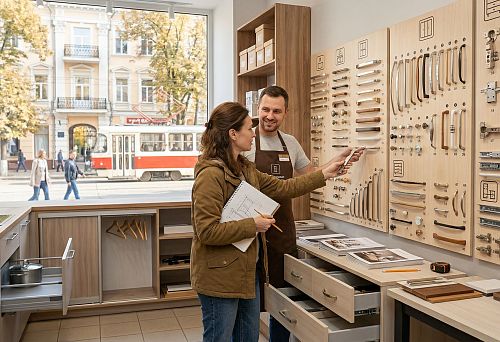
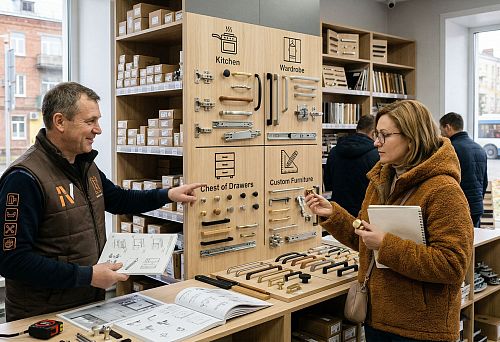
7.2. Furniture handles
Furniture Handles come in:
● Hooks: universal solution;
● Buttons: compact, suitable for classic and country styles;
● Rails: elongated, characteristic of modern kitchens;
● Inset: for sliding doors;
● Wooden (sometimes fully solid), metallic (chrome, brass, bronze), ceramic or glass inserts.
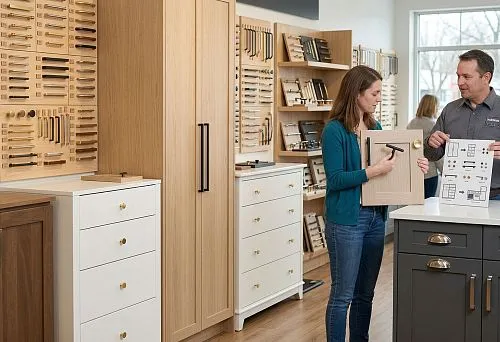
Handle selection affects not only aesthetics but also usability. Ornate, patina-finished handles suit classical interiors, while minimalist handles are appropriate for Scandinavian styles. Wooden handles, in high-tech — shiny metallic or push-to-open systems.
8. Ecology and safety
Formaldehyde resins are present in most wood-based panels. When selecting, refer to emission class: E0, E1 (safe for residential spaces), E2 (rarely used and not recommended for bedrooms or children's rooms).
For coatings (lacquers, paints, adhesives), check certifications. Prolonged use of low-quality materials may pose a risk of releasing harmful compounds.
9. Care and Maintenance
● Laminate, MDF: wipe with a damp soft cloth without aggressive chemicals. Avoid water getting on edges.
● Solid wood: use polishes, oils, waxes. Protect from excessive moisture.
● Plywood: protect with varnish, repaint if necessary;
● Glass: use special glass cleaners, avoid impacts.
● Metal: wipe dust off, ensure no rust (in case protective coating is damaged).
● Hardware: periodically check fasteners, vacuum internal mechanisms (guides), lubricate as needed.
10. Tips for Choosing Materials for Furniture
- Budget. Assess your financial capabilities: solid wood and veneered fronts are more expensive, while MDF is more affordable.
- Style and purpose. If emphasizing luxury (classical style) is important, choose solid wood or veneer. For minimalism, glossy acrylic fronts or MDF are suitable.
- Usage conditions. Kitchens, bathrooms, or balconies require moisture-resistant materials (MDF, laminates, plastic).
- Load capacity. For shelves with heavy items, choose strong MDF or high-grade plywood.
- Dimensions. Large solid wood cabinets will be very heavy — logically, choose a lighter construction from MDF or plywood.
- Hardware. Quality hinges, guides, andFurniture Handles — are essential for comfort. Do not skimp on proven brands.
Conclusion
Furniture production materials offer a wide range of solutions: from budget-friendly MDF to premium solid wood. Each option has its strengths and weaknesses, and the right choice depends on the task, interior style, and budget.
Key points:
● Panel materials (MDF, laminate) are suitable for most furniture, differing in affordability and decorative variety.
● Solid wood — ideal for those who appreciate naturalness and durability, especially inclassical interiors.
● Plywood has found new life in eco-style, 'Scandi', and children's furniture.
● Glass and metal — choices for modern, loft, and high-tech styles, adding lightness or industrial charm.
● Hardware (hinges, guides, handles) — details that affect overall impression and usability.
By thoughtfully combining materials and paying attention to details, you will get furniture that matches your aesthetic preferences, functional needs, and budget. Such furniture will last long, please the eye, and provide comfort in daily life.