Article Contents:
- Engineering Foundations of Reliable Connections
- Physics of loads in staircase systems
- Properties of Wood as a Structural Material
- Classification of Mounting Methods
- Mechanical connections
- Threaded Fasteners
- Adhesive joints
- Preparation Technologies of Elements
- Precise Marking and Measurements
- Mechanical Processing of Connections
- Quality Control of Preparation
- Step-by-step installation technology
- Installing Support Posts
- Installation of intermediate balusters
- Handrail Installation
- Specialized Fastening Technologies
- Hidden mounting systems
- Reinforced Connections for High Loads
- Quality Control and Testing
- Visual inspection of connections
- Load testing
- Documentation of results
- Features of working with different species
- Coniferous species: pine, spruce, larch
- Hardwood species: oak, beech, ash
- Protective Coatings and Durability
- Surface Preparation
- Finish Coatings
- Maintenance and repair
- Preventive Measures
- Repair of Damaged Connections
- Innovative technologies and materials
- Modern Adhesive Formulations
- Composite Reinforcements
- Digital technologies in production
- Economic Aspects
- Cost Analysis of Different Methods
- Long-Term Economic Efficiency
- Conclusion
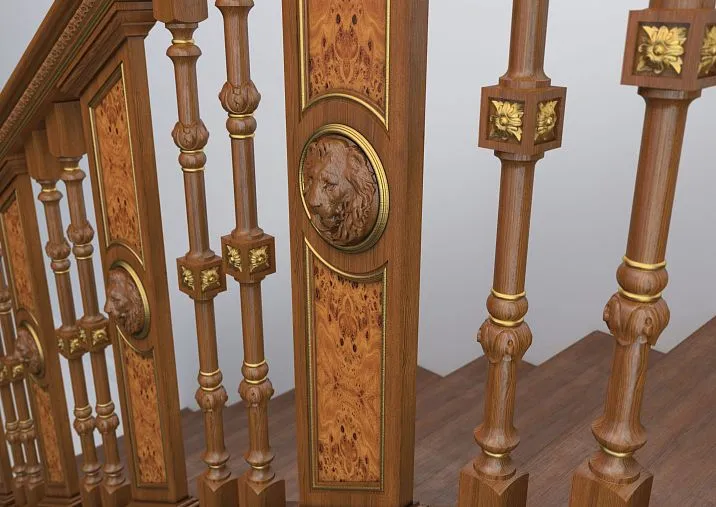
A flawless staircase begins with details. Each connection and fastener element affects the overall strength, durability, and aesthetics of the structure. Fastening balusters and handrails made of wood Represents a complex technological process requiring deep knowledge of materials science, precision in execution, and understanding of load distribution principles. The quality of these connections affects not only the appearance of the staircase but also the safety of everyone who uses it.
Imagine a staircase where every touch of the handrail gives a feeling of absolute reliability. Where there is no slightest play, no hint of instability. Such a result is achieved with proper attention to fastening all elements of the railing. But what secrets do experienced masters hide? What technologies allow creating connections capable of withstanding decades of intensive use?
In the modern world, there are numerous ways to join wooden elements of staircase structures. From classic mortise-and-tenon joints to innovative metal systems – each method has unique advantages and requires a specific approach. The choice of the optimal option depends on the type of wood, interior style, expected loads, and technical capabilities of the installer.



Engineering Foundations of Reliable Connections




Physics of loads in staircase systems
Wooden stair railings are subjected to a complex set of loads during operation. Vertical forces arise when people lean on handrails, horizontal forces occur due to lateral impacts, and torsional moments result from uneven weight distribution among users. Each connection must withstand these multidirectional forces without deformation or weakening of fasteners.
Dynamic loads pose a special threat to the integrity of the structure. When a person quickly ascends the stairs while leaning on the handrail, impact forces arise that are multiple times greater than static loads. That is why surface mounting is insufficient – deep mechanical connections with sufficient contact area are required.
The distribution of forces along the length of the handrail is uneven. Maximum loads concentrate at the beginning and end of the stair run, where people most often grip the handrail. Intermediate sections experience less stress, but require equally reliable fastening to ensure overall system rigidity.
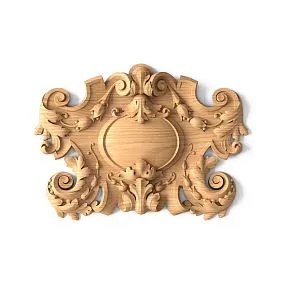
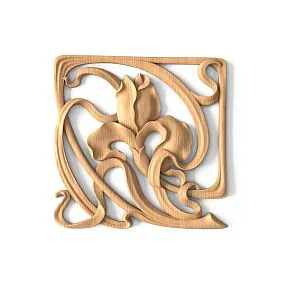
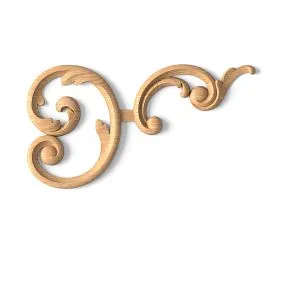
Our factory also produces:





Properties of Wood as a Structural Material
Wood is an anisotropic material with different properties along and across the grain. Compressive strength along the grain may be 10-15 times greater than across the grain. This characteristic is critically important when designing connections and selecting the direction of load application.
Moisture-induced deformations of wood create additional stresses in connections. A 1% change in moisture content can cause linear dimensions of wood to change by 0.1-0.3% across the grain and remain virtually unchanged along the grain. A properly designed connection must compensate for these deformations.
Different wood species exhibit different behavior under loading. Coniferous species are more elastic but less strong. Deciduous species are characterized by high strength but may be more brittle. These characteristics must be considered when selecting the method of fastening and type of fasteners.
Get Consultation
Classification of Mounting Methods
Mechanical connections
Mortise-and-tenon joints remain the gold standard in wooden construction. The principle is based on creating a protrusion (tenon) on one part and a corresponding groove (mortise) on another. For staircase structures, various types of tenons are used: rectangular, round, wedge-shaped.
Rectangular tenons provide maximum contact area and are suitable for structures with high loads. The tenon dimensions should be 1/3 of the thickness of the receiving part in width and at least 20 millimeters in length. These proportions ensure sufficient strength without weakening load-bearing elements.
Round tenons (dowel pins) are easier to manufacture and provide even stress distribution. The diameter of dowel pins is usually 8-12 millimeters, and the depth of insertion is at least two diameters. For increased reliability, multiple dowel pins are used, arranged in a checkerboard pattern.
Threaded Fasteners
Modern threaded systems significantly surpass traditional self-tapping screws in reliability and durability. Conformers, specially developed for furniture production, are adapted for staircase structures. They provide high connection strength with minimal damage to the wood structure.
Countersunk-head screws allow creating virtually invisible joints. The hole for the screw head is drilled to a precisely defined depth, and after tightening, it is covered with a wooden plug matched in color and texture to the main material.
Bronze or stainless steel threaded bushings are embedded into wood and allow for multiple assembly and disassembly of connections. This is especially important for removable handrails or structures requiring periodic maintenance.
Modern woodworking adhesives have fundamentally changed approaches to joining wooden elements. Polyurethane formulations create water-resistant joints that match the strength of wood itself. Setting time is 10–15 minutes, full strength is achieved within 24 hours.
Epoxy adhesives provide maximum joint strength, but require precise mixing ratios of components. They are especially effective for filling gaps and creating joints between dissimilar materials.
Adhesives based on polyvinyl acetate (PVA) remain popular for interior work due to their ease of application and environmental safety. However, their water resistance is limited, which should be considered when selecting them for humid areas.
Technologies for preparing elements
The quality of the joint directly depends on the accuracy of preliminary marking. All elements must be marked with the location and orientation of installation. Special templates and guides are used to ensure repeatability of operations.
Precise marking and measurements
Measuring tools require regular verification and calibration. Calipers, micrometers, and squares must provide measurement accuracy down to 0.1 millimeters. Laser distance meters and levels significantly speed up the marking process for large structures.
Control templates are made from stable materials — plywood, MDF, metal. They allow quickly checking the correctness of part processing and ensure uniformity of all structural elements.
Mechanical processing of joints
Drilling holes for fasteners requires special attention to tool quality. Drills must be perfectly sharpened and match the material being processed. For hardwoods, drills with a small included angle are used; for softwoods, drills with a larger angle are used.
Milling of grooves and profiles is performed on specialized equipment with precise positioning. Feed rate and spindle speed are selected depending on the wood species and depth of processing.
Sanding of mating surfaces improves adhesive bonding and ensures tight fitting of parts. Abrasives with grit size 120–220 are used; finer abrasives can "polish" wood pores.
Quality control of preparation
Geometric control includes checking dimensions, angles, and surface flatness. Deviations from nominal values must not exceed the allowable limits specified in technical conditions.
Wood moisture is controlled using electronic moisture meters. For interior structures, moisture should not exceed 12%; for exterior structures — 15%. Elements with elevated moisture are directed for additional drying.
Visual inspection allows identifying hidden wood defects — internal cracks, rot, insect infestation. Such elements are excluded from production or directed for reprocessing.
Visual inspection allows for the detection of hidden wood defects – internal cracks, rot, insect damage. Such elements are excluded from production or sent for recycling.
Step-by-step installation technology
Installation of Support Posts
Marking locations for post installation is performed taking into account the architectural features of the staircase. Posts are installed at the beginning and end of each flight, as well as at turns and landings. The distance between posts should not exceed 3 meters.
Fastening wooden balusters and handrails
Attachment to the floor is performed in different ways depending on the base material. For wooden floors, strong screws 100–120 mm long are used; for concrete, anchor bolts 12–16 mm in diameter are used. Intermediate balusters are installed after securing support posts. A control string is stretched between posts, serving as a reference for correctly positioning all elements in a single plane.
Installation of intermediate balusters
The distance between balusters is determined by safety requirements and aesthetic considerations. Building codes establish a maximum clear distance of 150 mm to prevent children from falling. The optimal spacing for installation is 100–120 mm.
Fastening to treads can be done in various ways. The most reliable method is through-bolt fastening using threaded rods. The rod passes through the tread and is screwed into the end of the baluster to a depth of at least 30 mm.
The handrail is the finishing element of the railing and requires special attention to installation quality. All balusters must be pre-cut at an angle corresponding to the staircase’s slope.
Handrail installation
The handrail support rail significantly simplifies handrail installation and increases joint reliability. The rail is fastened to the top ends of balusters using screws or dowels, and the handrail is mounted onto the rail using adhesive and additional fasteners.
Joints in the handrail at turns require special skill. Angles must be precisely fitted, joints must be tight and inconspicuous. Hidden metal plates or bolts are used to strengthen the joints.
Specialized fastening technologies
Modern concealed fastening systems allow creating aesthetically perfect joints without visible fasteners. Magnetic systems use powerful neodymium magnets to secure removable elements.
Hidden fastening systems
Pneumatic fasteners operate on the principle of expanding special sleeves under pressure. Such systems ensure even load distribution and eliminate stress concentration at individual points.
Bayonet locks allow quickly connecting and disconnecting elements with a simple rotation. This is especially convenient for temporary structures or elements requiring frequent disassembly for maintenance.
Fastening to treads can be done in various ways. The most reliable method is through-bolt fastening using threaded rods. The rod passes through the tread and is screwed into the end of the baluster to a depth of at least 30 mm.
Reinforced connections for high loads
Reinforced connections are used in areas of increased load, employing metal elements. Steel plates embedded in wood take on the primary forces, while the wood serves a decorative function.
Composite reinforcements combine the strength of metal with the aesthetics of wood. Carbon or glass fiber rods are inserted into grooves of wooden elements, significantly increasing their load-bearing capacity.
Hybrid constructions combine different materials to achieve optimal characteristics. A metal frame provides strength, wood provides beauty, and modern adhesives ensure reliable connection of components.
Quality control and testing
Visual inspection of connections
After completion of assembly, all connections are subjected to careful visual inspection. Gaps between elements, adhesive residue on visible surfaces, unevenness, or wood damage are not permitted.
The geometry of the structure is checked using precise measuring tools. Deviations from vertical alignment must not exceed 2 millimeters per meter of height. The handrail must maintain constant height along the entire length of the staircase.
Surface quality is assessed under different lighting conditions. All defects must be eliminated before applying the final finish. Special attention is given to connection areas, where processing marks may be visible.
Load testing
Connection strength is tested by applying controlled loads. A horizontal load of 100 kilograms is applied to the handrail at various points. Connections must not show signs of weakening or deformation.
Dynamic tests simulate real operating conditions. Sudden loads are applied to the handrail, simulating a person’s impact during rapid movement. Quality connections withstand such impacts without damage.
Cyclic tests are conducted to evaluate the durability of connections. Repeated application of loads helps identify fatigue damage and determine the service life of the structure.
Document the results
All control and test results are documented in special protocols. This allows tracking product quality and identifying systematic issues in the technology.
Photographic documentation of critical joints enables subsequent analysis. High-resolution digital photographs allow detailed examination of connection quality.
Product passports contain complete information on materials, manufacturing technology, and test results. These documents are provided to the customer and serve as the basis for warranty obligations.
Features of working with different species
Coniferous species: pine, spruce, larch
Coniferous species are characterized by relative softness and ease of processing, but require special attention when making connections. Soft wood may compress under fasteners, leading to weakened connections.
Pre-drilling holes is mandatory for all types of fasteners. The hole diameter should be 1-2 millimeters smaller than the fastener diameter. This ensures tight fit without risk of wood splitting.
Resin content in coniferous species may hinder gluing. Connection areas must be cleaned with a solvent and lightly sanded to improve adhesive bonding. Some adhesives are specifically designed for resinous wood.
Hardwood species: oak, beech, ash
Hard deciduous species provide maximum connection strength but require more powerful tools and special technologies. High wood density may cause cracking with improper fastening.
Pre-drilling should be performed with sharp drills at low speeds. Wood overheating may cause charring and structural weakening. Periodic cooling of the drill prevents overheating.
Adhesive joints in hard species exhibit exceptional strength. Dense wood structure ensures good adhesion, and high material strength allows creating thin adhesive joints.
Protective coatings and durability
Surface preparation
Quality finishing begins with careful surface preparation. All elements must be sanded with abrasives of varying grit, starting from coarse and ending with fine.
Dust removal is critically important for coating quality. Compressed air or special sticky cloths are used. The surface must be perfectly clean before applying primer or finish.
Priming improves coating adhesion and equalizes wood’s absorption capacity. Primer is applied in a thin, even layer and thoroughly rubbed into the entire surface.
Finish coatings
Varnish coatings provide maximum protection against wear and moisture. Polyurethane varnishes create a durable film resistant to mechanical damage. Number of coats depends on operating conditions.
Oil-based coatings highlight the natural beauty of wood, creating a warm matte surface. They penetrate deeply into the material structure without forming a surface film.
Wax coatings create a pleasant to the touch surface with a slight gloss. Wax is applied in thin layers and carefully polished to achieve an even finish.
Maintenance and repair
Preventive measures
Regular maintenance extends the service life of connections and the entire structure. Periodic inspection for fastener loosening allows timely detection and resolution of issues.
Tightening threaded connections must be done carefully. Excessive force may damage threads or split the wood. A torque wrench is used to control tightening force.
Updating protective coatings prevents moisture penetration into joints. Update frequency depends on operating conditions and is typically 3-5 years for internal structures.
Repair of damaged connections
Joint weakening may occur due to wood shrinkage, fastener wear, or exceeding calculated loads. Timely repair prevents further structural damage.
Restoration of mortise-and-tenon joints may require replacing worn elements. New tenons are made to fit enlarged mortises. Sometimes installing additional dowels is sufficient.
Fastener replacement is performed with similar or stronger elements. When replacing screws with bolts, changes in joint loading characteristics must be considered.
Innovative technologies and materials
Modern adhesive compositions
Structural adhesives of the new generation provide bonds stronger than the wood itself. They are resistant to temperature fluctuations, moisture, and ultraviolet radiation.
Fast-curing formulations reduce construction assembly time. Some adhesives set within seconds under ultraviolet light or special activators.
Reversible adhesives allow disassembly of joints when repair or renovation is needed. They soften upon heating or exposure to special solvents.
Composite Reinforcements
Carbon fiber rods are inserted into wooden element slots, significantly increasing their strength. Such reinforcements are virtually invisible and do not compromise the structure's aesthetics.
Fiberglass tapes are used to reinforce joints at stress concentration points. They are applied to the surface and concealed under the final finish.
Aramid fibers possess exceptional tensile strength and are used to create highly critical joints. Their application is justified in structures subjected to extreme loads.
Digital technologies in production
CNC machines provide the highest precision in joint processing. Programmable centers can create complex three-dimensional profiles with accuracy down to hundredths of a millimeter.
Laser technologies are used for cutting and engraving elements. The laser beam ensures a perfectly clean cut without mechanical stress on the material.
Robotic assembly systems improve production quality and speed. Robots do not tire, do not make mistakes, and ensure consistent joint quality.
Economic Aspects
Cost analysis of different methods
Fastening cost depends on the chosen method and materials. Simple threaded connections are cheaper than complex mortise joints but may be less durable.
Labor costs constitute a significant portion of the total cost. Automated methods reduce labor expenses but require investment in equipment.
Premium-grade materials cost more but offer superior performance and longer service life. Cutting costs on materials may result in additional expenses in the future.
Long-term economic efficiency
Quality joints pay for themselves through long service life and minimal maintenance costs. Cheap solutions may require replacement within a few years.
The impact on property value should also be considered. Quality stair constructions enhance the attractiveness of a property and may increase its market value.
Insurance companies may offer discounts on insuring properties with quality stair constructions, reducing overall operating expenses.
Conclusion
Mastercraft Fastening balusters and handrails made of wood Represents a complex field combining traditional carpentry techniques with modern innovative solutions. Each method has its advantages and requires deep understanding of materials, precision, and attention to detail.
Properly executed joints ensure not only the safety and longevity of the structure but also its aesthetic perfection. Investments in quality fastening pay off multiple times due to long service life and minimal maintenance costs.
Technological advancements open new opportunities for improving stair constructions. Composite materials, digital manufacturing technologies, innovative fastening systems—all contribute to creating staircases that combine beauty, functionality, and reliability.
The future of the industry is linked to the integration of various technologies and materials. However, the core principles of quality fastening remain unchanged: precision, neatness, and the professionalism of the executor.
When selecting an installer for stair construction fastening, it is important to consult proven specialists with years of experience. STAVROS combines traditional craftsmanship with modern technologies, creating staircases that serve as benchmarks of quality and beauty. Our specialists are proficient in all modern fastening methods and guarantee flawless quality for every joint. Choosing STAVROS means investing in the reliability, safety, and longevity of your staircase.