Article Contents:
- Philosophy of Natural Material in Modern Space
- Revival of Woodworking Traditions
- Manufacturing Technology as Art
- Architectural Role of Decorative Elements
- Compositional Significance in Interior Design
- Stylistic Directions and Their Interpretation
- Technical Aspects of Applying Wooden Decor
- Installation and Mounting Features
- Protective Treatment and Finishing Coatings
- Aesthetic Possibilities and Design Solutions
- Color Interpretations of Natural Material
- Combining with other materials
- Functional Advantages of Natural Decor
- Ecological Safety and Microclimate
- Durability and Repairability
- Regional Traditions and Cultural Characteristics
- European influences in Russian interiors
- Adaptation to Modern Needs
- Economic Aspects of Choosing Wooden Decor
- Investment Value of Quality Decor
- Comparative Analysis of Ownership Costs
- Trends and innovations
- Modern Technologies in Traditional Craft
- Personalization and individual approach
- Psychology of Perceiving Natural Decor
- Emotional Impact of Natural Materials
- Cultural and Historical Associations
- Practical recommendations for selection and application
- Criteria for Selecting Quality Elements
- Rules for Combining with Architectural Elements
- Conclusion: The Art of Creating a Unique Space
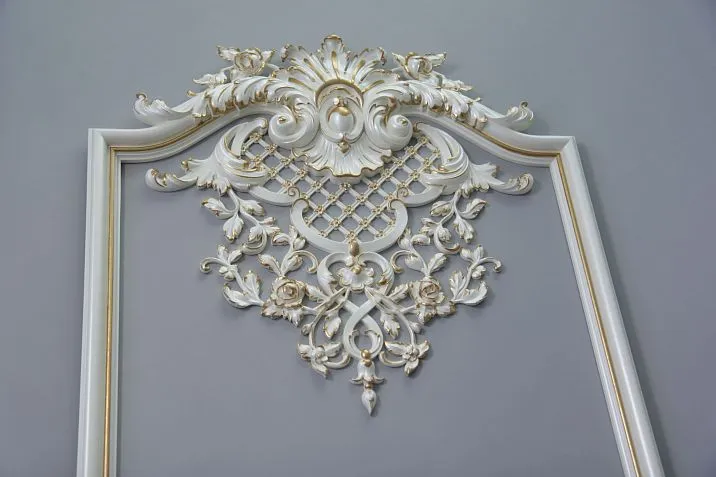
Have you ever wondered what makes an interior truly alive and breathing? What transforms an ordinary room into a space filled with character and aristocratic charm? The answer lies in the details—the elusive elements that create atmosphere and speak of the homeowner’s taste. Decor for Molding It is precisely such a magical detail, capable of completely transforming the perception of any room.
Each decorative element is a small story told through the language of forms and textures. When we speak of moldings and their decorative treatment, we refer to an art whose roots go back to ancient times, to eras when master carvers created true masterpieces from noble woods.


Philosophy of natural material in modern space




Revival of woodworking traditions
Modern society is experiencing a remarkable period of returning to its roots, when natural materials once again regain their value and significance. In this context Decor for Molding Solid wood represents not just an interior element, but a true manifesto of quality and authenticity.
Solid beech and oak, used in producing decorative elements, possess unique characteristics that were formed by nature over decades. Each annual ring in the wood's structure is a mark of time, a witness to climatic changes and natural cycles. That is why items made from natural solid wood never repeat each other; each carries its own individual history and unique character.
Beech, as a material for creating decorative elements, is valued for its dense, uniform structure and excellent workability. This material allows for the creation of delicate carving details while maintaining the strength and longevity of the item. Oak, in turn, brings a sense of monumentality and nobility to decoration, its expressive texture becoming an additional decorative element.
Our factory also produces:


Manufacturing technology as an art
The process of creating decorative elements for moldings is a synthesis of modern technologies and traditional craftsmanship. Each detail undergoes multiple stages of processing, starting from careful selection of raw materials and ending with final surface finishing.
Initial processing of solid wood includes a kiln-drying process, which brings the wood's moisture content to an optimal level. This is a critically important stage, determining the future stability of the item and its resistance to deformation. Properly dried wood does not crack, warp, or lose its geometry over long periods of use.
Wood carving is a special art requiring not only technical skills but also artistic sensitivity. Modern equipment allows achieving exceptional precision in reproducing complex ornaments, but it is human hands that give each item soul and individuality.
Get Consultation
Architectural role of decorative elements
Compositional value in interior design
Decor for Molding performs a much more complex role than mere surface decoration. It is an architectural composition tool, enabling the creation of rhythm, accents, and visual connections between various interior elements.
Corner elements serve not only for the aesthetic completion of molding compositions but also perform an important structural function. They allow for smooth transitions between different planes, conceal technological joints, and ensure visual continuity of decorative finishes.
Central inserts become focal points in the overall interior composition. Placed in strategically important locations, they attract attention and create a visual hierarchy of space perception. A properly selected and positioned central element can dramatically alter the perception of a room, making it more grand or, conversely, intimate and cozy.
Stylistic directions and their interpretation
The modern market of decorative elements offers a wide range of stylistic solutions — from strict classical geometry to refined modern botanical motifs. Each direction has its own characteristics and requires a deep understanding of historical context.
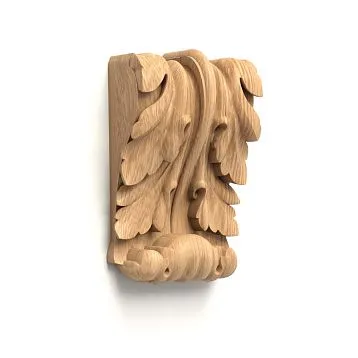
Classical motifs in decor for moldings are characterized by symmetry, order, and mathematical precision of proportions. This direction is ideal for creating respectable interiors, where feelings of stability and dignity are important. Acanthus leaves, rosettes, meanders, and other classical elements create an atmosphere of eternity and permanence.
Baroque forms are distinguished by dynamism and theatricality. Curved lines, complex scrolls, and rich detailing create a sense of luxury and festivity. Such elements require appropriate room scale and become central accents in interior composition.
Technical aspects of applying wooden decor
Features of installation and mounting
Working with decorative elements made of solid wood requires a special approach and understanding of the material's specific properties. Unlike polymer analogs, wooden decor has its own behavior characteristics under the influence of temperature and humidity changes in the surrounding environment.
Mounting elements are secured with consideration for possible micro-deformations of the wood. Special adhesives with certain elasticity are used, capable of compensating for minor material movements. In some cases, a combined mounting method — adhesive in combination with mechanical fasteners — is applied.
Surface preparation for mounting decorative elements includes not only cleaning and leveling but also treatment with special compounds that improve adhesion. Special attention is paid to compatibility between the base's paint coatings and the decorative elements.
Protective Treatment and Final Coatings
The longevity of wooden decoration for moldings is largely determined by the quality of protective treatment and final finish. Modern technologies allow creating coatings that not only protect wood from adverse effects but also highlight its natural beauty.
Antiseptic treatment protects wood from biological damage — fungi, mold, and insect pests. Quality impregnation penetrates deeply into the wood structure, creating long-term protection without harming the material's eco-friendliness.
Paint and varnish coatings perform a dual function — protective and decorative. Modern water-based varnishes provide excellent protection against moisture and mechanical damage, while still preserving the wood's natural ability to breathe.
Aesthetic possibilities and design solutions
Color interpretations of natural material
The natural beauty of solid wood can be enhanced and emphasized through various surface treatments. Staining allows changing the wood's color palette without hiding its natural texture. Staining oak can give it a noble dark tone characteristic of antique furniture.
The brushing technique opens additional possibilities for creating expressive textures. Removing soft wood fibers with special brushes allows highlighting the grain pattern and creating additional play of light and shadow on the surface of decorative elements.
Patina and artificial aging allow creating an effect of multi-century nobility. These techniques are especially in demand when creating interiors in historical styles, where the atmosphere of authenticity and connection to the past is important.
Combining with other materials
A modern approach to interior design implies bold combinations of various materials and textures. Decor for Molding Solid wood combines beautifully with natural stone, metal, glass, and modern composite materials.
The contrast between the warmth of wood and the coolness of metal creates dynamic interior compositions, relevant to modern stylistic directions. Combining wooden decor with stone surfaces emphasizes the connection to nature and creates a sense of fundamentality and reliability.
Integrating wooden decorative elements into modern high-tech interiors allows adding warmth and humanity to spaces dominated by glass, metal, and synthetic materials.
Functional advantages of natural decor
Ecological safety and microclimate
In an era of heightened attention to ecological safety in living spaces, wooden decor acquires special value. Natural wood does not emit harmful substances; on the contrary, it contributes to creating a healthy microclimate in the room.
Wood has a natural ability to regulate air humidity, absorbing excess moisture during high humidity and releasing it during low humidity. This property is especially valuable in modern sealed buildings where natural ventilation is limited.
Phytoncides, natural antiseptic substances contained in wood, have a beneficial effect on the room's atmosphere. Coniferous species are especially rich in phytoncides, but hardwoods such as oak and beech also possess certain antibacterial properties.
Durability and repairability
Quality-made and properly installed Decor for Molding Solid wood, properly made and installed, can serve for decades without losing its aesthetic and functional qualities. Unlike many synthetic materials, wood only gains additional nobility and charm with age.
The possibility of restoration and renewal is an important advantage of wooden decor. Scratches, minor damages, and color changes can be corrected without replacing the entire element. Sanding, staining, and reapplying varnish allow fully restoring the original appearance of decorative elements.
The modularity of the decorative element system allows replacing individual parts without disrupting the overall composition. This is especially important when reconstructing historical interiors, where maintaining authenticity is necessary while allowing for updates.
Regional traditions and cultural specifics
Russian traditions of wooden architecture
Russia possesses rich traditions of working with wood, formed over many centuries of national architecture development. These traditions are reflected in modern decorative element production, where principles of quality wood processing and attention to detail are preserved.
Russian masters have always distinguished themselves by a special understanding of the properties of various wood species and the ability to fully reveal the potential of each material. These knowledge, passed down from generation to generation, are today enriched by modern technologies and scientific developments.
The climatic characteristics of Russian regions have left their mark on wood processing technologies. The need to create items resistant to significant temperature fluctuations and humidity changes led to the development of special wood drying and protective treatment methods.
Adaptation to modern needs
The modern Russian consumer demands high standards of quality and functionality for interior elements. Decor for Molding It must not only meet aesthetic requirements but also be practical in use, easy to maintain, and durable.
Urbanization and changes in lifestyle have led to new requirements for interior solutions. Modern apartments and offices require decorative elements that combine classic beauty with functionality and meet contemporary living standards.
Growing interest in personalizing living space creates demand for unique decorative solutions. The possibility of creating exclusive elements based on individual sketches allows each interior to acquire a unique character.
Economic aspects of choosing wooden decor
Investment value of quality decor
Purchasing high-quality decorative elements made of solid wood represents a long-term investment in the beauty and comfort of living space. Unlike cheap synthetic alternatives, wooden decor not only retains but also increases its value over time.
The cost per square meter of housing with quality decorative finishes is significantly higher than that of standard housing. This makes investments in decorative finishes economically justified, especially when viewed in the long-term perspective.
Low operating costs are another economic advantage of wooden decor. The absence of the need for frequent updates or replacement of elements makes the overall cost of ownership more attractive compared to cheap alternatives.
Comparative analysis of ownership cost
When analyzing the economic efficiency of various decorative options, it is important to consider not only initial costs but also expenses throughout the entire life cycle. Decor for Molding made from solid wood, despite the higher initial cost, demonstrates excellent economic efficiency in the long term.
Synthetic materials, attractive in price at the time of purchase, often require replacement within a few years of use. Loss of color, deformation, cracking, and other defects necessitate complete updating of the decorative finish.
The possibility of restoring wooden elements allows significantly extending their service life at minimal cost. Periodic renewal of the lacquer finish and minor repairs are much cheaper than complete replacement of decorative elements.
Trends in development and innovation
Modern Technologies in Traditional Craft
The introduction of modern technologies into the production of wooden decor allows achieving a previously unattainable level of quality and precision. Computer-aided design and CNC machines ensure ideal repeatability of complex ornaments while preserving manual finishing of details.
3D modeling allows creating virtual prototypes of decorative elements and evaluating their interaction with architectural features of a specific interior even during the design stage. This significantly reduces risks and enables achieving an ideal result.
Laser processing opens new possibilities for creating ultra-precise details and complex geometric forms. Combining laser technology with traditional manual processing allows creating unique items unattainable by other methods.
Personalization and Individual Approach
The modern market of decorative materials is moving toward greater personalization and meeting individual client needs. The possibility of creating unique elements decoration for moldings according to individual sketches has become an important competitive advantage.
Digital technologies allow clients to actively participate in the creation process of decorative elements. Interactive catalogs, virtual try-ons, and the ability to make real-time changes make the selection process more convenient and effective.
Growing demand for exclusive solutions stimulates the development of small-batch production and custom-made items. This opens new opportunities for designers and architects to create truly unique interiors.
Psychology of perception of natural decor
Emotional impact of natural materials
Scientific research confirms that natural materials have a positive effect on a person's psychological state. The texture of wood, its natural colors and grain patterns evoke associations with nature and create a sense of calm and security.
Tactile sensations from touching wooden surfaces activate positive emotions and contribute to reducing stress levels. This is especially important in today's world saturated with synthetic materials and technological solutions.
The aromatic properties of wood also play an important role in creating a comfortable atmosphere. A subtle woody scent creates a feeling of home coziness and contributes to the psychological comfort of the occupants of the space.
Cultural and historical associations
Decor for Molding Made from natural wood carries cultural memory and historical associations. Using such elements in a modern interior creates a link between the past and the present, adding depth and significance to the space.
Classic ornaments and traditional forms awaken genetic memories of beauty and harmony formed over centuries of cultural development. This creates a sense of stability and intergenerational continuity.
The prestige and status associated with wooden decor are linked to historical associations with luxury and nobility. For centuries, wooden carving was accessible only to the wealthy classes, forming enduring associations between high-quality wooden decor and high social status.
Practical recommendations for selection and application
Criteria for selecting quality elements
When selecting decorative elements made from solid wood, it is important to pay attention to several key characteristics. The quality of the wood is determined by the uniformity of its structure, absence of knots and other defects in visible parts of the item, and correct geometric parameters.
The moisture content of the wood must comply with standards for interior use. Over-dried or under-dried wood may deform after installation, leading to disruption of the overall composition's geometry.
The quality of carving is assessed by the clarity of lines, depth of detail work, and overall harmony of the ornament. Hand finishing should be done carefully, without tool marks or other processing defects.
Rules for combining with architectural elements
Harmonious integration of wooden decoration for moldings into the architectural environment requires understanding of proportions and stylistic features of the room. The scale of decorative elements should correspond to the size of the room and ceiling height.
The color palette of wooden decor should harmonize with the overall color concept of the interior. It is important to consider not only the base color of the wood, but also possible changes in tone under the influence of lighting and time.
Stylistic unity of all decorative elements creates the integrity of the interior composition. Mixing different styles requires a professional approach and deep understanding of the characteristics of each direction.
Conclusion: the art of creating a unique space
In a world where mass production often leads to standardization and loss of individuality, Decor for Molding a piece of natural solid wood remains an island of authenticity and craftsmanship. Each element carries a fragment of nature, the history of the tree from which it was made, and the skill of human hands that gave it its form.
Choosing wooden decor for your interior is an investment not only in the beauty of the space but also in the quality of life. Natural materials create a unique atmosphere of coziness and harmony that cannot be replicated with artificial means. This is an investment in family health, psychological comfort, and aesthetic development.
Modern technologies allow combining traditional craftsmanship with innovative solutions, creating products of the highest quality. Precision processing, perfect geometry, and flawless surface quality are achieved through the application of advanced manufacturing methods while preserving the principles of traditional craftsmanship.
Wooden decor is a choice for those who value authenticity, quality, and beauty. It is a solution for people who understand the difference between fleeting fashion and timeless values. In an interior adorned with high-quality wooden elements, every day becomes a celebration for the eyes and soul.
The company STAVROS embodies the ideal embodiment of principles of quality and craftsmanship in the production of decorative elements from natural solid wood. Decades of experience working with noble wood species, the use of the most modern technologies, and unwavering attention to detail make STAVROS products a benchmark in their field. Choosing STAVROS means choosing not just decorative elements — you are choosing a philosophy of quality, beauty, and durability that will delight you and your loved ones for many years.