Article Contents:
- Fundamental Principles of Reliable Mounting
- Physics of Loads and Force Distribution
- Choosing Fasteners for Specific Tasks
- Preparation Stage: Guarantee of Successful Installation
- Precise Marking as the Foundation of Quality
- Tool and Material Preparation
- Fastening Technologies to Various Substrates
- Installation on Heavy Wooden Steps
- Through-fastening on Thin Bases
- Secrets of Working with Different Materials
- Features of Installing Wooden Posts
- Metal Posts: Strength and Durability
- Professional Tricks and Secrets of Craftsmanship
- Compensation for thermal deformations
- Hidden mounting systems
- Quality Control and Diagnostics of Connections
- Methods of Checking Mounting Reliability
- Long-Term Monitoring of Condition
- Common Mistakes and Ways to Avoid Them
- Typical Errors of Beginner Craftsmen
- Professional Solutions for Complex Situations
- Innovative Mounting Technologies
- Modern Adhesive Systems
- Composite Fastening Elements
- Economic Aspects of Quality Installation
- Price-to-Quality Ratio
- Budget Planning for Installation Work
- Conclusion

Anyone who has ever held a hammer and seen wobbly railings understands: the quality of mounting stair components determines not only aesthetics but also the safety of the entire family. Improperly installed support posts turn an attractive staircase into a source of constant worry and potential danger.
Imagine this scenario: guests ascend your staircase, lean on the railings, and they begin to wobble under their hands. Awkwardness, embarrassment, and above all — risk of serious injury. That is why the question of how to properly mount balusters becomes critically important for every homeowner. how to properly mount balusters, becomes critically important for every homeowner.
In this article, we will reveal professional installation secrets that will transform your staircase into a model of reliability and longevity. Forget superficial advice — here you will find deep knowledge, tested over decades of practice.


Fundamental Principles of Reliable Mounting




Physics of Loads and Force Distribution
Before taking up tools, it is necessary to understand what forces act on stair railings during operation. Each support post experiences a complex of multidirectional loads: vertical from its own weight and railing weight, horizontal from people leaning on it, and dynamic from movement along the stairs.
The critical point is where the post is mounted to the base. It is here that all stresses concentrate, and even the slightest error in calculations or execution may lead to gradual connection failure. Professional builders know: the contact area between elements should be maximum, and fasteners should be evenly distributed.
Special attention is paid to the base material. Mounting on a heavy wooden step is fundamentally different from mounting on thin plywood sheathing. In the first case, deep anchor connections can be used, while in the second case, through-fastening with distribution plates is required.
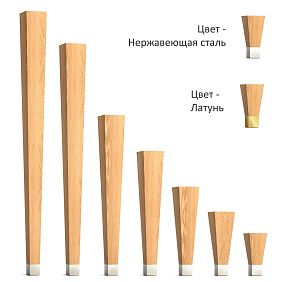
Our factory also produces:





Choosing fasteners for specific tasks
The modern market offers dozens of types of fasteners for stair structures. Each type has its own area of application and limitations. Wooden dowels are ideal for concealed mounting in classic interiors, but require perfect manufacturing accuracy. Metal bolts provide maximum strength but may cause problems under thermal deformation.
Threaded connections allow adjusting tension during operation, which is especially important for wooden structures prone to shrinkage. Adhesive compositions enhance mechanical connections but require careful surface preparation and adherence to application technology.
Combined fastening systems, combining several types of connections, provide maximum reliability. For example, a bolt with threads, reinforced with wood glue and additionally secured with a transverse pin, creates a practically indestructible connection.
Get Consultation
Preparation stage: the foundation of successful installation
Precise marking as the basis of quality
Professional installation begins with careful marking. Each post must be installed strictly in the designated location with millimeter precision. Deviations accumulate and at the end of the stair run may reach critical values.
Modern laser levels allow creating perfectly level marking lines at any distance. However, even the most precise equipment is useless without understanding the geometric principles of stair structures. The distance between posts must consider not only safety requirements but also the visual perception of rhythm.
Marking on curved staircases presents particular difficulty. Here, each post has an individual installation angle, and even the slightest calculation error leads to disruption of the overall geometry of the railing. Professionals use special templates and guides to ensure accuracy.
Tool and material preparation
The quality of installation directly depends on the condition of the tools used. Dull drill bits create ragged holes with uneven edges, reducing connection strength. Inaccurate measuring instruments lead to accumulated errors. Worn-out drill bits for impact drivers damage fastener heads.
Fasteners require preliminary sorting and inspection. All bolts must have the same length and thread diameter. Nuts and washers must match bolt sizes. Adhesive compositions must have an appropriate shelf life and correct consistency.
Fasteners require pre-sorting and inspection. All bolts must have the same length and thread diameter. Nuts and washers must match bolt sizes. Adhesive compounds must have an expiration date and proper consistency.
Fastening technologies to various bases
Mounting on thick wooden treads
Thick wooden treads of 40 millimeters and more provide ideal conditions for secure mounting. Here, deep anchor connections can be used, ensuring maximum strength with minimal visible fastener elements.
The blind mounting technology involves drilling a hole at the end of the post to a depth of 30-40 millimeters. A metal bolt is installed into this hole on glue, protruding 20-25 millimeters. A corresponding hole is drilled into the tread, and the post is mounted onto the bolt.
It is critically important to ensure alignment of holes in the post and tread. Even the slightest deviation leads to post misalignment or damage to the connection during installation. Professionals use special guides to ensure ideal drilling accuracy.
Through mounting on thin bases
When working with thin bases — such as plywood or MDF treads less than 30 millimeters thick — blind mounting becomes impossible. In this case, through mounting using long bolts or screws is applied.
Through mounting technology requires access to the underside of the tread for installing nuts and washers. This is not always possible in finished structures, so this type of mounting is planned during the staircase design stage.
Special attention is paid to load distribution on thin bases. Wide washers or load-distributing plates must be installed under nuts to prevent material compression. Torque is strictly controlled to prevent base deformation.
Secrets of working with different materials
Features of installing wooden posts
Wood as a material has its own characteristics that must be considered during installation. Natural wood moisture, grain direction, presence of knots and resin pockets — all this affects the mounting technology.
Drilling holes at the end of a wooden post requires special care. Incorrectly selected drill bit speed may lead to wood cracking or chipping. To prevent this, special spade bits with sharp cutting edges are used.
Correct baluster mounting Wooden balusters require mandatory treatment of connection areas with protective compositions. End surfaces are most susceptible to moisture absorption, which may lead to rotting and connection failure.
Metal posts: strength and durability
Metal posts provide maximum structural strength but require a special approach to mounting. Welded connections offer the highest reliability but are not always feasible in existing interiors.
Bolted connections of metal posts allow creating disassemblable structures, which is important for maintenance and repair. However, they require precise fitting of parts and use of high-quality fasteners made of stainless steel.
Special attention is paid to protecting metal elements from corrosion. All connection points are treated with anti-corrosion compositions, and additional protective coatings are used in aggressive environments.
Experienced masters always take into account thermal deformation of materials when designing fasteners. Wood and metal have different coefficients of linear expansion, which can lead to stress in joints.
Compensation for thermal deformations
To compensate for thermal deformations, elastic gaskets are used between dissimilar materials. In long structures, compensating gaps are provided to allow materials to expand and contract freely.
It is especially important to consider seasonal changes in wood moisture. During heating, wood dries out, and in summer it swells. These processes can weaken joints, so provisions are made for tightening fasteners.
Modern design trends require maximum concealment of fastener elements. Professionals have developed numerous methods of invisible mounting that preserve aesthetics while ensuring reliability.
Hidden fastening systems
Modern design trends require maximum concealment of fastener elements. Professionals have developed numerous methods of invisible mounting that preserve aesthetics while ensuring reliability.
A magnetic hidden fastening system allows creating removable structures without visible fasteners. Powerful neodymium magnets embedded in posts and bases provide secure fixation while retaining the possibility of disassembly.
Pneumatic fastening systems use compressed air to secure posts in special sockets. Such systems provide instant installation and removal, which is important for exhibition and temporary structures.
Quality control and diagnostics of connections
Methods of checking fastener reliability
After completing the assembly, a thorough inspection of the reliability of all connections must be conducted. Visual inspection allows identifying obvious defects: cracks in the material, poor fit of parts, signs of fastener deformation.
Mechanical tests involve applying controlled loads to each post. The standard method involves applying a horizontal load of 100 kilograms to the top of the post. Deflection should not exceed 5 millimeters, and residual deformations should be absent.
Acoustic diagnostics allow identifying hidden defects in joints. The characteristic sound when tapping a post may indicate voids in the adhesive joint or loosening of fasteners.
Long-term Monitoring of Condition
The reliability of stair railings must be monitored not only immediately after installation but also during operation. Regular inspections allow identifying problems at an early stage and preventing serious damage.
Special attention is given to connections in areas of increased load: initial and final posts of stair runs, corner elements, locations of additional handrails. It is here that the first signs of fastener weakening often appear.
Modern monitoring systems use deformation and vibration sensors for continuous control of the structure's condition. Such systems are especially relevant for public buildings with high staircase usage intensity.
Common mistakes and ways to avoid them
Typical mistakes of novice craftsmen
The most common mistake of beginners is underestimating the importance of the preparatory stage. Rushing during marking leads to accumulation of errors and the need to redo work. Cutting corners on fastener quality results in problems during operation.
Incorrect selection of drill bit diameter is another common mistake. An oversized hole does not provide a tight fit for fasteners, while an undersized one may cause material cracking. The optimal size is determined by the type of wood and characteristics of the fastener element.
Neglecting protective treatment of connection areas leads to premature fastener failure. Moisture penetrating unprotected wood ends causes rot and weakening of the connection.
Professional solutions for complex situations
Experienced masters know how to handle non-standard situations. A cracked step does not necessarily require full replacement — the crack can be reinforced with epoxy and work continued. An inaccurately drilled hole is corrected by installing a wooden plug and drilling again.
Special techniques are used when working with valuable wood species, minimizing the risk of material damage. Pre-drilling pilot holes, using lubricant for fasteners, and controlling torque — all of these help preserve the integrity of expensive material.
Innovative fastening technologies
Modern adhesive systems
Advances in the chemical industry have led to the emergence of new types of adhesive compositions, revolutionizing fastening technologies. Structural acrylic adhesives provide joint strength exceeding the strength of the wood itself.
Polyurethane adhesives retain elasticity after curing, allowing them to compensate for thermal deformations and vibrational loads. Epoxy compositions create water-resistant joints, resistant to moisture and biological factors.
Anaerobic adhesives polymerize only in the absence of oxygen, making them ideal for securing threaded connections. They prevent spontaneous loosening of fasteners under vibration.
Composite fastening elements
Modern composite materials open up new possibilities for creating fastener elements. Carbon fiber bolts have high strength at minimal weight and are resistant to corrosion.
Fiberglass anchors provide reliable fastening in various base materials. Their coefficient of linear expansion is close to that of wood, eliminating the appearance of thermal stresses.
Ceramic fastener elements demonstrate exceptional resistance to aggressive environments and temperature effects. They are used under special operating conditions.
Economic aspects of quality installation
Price-to-quality ratio
Quality installation requires investment in materials and tools, but these costs are offset by the longevity and reliability of the structure. Cutting corners on fasteners often leads to repairs needed within just a few years of operation.
The cost of professional fasteners constitutes a minor portion of the total staircase structure cost, yet it directly determines the reliability of the entire system. Using quality materials guarantees long-term operation without additional repair costs.
Properly executed installation increases property value and creates a positive impression of the home's overall quality. This is especially important when selling or renting out the property.
Budget Planning for Installation Work
Proper budget planning includes not only material and fastener costs, but also tool, consumable material, and potential modification expenses. A reserve of 10-15% of the main sum allows handling unforeseen situations.
Investments in quality tools pay off when executing multiple projects. Professional drill bits, measuring instruments, and specialized fixtures significantly improve work quality and speed.
Conclusion
The skill of reliably fastening staircase elements comes with experience and continuous refinement of skills. how to properly mount balusters It is not merely a technical procedure, but an art requiring understanding of materials, precision of execution, and attention to detail.
Each project is unique and requires an individual approach, taking into account the structural characteristics, usage conditions, and aesthetic requirements. Modern technologies and materials open new possibilities, but the fundamentals of craftsmanship remain unchanged.
Investments in quality installation pay off in terms of safety, longevity, and aesthetics of staircase structures. Properly installed elements serve for decades without requiring significant maintenance or repairs.
When selecting a partner for installation work, consult proven professionals with years of experience. STAVROS combines traditional craftsmanship with modern technologies, ensuring flawless installation of staircase structures. Our specialists know all the intricacies of working with various materials and are ready to guarantee the reliability of every connection. Choosing STAVROS means investing in the safety and longevity of your staircase.