Article Contents:
- Architectural Role of Balusters in Modern Interior Design
- Functional Features of Balusters
- Materials for Baluster Manufacturing: Choice of Professionals
- Wooden Balusters: Classic Beyond Time
- Metallic solutions: strength and elegance
- Variety of Baluster Styles and Forms
- Turned Balusters: Symmetry and Harmony
- Milled Balusters: Technology and Creativity
- Carved balusters: art in wood
- Baluster Mounting Technology: Foundations of Reliability
- Mounting to Treads: Classical Approach
- Mounting to the Handrail: Installation Features
- DIY Baluster Installation: Step-by-Step Guide
- Preparation stage
- Marking and Preparing Mounting Locations
- Installation process
- Custom Baluster Manufacturing by Professionals
- Process of Developing Individual Design
- Technological capabilities of modern production
- Correct Mounting Technology: Secrets of Craftsmanship
- Choosing the optimal mounting method
- Ensuring Connection Strength
- Mounting to Treads: Special Features
- Preparing Treads for Installation
- Installation Technology
- Modern trends in baluster design
- Minimalism and Functionality
- Combining materials
- Care and Maintenance of Balusters
- Regular Maintenance of Wooden Elements
- Protection from External Influences
- Economic Aspects of Choosing Balusters
- Factors Affecting Cost
- Long-Term Economic Efficiency
- Acoustic and thermal properties
- Basic Requirements for Railing
- Special Requirements for Childcare Facilities
- Conclusion
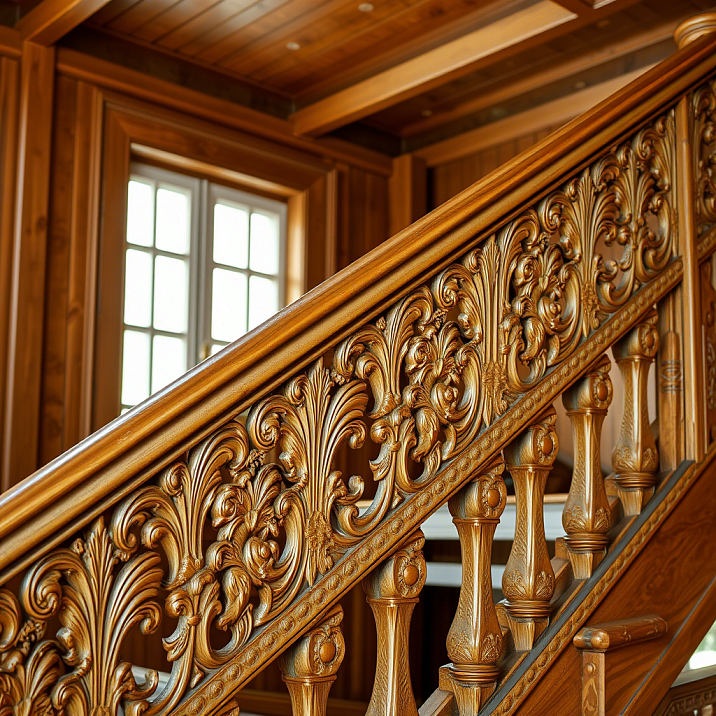
A staircase in a home is not just a functional element, but a true work of architectural art capable of transforming space and becoming the central accent of the interior. Balusters — vertical support elements — play a special role in creating the harmonious appearance of the staircase structure, ensuring safety and giving the railing a finished aesthetic look.
The modern market offers an incredible variety of solutions for decorating staircase railings. When it comes to buy balusters for handrailit is important to understand that the choice of these elements determines not only the appearance of the structure, but also its functional characteristics, durability, and safety of use.




Architectural Role of Balusters in Modern Interior Design
Balusters are vertical posts installed between staircase steps and the handrail, creating a secure railing. These elements serve a dual function: ensuring safety while moving up and down stairs, and serving as decorative accents that highlight the interior’s stylistic solution.
The history of baluster use in architecture spans millennia. Even in ancient times, craftsmen understood the importance of creating not only functional but also beautiful railings. Today, traditions of ancient architecture seamlessly blend with modern manufacturing technologies and design solutions.




Functional Features of Balusters
The primary task of balusters is to ensure safety. They prevent accidental falls from the stairs, provide hand support when ascending or descending, and evenly distribute load across the entire railing structure. Properly installed balusters can withstand significant lateral loads, which is especially important in homes with children or elderly people.
In addition to safety, balusters play an important role in shaping the visual perception of the staircase. They create rhythm, establish proportions, and can visually alter the perception of space. Tall, slender balusters make the staircase more elegant and airy, while massive elements give the structure solidity and substance.
Our factory also produces:



The choice of material for balusters is determined not only by aesthetic preferences but also by practical considerations: operating conditions, interior style, project budget, and requirements for the durability of the structure.
Wood remains the most popular material for making balusters due to its unique properties. Wood possesses natural beauty, warmth to the touch, eco-friendliness, and the ability to create the most diverse shapes and decorative elements.
Get Consultation
Wooden balusters: classic beyond time
Oak is considered the standard of quality among wood species for staircase elements. Its dense structure, high strength, and noble texture make oak balusters an ideal choice for creating durable and beautiful railings. Oak is easily processed, allowing for both simple geometric shapes and intricate carved elements.
Oak is considered the benchmark of quality among wood species for stair elements. Its dense structure, high strength, and elegant texture make oak balusters an ideal choice for creating durable and beautiful railings. Oak is easily workable, allowing for both simple geometric forms and intricate carved details.
Beech is distinguished by its expressive texture and high strength. This wood species has natural flexibility, making beech balusters particularly resistant to mechanical loads.
Spruce, as a coniferous species, offers an optimal price-to-quality ratio. Spruce balusters are easy to process, have a pleasant natural aroma, and, with proper treatment, can serve for many years.
Metal balusters open up wide possibilities for creating modern and classic interiors. Wrought elements allow for the realization of the most daring design ideas, creating unique artistic compositions.
Metallic Solutions: Strength and Elegance
Steel provides maximum structural strength and allows creating thin, elegant forms without losing load-bearing capacity. Modern metal processing technologies enable the creation of balusters with various finishes: from classic black to contemporary color solutions.
Steel provides maximum structural strength and enables the creation of slender, elegant forms without sacrificing load-bearing capacity. Modern metalworking technologies allow for balusters with various finishes: from classic black to contemporary colored options.
Stainless steel is ideally suited for modern interiors in high-tech or minimalist styles. Its mirror-like surface creates a sense of lightness and visually expands the space.
Variety of baluster styles and forms
The modern market offers balusters different in shape, style, and method of manufacture, allowing to find the ideal solution for any interior.
Turned balusters: symmetry and harmony
Turned balusters are made on a lathe by processing blanks with special cutters. This method of manufacturing allows creating elements with perfectly symmetrical shapes and smooth transitions between different profile sections.
Classic turned balusters often include various geometric elements: spheres, cones, cylinders, which, in different combinations, create unique profiles. Such balusters are perfect for traditional interiors, creating a sense of stability and classic beauty.
Milled balusters: technology and creativity
Milling allows creating balusters with more complex profiles, including longitudinal and transverse grooves, chamfers, and other decorative elements. This processing method opens up wide possibilities for creating original design solutions.
Carved balusters are true works of art. Hand carving of wood allows creating unique elements with floral ornaments, geometric patterns, or narrative compositions.
Carved balusters: art in wood
Modern CNC processing technologies allow creating carved balusters with high precision and repeatability, while preserving the artistic value of handcrafted work. Such elements become the central decoration of the staircase and the entire interior.
Modern CNC processing technologies allow for the creation of carved balusters with high precision and repeatability, while preserving the artistic value of handcrafted work. Such elements become the central decoration of the staircase and the entire interior.
Baluster mounting technology: basics of reliability
Proper mounting of balusters is the guarantee of safety and longevity of the entire staircase structure. There are several main mounting methods, each with its own features and areas of application.
Mounting to treads: classic approach
Mounting balusters directly to treads is the most common installation method. This method ensures secure fixation and even load distribution across the entire staircase structure.
For quality mounting of balusters to treads, various types of fasteners are used. Structural self-tapping screws with a diameter of at least 8 mm provide strong connections when properly installed. It is important to pre-drill holes of the required diameter and use wood glue for additional fixation.
Shanks are wooden cylinders inserted into pre-drilled holes in the tread and baluster. This mounting method provides an invisible connection and is especially suitable for expensive wood species, where it is important to preserve the surface aesthetics.
Metal spikes provide maximum connection strength and are especially recommended for heavy balusters or in cases of increased load on the railing.
Mounting to the stringer: installation features
When mounting balusters to the stringer, the angle of inclination of the structure must be considered. The lower part of the balusters should be cut at an angle corresponding to the staircase's incline to ensure vertical positioning of the railing elements.
Using a baluster rail — a special plank to which all balusters are attached — allows creating a single unit that is then mounted to the stringer as one whole piece. This method ensures precise positioning of all elements and simplifies the installation process.
Installing balusters yourself: step-by-step guide
Many homeowners prefer to install balusters on the staircase themselves, which not only saves on installation services but also provides additional skills in working with wood.
Preparation Stage
Before beginning installation, it is necessary to carefully prepare all tools and materials. Required: a drill with a set of drill bits of various diameters, a miter saw for precise trimming of elements, measuring tools (tape measure, square, level), clamps for securing parts during processing.
It is important to determine the exact number of balusters in advance and calculate the distance between them. The standard distance between baluster axes is 120-150 mm, ensuring an optimal balance of safety and aesthetics.
Marking and preparing mounting locations
Accurate marking is the foundation of quality installation. It is necessary to mark the installation locations of each baluster on the treads or stringer, taking into account the even distribution of elements along the entire length of the staircase.
When marking, it is important to consider the placement of support posts, which are installed at the beginning and end of each flight. Balusters should be positioned between the posts with even spacing.
Installation process
Installation begins with preparing mounting holes. The hole diameter must exactly match the size of the fastener used. When using dowels, holes are drilled to a depth equal to half the dowel length plus 2-3 mm for glue.
Each baluster is installed strictly vertically using a level. It is important to ensure tight contact of the element with the tread or stringer surface. Using PVA wood glue provides additional joint strength.
After installing all balusters, it is necessary to check their verticality and adjust their position if needed until the glue has fully set.
Professional custom baluster manufacturing
often requires Custom Baluster Manufacturing. An individual approach allows creating elements that perfectly match the architectural style of the house and the personal preferences of the client.
Process of developing an individual design
Creating unique balusters begins with a detailed analysis of the room's architectural features and the client's preferences. Designers take into account interior style, staircase dimensions, lighting characteristics, and overall space design concept.
Modern technologies allow creating 3D models of future balusters, enabling an assessment of the elements' appearance within the context of the entire staircase structure before production begins.
Technological capabilities of modern production
Modern woodworking equipment allows realizing the most complex design ideas. Multi-axis CNC machines provide high precision and enable the creation of elements with complex geometry.
Combining various woodworking technologies — turning, milling, and threading — allows creating balusters with unique characteristics that combine functionality and artistic value.
Correct mounting technology: secrets of craftsmanship
The question of how to properly install balusters on the staircase, concerns many homeowners who have decided to handle the installation of the staircase railing themselves.
Choosing the optimal fastening method
The choice of mounting method depends on the staircase construction, baluster material, and requirements for the appearance of the finished railing. For staircases on stringers, mounting directly to the treads is most suitable, while for staircases on stringers, mounting to side structural elements is often used.
Hidden mounting using dowels or bolts provides the most aesthetically pleasing appearance but requires high precision in execution. Open mounting with screws is easier to implement but requires additional measures to conceal the fasteners.
Ensuring connection strength
The strength of baluster mounting is determined not only by the type of fastener used but also by the quality of preparation of the mating surfaces. Baluster ends must be carefully processed and have a flat surface to ensure tight contact.
Using wood glue is a mandatory element of quality mounting. Glue not only increases the strength of the joint but also compensates for minor inaccuracies in the dimensions of mounting holes.
Features of mounting to treads
Baluster mounting on stairs to the tread requires special attention to details and adherence to a specific technology.
Tread preparation for installation
The tread surface must be carefully prepared before installing balusters. All dirt, dust, and remnants of finishing materials must be removed. The locations for baluster installation must be marked with high precision.
When drilling holes in the treads, it is important to use drills of the appropriate diameter and control drilling depth. The holes must be strictly perpendicular to the tread surface to ensure vertical baluster positioning.
Installation technology
The installation process begins with installing the end balusters, which serve as a reference for placing the remaining elements. A string is stretched between the end balusters to help control the correct placement of intermediate elements.
Each baluster is installed using a level to check verticality. After installing all elements, it is necessary to allow time for the adhesive to fully set before proceeding to the next installation stage.
Modern trends in baluster design
Modern stair railing designs are constantly evolving, offering new solutions that combine functionality, aesthetics, and innovative technologies.
Minimalism and functionality
Modern interiors increasingly favor minimalist solutions, where each element performs its function without unnecessary decorative elements. Balusters in such interiors are characterized by simple forms, clear lines, and the use of modern materials.
Glass balusters are becoming increasingly popular due to their ability to visually not clutter space while retaining all the functional characteristics of traditional railings.
Combining materials
Modern designers actively experiment with combining different materials in one structure. The combination of wood and metal, glass and stone creates unique visual effects and allows creating railings that perfectly fit the concept of a modern interior.
Such an approach requires high craftsmanship in design and manufacturing, but the result justifies the effort, creating truly unique architectural solutions.
Care and maintenance of balusters
Proper care of balusters ensures their longevity and preservation of their original appearance for many years of use.
Regular maintenance of wooden elements
Wooden balusters require regular maintenance, including cleaning from dust and dirt, checking the condition of protective coatings, and renewing them if necessary. Using special wood care products helps preserve the natural beauty of the material.
It is important to regularly check the strength of baluster fastening and tighten fasteners if necessary. This is especially relevant in the first months after installation, when natural wood shrinkage occurs.
Protection from external influences
Balusters, especially those located near windows or in rooms with high humidity, require additional protection from ultraviolet radiation and moisture. Using quality varnishes and impregnations significantly extends the service life of wooden elements.
Metallic balusters require monitoring of protective coating condition and timely removal of corrosion spots. Modern coatings provide long-term protection but require periodic renewal.
Economic aspects of baluster selection
The cost of balusters varies widely depending on the material, manufacturing complexity, production method, and other factors. Proper selection allows finding the optimal price-to-quality ratio.
Factors Affecting Cost
The main factors determining the cost of balusters are the manufacturing material, processing complexity, order volume, and production deadlines. Standard turned balusters from pine have the most accessible price, while carved elements from oak or exotic woods may cost several times more.
Custom-made balusters according to individual sketches are always more expensive than purchasing standard elements, but they allow creating a unique solution perfectly matching the architectural style of the house.
Long-term economic efficiency
When choosing balusters, it is important to consider not only the initial cost but also maintenance and potential replacement costs in the future. High-quality balusters made from hardwood or stainless steel can serve for decades without replacement, making them more economically advantageous in the long term.
Investments in quality balusters pay off not only through longevity but also by increasing the overall property value. A beautiful staircase with quality railings is a significant interior element that positively affects the home's appraisal.
Safety and regulatory requirements
Designing and installing stair railings must comply with current construction codes and regulations that set requirements for the safety of stair structures.
Requirements for railings
The height of the stair railing should be at least 900 mm for residential buildings and at least 1200 mm for public buildings. The distance between balusters should not exceed 120 mm to prevent children from slipping between railing elements.
The railing structure must withstand a horizontal load of at least 100 kg/m for residential buildings. This requirement defines the minimum characteristics of fastening elements and baluster materials.
Special requirements for childcare facilities
Childcare facilities have higher safety requirements for stair railings. The distance between balusters should not exceed 100 mm, and the railing structure must exclude the possibility of injuring children.
Baluster materials must be environmentally safe and free of harmful substances. The surface of the elements must be smooth, without sharp edges or protruding elements.
Conclusion
Choosing and installing balusters is an important stage in creating a beautiful and safe staircase, requiring a professional approach and attention to detail. Properly selected and correctly installed balusters not only ensure the safety of staircase use but also become an important interior element, highlighting the style and individuality of the home.
Modern production technologies and a wide range of materials allow creating balusters that perfectly meet any architectural and design requirements. Remember that quality balusters are an investment in the safety, beauty, and longevity of the staircase structure.
STAVROS Company offers a full range of services for designing, manufacturing, and installing staircase railings. Years of experience, use of high-quality materials, and modern technologies enable creating balusters that serve for decades while retaining their beauty and functionality. By contacting STAVROS professionals, you receive a guarantee of quality and individualized approach to solving any tasks in staircase design.