Article Contents:
- Who is a wood carving master?
- Master's Skills
- Why is this profession unique?
- Process of Creating Wooden Carvings
- Finished Products of a Wood Carving Master
- Why is the profession of a wood carving master still relevant?
- How to choose a wood carving master?
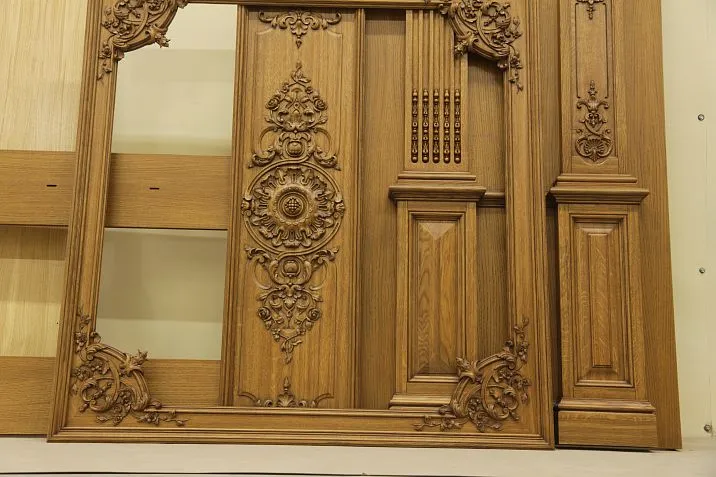
Wood carving is one of the oldest forms of art, which continues to inspire today. Wood carving masters transform natural material into refined decorative elements, preserving its natural beauty and warmth. They combine tradition and innovation in their work, creating unique items that adorn interiors, building facades, and furniture. Wood carving art requires a deep understanding of the material, a creative approach, and the highest level of craftsmanship, making each piece a true work of art.
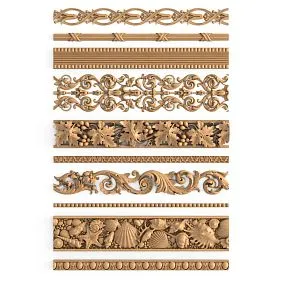


Who is a wood carving master?
A wood carving master is not just a craftsman, but an artist and engineer in one. His task is to breathe life into a piece of wood, creating decorative elements that delight the eye and serve for many years. The master’s works can be used in interiors, exteriors, furniture, and even household items. This combination of aesthetics and functionality makes the profession of a master in demand today.
Master's Skills
- Artistic Vision
The master must possess an exceptional sense of style and symmetry. Proportions, harmony of lines and details are crucial in his work, forming the basis of any pattern. For example:
○ Ability to see the future pattern in unprocessed wood.
○ Ability to adapt traditional motifs to modern client requests.
- Technical Skills
Wood carving includes many techniques that the master masters over many years:
○ Hand carving: using traditional tools to create unique ornaments.
○ Working with modern equipment: CNC machines, lasers, and other technologies that allow creating complex patterns with high precision.
- Knowledge of Materials
Understanding the properties of different types of wood is a key aspect of the master’s work. Wood varies in density, texture, and resistance to external influences, which determines its application:
○ Oak and beech are suitable for intricate carving, as they are strong and durable.
○ Ash and pine are softer, making them ideal for large decorative elements.
- Creative Approach
Each project of the master requires an individual approach. This is not only the embodiment of technical skill, but also the creation of a unique design that highlights the style of the space.
Why is this profession unique?
The work of a wood carving master combines several directions:
● Craft: technical skills and mastery of tools.
● Design: understanding current trends in interior and exterior design.
● Culture: preserving and adapting wood carving traditions.




Process of Creating Wooden Carvings
The process of creating wooden carvings is truly unique art that combines skill, precision, and creativity. Each item goes through several stages, starting from an idea and ending with an exquisite finished element that will become a decoration for an interior or facade. It is important to understand that the master’s work requires not only technical skills, but also deep immersion in the material’s characteristics, style, and purpose of the item.
1. Designing: the idea that inspires
Creating any wooden carving begins with an idea. This stage requires the master to have a creative approach, attention to detail, and understanding of how the pattern will look in the finished product.
● Sketch Development
The process begins with sketches. The master creates a sketch of the future pattern, taking into account the style, size, and purpose of the item. For example, symmetrical ornaments with plant motifs suit classic interiors, while minimalist lines are suitable for modern spaces.
● Considering the characteristics of the space
Patterns are developed taking into account where they will be used: for interiors, facades, furniture, or decorative panels. At this stage, the master determines the scale and shape of the elements to ensure they harmoniously fit into the overall space.
● Coordination with the client
If the item is made to order, the sketch is discussed with the client. This allows taking into account their preferences and making the project truly unique.
2. Material Selection and Preparation
Material is the foundation of any wooden carving. High-quality wood ensures the longevity, strength, and aesthetic appeal of the finished product.
● Wood Selection
For carving, hard woods such as oak, beech, or ash are usually chosen. They have high density and resistance to mechanical damage. Softer woods, such as pine, are used for large decorative elements.
● Material Preparation
Before starting work, the wood undergoes drying and processing stages. This prevents cracking, deformation, and preserves the wood’s texture.
● Textural Features
The master takes into account the natural grain of the wood, which can be emphasized in the finished product or used as part of the decoration.
3. Carving: Combining Technique and Art
The main stage of creating a pattern is carving. Here, the master turns the idea into reality, using tools and modern technologies:
● Hand Carving
A traditional method that allows creating unique and complex elements. The master uses a set of chisels and gouges to work on the finest details.
● Working on CNC Machines
Modern technologies allow achieving high precision and symmetry. CNC machines are used for mass production or creating large elements.
● Combined Approach
Often, the master first uses a machine to create the basic shapes, then manually refines the details, adding individuality and expressiveness.
4. Finishing and Protection
After completing the carving, the item undergoes sanding and finishing stages to preserve its beauty and extend its service life:
● Sanding
The surface of the item is leveled to make it smooth and pleasant to the touch. This is especially important for decorative elements used in interiors.
● Applying Protective Coatings
The finished pattern is coated with varnish, oil, or wax. This protects the wood from moisture, dust, and UV radiation, while also highlighting its texture.
● Painting or Patination
Sometimes items are painted or patinated to give them a certain style, for example, an antique carving effect.
The finished item is delivered to the installation site. The craftsman may participate in the installation process to ensure that the patterns harmoniously integrate into the overall space.
Carved casings, cornices, and decorative panels are installed taking into account the architectural features of the building.
Facade elements
Interior items
Inlays, panels, and furniture patterns are installed depending on the room's design and the client's requirements.
Stickers, panels, and furniture patterns are installed depending on the room's design and the client's requirements.
The process of creating wooden patterns is an art requiring patience, skill, and love for one's work. Each item undergoes a long journey from idea to finished element, becoming part of a unique space.
Our factory also produces:


Finished items by wooden pattern craftsmen
The result of a wooden pattern craftsman's work is refined items that combine aesthetics and functionality. They are capable of not only decorating interiors or facades but also highlighting the uniqueness of a space. Finished items become part of the interior or architecture, adding depth, character, and style. Modern craftsmen create a wide range of items that harmoniously blend with various styles — from classic to minimalism.
1. Decorative inlays
Decorative Inserts are a universal element used both indoors and outdoors. They are made from solid wood and are suitable for decorating furniture, walls, doors, and even ceilings.
● Furniture decoration
Decorative inlays transform standard cabinets, chests, or tables into refined interior pieces. Using patterns, you can draw attention to furniture facades, giving them a luxurious look.
● Door decoration
Use inlays to decorate interior or entrance doors. They add expressiveness and make doors a focal point of the space.
● Wall decoration
Install inlays on walls to create decorative panels or highlight accent zones.
2. Carved casings
Casings are a classic decorative element for facades, used to frame windows and doors. Wood carving makes these elements expressive, adding character and individuality to the house.
● Functionality
Casings not only decorate the facade but also protect window frames from moisture, dust, and damage.
● Aesthetics
Carved casings emphasize the building's style, making it more attractive. They can be crafted in various styles — from traditional to modern.
3. Decorative panels
Panels with carved patterns are ideal for creating accent zones in interiors. They can be used in living rooms, bedrooms, offices, or kitchens, adding elegance and completeness to the space.
● On walls
Panels with patterns transform ordinary walls into decorative elements. They can be used to decorate areas behind TVs, dining zones, or fireplaces.
● On ceiling
Decorative panels on the ceiling create a sense of depth and make the interior more complex and interesting.
4. Carved furniture facades
Carved furniture facades transform standard cabinets, chests, and tables into works of art. They suit both classic and modern interiors, adding elegance and character.
● Headboards
Carved headboards become the central element of the bedroom, emphasizing its style and atmosphere.
● Kitchen furniture facades
Using carved facades makes the kitchen refined, adding retro or classic touches.
5. Mirror and picture frames
Carved wooden frames create elegant framing for mirrors and pictures. Such items become a striking accent in the interior, adding elegance and character.
● Mirrors
Framing mirrors with carved frames makes them visually more attractive, emphasizing the style of the space.
● Paintings and photographs
Carved frames for paintings add depth and draw attention to the artworks.
6. Facade elements
Carved wooden facade elements for buildings are a way to highlight the uniqueness of a home and give it individuality.
● Cornices and friezes
These elements decorate the building, adding elegance and architectural completeness.
● Porch decoration
Carved balusters, posts, and railings make the porch more welcoming and cozy.
Uniqueness of ready-made items
Each item created by a master of wooden patterns is unique. It combines attention to detail, use of quality materials, and an individual approach. Such elements can be standard solutions or custom-made, according to the client's wishes.
Get Consultation
Why the profession of a wooden pattern master remains relevant?
A master of wooden patterns is not just a craftsman, but a keeper of an art that connects the past and the present. In an era of mass production and standard solutions, such specialists remain especially in demand, as their work fills space with individuality, warmth, and uniqueness. The relevance of the profession of a wooden pattern master is due to several key aspects.
1. Demand for natural materials
The modern world increasingly values ecological and natural solutions. Wood as a material has unique properties that make it ideal for use in interiors and exteriors:
● Ecological safety
Natural wood is safe for health, does not emit toxic substances, and contributes to creating a comfortable microclimate. This is especially important for living spaces.
● Aesthetics of nature
The texture, shades, and patterns of wood cannot be artificially reproduced. Each wooden element is a unique work of nature.
● Durability
Properly processed wood retains its properties for decades, making it an economically advantageous choice.
2. Uniqueness and individuality
Wood carving masters create not just decorative elements, but works of art that highlight the individuality of a home or interior. Unlike mass production, handmade and original projects allow for uniqueness in every piece.
Handmade work
Hand-carved woodwork adds soul and uniqueness to items. Each pattern has its own characteristics, making it unique.
Custom approach
Masters work on individual projects, taking into account the client's wishes, the style of the room, and the purpose of the item. For example, Decorative Inserts can be developed according to a specific interior.
Preservation and development of traditions
Wood carving is part of cultural heritage passed down from generation to generation. Masters of wooden patterns not only preserve traditions but also adapt them to modern requirements.
Traditional motifs
Many patterns, such as floral ornaments or symbolic geometric figures, have deep roots in history. Using such elements helps maintain a connection with cultural heritage.
Adaptation to modernity
Masters combine classical techniques with modern technologies, such as laser cutting and CNC machines, to create items that meet current demands.
Flexibility and versatility of application
Wooden patterns suit a wide variety of styles and spaces, making the masters' work in demand across different fields:
Classic interiors
In traditional spaces, carved patterns emphasize elegance and luxury.
Modern interiors
Minimalist patterns or abstract forms add depth and texture.
Architectural solutions
Carved elements are used to decorate facades, porches, windows, and doors.
Growing popularity of handmade work
In the age of mass production, more and more people value handmade labor and unique items. Masters of wooden patterns create works that cannot be reproduced on an assembly line:
Original design
Each item is developed individually, making it a true rarity.
Quality and attention to detail
Unlike mass production, handmade work implies careful attention to every detail.
Prospects and innovations
The profession of a wooden pattern master continues to develop thanks to the introduction of new technologies and materials. Today, masters use:
Modern tools
Lasers, CNC machines, and other technologies allow for faster processing and higher precision.
Innovative coatings
New varnishes, oils, and paints increase the durability of products while preserving their appearance.
Conclusion: wood carving master — a profession that unites tradition and the future
Wood carving master — this is a specialist who creates not just beautiful items, but embodies ideas and inspiration in natural material. Thanks to its versatility, eco-friendliness, and uniqueness, wood carving remains relevant and in demand in the modern world. The items made by masters, such as Decorative Inserts, help make every home cozy, stylish, and unique.
How to choose a wood carving master?
Choosing a wood carving master is a key step that determines the quality and aesthetic value of the future item. Working with wood requires high professionalism, a creative approach, and deep understanding of the material. Finding a master who will bring your ideas to life and create a unique product is not always easy, but the right choice guarantees that the result will exceed expectations.
1. Reviewing the master’s portfolio
The portfolio is the master’s business card, allowing you to assess his style, level of skill, and experience.
● Variety of projects
Examine what items the master has previously created: these may be Decorative Inserts, carved panels, furniture facades, or facade elements. The broader the range of work, the more versatile the master.
● Quality of execution
Pay attention to details: symmetry of patterns, clarity of lines, absence of defects on the surface.
● Stylistic approach
Assess how well the master’s style matches your vision. For example, if you want classic ornaments, a master with a minimalist approach may not meet your expectations.
2. Reputation and client reviews
Client reviews will help form a more complete picture of the master’s professionalism.
● Reliability and deadlines
Find out how punctual the master is in fulfilling orders and whether he adheres to agreed deadlines.
● Quality of communication
A good master is always open to dialogue, takes into account the client’s wishes, and is ready to suggest solutions that will make the item better.
● Recommendations
Positive client reviews are one of the main indicators of professionalism. If the master has years of experience and loyal clients, this speaks to the high quality of his work.
3. Level of professionalism
Choosing a master should be based on his experience and qualifications.
● Work experience
The more practical experience the master has, the better he understands the nuances of working with wood.
● Technical skills
A modern master must be proficient in both traditional carving methods and modern technologies such as laser cutting or CNC machining.
● Artistic vision
Assess how well the craftsman can adapt pattern designs to your requirements and harmoniously integrate them into the overall space.
4. Materials and technologies
Quality materials and modern technologies are the guarantee of durability and aesthetic appeal of the product.
● Wood selection
Find out which types of wood the craftsman works with. The best craftsmen use hardwoods such as oak, beech, or ash, which are strong and durable.
● Protective Coatings
Ensure that the craftsman uses modern varnishes, oils, and waxes to protect the items from moisture, UV radiation, and mechanical damage.
● Production technologies
A good craftsman knows how to combine handwork with the use of modern tools to achieve high precision and detail.
5. Individual approach
A craftsman willing to work on individual projects can create a unique item that meets your requirements.
● Flexibility in work
Find out if the craftsman is willing to adapt the design to your preferences or create a project from scratch.
● Advice and recommendations
An experienced craftsman will always offer optimal solutions that enhance the appearance and functionality of the item.
● Examples of individual orders
Review examples of custom-made items to understand how prepared the craftsman is to handle non-standard tasks.
6. Price and delivery time
The price of the item often depends on the complexity of the work, the material, and the delivery time.
● Transparent pricing
A good craftsman immediately clarifies the cost of the work, including the price of materials, processing, and installation.
● Production timeline
Ensure that the craftsman can complete the order within your desired timeframe while maintaining the quality of the work.
How to make the right choice?
When choosing a craftsman for wooden patterns, trust your impressions, study their work, and ask all your questions. A craftsman with a high level of professionalism and creative approach will not only create a unique item but also transform your home or interior into a harmonious space filled with warmth and style.
If you are looking for craftsmen who create Decorative Inserts and other wooden items, the company STAVROS offers services of professionals who combine years of experience with innovative technologies.