Article Contents:
- Revelations of Oak Nature: What Makes Solid Oak Special
- Architecture of Perfection
- Climate Stability and Adaptability
- Technological Evolution: From Axe to Laser
- Selection and Preparation: The Art of Choice
- Drying: Transforming Living Wood into Stable Material
- Mechanical Processing: Precision at the Edge of Art
- Application Spectrum: Unlimited Possibilities of Solid Oak
- Furniture Art: Classic Beyond Time
- Architectural Elements: Details That Create the Image
- Flooring: The Foundation of Luxury
- Finishing: Transforming Beauty into Perfection
- Surface Preparation: The Foundation of Quality
- Modern Finishes: Protection Technologies
- Decorative Techniques: The Art of Transformation
- Ecological advantages: responsibility toward nature
- Carbon Balance: Wood as CO2 Steward
- Healthy Microclimate: Natural Benefits
- Sustainable Forestry: Caring for the Future
- Economic Appeal: Investments in the Future
- Factors Driving Value Growth
- Liquidity and Inheritance Value
- Stylistic Universality: Harmony in All
- Classic Directions
- Modern Trends
- Design Innovations: The Future is Already Here
- Digital technologies in design
- Hybrid Materials and Technologies
- Smart Technologies in Furniture
- Care and Restoration: Preserving Beauty for Centuries
- Daily Care: Simple Rules
- Professional Restoration: Reviving Beauty
- Preventive Conservation: Preventing Destruction
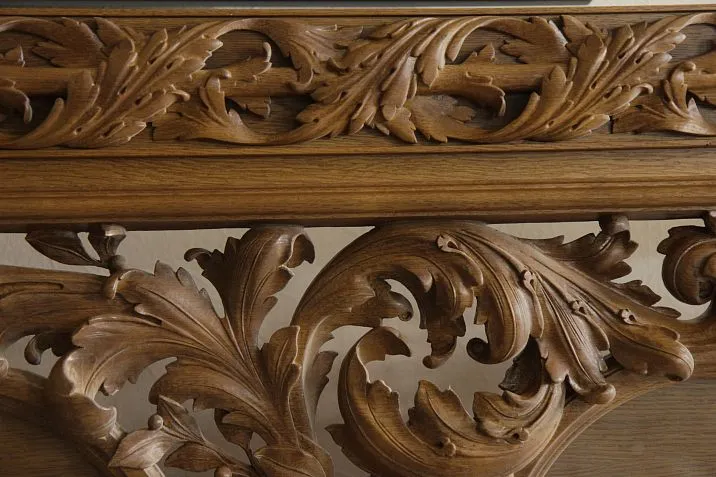
Nature has generously endowed humanity with numerous materials, but only a few can rival the nobility and longevity of natural oak wood. Solid Oak Products today embody thousand-year-old craftsmanship traditions combined with advanced processing technologies, creating items that become family heirlooms passed down from generation to generation.


Revelations of Oak Nature: What Makes Solid Oak Special
Immersing ourselves in the world of natural wood, we discover a remarkable universe where each fiber tells the story of decades of growth. Solid oak is not merely a building material—it is a living chronicle of time, captured in the tree rings and unique texture.




Structural Architecture of Perfection
Solid oak possesses a truly unique internal architecture. The density of this material ranges from 700 to 900 kilograms per cubic meter, providing exceptional strength and stability. Its hardness on the Brinell scale reaches 4.2 units, surpassing the values of most other wood species.
The special structure of oak fibers creates a unique pattern, where large spring wood pores alternate with dense summer growth areas. This natural pattern makes each oak board absolutely unique, transforming furniture and decorative elements into works of art.
The tannin content in oak wood reaches 20 percent, which not only imparts a characteristic golden-brown hue but also provides natural protection against moisture, fungi, and insects. This natural preservation allows oak products to retain their original beauty for centuries.
Our factory also produces:


Climate Stability and Adaptability
Solid oak demonstrates an outstanding ability to adapt to various climatic conditions. The linear expansion coefficient is only 0.4 percent radially, ensuring dimensional stability despite changes in air humidity.
The hygroscopic nature of oak wood allows it to naturally regulate humidity in a room. In humid weather, the solid oak absorbs excess moisture, while in dry periods, it releases it back into the air, creating a comfortable microclimate.
Oak’s temperature resistance is remarkable. The wood withstands brief exposure to temperatures up to 150 degrees Celsius without structural changes, making oak products ideal for use near fireplaces and heating appliances.
Get Consultation
Technological Evolution: From Axe to Laser
Modern Processing of solid oak products represents an exciting journey from ancient craft techniques to high-tech manufacturing methods. Each stage of this process requires a deep understanding of the material and virtuoso mastery of tools.
Selection and Preparation: The Art of Choice
The process of creating high-quality oak products begins long before the first tool touches the wood. Raw material selection is an entire science, where the master’s experience combines with modern diagnostic methods.
The tree’s age at the time of felling must be at least 80–120 years. Only such wood possesses the necessary density and pronounced texture. The trunk’s diameter at the base must exceed 70 centimeters, indicating slow, even growth.
The time of felling plays a critical role in the quality of future products. Winter months, when sap movement is minimal, are considered the ideal period for felling. Wood cut during this time contains less moisture and is less prone to cracking.
Primary processing includes removing the bark and sapwood, leaving only the heartwood—the strongest and most beautiful part of the trunk. Logs are sawn with consideration for grain direction to obtain the most stable boards.
Drying: Transforming Living Wood into Stable Material
Drying solid oak is a complex technological process requiring precise control of multiple parameters. The initial moisture content of freshly felled oak can reach 50–80 percent, and it must be reduced to 8–12 percent for furniture production.
Natural drying in stacks lasts from 6 months to 2 years depending on board thickness. Logs are laid with spacers ensuring air circulation. This slow process allows the wood to adapt to changes without forming internal stresses.
Kiln drying accelerates the process to several weeks. Temperature regimes are strictly regulated: initial temperature 35–40 degrees Celsius at 85–90 percent air humidity gradually increases to 60–65 degrees Celsius as humidity drops to 25–30 percent.
Vacuum drying is a revolutionary technology allowing moisture reduction at low temperatures. The process occurs in a sealed chamber under 0.1–0.2 atmospheres, preventing cracking and preserving the natural color of oak.
Mechanical Processing: Precision at the Edge of Art
Modern machining of oak solid wood requires special equipment and highly skilled operators. The high density and hardness of the wood impose specific requirements on cutting tools and machining parameters.
Sawing oak blanks is performed using saws with carbide-tipped teeth. Feed speed should not exceed 8-12 meters per minute to prevent overheating and charring of the wood. The tooth geometry is specially adapted for hardwoods: 15-20 degrees for the front angle and 12-15 degrees for the back angle.
Profiling milling requires tools made of high-speed steel or with carbide inserts. Spindle speed is 18,000-24,000 rpm with feed rate of 3-6 meters per minute. These parameters ensure a clean surface without chips or scratches.
Turning oak blanks for balusters and decorative elements requires special care. Cutting speed should not exceed 120-150 meters per minute, and the cutting depth per pass should be 2-3 millimeters.
Sanding oak surfaces is performed in stages with gradually decreasing abrasive grit. Initial sanding uses 80-100 grit, intermediate 150-180 grit, and final 220-320 grit. The direction of abrasive movement should align with the grain direction.
Application scope: limitless possibilities of solid wood
The versatility of oak solid wood products is astonishing in its variety. From classic furniture to modern architectural solutions — oak solid wood finds application in virtually all fields where quality, beauty, and durability are valued.
Furniture art: classic beyond time
Furniture made of oak solid wood embodies the highest achievements of joinery art. Each piece becomes not merely a functional interior element, but a true work of art capable of serving generations.
Oak solid wood tables demonstrate unmatched strength and stability. A tabletop 40-50 millimeters thick withstands a load of up to 400 kilograms per square meter without deformation. Joints are made using traditional joinery techniques: mortise and tenon, dovetail, and dowel joints.
Oak solid wood chairs and armchairs combine ergonomic design with durability. Curved elements of backs and armrests are created by steaming and gradual bending in special fixtures. The radius of curvature must not be less than 8-10 times the thickness of the bent part.
Cabinets and chests become central elements of interior design. Massive oak constructions can support a load of up to 150 kilograms per shelf. Doors are made from solid wood or with panel inserts to reduce weight while maintaining strength.
Oak solid wood beds create an atmosphere of security and comfort. Massive constructions withstand a load of up to 600 kilograms, ensuring absolute reliability. Headboards are adorned with carved elements or feature minimalist modern shapes.
Architectural elements: details that create an image
Architectural decor made of oak solid wood can dramatically transform any space. These elements do not merely complement the interior, but create its character and mood.
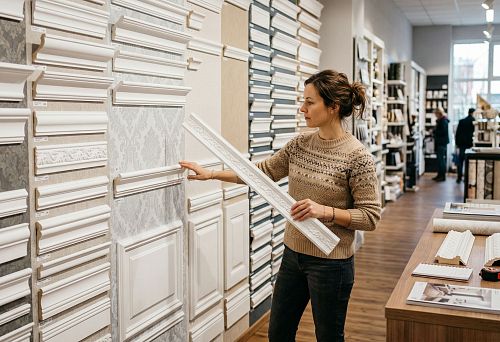
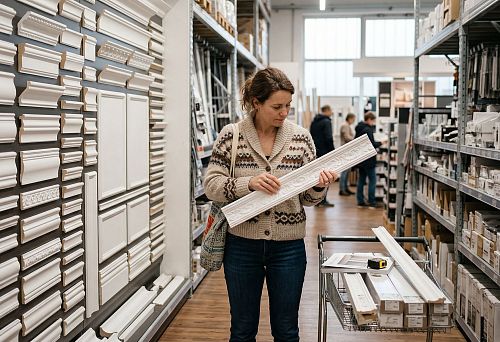
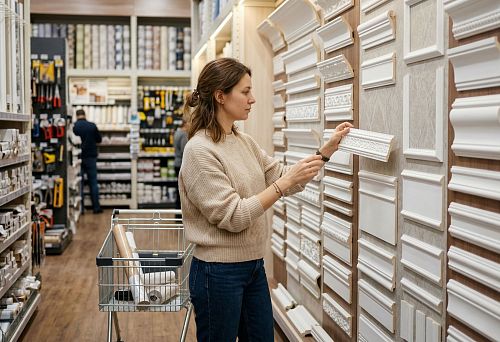
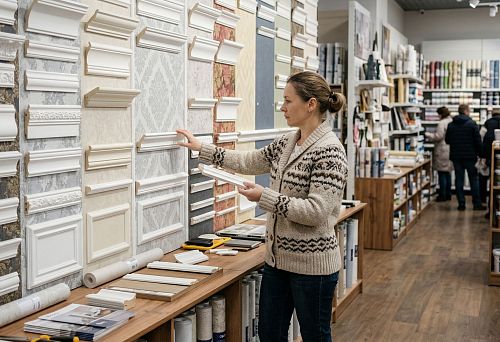
Moldings and cornices from oak solid wood serve as refined framing for walls and ceilings. Complex profiles with multiple curves are created on specialized milling machines. Product lengths can reach 6 meters without joints, allowing for seamless decoration of large spaces without visible seams.
Baseboards 80 to 200 millimeters high visually increase room height and create a sense of monumentality. Concealed cable channels allow for wiring without compromising interior aesthetics.
Casing and door surrounds transform ordinary openings into architectural accents. Casings are 25-40 millimeters thick and 80-150 millimeters wide. Carved elements add elegance to classic interiors.
Stair balusters create a majestic atmosphere and ensure safety. Turned elements with diameters of 80-120 millimeters withstand lateral loads up to 100 kilograms. A variety of profiles allows selecting a design to match any interior style.
Floor coverings: the foundation of luxury
Oak parquet and solid wood planks are traditionally considered the benchmark of quality flooring materials. These materials combine beauty, strength, and the ability to be restored multiple times.
Solid oak parquet with thickness 15-22 millimeters can withstand up to 8-10 sanding cycles, ensuring a service life exceeding 100 years. Planks measuring 400x60 millimeters are laid in various patterns: plank, herringbone, French herringbone, squares.
Solid wood planks 20-25 millimeters thick create a monolithic flooring impression. Plank widths vary from 120 to 300 millimeters, and lengths from 1000 to 3000 millimeters. Tongue-and-groove joints ensure tight fitting without visible gaps.
Artistic oak parquet represents true works of art. Complex geometric patterns, rosettes, borders are created from elements of various oak shades. Each square meter of such flooring is unique and irreplaceable.
Decking planks 100-200 millimeters wide imitate wooden decks of ships. Bevels on long edges highlight the surface structure and conceal minor deformations caused by humidity changes.
Final finishing: transforming beauty into perfection
Final finishing of oak solid wood products is the concluding stage that determines not only the appearance of the finished item but also its performance characteristics. Modern technologies allow creating finishes that not only protect the wood but also accentuate its natural beauty.
Surface preparation: the foundation of quality
The quality of the final finish largely depends on the thoroughness of surface preparation. Oak wood requires a special approach due to its open porous structure and high tannin content.
De-gumming the surface removes residual tree sap and tannins that may affect the adhesion of the finish. Special alkaline or organic solvent-based compounds penetrate deeply into the wood pores.
Priming creates an intermediate layer between the wood and the final finish. Oak primers contain special additives that block tannin release and prevent dark spots on light finishes.
Filling pores levels the surface and creates a base for glossy finishes. Wood flour and binder-based fillers fill large pores characteristic of oak wood.
Intermediate sanding with 280-320 grit abrasive removes raised fibers and creates the optimal surface roughness for applying final materials.
Modern finishes: protection technologies
Polyurethane finishes represent the most universal solution for protecting oak surfaces. Two-component formulations provide a hardness of up to 2H on the pencil scale while maintaining elasticity.
Water-based finishes do not alter the natural wood color and have minimal odor. Drying time between coats is 2-4 hours at 20 degrees Celsius and 50-60 percent humidity.
Oil-based finishes deeply penetrate the wood structure, creating a breathable coating. Natural oils—tung, linseed, with added waxes—provide a natural matte sheen and pleasant tactile sensations.
Wax finishes create a thin protective film on the surface that is easily restored. Hard waxes based on carnauba are applied in thin layers and polished to a shine using special machines.
Shellac finishes are traditionally used for restoring antique furniture. French polish creates a deep, lively finish with a unique play of light within the layers.
UV-curing finishes polymerize under ultraviolet radiation in a few seconds. The resulting finish has exceptional hardness and chemical resistance.
Decorative techniques: the art of transformation
Staining allows changing the color of oak wood without losing its texture. Water-based and alcohol-based stains penetrate to a depth of 1-3 millimeters, creating an even color. Oil-based stains provide deeper, more saturated tones.
Brushing highlights the natural oak texture by removing soft fibers. Rotating brushes with brass or steel bristles create a relief surface with height variations up to 2 millimeters.
Patination mimics the natural aging of wood. Special compounds are applied into grooves and pores, creating an effect of long-term use. Various patina colors—from golden to black—allow creating different effects.
Crackle finish creates a network of fine cracks on the surface, imitating old finishes. Special lacquers shrink at different intensities upon drying, creating a characteristic pattern.
Ecological advantages: responsibility toward nature
In the era of global ecological crisis Solid Oak Products represent an example of sustainable consumption and responsible use of natural resources.
Carbon balance: wood as a CO2 store
Oak wood is a natural carbon sink. During growth, trees absorb carbon dioxide from the atmosphere and convert it into wood mass. One cubic meter of oak wood contains about 300 kilograms of bound carbon.
Using wood in long-lasting constructions and furniture allows preserving this carbon for decades and centuries. Compared to metal or plastic production, manufacturing oak products requires 5-10 times less energy.
The life cycle of oak products significantly exceeds alternative materials. Quality solid oak furniture can last 100-200 years, whereas products made of particleboard or MDF require replacement every 10-15 years.
At the end of their service life, oak products are fully biodegradable. They can be composted or used as biomass fuel without harming the environment.
Healthy microclimate: natural benefits
Oak wood possesses natural antimicrobial properties due to its high tannin content. These substances inhibit the growth of harmful bacteria and fungi, creating a healthier indoor atmosphere.
Wood’s ability to regulate humidity is especially valuable in living spaces. Oak surfaces absorb excess moisture during high humidity and release it during low humidity, maintaining an optimal level of 40-60 percent.
The absence of toxic emissions makes oak products an ideal choice for children’s rooms and bedrooms. Unlike composite materials, solid oak does not emit formaldehyde or other harmful substances.
Air ionization occurs naturally due to the structure of wood fibers. The amount of beneficial negative ions for human health increases by 15-20 percent in rooms with wooden finishes.
Sustainable forestry: caring for the future
Modern oak product manufacturing is based on sustainable forestry principles. FSC and PEFC certification guarantees that wood is harvested in accordance with ecological and social standards.
Selective logging allows forest ecosystems to be preserved. Only mature trees, aged 80-120 years, are harvested, while young and sapling trees remain untouched.
Forest regeneration ensures the reproduction of oak forests for future generations. Two to three saplings are planted for every felled tree, guaranteeing an increase in forested areas.
Local production reduces transportation costs and carbon dioxide emissions. Using regional wood supports the local economy and preserves jobs.
Economic attractiveness: investing in the future
Purchasing solid oak products should be viewed not as an expense, but as a long-term investment. High-quality oak items not only retain their value but often become more valuable over time.
Factors of value growth
The limited availability of high-quality oak wood makes products made from it increasingly valuable. Mature oak forests are shrinking, while demand for eco-friendly materials is rising, creating a stable trend of price increases.
Craftsmanship adds artistic value to items. Handmade by skilled artisans, unique design, flawless execution transform furniture into collectible pieces.
Historical significance affects the cost of antique oak items. Furniture from the 18th-19th centuries can reach prices of hundreds of thousands of dollars at international auctions.
Regional characteristics also influence pricing. Oak from certain regions — Slavonian, Voronezh, Tula — is especially valued due to the unique properties of the wood.
Liquidity and heirloom value
The market for used solid oak furniture is quite active. High-quality items, even if previously used, find buyers without significant loss of value. Items from well-known manufacturers and designers are especially prized.
Oak furniture restoration potential is virtually unlimited. Even severely damaged furniture can be restored to its original condition, which is impossible for composite material items.
The family value of oak items increases with each generation. A table where the family gathers, a bed where children are born, a cabinet storing family heirlooms acquire special emotional significance.
The insurance value of quality oak furniture increases annually by 5-10 percent, comparable to the returns of many financial instruments. This makes purchasing oak items attractive from an investment standpoint.
Stylistic versatility: harmony in everything
One of the main advantages of solid oak is its remarkable ability to harmoniously fit into any interior style. From classical palace halls to ultra-modern lofts — oak items find their place everywhere.
Classic styles
In classic interiors, oak traditionally occupies a central role. Carved panels, massive doors, coffered ceilings create an atmosphere of grandeur and majesty. Rich decoration, complex profiles, gilding highlight the owner’s status and impeccable taste.
The English style prefers dark oak tones with a pronounced grain. Oak treated with tannins acquires a deep chocolate color and distinctive grain pattern.
The French style leans toward light tones with rich gilding and inlays. Elegant curves, floral motifs, marquetry transform furniture into decorative art pieces.
The Russian style is characterized by monumental forms and rich carved decoration. Vegetal ornaments, geometric patterns, depictions of animals and birds create a unique national character.
Modern trends
Scandinavian minimalism has revealed new dimensions of oak’s beauty. Light tones, simple forms, absence of unnecessary decoration allow focus on the natural beauty of the material.
White oak, treated with special compounds, acquires a nearly white color while retaining its natural grain. This material is ideal for creating light, airy interiors.
Industrial style successfully uses oak elements combined with metal, concrete, and glass. The contrast between warm wood and cold industrial materials creates expressive interior compositions.
Eco-style maximally utilizes the natural properties of oak. Unfinished surfaces, preservation of natural imperfections, minimal coatings emphasize closeness to nature.
High-tech style uses oak elements as a counterpoint to high-tech materials. Glossy finishes, geometric forms, built-in lighting create a futuristic look.
Innovations in Design: The Future is Already Here
Modern technologies open up for designers of solid oak products almost limitless creative possibilities. Parametric modeling, digital manufacturing, and new materials expand the applications of wood.
Digital Technologies in Design
3D modeling allows creating complex shapes that were previously impossible to manufacture from solid wood. Software calculates optimal material distribution, minimizing waste and maximizing strength.
Virtual reality allows customers to see future products in the interior even before production begins. This significantly reduces the risk of dissatisfaction with the result and accelerates project approval.
Generative design uses algorithms of natural processes to create organic forms. Structures mimicking plant growth or crystal formation gain particular expressiveness in solid oak.
Topological optimization allows creating items of minimal weight with maximum strength. The computer calculates optimal material distribution, removing excess and reinforcing loaded zones.
Hybrid Materials and Technologies
Composites based on solid oak combine the beauty of natural wood with improved performance characteristics. Impregnation with polymer compositions increases strength and moisture resistance while preserving the external appearance.
Laminating thin oak layers onto modern substrates allows creating large-format elements with high dimensional stability. Such constructions are ideal for building facades and large architectural forms.
Thermo-modification changes wood properties at the molecular level. Processing at 180-220 degrees Celsius in an inert environment increases dimensional stability and biostability.
Plasma surface treatment changes its chemical properties without affecting its appearance. Adhesion of coatings improves, water absorption decreases, and wear resistance increases.
Smart Technologies in Furniture
Integrating electronics into oak products creates a new class of smart furniture. Tables with wireless charging, cabinets with automatic lighting, chairs with heating and massage become reality.
Humidity and temperature sensors embedded in furniture monitor operating conditions and warn of the need for additional treatment. This extends the lifespan of products and keeps them in ideal condition.
Augmented reality systems transform ordinary surfaces into interactive ones. A table can become a touch screen, and a wall can become a video conference display.
Adaptive furniture changes its configuration according to user needs. Pneumatic and electric actuators ensure smooth transformation of shape and size.
Care and Restoration: Preserving Beauty for Centuries
Proper care of solid oak items ensures their longevity and preservation of original beauty. Modern care and restoration methods allow maintaining oak items in ideal condition for centuries.
Daily Care: Simple Rules
Regular cleaning of oak surfaces should be done with special products designed for natural wood. Ordinary cleaning agents may damage the finish and alter the color of the wood.
Air humidity in rooms with oak furniture should be maintained at 40-60 percent. Too dry air may cause cracking, while excessive humidity may lead to deformation and mold growth.
Temperature regime is also important for preserving items. Sudden temperature fluctuations, placing furniture near heating appliances or air conditioners may cause deformation and cracking.
Protection from direct sunlight prevents fading and drying out of wood. Using curtains, blinds, or special protective films on windows will help preserve the original color of items.
Professional Restoration: Reviving Beauty
Over time, even the highest quality oak items may require professional restoration. Restoration is a complex process requiring deep knowledge and years of experience.
Diagnosis includes detailed inspection of the item, determining the type of damage, analyzing coatings. Modern non-destructive testing methods allow identifying hidden defects without disassembling the structure.
Removal of old coatings can be done using chemical strippers, heat guns, or abrasive methods. The choice of method depends on the type of coating and the extent of damage.
Wood restoration includes filling cracks, replacing damaged areas, removing traces of pests. Special compositions based on wood flour and synthetic binders are used.
Recreating finishes requires precise adherence to historical techniques. Materials closest to the original are selected, and traditional application methods are reproduced.
Preventive conservation: preventing deterioration
Modern museum practice has developed effective preventive conservation methods that can also be applied to domestic collections of solid oak items.
Climate control maintains stable microclimate conditions. Humidification and dehumidification systems, thermostats create ideal conditions for preserving wood.
Bioprotection prevents wood damage by insects and fungi. Modern treatments provide long-lasting protection without altering the appearance of items.
Monitoring condition includes regular inspections with documentation of any changes. Maintaining records allows tracking the condition's dynamics and planning preventive measures.
Protective coatings create a barrier between wood and aggressive environmental factors. Modern nanocoatings provide molecular-level protection while remaining practically invisible.
In today's world, where synthetic materials increasingly replace natural ones, solid oak items remain an island of authenticity and quality. They embody the finest traditions of human craftsmanship, enriched by modern technological achievements.
Choosing oak items means investing not only in the beauty and comfort of our home, but also in the health of our family, planetary ecology, and humanity's cultural heritage. Each solid oak item is a fragment of nature, preserved and transformed by human talent into an object capable of serving generations and inspiring for centuries.
The future of the oak products industry lies in further development of environmentally responsible technologies, integration of digital solutions, and preservation of craftsmanship traditions. Artificial intelligence and robotics will not replace human creativity, but rather expand its possibilities, enabling the creation of items of unprecedented quality and complexity.
STAVROS stands at the forefront of this development, combining rich domestic craftsmanship traditions with global innovations in woodworking. Every STAVROS item is not merely interior decor, but a manifestation of a philosophy of perfection, where respect for nature combines with a pursuit of beauty and functionality. In STAVROS’s portfolio, solid oak reveals its majestic beauty, creating masterpieces that will be a source of pride for any interior and family heirlooms for future generations.