Article Contents:
- Psychology of the color white in architecture
- Cultural associations and symbolism
- Stylistic directions and white balusters
- Classic style: Eternal elegance
- Scandinavian minimalism: purity of lines
- Provence: romance of French countryside
- Modern style: Innovations in traditions
- Materials and Manufacturing Technologies
- Solid wood: the classic of the genre
- Modern composite materials
- Painting Technologies
- Design solutions and compositions
- Contrasting combinations
- Monochromatic solutions
- Color Accents
- Lighting and white balusters
- Natural Lighting
- Artificial Lighting
- Practical aspects of selection and installation
- Planning and design
- Technical requirements
- Installation and mounting
- Maintenance and care
- Daily care
- Preventive maintenance
- Economic Aspects
- Manufacturing Cost
- Long-Term Economic Efficiency
- Trends and Innovations
- New materials and technologies
- Design trends
- Conclusion
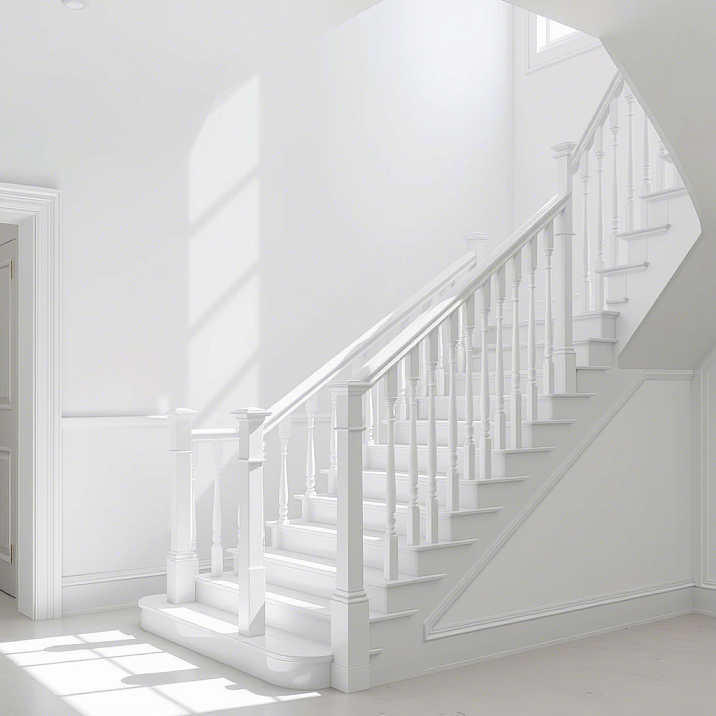
Imagine the moment when you first step through the threshold of your home and your gaze falls upon the majestic staircase with white balustersThis is not just an architectural element — it is a symphony of light and form, where every detail plays its part in creating a unique atmosphere. The snowy balusters rise like columns of an ancient temple toward the ceiling, evoking a sense of solemnity and nobility that instantly transforms the entire space.
In the world of interior design, the color white holds a special place — it is universal, timeless, and possesses an amazing ability to visually expand space. When it comes to staircase constructions, white balusters become not just functional safety elements, but true works of art capable of turning an ordinary staircase into the focal point of the interior.


Psychology of the color white in architecture
White color in interior design is not merely the absence of color — it is a powerful tool for influencing human psychology. It is associated with purity, freshness, new beginnings, and endless possibilities. In the context of staircase constructions, white balusters create a sense of lightness and airiness, which is especially important in small rooms.
Visual expansion of space is one of the main advantages of the color white. A staircase with snowy balusters appears less massive, allowing the feeling of spaciousness to be preserved even in compact hallways and entryways. Light reflecting off white surfaces creates additional illumination, making the room brighter and cozier.
The emotional impact of the color white cannot be underestimated. It calms, creates a sense of order and harmony. Ascending a staircase with white balusters, a person subconsciously tunes into a positive mood, which is especially important at the beginning and end of the workday.




Cultural associations and symbolism
In various cultures, the color white has deep symbolic meaning. In Western tradition, it is associated with solemnity, celebration, and new beginnings. In Eastern philosophy, white symbolizes purity of thought and spiritual perfection. These cultural codes operate on a subconscious level, creating a positive perception of the interior.
The architectural tradition of using white color in staircase design traces its roots back to classical antiquity. Marble balustrades of ancient Greek and Roman temples became the prototype for modern white balusters, preserving the spirit of grandeur and solemnity.
Our factory also produces:


Stylistic directions and white balusters
Get Consultation
Classic Style: Eternal Elegance
Classic interior and white balusters — this is a union tested by centuries. In classic style, the white color of balusters emphasizes the elegance of carved forms, creating contrast with dark wood treads and handrails. The precisely profiled classic balusters in white finish acquire particular expressiveness, and every detail becomes more noticeable and significant.
Symmetry and proportions of classic style harmonize perfectly with the white color of balusters. The strict geometry of forms, based on the golden section, in white finish creates a sense of mathematical precision and harmony. Such staircases become true masterpieces of architectural art.
Decorative elements of classic balusters — fluting, capitals, bases — in white color acquire particular elegance. The play of light and shadow on white surfaces highlights every detail, creating a volumetric, sculptural effect.
Scandinavian Minimalism: Purity of Lines
Scandinavian interior style cannot be imagined without the color white. Staircases with white balusters in Scandinavian style are characterized by simplicity of forms and functionality. Simple geometric profiles — square or round in cross-section — create a sense of order and calm.
Natural materials combined with white color create an atmosphere of eco-friendliness and closeness to nature. White balusters made of solid pine or birch retain the natural wood texture, adding warmth to the cool white color.
Functionality above all — this is the main principle of Scandinavian style. White balusters here are not overloaded with decoration; every line has a practical justification. This creates a sense of honesty and openness in design.
Provence: Romance of French Provençal
Provence style brings notes of French romance and rustic coziness to the interior. White balusters in Provence style often have artificially aged surfaces, creating a sense of long history. Patination and brushing add depth and character to white surfaces.
Floral motifs and plant ornaments characteristic of Provence, in white finish, acquire particular delicacy. Carved balusters with images of roses, lavender, or grapevines in white color create an atmosphere of a French chateau.
Combination with pastel tones — a distinctive feature of Provence style. White balusters harmoniously combine with lavender, mint, and peach shades in wall finishes and decor.
Modern Style: Innovations in Tradition
Modern interior style offers new interpretations of classic forms. White balusters in modern execution may have unusual geometric profiles created with high-precision equipment. Asymmetric forms, beveled edges, combining different cross-sections — all this creates a dynamic, modern image.
Integration of technologies allows creating white balusters with built-in lighting, sensor elements, and smart home systems. Such solutions make staircases not only beautiful but also high-tech.
Eco-friendly materials are becoming increasingly popular in modern design. White balusters made from recycled materials or fast-growing wood species meet sustainability requirements.
Materials and Manufacturing Technologies
Solid wood: the classic of the genre
Wooden balusters remain the most popular choice for creating white staircase railings. Pine is the most affordable material, possessing good working properties. Its soft structure is easy to process, and natural resins provide additional protection against moisture.
Birch is valued for its uniform structure and ability to perfectly accept white paint. Birch balusters after painting have a flawless smooth surface without visible pores or irregularities.
Oak is a premium choice for those who value durability and prestige. White-painted oak balusters retain the expressive wood grain texture, creating an interesting visual effect.
Modern composite materials
High-density MDF allows creating balusters of complex shapes with a perfectly smooth surface. This material is resistant to cracking and deformation, which is especially important for white surfaces, where any defect is immediately noticeable.
Polyurethane is an innovative material allowing the creation of balusters with intricate decorative details. Polyurethane balusters are moisture-resistant, do not crack or deform, and maintain an ideal white color for many years.
Wood-Plastic Composite (WPC) combines the beauty of natural wood with the practicality of modern materials. WPC balusters in white have high resistance to moisture and temperature fluctuations.
Painting technologies
Priming is a critically important stage in preparing the surface for white paint. Quality primer ensures even coverage and prevents the wood grain texture from showing through the white paint.
Multi-layer paint application ensures a deep, rich white color. Each layer is carefully sanded before the next is applied, guaranteeing a perfectly smooth surface.
Finish coatings protect white paint from mechanical damage and ultraviolet radiation. Modern polyurethane varnishes preserve the whiteness of balusters for many years.
Design Solutions and Compositions
Contrasting Combinations
One of the most effective solutions is combining white balusters with dark treads and handrails. The classic combination of white with wenge, dark oak, or walnut creates a striking contrast, emphasizing the staircase's architectural forms.
Texture play adds depth to the composition. Smooth white balusters combined with brushed dark treads create an interesting tactile contrast, making the staircase not only beautiful but also pleasant to touch.
Metallic accents — handrails made of stainless steel or brass — add a modern touch to the classic combination of white balusters with dark wood.
Monochromatic Solutions
A fully white staircase is a bold design solution requiring special skill in working with textures and forms. Various shades of white — from snowy white to cream — create subtle nuances, making the monochromatic composition interesting and lively.
Playing with lighting becomes especially important in monochromatic interiors. Properly placed lights create play of light and shadow on white surfaces, adding volume and dynamism.
Textural contrasts — combining smooth and textured surfaces — help avoid monotony in a fully white interior.
Color accents
White balusters serve as an ideal backdrop for vibrant color accents. Colored handrails — red, blue, green — create a cheerful, dynamic atmosphere, especially popular in children's and youth interiors.
Decorative inserts in white balusters — colored glass, metal, ceramic — add individuality to standard forms.
Seasonal decoration of white balusters allows easily changing the interior's mood. Garland, ribbons, flowers transform the staircase into a festive decorative element.
Lighting and white balusters
Natural lighting
White balusters have an amazing ability to work with natural light. Reflection of sunlight off white surfaces creates additional illumination, making the room brighter and more spacious.
Changing lighting throughout the day creates different moods. Morning light gives white balusters a cool, fresh tone, daylight makes them brilliantly white, and evening light adds warmth and coziness.
Seasonal changes in lighting also affect the perception of white balusters. In winter, they appear especially clean and fresh, in summer — cool and refreshing.
Artificial lighting
Properly designed artificial lighting can dramatically change the perception of a staircase with white balusters. Directional lighting highlights the shape and texture of balusters, creating dramatic effects of light and shadow.
Hidden lighting in steps or handrails creates soft, even illumination, making white balusters even more expressive. Colored lighting allows changing the interior's mood with one button press.
Decorative lighting fixtures — wall sconces, pendant lights, floor lamps — should harmonize with white balusters, not compete for attention, but complement the overall composition.
Practical Aspects of Selection and Installation
Planning and design
Creation Staircases with white balusters It begins with careful planning. Analysis of the space includes assessing natural lighting, room dimensions, interior style, and functional requirements.
Choosing proportions is critically important for white balusters, as the white color makes any disproportion more noticeable. Height, cross-section, and spacing between balusters must be carefully calculated.
Integration with the overall design requires consideration of all interior elements. White balusters should harmonize with the color scheme, style, and scale of the room.
Technical Requirements
The structural strength of white balusters must comply with regulatory requirements. The white color should not affect the functional characteristics of the items.
The quality of the coating is especially important for white surfaces. Any defects — unevenness, stains, scratches — on a white background are immediately noticeable.
The durability of the white coating depends on the quality of materials and application technology. Modern paints and varnishes ensure the preservation of whiteness for many years.
Installation and Mounting
Preparing the base requires special care when installing white balusters. Any irregularities or defects in the base will be visible through the white coating.
Accuracy of installation is critically important for white balusters. Even minor deviations from vertical alignment or uneven spacing between elements are immediately noticeable.
Protection during installation of white balusters requires special precautions. Surfaces must be protected from contamination and mechanical damage.
Care and Maintenance
Daily Care
White balusters require more careful maintenance compared to dark surfaces. Regular cleaning of dust and dirt should be done with soft materials that do not leave scratches.
Wet cleaning must be performed with special agents containing no abrasive particles. It is important to avoid agents with whitening components, which may damage the protective coating.
Controlling humidity in the room helps prevent deformation of wooden elements and preserves the quality of the white coating.
Preventive Maintenance
Periodic treatment with protective compounds extends the service life of white balusters. Special waxes and polishes not only protect the surface but also add extra gloss.
Timely repair of minor damage prevents its progression. Scratches and chips on white surfaces should be addressed immediately.
Professional restoration may be required after several years of use. Experienced craftsmen can restore the original whiteness even on severely damaged surfaces.
Economic Aspects
Manufacturing Cost
White balusters typically cost more than those with natural finishes due to additional operations for surface preparation and multi-layer painting. Quality surface preparation requires more time and materials.
Material choice significantly affects cost. Solid wood balusters with white finish cost more than those made from MDF or composite materials.
Complex shapes also affect price. Simple geometric profiles are cheaper than carved items with intricate decorative elements.
Long-term economic efficiency
The versatility of the white color makes such balusters a worthwhile investment. They suit any interior style and do not require replacement when changing the design.
Increased property value is an important economic factor. A quality staircase with white balusters significantly enhances the property's appeal in the real estate market.
The longevity of well-made white balusters pays for the initial investment. With proper care, they retain their original appearance for decades.
Trends and Innovations
New materials and technologies
Nanotechnologies in paint and coating production open new possibilities for creating white surfaces with improved characteristics. Self-cleaning coatings resistant to dirt and ultraviolet radiation.
Eco-friendly materials are becoming increasingly popular. Water-based paints, natural waxes, and biodegradable coatings meet ecological safety requirements.
Smart materials with variable properties allow creating balusters that can change the shade of white depending on lighting or temperature.
Design Trends
Personalization is becoming an important trend. Clients want to obtain unique white balusters reflecting their individuality and preferences.
Integration of technologies — built-in lighting, touch elements, smart home systems — makes white balusters not only beautiful but also functional.
Ecological awareness influences material and technology choices. Buyers increasingly choose eco-friendly solutions, even if they cost more.
Conclusion
A staircase with white balusters is not just an architectural element, but a realization of a dream of a beautiful, stylish, and functional home. The white color of balusters possesses an amazing ability to transform space, making it brighter, more spacious, and more elegant. Regardless of the chosen style — classic, modern, Scandinavian, or Provencal — white balusters for creating a unique interior will become an elegant accent, highlighting the owner's good taste.
Modern technologies and materials allow creating white balusters of exceptional quality that retain their beauty for many years. Investing in a quality staircase with white balusters is investing in comfort, safety, and aesthetic pleasure for the whole family.
Choosing white balusters requires careful planning, a professional approach to manufacturing and installation, as well as proper maintenance during use. But the result is worth the effort — the staircase becomes a true decoration of the home, a source of pride and daily aesthetic pleasure.
When selecting a supplier of white balusters, special attention should be paid to the company's reputation, product quality, and service level. STAVROS has established itself as a leading manufacturer of high-quality solid wood products. Years of experience, use of premium materials and modern technologies, along with a deep understanding of design trends, enable STAVROS to create white balusters that fully meet the highest quality standards and exceed even the expectations of the most discerning clients seeking to create unique interiors with impeccable taste and style.