






































Article Contents:
- What moldings do to space and why they are needed
- Where moldings are used in interior design
- On walls
- On the Ceiling
- In door and window openings
- In niches and accent zones
- In transition zones between rooms
- Which molding elements are most commonly used
- Moldings
- Cornices
- Baseboards
- Ceiling Rosettes
- Molding for Walls
- Ceiling decor
- Molding and additional elements
- How to choose molding material: polyurethane, plaster, polystyrene
- Polyurethane
- Gypsum
- Polystyrene
- Molding in different interior styles
- Ornament in modern interiors
- Molding in neoclassicism
- Stucco in Classical Interior
- Molding in eclectic style
- Molding in restrained minimalist solutions
- Molding in apartment interior: ready-made scenarios by rooms
- Living Room
- Bedroom
- Entry Hall
- Office
- Kitchen-Dining Room
- Molding selection table by style and room
- Visual space correction with molding
- How not to overload the interior with molding: seven working principles
- Common mistakes when choosing molding for the interior
- Molding for the home: country projects and commercial spaces
- Where to look for molding for the interior
- FAQ: answers to popular questions about molding in the interior
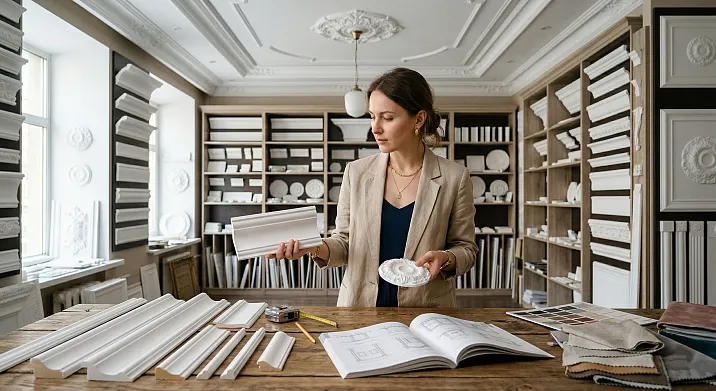
Imagine two identical rooms. Same layout, same furniture, same windows. In the first — bare plastered walls, a ceiling without a single accent, a straight transition from wall to ceiling plane. In the second — a cornice around the perimeter, molding frames on the walls, a ceiling rosette above the chandelier. What distinguishes these two spaces? Not the expensiveness of the furniture. Not the rarity of the finishing material. They are separated by exactly one architectural layer — decorative molding in the interior.
Molding does to a space what neither wallpaper, nor paint, nor textured plaster can do. It creates an architectural rhythm — that invisible system of horizontals and verticals, thanks to which the room begins to be perceived as a meaningful architectural object, and not just a 'room with furniture'. That is why the conversation about how to usestucco in interior, — is not a conversation about decoration, but about structure. About a professional tool available to everyone.


What molding does to a space and why it is needed
Before choosing elements, styles and sizes, you need to answer a fundamental question: why at all? Why, in the era of Scandinavian minimalism, white walls and simplicity of forms, return to molding? The answer is not in fashion trends — it is in the physics of space perception.
The human eye seeks support. It looks for horizontals and verticals that help 'read' a space—understand its scale, proportions, and depth. Where such supports are absent, a room can seem either too large and cold, or small and empty. Architectural decor provides precisely those lines and volumes that give the eye points of reference.
Here’s what specifically happens when molding is added to an interior:
Rhythm emerges. Wall moldings divide the plane into zones, creating a uniform repetition of forms. This rhythm is just like in music. It organizes perception and makes the space feel calm.
Scale emerges. A wall without a single decorative accent loses its scale—we can’t relate it to the human figure. A molding panel 80 centimeters high from the floor immediately provides a reference: here is the lower zone, here is the upper zone, here is the line by which you can gauge the room’s height.
Completeness emerges. A ceiling cornice is the finishing touch that 'closes' the vertical resolution of the wall. Without it, even the most expensive interior looks unfinished, as if the builders haven’t completed their work.
Character emerges. Molding sets the tone—historical, contemporary, strict, or light. Even before the eye registers the furniture and color, it reads the architectural decor as the 'language' of the interior.




Where molding is used in an interior
Relief Decor in Interiorit works in several key zones, each with its own logic of application.
Our factory also produces:


On walls
The wall is the primary working surface for decorative molding. Here, molding addresses three types of tasks.
Structuring. A horizontal molding running along the entire perimeter of the room at two-thirds of the wall height divides the wall into two tiers. The lower tier is visually 'weighted down'—it can be painted in a more saturated color or covered with textured wallpaper. The upper tier remains lighter. As a result, the wall gains depth and multi-dimensionality.
Framing. Molding frames create 'panels' on the wall—architectural rectangles that organize the plane. This is a particularly powerful technique for long walls that appear monotonous without division.
Accent. A decorative element—an overlay, medallion, ornamental composition—can become an independent visual accent on the wall. Behind the headboard of a bed, above a fireplace, in a niche with a mirror—in each of these cases, wall decor works like a 'painting,' only three-dimensional and integrated into the architecture.
Get Consultation
On the ceiling
Ceiling decor is the most free zone for working with molding. There is no furniture on the ceiling, no functional filling—only a pure plane that the designer organizes independently.
Minimal level—a cornice along the perimeter. It already creates completeness. Medium level—a cornice plus a ceiling rosette in the center. A full-fledged solution—cornice, border, corner inserts, a central medallion, or a coffered grid made of moldings.
В дверных и оконных проёмах
An opening is a place of transition. When it is framed with a decorative casing made of molding, an archivolt is added, or corner blocks are placed above the opening—the transition becomes an architectural event, not just a hole in the wall.
In niches and accent zones
A niche with molding is a ready-made frame for anything: for a mirror, for a painting, for decorative lighting. Molding turns a technical recess in the wall into an architectural element.
In transitional zones between rooms
The corridor connecting the living room and bedroom should maintain the style of both. Here, the decor acts as a 'translator' between the spaces, creating a sense of continuity in the interior design.
Which molding elements are used most often?
To discuss selection, you need to know the arsenal.Decorative molding in interior design— is not a homogeneous category, but a set of specialized elements with different functions.
Moldings are linear profiles used to create framed compositions, zone walls, and frame openings. They come in various widths (from 20 to 150 mm) and relief complexity — from smooth to richly decorated.
Molding is a linear profile for any purpose. It can be flat or three-dimensional, straight or curved, with or without ornament. Moldings are the most versatile tool in working with decorative plasterwork. They are used on walls for frames and division, on ceilings to create borders and cornices, and on furniture to decoratively enrich facades.
The width of the molding is chosen based on the ratio to the room's height: for ceilings up to 2.7 m, a width of 2–4 cm is optimal; for ceilings 3–3.5 m — 4–7 cm; for high rooms from 4 m — from 8 cm and above.
Crown mouldings
Cornice — a horizontal profile at the junction of the wall and ceiling. The fundamental role of the cornice: it completes the vertical solution of the wall and forms a 'frame' for the ceiling plane. A well-chosenceiling decorin the form of a cornice:
-
increases the visual height of the room with the correct profile;
-
conceals technical irregularities in the upper corner;
-
creates a niche for hidden lighting when using the appropriate profile;
-
sets the interior style—from academic classicism to a strict modern solution.
The cornice is selected based on the ratio: profile height in cm ≈ ceiling height in m × 2. For a 3 m ceiling—a cornice of about 6 cm. For a 4 m ceiling—about 8 cm. This is a guideline, not a rule, but it prevents gross scale errors.
Baseboards
The baseboard covers the lower corner of the wall, creates the lower horizontal line of the interior, and completes the vertical line. In a design project, the baseboard is not a functional minimum but an architectural element. The height of the baseboard should correspond to the scale of the space: in a room with a 3.5 m ceiling and a rich cornice, a 6-centimeter baseboard will look disproportionate.
For classic interiors, tall baseboards 12–18 cm with a profiled edge are standard. For modern ones—straight baseboards 8–10 cm with a sharp edge and minimal protrusion.
Ceiling Rosettes
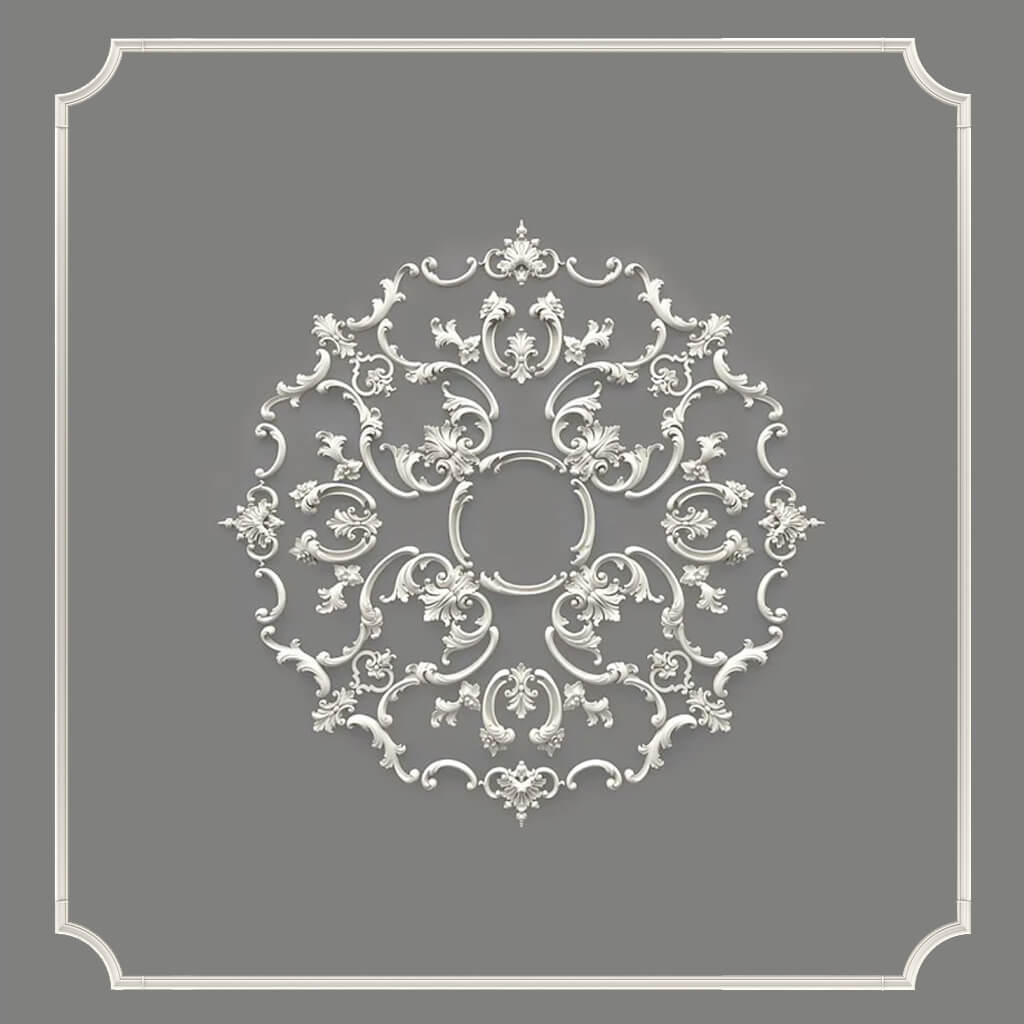
The ceiling medallion is the central accent of the ceiling. Traditionally installed under a chandelier, but in modern interiors, it can function as an independent decorative medallion. The medallion forms the visual 'center of gravity' of the ceiling—without it, a large, beautiful cornice remains unfinished.
The diameter of the medallion is selected based on the principle: no more than one-fifth of the smaller dimension of the room. In a 4 × 5 m room, a medallion with a diameter of 80–90 cm will be organic.
Wall molding
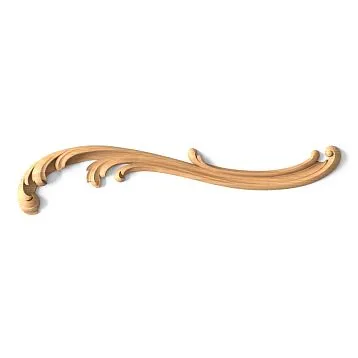
Wall-mountedPolyurethane wall decor— this is a broad group of products: decorative overlays, ornamental medallions, corner elements, pilasters, brackets. All of them create volume on a flat surface, adding depth and architectural character to the wall.
Ceiling decor
In addition to cornices and rosettes, ceilings can feature borders, corner inserts, moldings, and coffered grids made of moldings. This is a full-fledged ceiling solution—especially suitable for classic projects with high ceilings.
Trims and additional elements
In the STAVROS catalog, besides the main categories, you'll find brackets, capitals, rosettes of various diameters, and the full range of trim profiles—for complex decorative systems, for finishing furniture fronts, and for architectural facade decor.
How to choose molding material: polyurethane, gypsum, polystyrene
The question of material is not about aesthetics, but about practicality. Three materials compete in this market: polyurethane, gypsum, and polystyrene. Each has its own niche.
Polyurethane
Polyurethane is the market leader in interior molding due to its combination of characteristics. It is lightweight, durable, moisture-resistant, geometrically precise, takes paint well, and does not deform with temperature and humidity fluctuations. It is installed with adhesive and cut with standard tools.
The range of polyurethane products in professional catalogs covers everything from sleek modern profiles to rich ornamental classics. Designers choose polyurethane when they need a reliable solution with predictable results in a short timeframe.
Suitable for everywhere: living rooms, bedrooms, kitchens, bathrooms, commercial spaces, facades.
Plaster
A traditional material with a rich history. Plaster allows for the creation of unique items with the finest ornament detail. However, it has limitations: heavy, fragile on corners, poorly tolerates moisture, requires special installation conditions.
Plaster stucco today is a niche material for exclusive projects where historical authenticity and readiness for complex installation are important.
Polystyrene
The cheapest option. Used for budget solutions, mainly in the form of ceiling skirting boards. Soft, easily deforms under mechanical stress, range of shapes is limited. For serious design projects, polystyrene is not considered.
Conclusion on materials: for most tasks — residential and commercial, from apartments to restaurants — the optimal choice ispolyurethane decor for interiors. The 'quality / price / ease of installation' ratio here is the best.
Stucco in different interior styles
Each style dictates its own logic for working with stucco — in terms of scale, ornamentation, and number of elements.
Molded Decoration in Modern Interiors
Modern style — clean lines, geometry, functionality. This does not mean abandoning stucco. It means a different kind of stucco.
Moldings with a minimal profile depth — 8–12 mm. Cornices with a rectilinear geometric cross-section, without ornaments. Skirting boards with a sharp edge. Ceiling rosette — either minimalist or absent altogether. Such stucco in a modern interior does not decorate — it structures. It adds shadows, creates layering, and gives the space a sense of architectural thoughtfulness.
Molding in Neoclassicism
Neoclassicism is a dialogue with tradition without its literal repetition. Here, decor can be more expressive than in minimalism but retains restraint. Moldings with a soft profile, cornices with one decorative band, rosettes with a delicate pattern — all of this is appropriate and organic.
Principle for neoclassicism: form references classicism, scale is moderate. Molding is read as a 'hint,' not as a 'quote.'
Molding in a classic interior
Classicism is a complete space for molding. Rich multi-tiered cornices with ornamental bands, large ceiling rosettes with an elaborate acanthus pattern, wall panels with decorative medallions and corner elements — all of this is appropriate and expected here.
Key principle of classicism: systematicity. Cornice, moldings, baseboards must be coordinated with each other. A rich cornice with a simple baseboard is a violation of the system that is immediately visible.
Molding in Eclecticism
Eclecticism is the deliberate mixing of eras and forms. Here, molding can be unexpected: a classical cornice in an interior with modern furniture, a Baroque rosette under a laconic chandelier light. This works only if there is an internal logic to the mixing — that is, a conscious authorial intent, not a random set of elements.
Molding in restrained minimalist solutions
Minimalism with one decorative accent is a special genre. One molding on the wall. One cornice along the ceiling perimeter. One rosette. Such a solution requires precise selection of the element — because in a minimalist space, the single decorative element carries all the visual weight. Making a mistake here costs more than in classicism, where one imprecise element gets lost among the others.
Molding in apartment interiors: ready-made scenarios by rooms
Theory is good, but practice is more valuable. Here are specific scenarios for working withmolding in apartment interiors— by rooms, from the living room to the kitchen.
Living Room
The living room is the main space where decor can work to its full potential. Recommended scenario:
-
cornice around the perimeter of the ceiling — creates completeness and 'raises' the ceiling;
-
molding frames on the main wall (TV area or fireplace) — an accent block;
-
ceiling rosette above the main chandelier — the central accent of the ceiling;
-
high baseboard, coordinated with the cornice profile.
This minimal set already transforms an ordinary living room into an architecturally expressive space.
Bedroom
The bedroom requires delicacy. Molding here should create coziness, not theatricality.
-
A molding frame or decorative element behind the headboard — the accent center of the wall;
-
A thin cornice around the perimeter — optional but effective;
-
A baseboard of moderate height.
Key principle for the bedroom: symmetry and softness. All elements should create a sense of calm.
Entryway
The hallway — the first impression. It is here that one well-chosen element works most powerfully. A decorative archivolt above the entrance door, a cornice around the perimeter of a small space, a molding frame with a mirror — each of these techniques creates a sense of a well-thought-out interior from the first steps.
Office
The study — a space of status and concentration. Here, vertical molding panels on the walls work, creating a sense of library depth, a strict cornice with an academic profile, a high baseboard. Ornamentation — moderate, geometry — clear.
Kitchen-dining room
The kitchen — a room with high humidity, which is why polyurethane is preferable to plaster here. Horizontal molding above the backsplash, separating the work area from the dining area, a thin cornice in the dining area, a baseboard — a sufficient set for a kitchen space with designer character.
Table for selecting molding by style and room
| Room / Style | Crown Molding | Moldings | Rosette | Skirting board | Recommendation |
|---|---|---|---|---|---|
| Living room classic | Wide, with ornament | Frames, pilasters | Large, ornament | Tall, 12–18 cm | Complete system |
| Living room neoclassical | Средний, один пояс | Frames without ornament | Medium, delicate pattern | Medium, 10–14 cm | Coordinated system |
| Modern living room | Thin, geometry | Straight lines | Minimal | Straight, 8–10 cm | Minimal details |
| Bedroom of any style | Thin | Frame behind headboard | Optional | Moderate | One accent |
| Kitchen | Thin | Horizontal line | No | Moderate | Moisture-resistant material |
| Office | Strict | Vertical Panels | Optional | High | Geometry and order |
| Commercial (restaurant, hotel) | Rich | Panel system | Large | High | Scale + atmosphere |
Visual correction of space with molding
Molding is a tool for optical correction. Experienced designers know this, and it is important for everyone working with small or non-standard spaces to know.
How to visually raise the ceiling height. A cornice with a concave profile, directing the gaze upward, visually increases the perceived height of the room. Vertical moldings on the walls enhance this effect.
How to reduce the perceived height of a too-high ceiling. A horizontal molding on the wall at approximately 2.5 m 'cuts off' the excess height and creates a zone of human scale.
How to visually narrow a too-wide wall. Vertical molding panels break up a long wall into separate sections, each perceived independently. The wall 'shortens'.
How to zone an open space. In a studio or an apartment with an open plan, molding can become a zoning tool: a cornice only above the dining area, moldings only in the living room part — visually divides the space without partitions.
How not to overload an interior with molding: seven working principles
Overload is the most common mistake when working with decorative molding in an interior. Here are the principles that prevent it.
One 'loud' element per space. If the ceiling is rich — the walls are calmer. If the walls receive decorative load — the ceiling is minimal. Competition between two active zones creates visual chaos.
The scale of the element corresponds to the scale of the room. A 25 cm cornice in a room with a 2.5 m ceiling is pressure. The same cornice with a 4.5 m ceiling is organic. Always check the proportions.
In small rooms — thin profiles. Deep relief creates visual 'weight'. In a room up to 15 sq. m, this compresses the space. Profiles with a depth of up to 15 mm are preferable.
The same logic of profiles throughout the system. All elements — cornice, moldings, baseboard — should belong to the same stylistic 'language'. Curved and rectilinear profiles in the same room — conflict.
When only molding is enough. In a low-ceilinged room (up to 2.7 m) with a restrained style, a single horizontal wall molding is a full-fledged decorative step without the risk of overload.
When only a cornice is enough. In a high-ceilinged room with plain walls, a perimeter cornice is a self-sufficient solution. It completes the vertical without additional elements.
When one accent is enough. A bedroom, a small study, a minimalist living room — one well-chosen element (a frame behind the bed, a rosette above the table, an archivolt above the door) works better than several mediocre solutions.
Common mistakes when choosing molding for an interior
Even experienced professionals sometimes make mistakes when working with decorative molding. Here are the most common ones.
First mistake: disproportionate scale. The most frequent. A cornice chosen 'by eye' without correlating it to the room's height looks either unnoticeable or oppressive. The rule of proportionality is mandatory.
Second mistake: chaotic mixing of styles. A Baroque rosette and straight-line moldings in one interior is not eclecticism, it's a mistake. Eclecticism is built on a conscious authorial decision, not a random selection of elements.
Third mistake: overloaded walls and ceiling simultaneously. When both levels receive rich decoration, the space 'screams' from all sides. You need to choose where the main accent is.
Fourth mistake: ignoring the system. Molding selected separately from the cornice and baseboard creates a disjointed set of elements instead of a system. Always think about the ensemble.
Fifth mistake: molding without connection to the room's architecture. Molding frames that do not relate to the furniture placement, doorways, or windows — this is decoration for decoration's sake. Molding should 'converse' with the space.
Molding for the Home: Country Projects and Commercial Spaces
Beyond the city apartment, the tasks scale up. A country house with ceilings of 3.5–5 m is a completely different register for working with molding.
Here, wide cornices with ornamental bands, large ceiling rosettes with a diameter from 90 cm, full-fledged wall panels with pilasters, decorative consoles and brackets are appropriate. The scale of the rooms allows for the use of rich decor without the risk of overload — on the contrary, without it, a large space will seem empty and 'unfinished'.
For commercial spaces — a restaurant, hotel, showroom — molding performs an image function. It creates an atmosphere that is memorable and brings guests back. Here, the decor should be bold, large-scale, expressive.
The entire range for such tasks — from classic cornices to complex ornamental systems — is presented in the catalog ofpolyurethane products from STAVROS, broken down by categories and sizes.
Where to Look for Interior Molding
When the task is defined, the style is chosen, the scale is calculated — an assortment is needed. The STAVROS catalog offers a complete line ofmoldings and cornices for interiorsmade of polyurethane, categorized by type:
-
Wall decor — overlays, ornaments, medallions, pilasters;
-
Molding decor — corner blocks, connecting elements;
-
Ceiling rosettes — from minimalist to richly ornamental;
-
Baseboards — wide range of profiles and heights;
-
Cornices — from minimalist to classic multi-tiered;
-
Moldings — full range of linear profiles;
-
Polyurethane stucco — full material assortment;
-
Corbels and capitals — for complex decorative systems;
-
Trims — additional profile solutions.
In addition, the catalog features Author collections of decor by style: Art Deco, Empire, Classic, Modern, Gothic — for projects requiring a stylistically coordinated ensemble of elements from one series.
FAQ: answers to popular questions about interior molding
What is interior molding?
Interior molding refers to decorative architectural elements mounted on walls and ceilings: moldings, cornices, baseboards, ceiling rosettes, overlays, pilasters. They structure the space, create architectural rhythm, and visually complete the finish.
Where is molding appropriate in an apartment interior?
Molding is appropriate in any room of an apartment: in the living room — as a full decorative system, in the bedroom — as one accent element, in the hallway — to create a first impression, in the kitchen — as a horizontal molding or cornice.
What molding material is best for an apartment?
Polyurethane is optimal for apartments: lightweight, moisture-resistant, easy to install, available in a wide range of shapes. Plaster is suitable for exclusive projects, polystyrene — only for budget solutions.
How to choose a cornice based on ceiling height?
Guideline: cornice profile height in centimeters ≈ ceiling height in meters × 2. For a 2.7 m ceiling — cornice about 5–6 cm. For a 3.5 m ceiling — about 7–8 cm. This is an approximate rule, not a strict one.
Подходит ли лепнина для современного интерьера?
Yes. Modern interiors use laconic, rectilinear profiles without ornaments. A thin cornice, straight molding, minimalist rosette — all of these fit organically into a contemporary design.
How to avoid overloading the interior with molding?
The 'one loud element' principle: either an elaborate ceiling with calm walls, or expressive walls with minimal ceiling decor. Ensure the profiles are proportionate to the room's height.
What is more important: cornice or wall molding?
It depends on the task. The cornice completes the vertical and creates a transition to the ceiling. Wall molding structures the plane. In most projects, they complement each other within the system.
Как сочетать молдинги и карнизы?
Profiles should belong to the same 'language': both geometric or both with soft curves. The relief depth of the cornice is usually greater than that of the molding. All elements from the same collection is the most reliable way to coordinate them.
Where to buy interior molding?
Full rangeceiling rosettes and stucco decormade of polyurethane, categorized with photos and sizes, available in the STAVROS catalog. Delivery across Russia.
Can polyurethane molding be installed independently?
Yes. Basic elements—cornices, moldings, baseboards—are installed with special adhesive without complex tools or special surface preparation. Polyurethane is easily cut with a regular handsaw or utility knife.