Article Contents:
- The Genetic Code of Beauty: Where Does the Magic of Form Come From?
- Historical DNA of Architectural Decoration
- Psychology of Perceiving Classical Forms
- Polymer Alchemy: How Perfection is Born
- Molecular Architecture of the Material of the Future
- Technological Ballet of Production
- Quality Control as a Philosophy of Perfection
- Gallery of Styles: From Classicism to Avant-Garde
- Classicism: eternal harmony of proportions
- Baroque: Theater of Emotions in Interiors
- Modernism: nature as a source of inspiration
- Practical Magic: From Idea to Realization
- Design as the Art of Foreseeing
- Installation: Surgical Precision and Artistic Sensibility
- Final Finishing: The Last Touches of Perfection
- Economics of Beauty: Investments in Quality of Life
- Comparative Analysis of Solution Costs
- Long-Term Economic Efficiency
- Ecological Measurement: Responsibility Toward the Future
- Material Safety and Human Health
- Sustainable Development and Recycling
- The Future of Decorative Arts: Technologies of Tomorrow
- Digital revolution in design
- New materials and technologies
- Conclusion: The Time for Choice Has Arrived
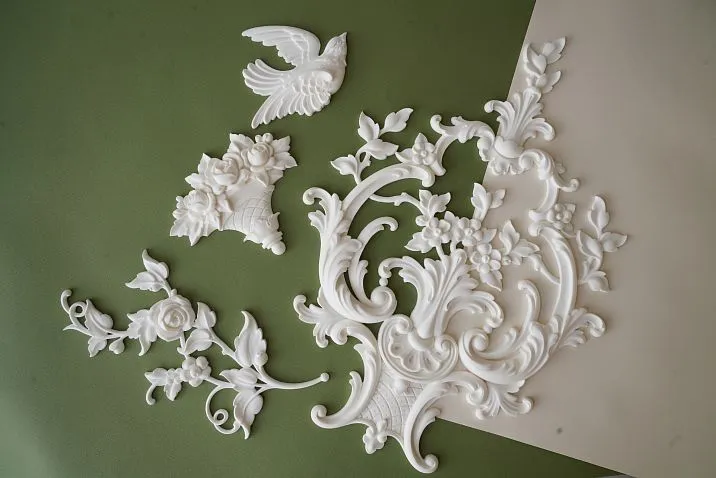
Every interior tells the story of its owner, but only a few can do so in the language of classical architecture. What transforms an ordinary space into a work of art? The answer lies in the details—the exquisite elements that have adorned royal palaces and aristocratic mansions for centuries. Today Polyurethane moldings it opens this world of luxury to anyone who strives to create a dream space.
Forget stereotypes of mass production and dreary uniformity! Modern polyurethane molding is a revolution in the world of decorative arts, where advanced technologies meet centuries-old craftsmanship traditions. Here, every swirl, every rosette, every molding curve carries the genetic memory of great architectural masterpieces of the past.




The Genetic Code of Beauty: Where Does the Magic of Form Come From?




Historical DNA of Architectural Decoration
The journey of molding decoration begins in Ancient Egypt, where the first masters learned to transform simple clay into works of art. But it was ancient Greece that gifted the world with that canon of beauty which still stirs hearts. Corinthian capitals with their lush acanthus leaves, Doric friezes with their strict geometry—all of this lives today in modern polyurethane molding.
The Roman Empire added to this symphony of forms grandeur and theatricality. It was the Romans who first understood that architectural decoration is not merely ornamentation, but a powerful tool of emotional impact. Every element was meant to speak of power, wealth, and magnificence. Modern Polyurethane moldings inherits this philosophy of impact, adapting it to the needs of the 21st century.
The Renaissance breathed new life into classical forms, adding mathematical precision of proportions and harmony of relationships. Masters of this era created a system of rules that still defines the principles of creating quality architectural decoration. The golden ratio, modularity, rhythmic repetitions—all these principles are embedded in the foundation of modern production of decorative elements.
Our factory also produces:


Why does the human eye so sensitively respond to classical proportions? Modern neuroscience provides amazing answers to this question. Certain size and shape ratios activate pleasure centers in our brain, creating a subconscious sense of harmony and beauty.
Wavy lines of plant ornaments remind us of nature, creating psychological comfort even in an urban environment. Geometric patterns, on the contrary, symbolize order and stability, which is especially important in an era of constant change and uncertainty.
Rhythm, as a fundamental principle of decorative space organization, affects our perception of time. A properly organized rhythm of repeating elements creates a sense of eternity and calm, while a disruption of rhythm attracts attention and creates dynamism.
Polymer alchemy: how perfection is born
Get Consultation
Molecular architecture of the material of the future
Polyurethane is not just plastic; it is a high-tech material with a unique molecular structure. Imagine a three-dimensional network where each molecule is connected to neighboring ones via multiple bonds. This structure provides the material with an exceptional combination of strength and elasticity.
The secret of polyurethane's success lies in the ability to vary its properties at the molecular level. By adding different components to the base composition, chemists can create materials with specified characteristics — from soft and elastic to hard and durable.
Modern polyurethane compositions for
contain dozens of different additives, each performing its specific function. Stabilizers prevent material degradation under ultraviolet exposure, antioxidants slow down aging processes, and rheology modifiers ensure perfect filling of the most complex geometries. moldings from polyurethane They contain dozens of different additives, each performing its specific function. Stabilizers prevent material degradation under ultraviolet exposure, antioxidants slow down aging processes, and rheology modifiers ensure perfect filling of the most complex geometries.
Technological ballet of production
Producing high-quality polyurethane moldings is an art where every movement is precisely timed to the second. The process begins with creating a master model — a reference sample that can be hand-carved by a master craftsman or created using modern 3D technologies.
Manufacturing silicone molds requires jewel-like precision. The silicone must reproduce every minute detail of the original, from the finest leaf veins to barely noticeable irregularities that give the product a handcrafted and lively appearance.
Injection molding — the culmination of the entire technological process. Components of the polyurethane system are mixed in strictly defined proportions at controlled temperatures. The slightest deviation from the technology may result in defects, so every process parameter is controlled by automated systems with precision down to fractions of a percent.
Quality control as a philosophy of perfection
Each product undergoes a multi-stage quality control system, where not only dimensional conformity but also surface quality, absence of internal defects, color stability, and many other parameters are checked.
Laboratory tests include assessments of strength, elasticity, resistance to temperature effects, chemical resistance, and durability. Samples are subjected to climatic chambers simulating various operating conditions, from tropical heat to Arctic cold.
Statistical analysis of control results allows continuous improvement of the technological process. Every deviation is analyzed, its causes are identified, and measures are taken to eliminate them. This ensures consistently high product quality and continuous improvement of characteristics.
Gallery of styles: from classicism to avant-garde
Classicism: eternal harmony of proportions
Classical style in architectural decoration is the embodiment of the ideal of beauty developed by humanity over millennia. Strict geometric forms, mathematically precise proportions, noble restraint — all of this finds its ideal embodiment in modern polyurethane moldings.
Corinthian elements with their characteristic acanthus leaves create a sense of luxury without excess. Each leaf is meticulously crafted with botanical precision, yet stylized according to the canon of classical art. The play of light and shadow on the relief surface creates a constantly changing picture, animating the static decoration.
Doric moldings and cornices bring a sense of monumentality and reliability to interiors. Their minimalist forms are ideally suited for modern interiors, where functionality and clean lines are valued, yet a connection to cultural tradition is necessary.
Baroque: theater of emotions in interiors
Baroque style — an explosion of emotions frozen in stone and plaster. Modern Polyurethane moldings allows recreating the full opulence and theatricality of this style at significantly lower costs and technical complexity.
Complex scrolls and volutes of baroque moldings require the highest level of craftsmanship in mold making. Each curve must smoothly transition into the next, creating a sense of continuous motion. Polyurethane is ideally suited for reproducing such complex forms due to its ability to accurately reproduce the finest details.
Baroque floral motifs are characterized by extraordinary opulence and naturalism. Garlands of flowers, interwoven ribbons, fruits, and berries — all of this creates a sense of abundance and celebration. In modern interiors, such elements become striking accents capable of transforming even the most modest space.
Modern: nature as a source of inspiration
The modern style revolutionized decorative art by abandoning the copying of historical models in favor of creating fundamentally new forms inspired by nature. Curves of stems, petals of flowers, butterfly wings — all of this became the basis for creating a unique decorative language.
Asymmetry as a compositional principle of modernism requires special skill in creating decorative elements. Each element must be unique, yet harmoniously fit into the overall composition. Polyurethane allows creating such complex asymmetrical forms with a high degree of detail.
The fluid lines of modernism are perfectly captured in polyurethane molding. The material allows for smooth transitions between various compositional elements, which is especially important for recreating the characteristic organic growth and development of forms typical of modernism.
Practical Magic: From Idea to Realization
Design as the Art of Foreseeing
Creating a harmonious interior using molding begins long before the first coat of adhesive. Professional design takes into account numerous factors: architectural features of the space, stylistic concept, functional requirements, and budget constraints.
Proportional relationships play a critical role in the perception of decorative elements. Too large elements in a small room create a sense of oppression, while small details in a spacious hall become lost and fail to make the desired impression.
Color selection must consider not only aesthetic preferences but also the psychological impact of various shades. Warm tones create a sense of coziness and comfort, while cool tones convey solemnity and formality. Contrasting solutions attract attention, while tonal ones create subtle accents.
Installation: Surgical Precision and Artistic Sensibility
Quality installation moldings from polyurethane Requires a combination of technical skills and artistic taste. Each element must be installed with millimeter precision, as even minor deviations become noticeable in the finished composition.
Surface preparation is the foundation of quality results. Walls and ceilings must be perfectly flat, dry, and degreased. Any irregularities will be accentuated by the molding, so preparatory work receives special attention.
Marking is performed using laser levels and professional measuring tools. Each line and each mounting point is checked multiple times, as correcting errors after adhering elements is extremely difficult.
Final Finishing: The Last Touches of Perfection
Filling joints requires special skill, as it is necessary to create a smooth transition between individual elements, making them visually unified. Special compounds, selected for a specific type of polyurethane, are used.
Priming before painting ensures even color and long-lasting finish. The primer must be compatible with both the molding material and the final paint, requiring knowledge of the chemical properties of various compositions.
Painting is the final stage that can dramatically alter the perception of the entire composition. Professional painters use various painting techniques to achieve optimal results in each specific case.
Economics of Beauty: Investments in Quality of Life
Comparative Analysis of Solution Costs
Initial costs for polyurethane molding may seem significant, but comparison with alternative solutions shows their economic justification. Gypsum molding costs 2-3 times more with significantly more complex installation and shorter lifespan.
Natural materials—wood, stone—outperform polyurethane in cost by multiples, requiring specialized care and regular maintenance. Transportation costs for heavy materials also significantly increase the overall project cost.
Installation time for polyurethane molding is significantly less than for alternative materials, reducing labor costs. Ease of processing allows for on-site fitting of elements, eliminating the need for specialized workshops.
Long-term economic efficiency
The service life of quality moldings from polyurethane Lasts several decades with minimal maintenance. The material requires no special care, is resistant to moisture, temperature fluctuations, and mechanical impacts.
The ability to repaint allows updating the interior without replacing decorative elements. This is especially important in commercial spaces, where design concept changes occur frequently.
The increase in property value with quality decorative finishing can reach 15-20% of the original cost. This makes investments in molding not only aesthetically but also economically justified.
Ecological Dimension: Responsibility Toward the Future
Material Safety and Human Health
Modern polyurethane compositions are produced according to the strictest ecological standards. The absence of heavy metals, formaldehyde, and other toxic substances makes the material safe for use in residential spaces.
Cured polyurethane does not emit volatile organic compounds, as confirmed by appropriate certificates. The material has no odor and does not cause allergic reactions, even in people with heightened sensitivity.
Polyurethane's antimicrobial properties prevent mold and bacterial growth on the surface of products. This is especially important in humid environments, where other materials may become sources of biological contamination.
Sustainable Development and Secondary Recycling
The long service life of polyurethane products reduces the need for frequent replacement and, consequently, waste volume. This aligns with the principles of sustainable development and responsible resource consumption.
Technological advancements in polyurethane recycling allow the reuse of used products to manufacture new materials. Chemical recycling enables breaking down the polymer into original components that can be reused.
The energy value of polyurethane during incineration is comparable to coal, making it a valuable energy resource. Modern waste incineration plants can effectively utilize this energy to produce heat and electricity.
The Future of Decorative Art: Technologies of Tomorrow
Digital revolution in design
Virtual and augmented reality technologies are revolutionizing the process of designing interiors with moldings. Clients can see the future result even before work begins, eliminating disappointments and allowing adjustments during the design phase.
Artificial intelligence is applied in optimizing the shapes and compositions of polymer materials. Machine learning algorithms analyze successful projects and propose optimal solutions for specific tasks.
Parametric design enables the creation of adaptive decorative systems that automatically adjust to the size and proportions of a specific room. This opens new possibilities for mass customization of design.
New materials and technologies
Nanotechnologies open up opportunities for creating polyurethane compositions with fundamentally new properties. Self-cleaning surfaces, color-changing surfaces in response to temperature or light, antibacterial coatings — all of this is no longer science fiction, but the reality of tomorrow.
Biopolymers based on renewable resources may become an alternative to traditional polyurethane. These materials retain all the positive properties of synthetic polymers, yet they fully degrade under natural conditions.
Additive technologies allow creating decorative elements of any complexity without limitations associated with traditional molding methods. 3D printing opens new horizons for personalization and creation of unique forms.
Conclusion: the time to choose has arrived
In a world where beauty becomes luxury and individuality is rare, polyurethane molding offers a path to creating dream spaces without compromise. This is a technology that makes accessible what for centuries was the privilege of the chosen few.
Every day spent in a beautifully designed interior is an investment in quality of life, emotional well-being, and creative development. Beauty is not luxury — it is a necessity, a human soul’s need for harmony and perfection.
Choosing quality molding is choosing for those who understand the value of beauty and are willing to invest in creating a space worthy of their ambitions and aspirations. This is the choice of those unwilling to compromise with the dullness and banality of mass production.
Modern technologies have made possible what designers of past generations dreamed of — creating a unique, individual interior at reasonable costs of time and money. Polyurethane molding has become the bridge between dream and reality, between desire and possibility.
STAVROS stands at the forefront of this revolution of beauty, offering the Russian market world-class products. Years of experience, deep understanding of client needs, and constant pursuit of perfection make STAVROS not just a material supplier, but a partner in creating dream interiors. Every STAVROS product carries a piece of the masters’ soul, their passion for beauty and pursuit of perfection. Choosing STAVROS means choosing quality proven by time, reliability confirmed by thousands of successful projects, and beauty that will delight you for years to come.