












































































Article Contents:
- The Philosophy of a Unified Space: When Details Create the Whole
- Advantages of a Comprehensive Approach
- A Unified Style: From Classic to Modern
- Classicism: Symmetry and Order Logic
- Neoclassical: light elegance
- Baroque: Theatrical Luxury
- Modern: Natural Lines and Asymmetry
- Beautiful Moldings: The Architecture of Space
- Ceiling Solutions: Height and Volume
- Wall Decor: Verticality and Rhythm
- Decorative Accents: Focal Points
- Elite Solid Wood Furniture: Warmth and Durability
- Living Room: A Symphony of Forms
- Dining Room: A Family Gathering Place
- Bedroom: Intimacy and Coziness
- Full-Cycle Production: Control at Every Stage
- Designing: From Idea to Blueprint
- Production: From Material to Finished Product
- Logistics and Installation: The Final Touch
- Visualization: See It Before It's Realized
- Examples of Completed Projects: Theory in Practice
- Project 1: Classic Living Room
- Project 2: Neoclassical Bedroom
- Project 3: Baroque Dining Room
- Frequently Asked Questions
- What is the advantage of ordering furniture and moldings from a single manufacturer?
- How long does a comprehensive project take?
- Can ready-made models and custom pieces be combined?
- How to care for wooden furniture and polyurethane moldings?
- Which style to choose for a small apartment?
- Can the color of moldings and furniture be changed after installation?
- What is the cost of a comprehensive project?
- Do you provide a warranty on the products?
- Conclusion: Harmony is Born in Unity
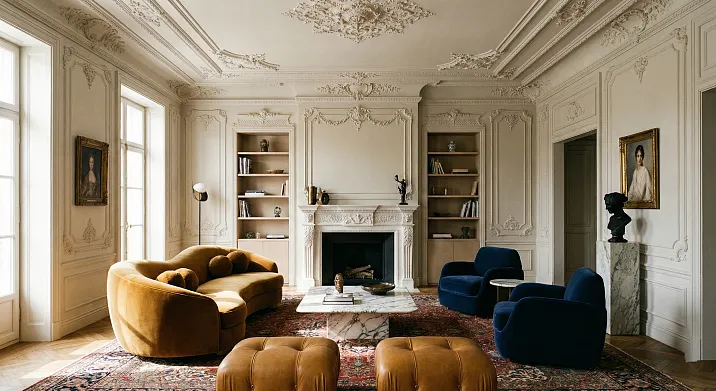
Enter a house where every detail speaks the same language. WhereBeautiful moldings on wallsechoes the carved elements of the furniture, where the molding profile repeats the line of the countertop, where the cornice on the ceiling resonates in the decoration of the cabinet fronts. This is not a coincidence or a happy accident—it is the result of a thoughtful comprehensive approach, where the interior is created as a single composition. Why do some spaces look integral, harmonious, as if carved from a single block, while others appear as a collection of disparate elements, even expensive ones? The secret lies in the unity of origin, in a single manufacturer who controls the style, proportions, and quality of execution of all interior components.
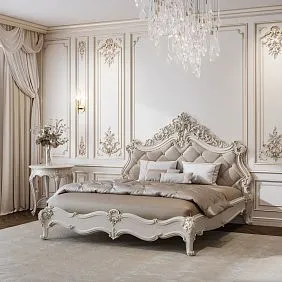


The philosophy of a unified space: when details create the whole
A premium-class interior is not the sum of expensive items placed in one room. It is a symphony where each instrument plays in the same key, complementing and enhancing the others. Imagine: you ordered a luxurious solid oak chest of drawers with Baroque-style carved overlays, but decorated the walls with minimalist smooth panels. Or installed lavish stucco with acanthus leaves but chose furniture in a strict Scandinavian style. The result is visual dissonance, a conflict of languages that subconsciously creates discomfort.
A comprehensive approach solves this problem radically. Whendesigner furniture made of solid woodand architectural decor are created by a single manufacturer, stylistic unity is guaranteed. Designers use one bank of ornaments, the same proportions, and one philosophy of form-making. The carved overlay on the chest of drawers front repeats the motif on the wall panel. The molding profile echoes the profile of the furniture cornice. Even the color and texture of the finish are selected in a unified palette.
This does not mean monotony or uniformity. On the contrary, a unified stylistic language allows for the creation of complex, rich interiors where many elements come together into a harmonious picture. Like in a good literary work: many characters, plotlines, events, but all are subordinated to the author's single vision, speak a recognizable language, and create a holistic impression.




Advantages of the comprehensive approach
By working with a single manufacturer of stucco and furniture, you gain numerous practical advantages that go beyond aesthetics.
Unified production quality—all products undergo the same control standards. Solid wood for furniture and for wooden decorative elements undergoes identical drying, processing, and finishing. Polyurethane stucco is manufactured using the same technology, with the same geometric tolerances, and the same surface quality. This eliminates situations where furniture is executed at the highest level, while decorative elements disappoint with crooked lines or rough finishing.
Coordinated timelines—when ordering a comprehensive solution, all components are produced in parallel and delivered simultaneously. There is no situation where furniture is already ready and waiting in the warehouse, while stucco is delayed for months due to problems with another supplier. This is especially critical for renovations with strict deadlines.
Single point of responsibility—if questions arise, adjustments are needed, or warranty situations occur, you interact with one company. There is no need to figure out who is at fault: the furniture manufacturer, the stucco supplier, or the installation crew. One contract, one company, one manager who coordinates the entire project.
Budget optimization—comprehensive orders typically receive pricing advantages. A manufacturer receiving a large order for complete interior design can offer more favorable terms than when purchasing individual items from different suppliers. Additionally, intermediary markups and designer fees for coordinating orders from different manufacturers are eliminated.
Technical compatibility—the dimensions, proportions, and fastenings of all elements are designed to work together. The height of the furniture plinth aligns with the height of the baseboard. The thickness of the front overlays on the furniture corresponds to the relief of the wall panels. Furniture cornices harmonize in profile and size with ceiling ones.
Our factory also produces:


Unified style: from classic to modern
Stylistic unity is the cornerstone of a harmonious interior. Let's examine how the comprehensive approach is implemented in various stylistic directions.
Get Consultation
Classicism: symmetry and order logic
Classicism—a style based on the principles of ancient architecture—requires the strictest adherence to proportions and canons. Here, the comprehensive approach is especially important, as the slightest deviation from proportions destroys harmony.
buy decorative moldingsin the classical style means obtaining elements designed according to the canons of the order system. Corinthian capitals of columns are repeated in the capitals of pilasters on furniture. Egg-and-dart motifs on the cornice echo the Ionic ornament on the frieze of a chest of drawers. The modillions of the ceiling cornice have the same proportions as the corbels under the console table's top.
Furniture in the classical style is characterized by architectural forms. Cabinets and chests of drawers are constructed as miniature buildings with a plinth, body, and crowning cornice. The proportions of the three parts correspond to the proportions of the classical order. The decor is restrained, based on geometric and plant motifs: meander, egg-and-dart, dentils, acanthus leaf, laurel garlands.
The color palette of classicism consists of natural wood tones or noble painted surfaces. White stucco against walls painted in pastel tones—blue, olive, peach, lilac.Elite designer furnitureis made from solid oak, walnut, mahogany in natural tones or with light tinting that emphasizes the texture.
A comprehensive classic interior project includes: ceiling cornices with modillions and dentils, rosettes for chandeliers, wall moldings framing panels or paintings, pilasters with capitals and bases, door portals with pediments, baseboards with classical profiles. Furniture part: cabinets and chests of drawers with architectural cornices, tables with turned legs and carved friezes, armchairs and sofas with wooden carved armrests, mirrors in frames with classical ornamentation.
Neoclassicism: light elegance
Neoclassicism—a modern interpretation of the classical style, where the logic of proportions and main decorative motifs are preserved, but the execution becomes lighter, more concise, and better adapted to the modern lifestyle.
Stucco in neoclassicism is less relief, profiles are simpler, ornaments are more restrained. Instead of lavish Corinthian capitals—simplified versions of the Ionic order. Instead of multi-layered cornices with modillions and dentils—concise two- or three-layer compositions. Rosettes for chandeliers are geometrically clean, without excessive detailing.
Furniture in neoclassicism retains classical proportions, but the lines become stricter, and the decor is more minimal. Cabinets have cornices, but of a simplified profile. Fronts can be smooth with light paneling or with minimalist overlays. Table and chair legs are straight tapered or slightly curved, without excessive carving.
The color scheme of neoclassicism is light, airy. White or light gray stucco, light walls, furniture in light tones—bleached oak, light walnut, painted wood in pastel shades. Contrasts are possible: dark furniture on a light background or vice versa, but the contrasts are soft, not sharp.
A comprehensive solution in the neoclassical style includes: simplified cornices and moldings, geometric rosettes, wall panels with minimalist paneling, baseboards of classical but lightened profiles. Furniture: cabinets and chests of drawers with clean lines, tables with tapered legs, armchairs with simple armrests, mirrors in frames with restrained decor.
Baroque: theatrical luxury
Baroque—a style of maximum decorativeness, dynamism, theatricality. Here, the comprehensive approach is critical, as an excess of decor can easily turn into kitsch if the elements are not coordinated with each other.
Stucco in Baroque is abundance: multi-layered cornices with deep relief, large rosettes with plant motifs, cartouches, mascaron, putti, garlands. The lines are curved, dynamic, creating an impression of movement. Surfaces are not flat but wavy, with transitions in relief.
Baroque furniture is equally opulent. Cabriole curved legs, bombe wavy fronts, abundant carving with plant and sculptural motifs, gilding. The forms are massive, heavy, demonstrating the richness of the material and the skill of execution.
The Baroque color palette is rich and contrasting. White stucco with gilding against a background of deep wall colors — burgundy, emerald, sapphire. Furniture made of dark wood — walnut, mahogany — with gilded carved elements.
A comprehensive Baroque interior is a symphony of decoration, where each element echoes another, enhancing the overall impression of luxury. A ceiling with multi-layered cornices, large rosettes, possibly plafond painting framed by stucco frames. Walls with pilasters, arches, niches, abundantly decorated with overlays. Furniture: display cabinets with curved fronts and gilded carving, tables on curved legs with carved friezes, armchairs and sofas with carved backs and armrests, abundant upholstery in velvet or tapestry.
Art Nouveau: Natural Lines and Asymmetry
Art Nouveau (Art Nouveau) is a style from the turn of the 19th-20th centuries, which brought flowing plant lines, asymmetry, and the rejection of right angles into the interior. Here, a comprehensive approach creates a special atmosphere of organicity, where all elements seem to have grown naturally.
Stucco in Art Nouveau features curved lines imitating plant stems, waves, and water flows. Ornaments are stylized irises, lilies, poppies, bindweeds. Asymmetrical compositions, where the left part does not mirror the right, create a sense of natural randomness.
Art Nouveau furniture is characterized by smooth lines. Chair backs are curved in the shape of a wave or stem, table legs have natural bends, cabinet fronts are decorated with stained glass with plant motifs, carving with climbing plants.
The Art Nouveau color palette is natural but refined. Muted greens, lilacs, gray-blues, golden-ochre tones. Stucco is often painted to match the walls or has a light patina, creating an aging effect.
A comprehensive interior in the Art Nouveau style includes: curved cornices and moldings with plant ornamentation, asymmetrical rosettes and overlays, stained glass windows and doors with plant motifs. Furniture: cabinets with stained glass inserts, tables with curved legs, armchairs and sofas with smooth backs and armrests, mirrors in frames with plant carving.
Beautiful Stucco: The Architecture of Space
Stucco decoration is not just an adornment for walls and ceilings. It is an architectural tool that organizes space, sets the scale, and creates visual connections between interior elements.
Ceiling Solutions: Height and Volume
In a premium interior, the ceiling never remains just a white plane. A properly designed ceiling visually increases the height of the room, adds volume, and creates architectural completeness.
Cornice — a basic element of ceiling decoration, framing the perimeter of the room. Depending on the style and ceiling height, the cornice can be a simple two-profile or a complex multi-layered one. The higher the ceiling, the more massive and relief cornice is appropriate. For standard ceilings of 2.7-3 m, cornices 10-15 cm high are suitable. For high ceilings of 3.5-4 m and above — cornices 20-30 cm and more with deep relief.
Chandelier rosette — the central element of the ceiling, attracting the eye. The size of the rosette is selected proportionally to the size of the room and the chandelier. For a room of 20-30 m², a rosette with a diameter of 60-80 cm is optimal. For large halls of 50-100 m² — rosettes with a diameter of 100-150 cm and more. The style of the rosette should correspond to the style of the interior: geometric for classicism, plant-based for Baroque and Art Nouveau, simplified for neoclassicism.
Coffers — rectangular or polygonal recesses in the ceiling, framed by moldings. A coffered ceiling creates depth, a play of light and shadow, and visually structures the space. A classic solution is square coffers with rosettes in the center of each. A modern interpretation is rectangular coffers without rosettes, with a minimalist profile of moldings.
Battens and panels — dividing the ceiling into zones using narrow moldings. Allows for visual correction of room proportions: dividing a long room into square sections, structuring a square one with rectangular fields.
Wall Decoration: Verticality and Rhythm
Walls in a classic interior are never left smooth. Decoration organizes vertical space, creates visual rhythm, and frames functional zones.
Moldings are a universal tool for wall decoration. Horizontal moldings divide the wall into belts, creating a classic three-part structure: baseboard, wall body, and frieze. Vertical moldings form panels, frame doors and windows, and create visual axes.
Wall panels (boiserie) — wooden or wood-imitation panels covering the lower part of the wall at a height of 90-120 cm. Panels protect the wall from mechanical damage, create coziness, and set the horizontal structure. Panels are framed with a profile and include panels — flat or relief. The top of the panels is crowned with a dado rail — a horizontal molding with a complex profile.
Pilasters — flat vertical projections imitating columns. A pilaster consists of a base, a shaft, and a capital. Pilasters structure the wall, create vertical axes, and frame functional zones — fireplaces, niches, doors. The distance between pilasters is determined by the proportions of the room and the style: in classicism — regular, uniform; in Baroque — can vary to create dynamics.
Door and window surrounds — door and window portals with architraves, pediments (frontons above the opening), consoles. The surround turns a utilitarian opening into an architectural element, sets the scale, and connects the opening with the general wall decoration.
Decorative Accents: Focal Points
In addition to structural elements, stucco includes purely decorative overlays — ornaments, cartouches, wreaths, garlands, which serve as focal points attracting attention.
Corner elements — decorative overlays placed in the corners of frames formed by moldings. Turn a simple rectangular frame into an ornamented surround. Can be plant-based, geometric, sculptural depending on the style.
Central overlays — placed in the center of a panel, above a door, above a window. Serve as a visual center to which the lines of the frame converge. Can be symmetrical (classicism) or asymmetrical (Baroque, Art Nouveau).
Friezes — horizontal ornamental strips placed under the cornice, above panels, along stairs. Create rhythmic decoration that echoes the ornaments on the furniture.
Elite Solid Wood Furniture: Warmth and Durability
If stucco organizes the architecture of space, then furniture fills it with functionality and coziness. Solid wood furniture in a comprehensive approach is not just furnishings, but a continuation of the architectural language expressed in the stucco.
Living Room: A Symphony of Forms
The living room is the formal space where the comprehensive approach is revealed to the fullest. It houses the most representative furniture pieces, which require coordination with the architectural decor.
Display cabinet — often the central piece of case furniture in the living room. In classical and Baroque interiors, the display cabinet is constructed as an architectural structure with a plinth, body, and crowning cornice. The cabinet's cornice replicates the profile of the ceiling cornice or wall moldings in miniature. Pilasters on the cabinet's facade echo the pilasters on the walls. Carved overlays use the same ornamental motifs as the stucco elements.
Chest of drawers — another key piece where stylistic unity is manifested. The shape of the chest, the profile of the tabletop, the character of the legs, the decoration of the fronts — everything must correspond to the overall style. In Baroque — curved bombe fronts; in Classicism — strict geometry with moderate decoration; in Art Nouveau — flowing lines and asymmetrical elements.
Console table — a refined piece, often placed against a wall under a mirror. Consoles may have only two front legs, with the wall serving as the rear support. Carved brackets under the tabletop echo the brackets of the ceiling cornice. The table's frieze repeats the ornaments of the wall moldings.
Coffee table — although it has a utilitarian function, in a premium interior it becomes a piece of furniture art. Carved under-table structure, a solid wood tabletop with expressive texture, possibly with inlay — all this connects the table with the overall decorative context.
Dining Room: A Place for Family Gathering
The dining room requires special attention to furniture, as functionality here is critical but should not conflict with aesthetics.
Dining table — the center of the dining room. Its size is determined by the number of seats; its shape — by the room's configuration and style. In a classical interior, rectangular or oval tables on turned or carved legs are preferred. The table's frieze (the horizontal plank under the tabletop) is decorated with carvings that echo the decor of other furniture pieces and stucco.
Chairs must correspond to the table not only functionally but also stylistically. The shape of the back, the profile of the legs, the character of the carving — everything is selected in a unified manner. In sets, chairs for side seats and armchairs for the ends are often used, emphasizing the hierarchy.
Buffet or sideboard — a storage unit for dishes and textiles. In a classical execution, the buffet has a two-tier structure: the lower part with closed fronts for storage, the upper part with glass doors for displaying beautiful dishes. The buffet's cornice, pilasters on the facade, and carved decoration are coordinated with the overall interior style.
Bedroom: Intimacy and Coziness
Bedroom — a private space where the comprehensive approach creates an atmosphere of security and coziness. Furniture here must be not only beautiful but also functionally comfortable.
Bed — the main piece in the bedroom. In a premium execution, the bed has a high headboard, often up to 2-2.5 m, turning it into an architectural element. The headboard can be carved, upholstered, or combined. The bed's legs and side panels are decorated according to the style: with carvings in Classicism and Baroque, with flowing lines in Art Nouveau.
Nightstands — paired pieces flanking the bed. Their design should correspond to the bed but not copy it in miniature — this would create monotony. Instead, the nightstands repeat individual motifs: the profile of the tabletop, the shape of the legs, the character of the hardware.
Chest of drawers or dressing table — additional pieces for storage and morning grooming. The height of a dressing table is lower than a standard chest of drawers (75-80 cm vs. 90-100 cm), creating visual variety.
Wardrobe — a necessary but large piece that can dominate the bedroom. To prevent the wardrobe from looking bulky, techniques for visual lightening are used: dividing the facade into sections with vertical pilasters, using mirror inserts, decorating the cornice, making the wardrobe part of the room's architecture.
Full-Cycle Production: Control at Every Stage
The quality of a comprehensive solution is determined not only by design but also by production technology.custom molding productionand full-cycle furniture production under one roof — a guarantee of adherence to standards at all stages.
Designing: From Idea to Drawing
Everything begins with design. The client comes with a request — to create an interior in a certain style, of a certain size, with specific functional requirements. The designer starts with an analysis of the space: measures the room, records ceiling heights, the location of windows and doors, utilities, and architectural features.
Then a concept is created — the overall stylistic and color solution, key furniture pieces and architectural accents are defined. The concept is developed in sketches, collages, and references are selected.
After the concept is approved, detailed development begins. Furniture layout plans are created, wall elevations with all decorative elements indicated, 3D visualizations that allow seeing the future interior. Specific models of stucco and furniture are selected from the manufacturer's catalog or custom pieces are designed.
The final stage of design is the creation of working documentation: drawings, material specifications, estimates. The documentation is transferred to production.
Production: From Material to Finished Product
Production of designer furnituremade from solid wood requires the sequential execution of many operations, each of which is critical for quality.
Wood preparation begins with the selection of lumber. Solid oak, beech, ash arrives as sawn boards that have undergone preliminary drying. At the production facility, the wood undergoes final kiln drying to a moisture content of 8-10%, after which it is acclimatized in the workshop.
Cutting and calibration — boards are cut into blanks of the required sizes, calibrated to precise thicknesses. Blanks are sorted by texture and color for each product separately to ensure visual unity.
Milling and assembly — blanks are processed on CNC machines, joints, profiles, and relief elements are formed. Parts are assembled using joinery connections and eco-friendly adhesives. The structure is clamped until the glue is completely dry.
Carving and decoration — if hand carving is provided, the carver transfers the ornament onto the product and performs the carving. For elements with repeating ornaments, overlays made by milling or casting are used.
Sanding — a multi-stage process with a gradual transition from coarse to fine abrasives. The goal is perfect surface smoothness, readiness for coating application.
Final finishing — application of oil, wax, varnish, or paint in several coats with intermediate sanding. For items with patination, multi-stage toning and polishing are performed.
Assembly and inspection — finished products are assembled, hardware is installed, the quality of finishing and the functioning of mechanisms are checked. Only after passing inspection is the product packaged and transferred to the warehouse.
Production of polyurethane moldings occurs in parallel. Silicone molds of the required profiles and overlays are created or selected from a library. Two-component polyurethane is poured into the molds, a chemical reaction occurs with foaming and curing. Finished products are removed from the molds, undergo geometry inspection, and are painted or patinated if necessary.
Logistics and installation: the final chord
Finished products are delivered to the site as a complete set. This is critically important — everything must arrive simultaneously so that installation proceeds sequentially, without downtime.
Installation of moldings is performed by a specialized team. Cornices, moldings, and overlays are attached with special adhesive, joints are filled, sanded, and elements are painted on-site if necessary. Precision in joining is important — seams should be invisible.
Furniture installation occurs after finishing work is completed. Large items — wardrobes, chests of drawers — are placed in position, leveled, and secured to walls for stability if necessary. Doors are hung, shelves and pull-out elements are installed, and hardware is adjusted.
Final acceptance — the client inspects the completed work, checks compliance with the project, quality of execution, and functioning of all mechanisms. Any issues are addressed, after which the project is considered complete.
Visualization: seeing before realization
One of the key advantages of working with a full-cycle manufacturer is the possibility of detailed 3D visualization of the future interior at the design stage.
Modern programs allow creating a photorealistic image where all details are visible: the wood texture on furniture, the relief of moldings, the play of light and shadow, color combinations. The client can virtually walk through the rooms, view the interior from different angles, and assess proportions and scale.
Visualization allows for experimentation without production costs. Want to see how furniture would look not in dark walnut but in light oak? The designer changes the material texture in the program in minutes. Unsure about the size of a cornice? Try several options in the visualization.
The ability to make corrections at the design stage saves time and money. Changing something in a drawing is simple; changing a finished product is expensive or impossible. Visualization minimizes the risk of disappointment after production.
Examples of completed projects: theory in practice
Let's consider several case studies illustrating the advantages of the comprehensive approach.
Project 1: Classic living room
Object — a living room in a mansion with an area of 60 m², ceiling height 3.5 m. Style — Russian classicism of the early 19th century.
Architectural solution: ceiling with a multi-level cornice 25 cm high, coffers formed by wide moldings, a rosette 100 cm in diameter for the central chandelier. Walls divided into three zones: a plinth section 90 cm high with wooden panels, a central section with vertical moldings forming rectangular panels for paintings, an upper frieze with a meander ornament.
Furniture solution: a display cabinet 2.4 m high with two glass doors, side pilasters with Ionic capitals, a crowning cornice repeating the profile of the ceiling in miniature. A chest of drawers with three drawers, carved overlays with acanthus leaves, a console table on turned legs with a carved frieze. A sofa and two armchairs with carved armrests, upholstered in silk damask. A coffee table with a marble top on a carved base.
Result: the living room is perceived as a unified space where all elements speak the same language. The profiles of the moldings echo the profiles of the furniture cornices. The meander ornament on the frieze is repeated on the frieze of the console table. The Ionic capitals of the pilasters on the walls and on the display cabinet create a visual rhyme. Color — white moldings against walls of an olive tone, furniture made of solid oak in a natural color with a light golden tint.
Project 2: Neoclassical bedroom
Object — a bedroom in an apartment with an area of 25 m², ceiling height 3 m. Style — modern neoclassicism.
Architectural solution: a concise two-level cornice 12 cm high, a geometric rosette 60 cm in diameter. Walls with minimalist moldings forming rectangular frames behind the bed headboard and opposite on the wall with the TV. Panels 80 cm high with simple raised panels.
Furniture solution: a bed with a high upholstered headboard framed by profiled solid oak, two bedside tables with one drawer and one open compartment, a chest of drawers with four drawers, a minimalist wardrobe with hinged doors. All furniture made of whitewashed oak with light patina.
Result: the bedroom is light, airy, not overloaded with decor, but with all signs of stylistic unity. The profile of the bed headboard frame repeats the profile of the wall moldings. The patina on the furniture harmonizes with the light texture of the painted walls. Color — white moldings, light gray walls, furniture made of whitewashed oak, gray-blue textiles.
Project 3: Baroque dining room
Object — a dining room in a country house with an area of 40 m², ceiling height 4 m. Style — Baroque.
Architectural solution: ceiling with a massive three-level cornice 35 cm high with modillions and dentils, a large rosette 120 cm in diameter with a floral ornament. Walls with pilasters crowned by Corinthian capitals, between the pilasters — panels with frames and central overlays in the form of cartouches.
Furniture solution: an oval dining table on curved cabriole legs with a carved frieze, eight chairs with high carved backs and velvet upholstery, a sideboard with curved bombe fronts, abundant carving with floral motifs, gilding on protruding elements.
Result: the dining room creates an impression of luxury and theatricality. The Corinthian capitals of the pilasters on the walls echo the capitals on the sideboard facade. The floral motifs on the ceiling rosette are repeated in the furniture carving. The curved lines of the sideboard fronts harmonize with the curves of the table legs. Color — white moldings with gilding against walls of a burgundy tone, furniture made of solid walnut with dark toning and gilded carving, emerald-colored velvet textiles.
Frequently asked questions
What is the advantage of ordering furniture and molding from one manufacturer?
The main advantage is guaranteed stylistic unity of all interior elements. Designers use a single bank of ornaments, unified proportional systems, and one philosophy of form creation. Additionally, you get unified delivery timelines, a single point of responsibility for warranty issues, and often a more favorable price for a comprehensive order compared to purchasing components from different suppliers.
How long does a comprehensive project take?
Timelines depend on the scope and complexity. A standard living room design project with furniture and molding manufacturing takes 6-10 weeks from project approval to delivery to the site. Complex projects with custom carving, non-standard sizes, and exclusive ornaments can take 12-16 weeks. Installation typically takes 1-2 weeks depending on the area.
Can ready-made models and custom items be combined?
Yes, this is common practice. Standard elements—cornices, moldings, standard overlays—are selected from the catalog and produced faster. Unique items—exclusive furniture, carved panels, custom overlays—are designed and manufactured for a specific order. This approach optimizes timelines and budget while preserving the interior's individuality.
How to care for wooden furniture and polyurethane molding?
Solid wood furniture requires regular dust removal with a soft cloth, protection from direct sunlight and extreme humidity, maintaining a temperature of 18-24°C and humidity of 40-60%. Oiled surfaces are refreshed with oil once a year. Varnished surfaces only need wiping with a damp cloth. Polyurethane molding is low-maintenance: dust wiping, and for cleaning—damp cleaning with mild detergents. Painted molding can be easily repainted if it loses its appearance.
What style to choose for a small apartment?
For small spaces, neoclassicism is optimal—it retains the elegance of classical styles but is more concise and doesn't overload the space. Use simplified molding profiles, light tones, minimalist decor. Avoid Baroque with its massiveness and abundance of ornamentation—in a small space, this creates an oppressive effect. Art Nouveau with flowing lines is also suitable for small rooms, visually softening corners and expanding the space.
Can the color of molding and furniture be changed after installation?
Polyurethane molding can be easily repainted with any water-dispersion or acrylic paints. Prepare the surface with light sanding, apply paint in 2-3 coats. Wooden furniture can also be repainted. To change the color while preserving the wood texture, use stains and tinting oils. For a radical color change—remove the old finish by sanding, apply opaque paint. This allows adapting the interior to changed tastes without replacing elements.
What is the cost of a comprehensive project?
The cost is individual and depends on area, style, decor complexity, wood species. Approximately: designing a 30-40 m² living room in neoclassical style with a basic furniture set (display cabinet, chest of drawers, console, coffee table) and molding (cornices, moldings, rosette) will cost 800-1200 thousand rubles. A Baroque interior with abundant carving and gilding will cost 1.5-2.5 times more. An exact estimate is prepared after design.
Do you provide a warranty on products?
Yes, all products are covered by warranty. On solid wood furniture—2 years on the structure, 1 year on hardware and mechanisms. On polyurethane molding—5 years on the material if operating conditions are observed. The warranty covers manufacturing defects, deformations with proper care. Damage from mechanical impacts, improper installation, or operation in extreme conditions is not covered.
Conclusion: Harmony is born in unity
Premium-class interior is not a set of expensive items placed in one space. It is a thoughtful composition where each element is in dialogue with others, where molding and furniture speak the same language, creating a sense of integrity and completeness. A comprehensive approach, when all interior components are designed and produced by one company, guarantees this unity.
Architectural decor organizes space, sets the scale, creates verticals and horizontals, frames functional zones. Furniture fills this space with functionality, the warmth of natural materials, and tactile comfort. When molding profiles echo furniture cornice profiles, when the ornament on wall overlays is repeated in the carving on cabinet fronts, when the proportions of wall pilasters correspond to table leg proportions—that very harmony emerges, distinguishing a true interior from a random set of elements.
Full-cycle production under one roof ensures not only stylistic unity but also unified quality standards, coordinated timelines, and budget optimization. You interact with one manager, receive one set of documentation, sign one contract. If questions arise or adjustments are needed, there's no need to coordinate multiple contractors—everything is resolved within one company.
Modern 3D visualization technologies allow seeing the future interior before production begins, making edits, experimenting with colors and materials without additional costs. This minimizes the risk of disappointment and ensures the result matches expectations.
Company STAVROS has been implementing comprehensive interior projects for over 23 years, combining polyurethane molding production and designer solid wood furniture. Own production facilities of 6000 m² in St. Petersburg are equipped with modern equipment, enabling projects of any complexity—from standard solutions to exclusive custom interiors.
The STAVROS catalog includes over 4000 models of wooden products and an extensive range of polyurethane molding covering all popular styles—from strict classicism to dynamic Art Nouveau. The in-house design bureau develops comprehensive projects where each element is elaborated considering the overall concept, visualization is created, and detailed specifications are prepared.
Production is controlled by technologists at all stages—from wood selection to final packaging. Oak and beech solid wood undergoes chamber drying to 8-10% moisture, is processed on CNC machines with precision up to 0.1 mm, sanded in multiple stages, coated with eco-friendly oils, varnishes, or premium-class paints. Polyurethane molding is made from European raw materials using foam molding technology, ensuring high surface layer density and product lightness.
STAVROS offers a full cycle of services: design with 3D visualization, production of all interior components, delivery across Russia and CIS, professional installation by trained teams, warranty and post-warranty service. We work with both private clients and professionals—designers, architects, construction companies—offering wholesale prices and technical support.
Choosing STAVROS means choosing a comprehensive solution where beauty meets functionality, traditions meet modern technologies, individuality meets the reliability of a proven manufacturer. Create an interior where every detail is in its place, where molding and furniture exist in harmony, where space tells the story of your taste and understanding of true values. Trust professionals who have been turning houses into works of art for over two decades.


