Article Contents:
- What is carved decor and why it's trending again
- Types of carved decor for interior: complete overview
- Carved Inlays
- Carved moldings
- Baguettes and decorative strips
- Carved rosettes and ceiling decor
- Pilasters and Columns
- Carved architraves
- Where wooden carved decor is applied: interior zones
- Carved decor for furniture fronts
- Carved decor for doors
- Carved decorative elements for walls
- Carved decor for ceilings
- Decor for frames, mirrors, and panels
- How to choose carved decor in Moscow: criteria that really matter
- By material: oak, beech, or MDF
- By size and proportions
- By interior style
- By method of mounting
- From a ready-made catalog or custom order
- Material determines everything: a detailed breakdown by tasks
- Solid wood for premium interiors
- MDF for neat budget solutions
- What to choose for furniture, walls, and doors
- When wood texture matters
- Styling solutions: carved decor for different zones and interiors
- Carved decor for classic interiors
- Carved decor for neoclassicism
- Carved decor for accent furniture decoration
- Carved decor for door and wall compositions
- Mistakes when buying carved decor that cost time and money
- Choosing only by photo
- Not considering size and scale
- They choose unsuitable material
- They don't think through the fastening
- They mix elements of different styles
- How to buy carved decor in Moscow: what to check before ordering
- Exact Dimensions
- Installation method
- Compatibility with style and furniture
- Delivery, availability, custom manufacturing
- Carved decor from oak and beech: what's the practical difference
- Carved decor for classic and neoclassical interiors: how to assemble a system
- FAQ: answers to popular questions about carved decor
- Where to buy carved decor in Moscow?
- Which carved decor is best for furniture?
- What is better for interior: oak, beech or MDF?
- Can carved decor be used for walls and ceilings?
- Is carved decor suitable for doors and facades?
- Can carved decor be ordered to custom sizes?
- How is wooden carved decor attached?
- How to choose decor for a classic interior?
- Which carved decor to choose for neoclassicism?
- Is there delivery of carved decor in Moscow and the region?
- About the manufacturer: why STAVROS

Carved interior decor in Moscow is not just a decoration for walls or furniture. It is an architectural statement capable of transforming an ordinary room into a space with character, depth, and history. But to achieve precisely that result, and not a chaotic mix of mismatched stylistic details, it is important to understand: what types of elements exist, where and why they are placed, what material to choose, how to install them, and where to buy carved decor in Moscow with a quality guarantee.
This is exactly what we will cover — in detail, to the point, and without fluff.


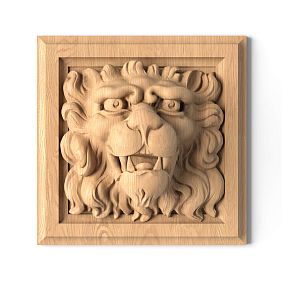
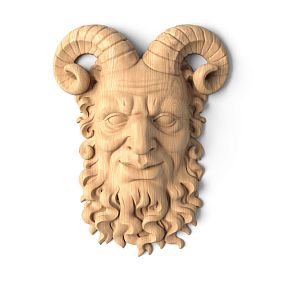


What is carved decor and why is it trending again
Carved decorative wooden elements have existed for as long as carpentry and furniture-making crafts themselves. Even in the Baroque and Classicism eras, an interior without wood carving was considered unfinished. Then came the eras of minimalism, and decor was declared superfluous. But the pendulum has swung back — and today, wooden carved decor is experiencing a true revival.
Why? Because people are tired of empty surfaces. Because natural wood is a living material that provides a sense of warmth, reliability, and connection with nature. Because a good carved element made from solid oak or beech is an item that will delight its owner for decades, not lose its appearance after the first renovation.
ModernCarved decor for interiorIt encompasses a huge range of products: from concise applied rosettes to complex ornamental panels, from thin moldings to massive pilasters. The main thing is to understand what exactly your space needs.




Types of carved decor for interiors: a complete overview
Before going to the catalog and placing an order, it's worth understanding the typology of products. Carved decor is not a single item, but a whole system of elements, each solving its own task.
Our factory also produces:


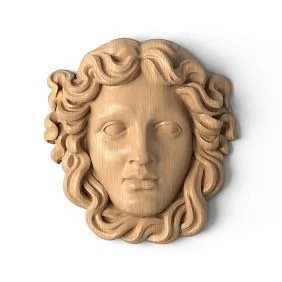
Carved Appliqués
Appliqués are the most versatile and popular type of carved decor. They are attached to the surface of furniture, doors, walls, panels, and fireplace portals. In shape, they can be central (symmetrical) and corner (for finishing joints and transitions); in pattern — floral, geometric, ornamental.
Decorative overlays for furniture and facadesAppliqués made from solid oak and beech are products that, when chosen correctly, give the effect of expensive handmade craftsmanship even on mass-produced furniture. It's enough to add a few elements to the fronts of a kitchen set or a sliding wardrobe — and the entire cabinet structure takes on a completely different appearance.
In a good overlay catalog you will find:
-
central overlays with floral and leaf ornaments
-
corner paired elements for symmetrical compositions
-
small accent details for filling space between large elements
-
decor sets selected by unified style and scale
Get Consultation
Carved millwork
Millwork products — moldings, cornices, baseboards, battens, casings — are linear decor that sets spatial proportions, structures surfaces, and creates interior horizontals and verticals.
Trim products made of oak, beech, and MDF— cornices, moldings, baseboards — are what architects call the 'skeleton of decor'. They set the rhythm of the wall, divide it into zones, frame openings, and create transitions between horizontal and vertical planes.
Wooden millwork is especially in demand in classical and neoclassical interiors, where detailing and proportion accuracy are important. But in modern styles — such as Japandi or Scandiclassic — natural wood moldings sound organic and noble.
Baguettes and decorative strips
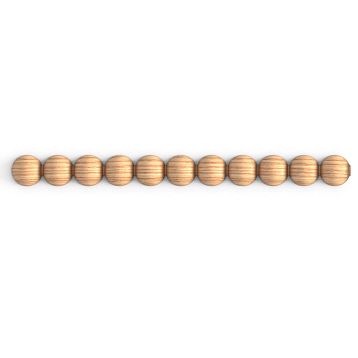
Baguette is a framing element used for decorating mirrors, paintings, panels, as well as for creating wall niches and rectangular decorative fields. Solid wood baguette looks significantly richer than plastic or polyurethane analogs and allows creating framing compositions of any complexity.
Carved rosettes and ceiling decor
Ceiling rosettes are a classic element of formal interiors. They are installed in the center of the ceiling, around chandeliers, in decorative domes and coffered structures. Carved rosettes made of solid wood are products that immediately elevate the status of a room.
Pilasters and columns
Pilasters and decorative columns are elements of architectural decor that form the vertical rhythm of space. They are used for decorating wall sections, door openings, wall niches, and for zoning large rooms. Combined with cornices and moldings, they create a complete classic interior.
Carved casings
Casing is the finishing of door and window openings. It is what completes the door's appearance and transforms it from a functional object into a decorative accent.Carved Mouldingsmade of solid oak or beech is a detail that guests immediately notice.
Where wooden carved decor is applied: interior zones
Understanding product types is good. But it's equally important to understand where and why they are placed. Decorative elements work differently depending on the surface and task.
Carved decor for furniture facades
This is perhaps the most popular application. Overlay carved elements are installed on the facades of kitchen sets, cabinets, dressers, nightstands, and bedside tables. They can be either accent (one large element in the center of the facade) or systematic (a set of corner and central overlays creating a unified framing composition).
Especially impressivewooden carved decor for furniturelooks great on painted MDF facades: solid wood overlays are glued and painted together with the base in one color, creating the illusion of complex milling. The result is furniture with a handmade look at a moderate budget.
Carved decor for doors
Doors are a separate story. An interior door decorated with carved overlays, trims, and moldings becomes a true architectural element that sets the tone for the entire room.
Carved decor for doors includes:
-
overlays on the door panel (central, corner, decorative inserts)
-
trims with carved ornament
-
cornices above the opening
-
corner and connecting elements
Important: door decor should be proportional to its size. Large overlays on a narrow door will look overloaded, while small details on a wide panel will get lost.
Carved decorative elements for walls
Wall decor is an entire art form. Using moldings, panels, and overlays, you can create wall compositions of any complexity: from a simple rectangular field with a frame to intricate multi-level ornaments.
Most common techniques:
-
Molding panels: moldings form rectangular fields on the wall, inside which you can insert fabric, wallpaper, paint, or leave a neutral background
-
Vertical pilasters: divide the wall into rhythmic zones, creating a classical architectural effect
-
Horizontal cornices: separate the wall into lower and upper parts, setting the scale
Carved decor for ceilings
The ceiling is an underrated surface. Yet, it is precisely ceiling decor that shapes the feeling of height, formality, and completeness in an interior.
Ceiling rosettes, cornices, decorative beams, and coffered frames made of natural wood are elements that immediately elevate an interior to the premium category. They are especially impressive in rooms with ceiling heights of 3 meters or more.
Decor for frames, mirrors, and panels
Carved overlays are actively used to create decorative frames for mirrors, paintings, and panels. This is an economical and effective way to obtain unique framing without spending huge amounts of money on ordering a custom handmade frame 'from scratch'.
How to choose carved decor in Moscow: criteria that really matter
This is where the most important part begins. Most buyers make their choice based on photos and price tags—and this is exactly where they make mistakes. Let's break down what you really need to look at.
By material: oak, beech, or MDF
The choice of material is a decision that determines everything else: appearance, durability, finishing method, and final cost.
Oak is a dense, heavy, very durable wood. Carving on oak turns out clear and long-lasting. Oak products are resistant to moisture, mechanical stress, and temperature fluctuations. This is the choice for premium interiors and items meant to last for generations. Oak takes both transparent oil or varnish (showing its beautiful texture) and opaque paint very well.
Beech is slightly softer than oak, with a more uniform structure. It is easy to work with, resulting in a smoother carving surface. Beech overlays and moldings are an excellent choice for painting, as beech's texture is not as pronounced as oak's, and enamel applies more evenly. The price of beech is usually somewhat lower than its oak counterpart.
MDF is a high-density pressed board. It is not solid wood, but it is a good option for budget solutions and for items planned to be fully painted. MDF has no natural grain, so it is not suitable for transparent finishes. However, it mills easily, produces clean edges, and is simple to install.
If naturalness and the aesthetics of wood are important to you—choose solid oak or beech. If the task is purely decorative and the item will be painted in a solid color—MDF will handle the task quite well.
By size and proportions
This is perhaps the most frequently ignored criterion. A beautiful overlay that doesn't fit the scale of the furniture or wall will ruin the impression of the entire interior.
The rule is simple: the size of the decorative element should be proportional to the surface it's installed on. For small facades (up to 500 mm) — small overlays. For wide doors and panels — large central elements with corner accents.
Before ordering, be sure to take precise measurements of the surface and compare them with the dimensions of the selected products. Professional sellers of carved decor will always indicate the exact dimensions in the product card — width, height, and thickness.
By interior style
Carved decor is not a universal solution that 'goes with everything.' Each style implies its own type of carving and shape of elements.
-
Classic and Baroque: rich floral ornaments, acanthus leaves, garlands, lush rosettes, complex multi-level cornices
-
Neoclassical: more restrained, clean lines, Greek ornament, meander, emphasis on symmetry and clarity of forms
-
Renaissance and Empire: strict symmetry, geometric ornaments with floral inserts
-
Modern classic / Art Deco: laconic geometric shapes, minimal details, clean lines
Important: do not mix elements of different styles in one room. A Baroque overlay next to a Greek meander is eclecticism without a concept.
By method of mounting
Most carved overlays are attached with glue — wood glue, PVA, or special liquid nails. For lightweight elements, this is sufficient. Heavy items (pilasters, voluminous cornices) are additionally secured with screws or dowels.
It's important to understand in advance:
-
what surface the element is being glued to (wood, MDF, drywall, concrete)
-
the weight of the item
-
whether the decor will be painted after installation or if the finish is already complete
Moldings and trim are attached with glue + hidden pins. Casing — with glue and finishing nails followed by puttying the nail heads.
From a ready-made catalog or custom order
If your tasks are standard — choose from the ready-made catalog. It's faster, cheaper, and easier. Most popular formats of overlays, moldings, baseboards, and rosettes are always in stock with the manufacturer.
If you have non-standard sizes, a particular style, or a complex architectural task — it makes sense to consider custom manufacturing. A good manufacturer will make any element according to your drawings or sample.
Material determines everything: a detailed breakdown by tasks
Solid wood for premium interiors
When people talk about genuinecarved wood decor, they specifically mean solid wood — solid or glued wood without artificial binders. Oak and beech solid wood is the quality standard for decorative items.
Solid wood products:
-
do not deform with proper use
-
accept any type of finishing perfectly
-
can be restored: repainted, sanded, oiled
-
have a living texture that no artificial material can reproduce
-
last for decades
Glued laminated timber (composed of lamellas) behaves even more stably than solid wood: selected lamellas compensate for wood stress and are less prone to warping.
MDF for neat budget solutions
MDF is an honest choice for those who understand its nature. It doesn't replace solid wood aesthetically, but it handles the role of decorative elements for painting quite well. MDF overlays and moldings are significantly cheaper, easier to process, and available in a greater variety of profiles.
The main rule: MDF requires high-quality priming before painting and cannot tolerate high humidity. It is not recommended to use MDF in bathrooms, kitchens with open cooking areas, and other damp rooms.
What to choose for furniture, walls, and doors
-
Furniture fronts: solid oak or beech for open texture, MDF for painting
-
Walls: both options are good, but for wall panels with complex profiles, it's better to take solid wood
-
Doors: solid wood overlays are the most durable and aesthetic option; MDF loses relief clarity faster with minor impacts and chips
When wood texture matters
If your project includes a transparent finish — oil, varnish, stain — choose only solid wood. Only natural wood has that living fiber structure that makes the surface warm and unique. MDF under a transparent finish looks dead.
Stylistic solutions: carved decor for different zones and interiors
Carved decor for classic interior
Classic is the native element of carved wooden decor. Here, rich applied ornaments on furniture, profiled cornices, pilasters with capitals, and ceiling rosettes are appropriate. Color palette: natural oak, tinted beech, white enamel with gold, patinated surfaces.
For classic style, a system is important: all elements must be selected in a single stylistic key and correct proportions. You cannot mix Baroque overlays with antique capitals—these are different eras with different plasticity.
Carved decor for neoclassicism
Neoclassicism is classicism, purified of excess. Here, carved decor is more laconic: clean moldings without complex profiles, overlays with simplified ornamentation, emphasis on geometry and symmetry. Colors: white, gray, beige, dark oak.
Wooden decor in neoclassical style— these are thin moldings on walls, laconic frame panels, clean cornices without complex profiles, and overlays with soft floral ornamentation.
Carved decor for accent furniture decoration
When there is no task to decorate the entire interior in a single decorative key, carved elements work as point accents. One beautiful overlay on the central facade of a sliding wardrobe, a couple of corner elements on a chest of drawers, a decorative frame on a mirror—this is enough to make the furniture 'speak'.
Carved decor for door and wall compositions
A doorway framed with carved ornament casings, a cornice-sandrik, and pilasters on the sides is a powerful architectural accent that sets the character for the entire space. Wall molding panels with overlays within the fields create the effect of expensive fabric panels without the actual fabric.
Mistakes when buying carved decor that cost time and money
Even experienced buyers sometimes make decisions that later turn into disappointment. Here are the most common ones.
Choosing based only on photos
A catalog photo is just one angle, one lighting, one scale. The actual product may differ in feel. If possible, view samples in person or request additional photos from different angles.
Not considering size and scale
This is mistake number one. The buyer sees a beautiful large overlay and orders it without comparing it to the actual dimensions of the facade. As a result, the element turns out to be either too large and covers the entire field, or so small that it gets lost.
Tip: print a 1:1 scale facade diagram and attach a cut-out template of the required size to it. This takes 10 minutes and saves money and nerves.
Choosing unsuitable material
MDF under clear coating, solid wood in the bathroom without special treatment — typical mistakes. Check with the seller what operating conditions the product is designed for and what types of finishes it accepts.
They don't think through the mounting
Ordering a beautiful molding only to find it won't attach to drywall without additional surface preparation — an unpleasant surprise. Always clarify the installation method and prepare the surface in advance.
They mix elements of different styles
A Baroque overlay with floral ornament and a strict geometric molding in Art Deco style — this is a conflict that is instantly noticeable. Buy decor from the same collection or from one manufacturer with a unified stylistic concept.
How to buy carved decor in Moscow: what to check before ordering
So, you've chosen the elements. Before clicking the 'Order' button or calling the manager, check the following.
Exact dimensions
Once again: take measurements of the surface. Width, height, distance from edges to center. Compare with the product dimensions in the item description. If in doubt — call and clarify.
Material and coating
-
What is the product made of: solid wood (oak, beech), glued laminated wood, MDF?
-
Is there a factory finish or is the product supplied unpainted?
-
Is it suitable for painting, oil, or varnish?
Installation method
-
How is it attached: with glue, studs, screws?
-
Is base preparation needed?
-
What glue does the manufacturer recommend?
Compatibility with style and furniture
Check that the selected item belongs to the same stylistic group as your other details. If you are decorating an interior in neoclassical style and your overlays are from a Baroque series, there will be dissonance.
Delivery, availability, custom manufacturing
Clarify:
-
whether the item is in stock at the warehouse or if it needs to be waited for
-
What are the delivery times for Moscow and the Moscow region?
-
Is it possible to manufacture custom sizes or custom shapes?
A good company will always answer these questions clearly and without evasive wording.
Carved decor made of oak and beech: what is the practical difference?
This question arises for almost every buyer. Oak or beech — which is better?
Oak is denser, heavier, and has a more pronounced, coarse texture. It looks excellent under transparent finishes — oil or varnish. Oak products are slightly more expensive. This is the choice for those who want to emphasize the naturalness and texture of the wood.
Beech is softer, with a more uniform structure. Carving on beech turns out smoother and more detailed. Beech takes painting and staining well. This is the choice for those who plan to fully paint the product or want to achieve the clearest possible carving.
In terms of strength, both materials surpass most competitors and, with proper care, last for decades. In the finished painted form, it is practically impossible to distinguish oak from beech — what matters is not the material itself, but the final result.
Carved decor for classic and neoclassical interiors: how to assemble a system
One of the main questions when working with decor is how not to 'overdo it' and not 'underdo it'. Here is a working algorithm.
Step 1: Identify 'anchor points' — doors, walls, furniture, ceiling. Decide what will be the main accent and what will serve as the background.
Step 2: Choose the scale — small, medium, or large decor. For small rooms (up to 20 sq.m), small and medium scales work better. For grand halls and spacious living rooms — large scale.
Step 3: Select a collection — all elements should be from a unified stylistic series. Manufacturers typically offer ready-made collections where overlays, moldings, cornices, and rosettes are designed as a single system.
Step 4: Set priorities — there's no need to decorate everything at once. Start with one zone (e.g., a wall panel or doorway) and see how it works in the space.
Step 5: Check proportions on-site — before installation, temporarily secure the elements and evaluate them from a distance of 2–3 meters. This is how they will be perceived in actual use.
FAQ: Answers to popular questions about carved decor
Where to buy carved decor in Moscow?
Carved wood decor for interiors in Moscow can be purchased directly from the manufacturer. This guarantees quality, precise dimensions, and the possibility of custom manufacturing. STAVROS is a Russian manufacturer with 24 years of experience, working with corporate and private clients. The catalog and ordering are available on the websitestavros.ru.
What carved decor is best for furniture?
For furniture fronts, overlays made of solid oak or beech are best suited. They provide clear carving, are durable, and take paint well. MDF is a budget alternative for solid color painting.
What is better for interior: oak, beech, or MDF?
If you need a natural texture — oak or beech. If the product will be fully painted — you can consider MDF. Oak is denser with a pronounced texture, beech is more uniform and smooth.
Can carved decor be used for walls and ceilings?
Yes. Moldings, cornices, rosettes, and overlays work great on walls and ceilings. The main thing is to choose the right scale and installation method.
Is carved decor suitable for doors and facades?
Yes, this is one of the most popular applications. Overlays are installed on the door leaf, architraves — on the opening. This significantly changes the appearance of the door at moderate cost.
Can carved decor be ordered to custom sizes?
Yes. STAVROS accepts orders for manufacturing custom products according to drawings and samples. Check the terms with managers.
How is wooden carved decor attached?
Light overlays — with glue (carpenter's PVA or liquid nails). Heavy elements are additionally fastened with screws or dowels. Trim (moldings, cornices) — with glue and finishing nails.
How to choose decor for a classic interior?
Focus on floral patterns, lush shapes, symmetrical compositions. Choose elements from the same collection. Material — solid oak or beech.
What carved decor to choose for neoclassicism?
More restrained forms: thin moldings, clean profiles, geometric patterns with soft floral details. Painting — white, gray, beige.
Is there delivery of carved decor in Moscow and the region?
Yes. STAVROS delivers from one piece across all of Russia, including Moscow and the Moscow region.
About the manufacturer: why STAVROS
If you are looking forcarved decor for interiors in Moscowfrom a reliable manufacturer — pay attention to STAVROS company.
STAVROS is a Russian manufacturer of wooden products and decorative elements with a 24-year history. Over this time, the company has become one of the most well-known brands in the solid wood decor segment in Russia.
What sets STAVROS apart:
-
In-house production — all products are manufactured at Russian facilities, ensuring quality control at every stage
-
Catalog of over 400 models — overlays, moldings, cornices, baseboards, rosettes, pilasters, trims, balusters, legs, handles, trim, and much more
-
Solid oak and beech — the main materials ensuring durability and aesthetics
-
Delivery from 1 piece across all of Russia — no need to assemble a wholesale batch
-
Custom manufacturing — non-standard sizes and shapes
-
Over 246 reviews with a 5.0 rating — real customer experience, not just claims
The company works with both private clients and furniture manufacturers, interior designers, construction companies, and wholesale buyers.
If you want to buy carved decor in Moscow and get not just "something made of wood," but a product that will last for years and enhance your interior — STAVROS is the right address. Full catalogof carved wooden decor, decorative overlays made from solid woodandof oak and beech millwork productsavailable on the official company website stavros.ru.