Article Contents:
- Wooden trim: when functionality meets art
- Advantages of natural wood: why wood wins
- Wood species: choosing material for life
- Types of trim: variety of forms and functions
- Technical Specifications: What to Pay Attention To
- Modern trends in interior design
- Criteria for choosing quality trim
- Features of installing wooden trim
- Final finishing: revealing the beauty of wood
- Care and maintenance of wooden trim
- Economic aspects of purchase
- Ecological aspects of selection
- Innovations in the production of wooden trim
- Regional market characteristics
- Industry development trends
- Frequently Asked Questions
- Conclusion

Have you ever thought about what makes an interior truly complete and harmonious? The secret lies in details – those very elements that create a cohesive design picture. And among these details, wooden trim items hold a special place. Choosingbuy wooden trim– this is not just purchasing construction materials, it is an investment in the beauty, durability, and coziness of your home.
In today's world, where synthetic materials often dominate the construction market, natural wood remains the benchmark of quality and eco-friendliness. Each wooden item carries the living energy of nature, unique texture, and aroma that cannot be artificially reproduced. But how to avoid getting lost in the variety of offers and make the right choice?


Wooden trim: when functionality meets art
What does wooden trim represent in today's understanding? It is a broad category of items united by one principle – they are measured and sold by the linear meter. From simple boards to intricate carved profiles, from utilitarian baseboards to elegant decorative moldings – all of this is the world of wooden trim.
Modern technologies have raised the production of trim items to a qualitatively new level. If, in the past, beautiful profiles were accessible only to the aristocracy, today everyone can afford to decorate their home with elements worthy of palace interiors.Wooden moldingsof modern production combine traditional forms with innovative processing technologies.
The functionality of wooden trim is multifaceted.Wooden baseboardsnot only conceal technological gaps between floor and walls, but also create a visual boundary that highlights the architecture of the room. Baseboards frame door and window openings, giving them completeness and style.Furniture made of oak complements the interior picture, especially if the furniture is also made of solid oak. Unity of material and finish creates a sense of completeness and stylistic coherence.top kitchen cabinets and wardrobes, creating an impression of monolithic unity and thoughtful design.




Advantages of natural wood: why wood wins
In the age of plastic and MDF, choosing natural wood may seem conservative. However, this choice is dictated not by tradition, but by objective advantages of the material. Natural wood possesses unique properties that cannot be fully replicated in artificial materials.
Ecological safety is the first and most important advantage. Wood does not emit toxic substances; on the contrary, it can absorb excess moisture and regulate the microclimate of the room. This is especially important for people suffering from allergies or with heightened sensitivity to chemical compounds.
The durability of natural wood has been tested over centuries. With proper treatment and care, wooden items can serve for decades, maintaining their beauty and functionality.Wooden trimmade from valuable species such as oak or beech, can last for a century or more, passing down from generation to generation.
Repairability is another important advantage. If a plastic element is damaged, it can only be replaced, but a wooden one can be restored, sanded, repainted, or re-coated with a new lacquer. This not only saves money, but also allows preserving the authenticity of the interior.
The natural beauty of wood is unique. Each item has a unique texture, pattern of growth rings, tone. Even items from the same batch will slightly differ from each other, creating a living, non-monotonous surface.
Our factory also produces:


Wood Species: Choosing Material for Life
Choosing wood species is a critically important decision that affects not only the appearance but also the performance characteristics of products. Each species has its own character, features, and area of application.
Coniferous species traditionally occupy a significant share of the market for trim products. Common pine is attractive due to its affordable price, ease of processing, and pleasant golden hue. Its wood has a distinct texture with clear growth rings, creating a dynamic pattern on the surface of products. However, pine requires high-quality drying and may contain resin pockets that become visible with temperature changes.
Spruce has a more subdued texture and lighter shade. It is less resinous than pine, which simplifies final finishing. Spruce products are ideal for painting, as the wood does not show through the coating and provides even color.
Broadleaf species represent the premium segment of the market. Oak is the king among wood species for trim products. Its wood possesses exceptional strength, elegant texture, and a wide range of shades from light yellow to dark brown.oak trim– this is the choice of those who value prestige and are willing to invest in quality.
Beech is attracted by its uniform structure, beautiful pinkish hue, and excellent workability. Beech wood accepts any type of finish, from transparent varnishes to opaque paints. It is ideal for making carved elements due to its density and uniformity.
Birch is valued for its light, almost white color and fine-grained structure. It lacks a distinct texture, making it ideal for painting. Birch products can imitate more expensive species or create their own unique style.
Get Consultation
Types of Trim Products: Variety of Forms and Functions
The world of wooden trim is incredibly diverse. Each type of product has its own purpose, technical requirements, and aesthetic features.
Baseboards are the most common type of trim product. They perform an important function, covering the technological gap between the floor and the wall, protecting the wall from damage during cleaning, and concealing utilities.wooden baseboards for flooring– these are not just functional elements, but also an important part of interior design.
ceiling trimBaseboards create a smooth transition between walls and ceilings, visually increasing the height of the room. Wide profiled baseboards can dramatically change the perception of space, giving it a formal and grand appearance.
Casing surrounds door and window openings, emphasizing their architectural significance.Oak skirting boards are an indispensable element of classic interior styles. In the English style, oak skirting boards with rich carving emphasize the aristocracy and solidity of the space. Dark wood tones harmonize beautifully with traditional materials — natural stone, leather, bronze.– especially popular in classical and country interiors, where it is important to emphasize the connection with nature and traditions.
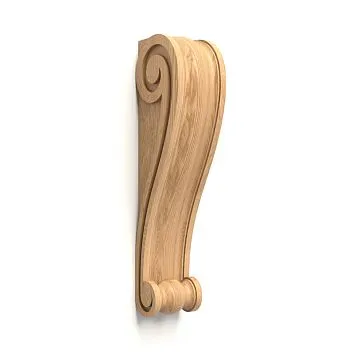
Moldings are purely decorative elements intended for decorating walls, ceilings, and furniture.Decorative wooden moldings– can imitate classical architectural elements or create modern geometric compositions.
Wooden planks– find wide application in modern interiors for creating accent walls, zoning spaces, and decorating ceilings. They allow creating dynamic compositions that play with light and shadow.
Crown moldings crown furniture compositions, creating a sense of completion and monolithic unity. Furniture moldings can be simple and minimalist or richly decorated with carving or profiling.
Technical Specifications: What to Pay Attention To
When choosing wooden trim, it is important to understand the technical characteristics that affect the quality and durability of products. These parameters are not always obvious to a non-professional, but they determine how the products will behave during use.
Wood moisture is a critically important parameter. The standard moisture content for interior trim products is 8±2%. Exceeding this value leads to shrinkage deformations after installation. Products may crack, warp, and gaps may appear between elements.
Geometric accuracy determines the quality of joints between individual elements. Deviations from nominal dimensions beyond allowable limits create problems during installation. Professional products must have deviations no more than ±0.5 mm for linear dimensions and no more than ±1° for profile angles.
Surface quality affects labor costs for final finishing. Surface roughness under transparent finish should not exceed Ra 6.3 microns, under opaque finish – Ra 12.5 microns. The presence of scratches, gouges, or tool marks is unacceptable for higher-grade products.
Wood grade determines the number and size of allowable defects. Grade "Extra" implies the complete absence of visible defects. Grade "A" allows small healthy light-colored knots. Grade "B" may contain dark knots, small cracks, resin pockets.
Profiling must exactly match the drawings. Profile distortions disrupt element joints, create visible defects, and reduce product functionality. Especially important is profile accuracy for elements joined at angles.
Modern Trends in Interior Design
Interior design trends are constantly evolving, and wooden trim follows these trends, adapting to modern aesthetic requirements. Understanding current trends will help make a choice that remains relevant for many years.
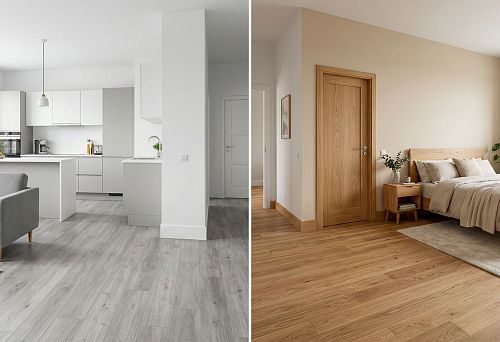
Minimalism continues to dominate in modern design. This direction requires simple, concise forms without excessive ornamentation. Baseboards become thinner and taller, profiles are simplified, decorative elements are minimized. The color palette is limited to neutral tones – white, gray, natural wood shades.
Eco-style is gaining popularity due to growing environmental awareness. Natural materials preserving the natural texture and color are becoming increasingly sought after. Brushed surfaces highlighting wood structure, artificial aging, patination – all these techniques help create an authentic natural style.
Scandinavian design influences preferences for light wood species. Birch, beech, whitewashed oak create an atmosphere of northern restraint and purity. Profiles remain simple, but precise and functional.
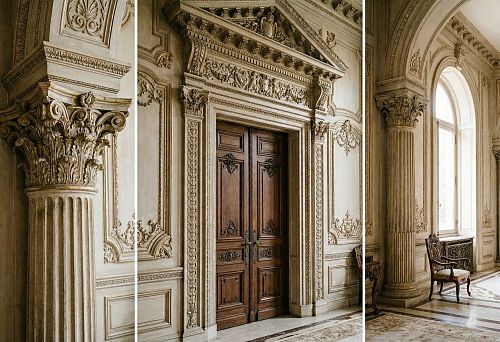
Neoclassicism revives interest in traditional forms. Complex multi-profile cornices, carved moldings, decorative panels are once again in fashion. However, modern neoclassicism is more restrained and elegant than historical classicism.
Industrial style creates demand for materials with distinctly natural surfaces.wooden planks on the wallWith preserved traces of processing, contrasting combinations of wood and metal have become popular elements of loft interiors.
Criteria for selecting quality molding
How to distinguish quality wooden molding from counterfeits or low-grade products? There are several criteria by which you can assess the quality of items even before purchase.
Visual inspection is the first stage of evaluation. The surface of the items should be smooth, without visible defects of processing. Scratches, chips, and marks from poor-quality tools are unacceptable. The wood color should be uniform, without bluish tinge, mold, or other signs of fungal damage.
Profile geometry is checked visually and with templates. All elements in a batch must be identical. Warping, twisting, or bowing are not allowed. Ends must be flat, without chips or cracks.
Wood moisture can be roughly assessed by the weight of the items. Over-dried wood becomes brittle and produces a dull sound when tapped. Excessively moist wood is heavy and may have a characteristic damp smell.
Documentation for quality products includes a certificate of conformity, a quality passport specifying key characteristics, installation and operation instructions. Lack of documentation is grounds for doubting the product's quality.
Manufacturer's reputation is an important factor in selection. Companies with long histories, positive customer reviews, and their own production typically offer higher-quality products.
Features of installing wooden molding
The quality of installation largely determines the final result. Even the highest-quality items may look sloppy if installed incorrectly. Understanding the basic principles of installation will help achieve a professional result.
Surface preparation is a mandatory step. Walls must be flat, clean, and dry. Irregularities exceeding 3 mm require leveling with plaster or drywall. Dust and dirt are removed, and the surface is primed to improve adhesion.
Marking is done using a laser or water level. Horizontal elements must be strictly horizontal, vertical elements — vertical. Marking angles requires special precision, as errors will be very noticeable.
Cutting elements is done with a circular saw using a fine-toothed blade. To achieve a clean cut without chips, the blade must be sharp, and feed speed — moderate. Angles are cut using a miter gauge or a miter saw’s rotary table.
Mounting can be performed in various ways depending on the weight and purpose of the items. Lightweight elements are mounted with adhesive, while heavier ones are additionally secured with screws or nails. Hidden mounting provides a better appearance but requires special tools.
Joining elements is the most critical operation. Ends must fit tightly together without gaps or height discrepancies. Corner joints require precise angle cutting. Using special corner elements simplifies mounting complex profiles.
Final finishing: revealing the beauty of wood
Final finishing not only protects wood from environmental exposure but also highlights its natural beauty. The choice of finish depends on the wood species, usage conditions, and design requirements.
Transparent finishes preserve and enhance the natural wood texture. Lacquers create a durable protective film that prevents moisture and contaminants from penetrating. Modern water-based lacquers have virtually no odor, dry quickly, and are safe for health.
Staining compounds allow you to change the color of wood while preserving its texture. Water-based stains provide even coloring without raising the wood fibers. Oil-based stains penetrate deeper into the wood, creating richer tones.
Oil-based finishes create a matte surface with a pleasant tactile feel. They emphasize the naturalness of wood and are easily repairable for local damage. Wax finishes provide a soft silk-like sheen and a pleasant aroma.
Opaque finishes completely hide the wood texture, allowing any desired color to be achieved. Enamels create a durable glossy surface resistant to mechanical impacts. Such finishes are often used in children’s rooms and kitchens.
Special effects are achieved through patination, brushing, and artificial aging. These techniques allow you to create an antique furniture effect, adding historical character and elegance to the interior.
Care and maintenance of wooden molding
Proper care extends the service life of wooden items and preserves their attractive appearance. Natural wood requires more attentive care than synthetic materials, but with simple rules, it can last for decades.
Regular cleaning involves removing dust and dirt. A slightly damp, soft cloth is used for this. Avoid excessive moisture, which can penetrate the wood and cause deformation. Aggressive cleaning agents may damage the finish.
Restoration of the coating is required when scratches, scuffs, or loss of gloss appear. Lacquered surfaces can be refreshed with special polishes. For serious damage, local sanding and reapplication of the coating may be necessary.
Climate control is important for maintaining wood stability. Sudden changes in temperature and humidity can cause deformation. The optimal relative air humidity is 45–65%.
Protection against mechanical damage includes using protective pads when moving furniture and careful handling of sharp objects. Deep scratches and dents require professional restoration.
Preventive inspections help identify problems early. Special attention is paid to joints, corners, and areas of high humidity.
Economic aspects of purchasing
The cost of wooden trim depends on many factors, and understanding these factors will help make an economically justified decision.
Wood species is the main pricing factor. Coniferous species are the most affordable, hardwoods are more expensive, and exotic species have premium pricing. However, a higher price may be justified by the material's longevity and prestige.
Profile complexity affects production labor costs. Simple rectangular sections are cheaper than complex multi-profile items. Carved elements have the highest cost due to manual labor.
The quality of processing also affects the price. Higher-grade items with perfect surfaces cost significantly more than standard ones. However, cutting corners on quality may result in additional costs for rework or early replacement.
Order volume affects unit cost. Bulk purchases allow significant discounts. However, storage costs for excess material should be considered.
Seasonal price fluctuations are linked to production cycles and demand. Prices are traditionally lowest in winter months when demand is minimal.
Regional differences are due to logistics costs and local competition levels. Buying from local manufacturers is often more cost-effective due to savings on transportation.
Ecological aspects of selection
Environmental responsibility is becoming an increasingly important factor in choosing building materials. Wooden trim has significant ecological advantages.
Renewability of the resource is the main advantage of wood. With proper forest management, forests can serve as a raw material source indefinitely. FSC certification guarantees that the wood comes from sustainably managed forests.
Wood's carbon footprint is significantly lower than that of synthetic materials. Trees absorb CO2 from the atmosphere during growth, and this carbon remains locked in the wood for the entire service life of the product.
Biodegradability allows wood to return to the natural cycle of substances after its service life. Wooden items can be composted or used as fuel without polluting the environment.
Energy consumption in producing wooden items is significantly lower than in manufacturing plastic or metal equivalents. This reduces overall environmental impact.
The absence of toxic emissions makes wood safe for human health. Natural wood does not contain formaldehyde, phenols, or other harmful substances.
Innovations in wooden trim production
Modern technologies have fundamentally changed wooden trim production, making it more precise, efficient, and environmentally friendly.
Digital design allows creating complex profiles with mathematical precision. CAD systems optimize the shape of items for specific application conditions, minimizing material waste.
CNC machines provide the highest precision of processing and repeatability of results. They can create profiles of any complexity with tolerances down to hundredths of a millimeter.
Laser technologies are used in decorative processing. Laser engraving allows creating delicate ornaments without mechanical impact on the material.
Thermal modification improves wood properties, increasing its stability and durability. Such wood is less prone to deformation and biological damage.
Composite technologies allow combining the best properties of different materials. A wooden base can be covered with protective polymer films or reinforced with fiberglass.
Regional market specifics
The Russian market for wooden trim has its own characteristics, related to geography, climate, and traditions.
The Northwestern region is traditionally a center for wood processing. Proximity to forest resources, developed infrastructure, and skilled workforce create favorable conditions for producing high-quality trim.
Central regions are characterized by high demand for quality products. The Moscow region, in particular, demands the highest standards for design and product quality.
Siberia and the Far East have unique wood species — cedar, Dahurian larch, and stone birch. These materials are highly valued in the market for luxury items.
Southern regions specialize in producing items from hardwoods — oak, ash, walnut. The mild climate allows working with delicate wood species.
Logistical features of each region affect material accessibility and cost. A well-developed transportation network reduces logistical costs.
Industry development trends
The wooden trim industry is constantly evolving, adapting to new market requirements and technological capabilities.
Product customization is becoming an important competitive advantage. Consumers increasingly demand individual solutions, unique profiles, and exclusive sizes.
Automation of production improves quality and reduces product cost. Robotic lines ensure stable parameters and eliminate human errors.
Environmental standards are becoming stricter. Producers are forced to adopt clean technologies, reduce waste, and use renewable energy sources.
Digital sales enable customers to order products online, receive 3D interior visualizations, and track order progress in real time.
The development of new materials expands design possibilities. Thermally modified wood, wood-based composites, hybrid materials open up new application horizons.
Frequently asked questions
How to choose the right wood species for trim?
The choice of species depends on several factors: project budget, interior style, operating conditions, and personal preferences. For budget projects, pine or spruce are suitable—they have an attractive texture and affordable price. For luxury interiors, consider oak or beech, which offer exceptional strength and elegant appearance. Birch is a compromise option—it is light, uniform, and readily accepts finishes. In rooms with high humidity, larch or oak are preferable due to their natural resistance to moisture.
What should be the moisture content of quality wooden trim?
The standard moisture content for interior trim products is 8±2%. This is the optimal indicator ensuring dimensional stability under normal operating conditions. Moisture content above 12% may lead to shrinkage deformations after installation—gaps, warping, cracking. Moisture content below 6% makes wood brittle and prone to splitting. Moisture can be checked with a moisture meter or by indirect signs—dry wood is light and produces a clear sound when tapped.
Can wooden trim be used in rooms with high humidity?
Yes, but with certain limitations and under specific requirements. First, choose moisture-resistant wood species—larch, oak, teak. Second, apply quality waterproof finishes using varnishes or oils. Third, ensure good room ventilation to prevent condensation. Avoid direct water contact and regularly inspect the finish. In critically humid zones (bathrooms, areas near bathtubs), it is better to use alternative materials.
How to correctly calculate the required amount of trim?
Calculation begins with precise room measurements. For baseboards, measure the room perimeter excluding door openings. For window casings, measure the perimeter of each opening. Add 10-15% to the result for waste and potential installation errors. When using standard lengths (usually 2.1–2.7 m), account for joints—each joint requires additional material. Complex profiles with corner elements require more detailed calculation. It is recommended to create a layout of elements before ordering materials.
What tools are needed for installing wooden trim?
Essential tools: a miter saw for precise cutting at required angles, a level for marking horizontal and vertical lines, a tape measure and pencil for measurements, a drill or impact driver for fastening, a hammer, a chisel for fitting joints, a miter gauge (if no miter saw is available). Additional tools may include: PVA glue or liquid nails, self-tapping screws or finishing nails, wood putty for filling fastener holes, sandpaper for final finishing. When working with hardwoods, a drill bit for pre-drilling holes for screws is required.
How much does quality wooden trim cost?
Cost varies widely depending on wood species, profile complexity, finish quality, and region of sale. Simple pine baseboards can be purchased for 100–200 rubles per linear meter. Items from hardwood species (oak, beech) cost 500–800 rubles per meter for simple profiles, up to 2000–3000 rubles per meter for complex carved elements. Luxury items from exotic species may cost 5000–10000 rubles per meter and more. Cost is also affected by order volume (wholesale discounts), season (lower prices in winter), and manufacturer reputation.
How to distinguish quality trim from poor quality?
Key quality indicators: uniform wood color without blue tinge or dark spots, smooth surface without scratches or chips, precise profile geometry without warping, absence of cracks and loose knots, correct moisture content (8–12%). Quality items are wrapped in protective film and marked with species, grade, and dimensions. When tapped, wood should produce a clear sound (a dull sound indicates excessive moisture or internal defects). Always request a quality certificate and product passport from the seller.
Can wooden trim be painted, and how to do it properly?
Yes, wooden trim accepts various finishes well. Preparation includes: sanding the surface with 220–320 grit sandpaper, removing dust, applying a specialized wood primer. For transparent finishes, use stains (to change color) and varnishes (for protection). For opaque finishes, use various types of enamel. It is better to apply the finish before installation—to ensure evenness and quality. The number of coats depends on the finish type: typically 2–3 coats of varnish or 1–2 coats of enamel. Each coat must fully dry before applying the next.
What is the service life of wooden trim?
With proper material selection, quality installation, and proper maintenance, wooden trim can last 20–50 years or more. Oak trim in historic buildings lasts for centuries. Service life depends on wood species (hardwoods last longer than softwoods), quality of protective finish, operating conditions, and maintenance frequency. In rooms with normal microclimate and regular maintenance, even pine trim lasts 15–20 years. Main enemies of wood: excessive moisture, sharp temperature fluctuations, mechanical damage, insects.
How to properly store wooden trim before installation?
Items must be stored in a dry room at 18–22°C and 50–60% relative humidity. It is important to ensure horizontal positioning with supports every 50–70 cm to prevent sagging. Ventilation gaps should be placed between rows. Items must be protected from direct sunlight, which can cause uneven drying and deformation. Protective film is removed only before installation. Acclimatization time in the installation room should be at least 24–48 hours—to allow wood to adapt to local humidity and temperature conditions.
Conclusion
Choosing wooden trim is a decision that defines the character of the interior for many years. The natural beauty of wood, its eco-friendliness, durability, and restorability make wooden trim the optimal choice for those who value quality and comfort.
The modern market offers a vast variety of solutions—from budget-friendly items made from coniferous species to exclusive trim from rare wood types. Production technologies have reached such a level that today, even the most daring design ideas can be brought to life.
Remember that quality wooden trim is not just a purchase, but an investment in the beauty and comfort of your home. With proper selection, professional installation, and proper care, these items will delight you and your loved ones for decades, creating an atmosphere of warmth and harmony.
Solutionbuy wooden trimRequires a balanced approach, consideration of many factors, but the result is worth it. Natural wood will never go out of style, never lose its relevance, never cease to impress with its natural beauty.
STAVROS has specialized in producing high-quality wooden trim for many years, combining traditional wood processing methods with modern technologies. Strict quality control at all production stages, use of only the best wood grades, innovative equipment—all this allows STAVROS to offer products meeting the highest standards. Choosing STAVROS means choosing a reliable partner who will help you bring your design dreams to life using quality wooden trim.