Article Contents:
- Cutting accuracy: millimeters that decide everything
- Length tolerances: when two meters are not quite two meters
- Straightness: when the baseboard looks in different directions
- Sanding quality: from rough to silk-smooth
- Preparation for painting: invisible details
- Profile geometry: when the shape doesn't hold
- Wood moisture: invisible threat
- Wood grade: from extra to economy
- Packaging: protection from the first to the last meter
- Inspection upon receipt: control checklist
- Where to buy: manufacturer, dealer, or market
- Seasonality of purchase: when to buy more affordably
- Documents and certificates
- Storage until installation
- Calculating quantity with allowance for reserve
- Price and quality: where the balance lies
- Frequently Asked Questions
- Conclusion
When considering the purchase of wooden baseboard, most focus on price, wood species, and color. This is logical, but insufficient. Behind an attractive catalog photo may lie a product with critical defects that will turn installation into a nightmare and result in disappointment. Crooked ends that won't align in corners. Uneven surface requiring hours of sanding. Planks of different lengths, forcing you to recalculate. Packaging that failed to protect material during transport, and now half the baseboards have dents and chips.
Professionals know:and paint it to the desired shade — standard practice in modern design. It is important to use special wood finishes that allow the material to breathe.— it's not simply finding the right shade and placing an order. It's checking dozens of quality parameters that determine how easy installation will be and how long the product will last. Cutting accuracy of ends, plank straightness, sanding quality, wood moisture, profile geometry — each of these parameters is critical. Ignoring even one will lead to problems, either during installation or several months after use.




Cutting accuracy: millimeters that decide everything
Baseboard ends are where true manufacturing quality is revealed. It is precisely the ends that join in corners, and it is precisely they that determine whether gaps will form or the connection will be monolithic. And here, precision down to fractions of a millimeter matters.
Qualitywith a classic profile creates a sense of solidity, reliability.has ends cut precisely at a 90-degree angle to the longitudinal axis. You can check this with a carpenter's square — place it against the end, and you'll immediately see any deviation. The allowable deviation for quality products is no more than 0.5 degrees. This corresponds to approximately 1 millimeter over 100 millimeters. Anything more will cause problems during fitting.
Why is this so important? Imagine: you cut two planks at 45 degrees for an inside corner. If the ends of both planks are not initially perpendicular, your 45-degree cut will be inaccurate. As a result, a gap will form in the corner, which you'll have to fill with putty or sealant. And that's no longer professional work — it's cosmetic repair of defects.
The quality of the cut itself is equally important. The end should be smooth, without chips, scratches, or fuzziness. Rough fibers indicate a dull tool or too fast feed rate. Such an end cannot be properly fitted — fibers will prevent tight contact. You'll have to manually sand each end, which takes time and risks compromising perpendicularity.
Manufacturers with modern equipment use end-cutting saws with carbide discs and automatic feed. Such machines provide a perfectly clean cut without chips. Cheap production often uses ordinary circular saws or even band saws, which cannot deliver the required quality. When purchasing, inspect the ends of several planks — if you see chips, scratches, or unevenness, reject this batch.
Plank length also depends on cutting accuracy. If the machine is improperly set up, planks in one batch may differ in length by several millimeters. This creates problems when calculating material quantity and during installation. Check several planks with a tape measure — they should be absolutely identical.




Length tolerances: when two meters are not quite two meters
Standard length of wooden baseboard — 2, 2.2, or 2.5 meters. But these are nominal values that may differ from actual. And here begins the interesting part: what tolerances are considered acceptable, and which indicate low production quality?
According to GOST for wooden trim items, the allowable deviation in length is ±5 millimeters for planks up to 2.5 meters long. That is, a plank nominally 2000 mm long may have an actual length from 1995 to 2005 mm. This is normal and does not create problems during installation. But some manufacturers exceed these limits, and then difficulties begin.
Imagine: you bought baseboard with a stated length of 2 meters, calculated the number of planks for your room. You brought the material, started installation, and discovered that the actual length of the planks is 1.97–1.98 meters. Seems like only a 2–3 centimeter difference. But if your wall is 6 meters long, these centimeters add up, and instead of three planks, you now need 3.5. And there's nowhere to use half a plank — waste.
The situation is even worse when the planks in one batch have different lengths. This is a sign of handmade production or material savings — they are cut not by a fixed measurement, but arbitrarily, just to get the maximum from the board.buy wooden skirting boardWith such variations — you are doomed to problems with calculation and fitting.
How to check? When receiving a batch, measure several planks from different packs with a tape measure. They should be identical within 2-3 millimeters. If the variation is greater — this is grounds for a complaint. Serious manufacturers control length using automatic measuring systems that reject planks with deviations.
Important nuance: the length tolerance does not mean that a plank can be 5 mm shorter than nominal. Quality manufacturers strive to maintain a positive tolerance — that is, the plank will not be shorter, but longer by 2-3 mm. This provides a margin for trimming and avoids material shortages. If planks are systematically shorter than stated — this is a sign of an unscrupulous manufacturer.
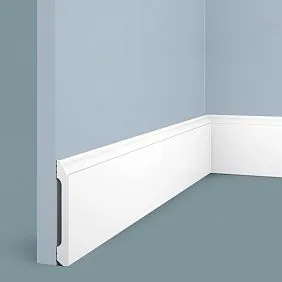
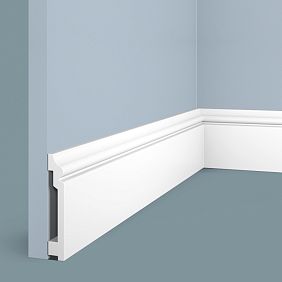
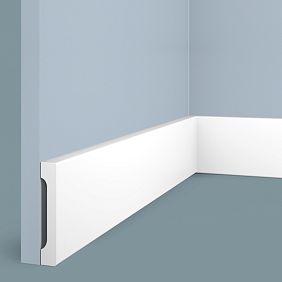
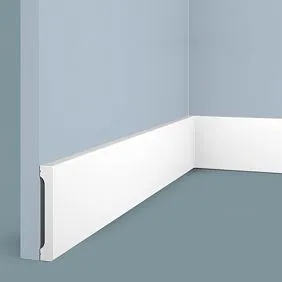
Our factory also produces:
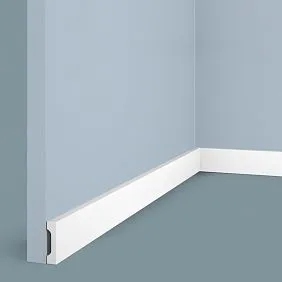
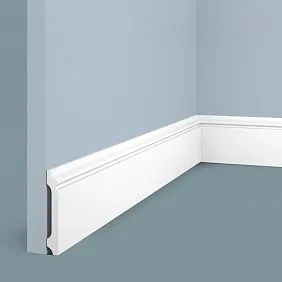

Straightness: when the baseboard looks in different directions
Take a baseboard plank, place it on a flat surface, and look along it as if aiming. Do you see curves, waves, or arches? This is a straightness problem, one of the most deceptive defects of wooden baseboards.
Wood is a living material that reacts to humidity. If the board was not sufficiently dried or stored incorrectly, it begins to warp. This results in helical twisting, when one end of the plank rotates relative to the other. Or an arched bend, when the plank looks like a bow. Or waviness, when alternating convex and concave sections appear along its length.
Installing such a baseboard becomes a torture. You try to press the plank against the wall, but it springs back, refusing to lie flat. You have to increase the number of mounting points, use additional weights, and over-tighten screws. As a result, either the baseboard cracks from excessive force, or gaps remain between it and the wall, ruining the entire appearance.
The allowable deflection for a quality baseboard is no more than 2 millimeters over a 2-meter length. You can check this simply: place the plank on a perfectly flat surface (glass, flat table, straightedge) and try to slide a feeler gauge or knife blade under it. If it slides easily — there is deflection. If the gap exceeds 2-3 mm — the plank is defective.
Causes of straightness defects: insufficient wood drying (moisture over 12%), improper storage (vertical stacking or on uneven surfaces), use of wood with internal stresses, sudden temperature and humidity changes during transport.Wooden baseboardFrom a serious manufacturer, it goes through all stages of stabilization and control.
Wide baseboards are especially sensitive in this regard. The higher the profile height, the more noticeable any deviations from straightness.wide wooden baseboardRequires perfect geometry, otherwise it is simply impossible to install it properly.
Helical twisting is checked this way: place the plank on a flat surface and check if all angles touch the plane. If one angle is raised — there is twisting. Such a plank can be attempted to be corrected by moistening and pressing with a weight for several days, but there is no guarantee. It’s simpler to reject it.
Get Consultation
Sanding quality: from rough to silk
The baseboard surface must be perfectly smooth. Not just flat, but truly smooth, without the slightest roughness, fuzziness, or marks of processing. This is not an aesthetic preference, but a technical requirement that determines the quality of the final coating.
The technology of sanding wooden items includes several stages. Primary sanding with 80-100 grit abrasive removes tool marks, smooths profile transitions. Secondary sanding with 120-150 grit abrasive removes scratches from the first processing. Final sanding with 180-240 grit abrasive creates the silky surface ready for painting or varnishing.
Poorly sanded baseboards have visible and tactile defects: longitudinal scratches from coarse abrasive, transverse scratches, fuzzy areas where fibers are not cut but crushed, rough zones where abrasive did not reach the surface. All of this will become apparent after applying varnish or paint — the coating will highlight every flaw.
Check the sanding quality: run your hand along the baseboard surface. It should be absolutely smooth, like polished stone. No catches, irregularities, roughness. Pay special attention to profile recesses — it is there that manufacturers often cut corners, thinking it won’t be noticeable. But it is there that varnish or paint accumulates, and any defects become especially prominent.
Inspect the surface at an angle to the light source. On poorly sanded surfaces, you will see longitudinal or transverse stripes — abrasive marks. On a quality surface, the reflection of light is even, without stripes or spots.
The back side of the baseboard should also be sanded, although not as carefully as the front. Some manufacturers leave the back side rough after the initial processing. This is a cost-saving measure that can lead to problems — a rough surface does not adhere well to the wall, and glue or sealant does not lay properly on it.
Sanding ends is often ignored, although it is critically important. Ends are open wood pores through which moisture actively absorbs. An unsanded end will absorb paint or varnish unevenly, forming spots. A quality manufacturer necessarily sands the ends with final abrasive.
If you are buying an unfinished baseboard for self-finishing, sanding quality becomes even more critical. You will either have to apply the coating to an inadequately prepared surface, resulting in mediocre results, or sand it yourself, spending time and effort.wooden baseboards for floorHigh-quality baseboards should be ready for painting immediately after purchase.
Preparation for painting: invisible details
If you plan to paint or varnish the baseboard, pay attention to surface preparation. A quality manufacturer does not simply sand the item — they conduct comprehensive preparation for the final finish.
Tannin removal — the first stage for coniferous species. Pine, spruce, larch contain resin that may appear on the surface under heat or after some time. Resin spots do not accept paint or varnish, creating uncoated areas. Quality production includes treatment with special compounds that remove or neutralize resin.
Priming — the second stage, which significantly improves the adhesion of the final coating. Primer fills wood pores, creates uniform absorption capacity, prevents spotting. A primed baseboard can be painted immediately after purchase. An unprimed one will require additional processing.
Filling knots and defects — the third stage for economy-class baseboards. Natural wood may have small knots, resin pockets, shallow cracks. A quality manufacturer does not simply leave these defects as is — they fill them with special compounds matching the wood color. After sanding, these areas become practically invisible.
Wood moisture is critical for painting. If the wood has moisture over 12%, paint or varnish may not lay evenly, causing bubbles, peeling, or spots. After drying, the coating may crack. When purchasing, always confirm the material’s moisture content. Serious manufacturers indicate it in the quality certificate.
You can visually check the surface preparation for painting: the surface must be absolutely clean, free of dust, dirt, grease stains. The wood color should be uniform, without dark or light spots (unless this is the natural wood grain). Knots, if any, must be spackled and sanded flush.
If the skirting board is already primed, this must be stated in the specification. A primed skirting board has a matte, slightly rough white or slightly yellowish surface. This is good — you can paint it immediately. If the seller claims the skirting board is primed, but the surface looks like bare wood — you are being deceived.
Profile geometry: when the shape doesn't hold
The skirting board profile is a complex shape with protrusions, grooves, and rounded edges. It is created by milling on special machines. Here, the quality of the equipment and the operator's skill play a decisive role.
Check the profile's symmetry. If the skirting board has a central groove or protrusion, they must be precisely centered. Asymmetry is a sign of poor machine setup or cutting corners on precision. Such a skirting board will look crooked even with perfect installation.
The depth and width of the grooves must be identical along the entire length of the board. Check this by comparing several sections of one board and different boards from the batch. If there are discrepancies — the equipment is operating unstably, the cutting tool is worn or incorrectly installed.
The profile's edges must be sharp, without rounding or chipping. Soft, blurred edges are the result of a dull tool or too fast feed rate. Such a profile looks sloppy and loses its definition.
The surface of the grooves must be smooth, without longitudinal scratches or steps. Scratches are marks left by a gear with teeth. Steps are the result of machine vibration or uneven feed. All these defects will become visible after painting, especially if using a glossy lacquer.
The profile's wall thickness must be sufficient. Some manufacturers, in pursuit of material savings, make walls between grooves too thin. Such a skirting board is brittle and easily cracks during installation, especially when screwed.
Complex decorative profiles require multiple passes with different milling cutters. Each pass must precisely match the previous one. If there is no match — steps, asymmetrical elements, blurred transitions appear. The quality of complex profiles is an indicator of production level.
Moisture content: an invisible threat
This is a parameter that cannot be checked visually, but determines whether the skirting board will remain flat a month after installation or turn into a wavy snake. Moisture content is a critical parameter for any wooden product, especially for skirting boards.
The optimal moisture content for wooden skirting boards is 8-12%. This is the equilibrium moisture content at which wood remains stable under normal residential conditions. If moisture is higher — wood will dry out, warp, and crack. If lower — it will absorb moisture from the air, swell, and deform.
How to check moisture? Professionals use moisture meters — special devices with needle electrodes that are inserted into the wood and show the percentage of moisture. When purchasing a large batch, it makes sense to bring your own moisture meter or ask the seller to measure it in your presence.
Indirect signs of high moisture: the wood feels heavier than it should; the surface feels cool to the touch; tapping produces a dull, non-resonant sound; dark spots or streaks may appear on the surface. All of this is a reason to refuse the purchase.
Under-dried wood is a common problem with handmade production. Proper kiln drying requires time (up to several weeks) and equipment. Some manufacturers shorten this process or even use air drying, which does not guarantee the desired result.wooden baseboards for flooringmust undergo a full cycle of kiln drying.
Over-dried wood (moisture below 6%) is also a problem. It will absorb moisture from the air, swell. This is especially noticeable in rooms with high humidity — kitchens, bathrooms. The skirting board may increase in size, deform, and detach from the wall.
Moisture content may change during transportation and storage. If the skirting board was stored in a cold, humid warehouse and then moved to a warm, dry apartment, it will start releasing moisture intensely. Or vice versa — from a dry warehouse to a humid room, it will start absorbing moisture. Therefore, not only the initial moisture content, but also storage conditions matter.
Material acclimatization is mandatory. After delivery, skirting boards must rest in the room where they will be installed for at least 48-72 hours. During this time, the wood's moisture content will equilibrate with the room's air moisture, and the material will stabilize. Installing without acclimatization leads directly to deformation.
Wood grade: from extra to economy
Not all wood is of equal quality. Even within the same species, there is a grading based on the presence of defects. This is called grade, and it directly affects the appearance and price of the skirting board.
Grade Extra or Premium — ideal wood without knots, cracks, resin pockets, wormholes, or stains. The texture is even, the color is uniform. Such a skirting board is suitable for luxury interiors, where every detail must be flawless. The price is accordingly higher — 2-3 times the price of Grade B.
Grade A or First Grade — high-quality wood with minimal defects. Light, healthy knots up to 5 mm in diameter are allowed, not more than 1-2 per linear meter; small resin pockets; minor color variations. This is the optimal choice for most interiors — a balance of quality and price.
Grade B or Second Grade — wood with noticeable but not critical defects. Knots up to 15 mm in diameter, dark knots, small cracks, resin pockets, noticeable color differences between sections. Such a skirting board requires additional processing — spackling knots, toning to even out color. Suitable for budget projects or painting, where the texture will be hidden.
Grade C or Economy — wood with numerous defects. Loose knots, cracks, resin pockets, wormholes, stains. Such a skirting board can only be used under opaque paint with dense paint that will cover all defects. Not suitable for natural texture.
Unscrupulous sellers often pass off Grade B as Grade A or simply do not indicate the grade. When purchasing, always confirm the grade and inspect the material.with a classic profile creates a sense of solidity, reliability.High-grade material costs more, but the result is worth it.
Important nuance: the grade is determined by the worst section within one board. That is, if a 2-meter board has 1.9 meters of perfect wood and 10 centimeters with a large knot — it is no longer Grade A, but at most Grade B.
Packaging: protection from the first to the last meter
A quality skirting board may be damaged during transportation if the packaging is insufficient. Dents, chips, scratches, and dirt — all of this is a result of poor packaging. And the most frustrating thing is that these defects appear only after delivery, when it's too late to change them.
Professional packaging of wooden skirting boards includes several levels of protection. The first level — protection of ends. These are the most vulnerable areas, where wood may crack or splinter. Quality manufacturers use plastic caps or thick cardboard on the ends of each board.
Second level — surface protection. Boards are wrapped in shrink film, corrugated cardboard, or expanded polyethylene. This protects against scratches, dirt, and moisture. The packaging must be tight, with no boards shifting inside.
Third level — forming bundles. Boards are arranged in bundles of 10–20 pieces, secured with stretch film or cardboard straps. The bundle must be rigid, with boards not shifting relative to each other. Cardboard spacers are placed between bundles for shock absorption.
Fourth level — outer packaging for transportation. Bundles are placed on pallets, wrapped with stretch film, and protected with cardboard at the corners. For long-distance transport, wooden crates or frames are used.
Packaging labeling must include all necessary information: manufacturer name, product article number, wood species, grade, dimensions, number of pieces per bundle, production date, batch number. Lack of labeling or incomplete information is a sign of an unserious manufacturer.
Upon receiving the material, check the integrity of the packaging. If the film is torn, cardboard is damp, or there are signs of impact — this is a reason for a thorough inspection of the contents. Do not hesitate to unpack several bundles and inspect the skirting boards for damage. It’s better to spend 15 minutes checking than to discover problems during installation.
Protection against moisture is especially important. If the packaging got wet, the wood may have absorbed water, swollen, and deformed. Such material cannot be used immediately — it must be unpacked, dried, and stabilized for at least a week. Better yet, refuse to accept it and request a replacement.
Receiving inspection: check-list
So, you placed an order, the material has arrived. What to check first to ensure quality?
Quantity. Count the boards. Ensure that the quantity matches the order. Check for boards of shorter length that may have been substituted for standard ones.
Packaging. Inspect the outer packaging for damage. If damage is found, unpack and inspect the contents immediately, in the presence of the driver.
Length. Measure several boards from different bundles with a tape measure. They should be identical within 2–3 mm.
Straightness. Place a board on a flat surface and check for any bends. Look along the board as through a rifle scope, checking for curvature.
Ends. Inspect the ends of several boards. They should be perpendicular, without chips or scratches. Use a square to check for perpendicularity.
Surface. Run your hand over the surface. It should be smooth, without roughness. Inspect at an angle to the light, checking for scratches and sanding defects.
Profile. Compare the profiles of several boards. It should be identical. Check for symmetry, groove depth, and edge sharpness.
Knots and defects. Inspect boards for knots, cracks, resin pockets. Ensure that the grade matches the ordered one.
Color. Compare the color of different boards. For natural wood, some variation is acceptable, but it should not be drastic.
Moisture. If you have a moisture meter, check the moisture content of several boards. It should be within 8–12%. If no meter is available, assess indirectly: the wood should not feel heavy or cold to the touch.
If defects are found — document them with photos or video, prepare an act in the presence of the driver, refuse acceptance or accept with reservations. Do not rely on luck — problems will not resolve themselves.to buy wooden baseboard— your right to receive quality material — your right.
Where to buy: manufacturer, dealer, or market
The place of purchase largely determines the quality of the material. Let’s consider the main options.
Directly from the manufacturer. The ideal option if the manufacturer works with retail. You receive fresh material, complete information on characteristics, and manufacturer warranty. Price is often lower than with intermediaries. The downside — not all manufacturers work with small orders, and there may be minimum order quantities.
Dealer centers and branded stores. A reliable option, especially if it’s an official dealer of a well-known manufacturer. The material undergoes quality control, storage conditions are maintained, and certificates are available. Price is higher than with manufacturers, but you get a wide selection, the ability to compare different options, and professional consultations.
Construction hypermarkets. Convenient and accessible, you can see and touch the material. But quality may vary. Large chains work with verified suppliers, but storage conditions are not always ideal. The material may sit on the shelf for a long time, absorbing moisture or, conversely, drying out.
Construction markets and small stores. The riskiest option. Material is often of unknown origin, without documentation, and storage conditions are uncontrolled. Price may be attractive, but the risk of receiving defective material is high. Recommended only if you are a professional who can assess quality yourself.
Online stores. Convenient, wide selection, and you can compare prices. But you cannot inspect the material before purchase. Choose only verified stores with good reputations, read reviews. Clarify return conditions in case the material does not suit you.
When choosing a place to buy, consider not only price, but also additional services: delivery, unloading, possibility of exchange/return, installation consultations. Sometimes it’s worth paying more to get full service and quality warranty.
Seasonality of purchase: when to buy more affordably
Prices for wooden skirting boards are subject to seasonal fluctuations. Knowing this, you can save money.
Winter (December–February) — low season. Construction in the private sector slows down, demand drops. Many manufacturers and stores hold sales, reducing prices by 10–20%. Good time to buy if you plan spring renovations.
Spring (March–May) — start of the season. Demand increases, so do prices. However, you get a wide selection, fresh batches, and can obtain new arrivals and popular items that were unavailable in winter.
Summer (June–August) — peak season. Maximum demand, maximum prices. Advantage — fast delivery, large stock volumes. Disadvantage — high price, possible shortages of popular items.
Autumn (September–November) — season decline. Demand drops, prices stabilize or decrease. Good time to buy, especially in October–November, when pre-New Year promotions begin.
In addition to seasonality, keep an eye on promotions and sales. Many stores hold them on company anniversaries, holidays, or simply to clear out excess stock. You can save 20–30%, but check quality carefully — sometimes outdated stock or defective items are put on sale.
Documents and certificates
By purchasingand paint it to the desired shade — standard practice in modern design. It is important to use special wood finishes that allow the material to breathe.Require the full set of documents.
Certificate of conformity confirms that the product meets GOST requirements. It indicates the manufacturer, product characteristics, and test results.
Declaration of conformity — an alternative to the certificate, where the manufacturer declares compliance with standards themselves. Less reliable, but still an official document.
Quality passport or specification contains detailed characteristics: wood species, dimensions, grade, moisture content, tolerances, storage conditions, shelf life.
Sanitary-epidemiological conclusion confirms safety for health. Especially important for children’s and medical facilities.
Having a full set of documents is a sign of a serious manufacturer. If a seller refuses to provide documents or claims they are unavailable — this is a reason to question the product’s quality.
Storage until installation
You bought quality material and delivered it without damage. Now it’s important to store it properly until installation.
The room must be dry, heated, and ventilated. Temperature 18–22°C, humidity 40–60%. Do not store in damp basements, unheated garages, or on balconies.
Position — strictly horizontal. Boards are laid on a flat surface, preferably on spacers every 50–70 cm. Do not install vertically or lean against walls — this will cause deformation.
Packaging is not removed until installation begins. It protects from dust, contamination, and mechanical damage. If you need to inspect the boards — carefully open the packaging, inspect, and immediately repackage.
Acclimatization is mandatory. The material must rest in the room where it will be installed for at least 48–72 hours. Only after this can you begin work.
Protection from sunlight. Direct sunlight can change the color of wood, especially light-colored species. If storing near a window — cover the material with fabric or cardboard.
Calculating quantity with allowance
You need to buy skirting boards with allowance. But what allowance is sufficient?
Basic calculation: measure the room’s perimeter, subtract the width of doorways. This is the minimum linear meters required.
Allowance for cutting angles: each corner (internal or external) requires cutting two boards at 45°. This results in a 5–10 cm loss per corner. If the room has 4 corners — you’ll lose at least 20–40 cm. Add this to your calculation.
Allowance for errors: even professionals sometimes make mistakes in measurements or cutting. For safety, add 5–10% to the total linear meters.
Allowance for the future: in a few years, you may need to replace a damaged section. Finding an exact match will be difficult — the manufacturer may have discontinued it or changed the shade. Buy 1–2 boards as a reserve and store them for future repairs.
Final formula: (Perimeter - Doors) × 1.15 + 2 reserve boards.
Do not economize on material. It’s better to have an extra board than to discover a shortage during installation and have to make an additional trip, losing time and risking not finding an exact match.
Price and quality: where is the balance?
Cheap skirting boards cannot be of good quality — this is a fact. Producing quality wooden skirting boards requires investment: modern equipment, long drying periods, quality control, proper packaging. All of this costs money.
But high price does not always guarantee quality. Sometimes it’s simply brand or middleman markup. How to find the balance?
Price reference (using pine as an example):
-
Economy segment: 150-250 rubles/m. Sort B-C, basic processing, simple packaging.
-
Mid-range segment: 300-500 rubles/m. Sort A-B, quality processing, normal packaging.
-
Premium segment: 600-1000 rubles/m. Sort Extra-A, flawless processing, professional packaging.
For oak and other premium species, prices are 2-3 times higher.
Don't chase the lowest price. Saving 50 rubles per meter will result in hours of suffering during installation and mediocre results. It's better to pay 20-30% more and get material that is pleasant to work with.
Frequently asked questions
Can you buy baseboard without inspection, through the internet?
Yes, but it's risky. Even detailed photos won't show all quality nuances. If buying online — choose only verified stores with return options. Upon receipt, check everything against the checklist above.
What to do if defective baseboard is delivered?
Compose an act in the presence of the driver, document defects with photos/video. Contact the seller and request replacement or refund. By law, you have the right to reject defective goods.
How long can baseboard be stored on the warehouse?
Under proper conditions — years. But fresher material is better. Check the production date. If baseboard has been stored over a year — inspect it carefully for warping and moisture changes.
Is it necessary to check each plank in a package?
Not necessarily — it’s too time-consuming. But check selectively: a few planks from the top, bottom, and middle of the package. If they are quality, the likelihood of defects in the rest is low.
Which is more important: wood species or processing quality?
Both parameters are important. Expensive species with poor processing will be worse than cheaper species with excellent processing. First evaluate manufacturing quality, then choose the species based on budget.
Can defects be fixed yourself?
Some defects can be fixed. Minor scratches can be sanded, uneven surfaces can be sanded smooth. But a crooked baseboard is almost impossible to fix. Don’t buy defective items hoping to fix them — it will cost you hours with uncertain results.
How to distinguish solid wood from veneer?
Look at the end. In solid wood, the grain runs through the entire thickness. In veneer, you’ll see a base of cheap wood and a thin layer (1-3 mm) of premium wood on top. Veneer is not a scam, but it should cost less than solid wood.
Is it mandatory to request certificates?
For home use — not mandatory, but recommended. For commercial spaces and children’s facilities — mandatory, as required by law.
What to do with leftovers after installation?
Don’t throw them away. Store for possible repairs. Leftovers can be used for small areas, repairing damage, or sold/given to someone who needs a little bit.
Is it worth buying baseboard on sale?
If quality is verified — yes, you can save. But be cautious: sometimes sale items are outdated or defective. Inspect twice as carefully.
Conclusion
Buying wooden baseboard is not just choosing color and species. It’s a comprehensive assessment of dozens of quality parameters that affect ease of installation, final result, and longevity. The accuracy of end-cutting will determine whether angles will be perfect or require sealing gaps with sealant. The straightness of planks will determine whether the baseboard will lie flat against the wall or leave gaps. The quality of sanding will determine whether the surface after painting will be silky or rough. The wood’s moisture content will determine whether the baseboard will remain flat after half a year or become wavy.
and paint it to the desired shade — standard practice in modern design. It is important to use special wood finishes that allow the material to breathe.Correct — means not simply paying money and receiving goods. It means studying the manufacturer, checking documents, personally inspecting the material, ensuring the quality of each parameter. It means not chasing the lowest price, but seeking a balance between price and quality. It means demanding certificates, checking packaging, measuring moisture, and controlling geometry.
Cheap baseboard with defects will ruin even an expensive renovation. Quality material will simplify installation and last for decades, justifying every ruble invested. Saving on quality is false economy — it results in redoing work, additional costs, and disappointment with the result.
STAVROS understands that for professionals and discerning clients, quality is not just a slogan. Each batch of baseboard undergoes multi-stage quality control: from incoming inspection of wood to final inspection of finished products. Length tolerances — strictly within ±2 mm. Straightness — no more than 1 mm deflection per 2 meters of length. End perpendicularity — within 0.3 degrees. Wood moisture — stable 8-10%. Sanding quality — three stages with final abrasive grit 220.
available in various species: pine, oak, beech, ash, larch. Each species undergoes a full kiln-drying cycle to a moisture content of 8-10%. Profiling is performed on CNC machines, ensuring identical profile consistency along the entire length and between planks. Sanding is a three-stage process, with final finishing using 220-grit abrasive. Packaging is professional, with end protection, individual plank wrapping, and formation of rigid bundles.wooden baseboards for flooringSTAVROS production is equipped with modern equipment from European manufacturers. Wood drying chambers with automatic temperature and humidity control. Four-sided planer machines for precise workpiece geometry. CNC routers for profiling. Sanding lines with sequential abrasive changes. Cross-cut saws with laser control for perfectly perpendicular ends. Each production stage is monitored, and every plank undergoes visual inspection before packaging.
In addition to skirting boards, at STAVROS you will find everything needed to create a harmonious interior:
. All made from natural wood, all with quality control at every stage, all with manufacturer’s warranty.Wooden cornices, Moldings, Casings, balusters for staircases, Furniture legsSTAVROS consultants will help you select the optimal option for your project, calculate the quantity taking into account all room specifics, advise on installation and finishing. Delivery is organized in accordance with all transportation rules — material arrives in the same condition as when it left the factory. Packaging protects against any external influences.
By choosing STAVROS, you are choosing not just skirting boards. You are choosing quality assurance, stable parameters, professional approach. You are choosing material that is easy to work with and will last for decades. Because STAVROS is a production for professionals and those who value quality above all else.
56.04 $ р.