Article Contents:
- Proportions: the mathematics of beauty in classic furniture
- Symmetry: the axis around which classic style revolves
- Rhythm: how ornament creates movement in a static interior
- Ornament versus emptiness: where decoration ends and overloading begins
- Textiles: how fabric softens the rigidity of classic forms
- Light: how lighting reveals the beauty of ornament and creates depth
- Wall panels: how to divide a wall and avoid monotony
- Color: how a palette unites ornament and emptiness
- Furniture and architecture: how to subordinate the interior to the space
- Mistakes when buying classic furniture: how not to turn your home into a museum
- How to combine classic furniture with modern technologies
- Classic furniture and modern materials: when you can deviate from traditions
- FAQ: answers to the main questions about classic furniture
- Conclusion: STAVROS — your guide to the world of classic style

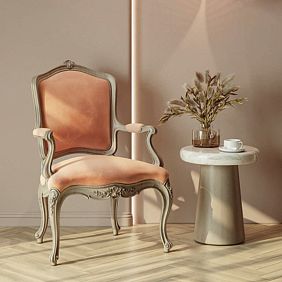
Classic furniture does not forgive mistakes. One extra scroll — and the room becomes a wax figurine museum. One empty corner — and space loses its soul, becomes cold and soulless. The balance between ornamentation and minimalism, between ornament and air — this is what distinguishes authentic classicism from its imitation. When deciding tobuy classic furniture, it is not enough to choose a beautiful chair or carved chest. It is important to understand how all elements will interact with each other, how ornament will breathe amidst emptiness, how symmetry will create rhythm, and how textiles will soften the strictness of proportions.




Proportions: the mathematics of beauty in classic furniture
Classicism did not begin with decoration. It began with numbers. Ancient architects derived proportions under which a building does not merely stand — it appears harmonious, regardless of viewing angle. The golden ratio, modular systems, the ratio of column height to its diameter — all of this became the foundation of classic furniture. The height of a chair's backrest relates to the seat height not by chance. The width of a cabinet is divided by height according to a specific rule. These proportions create visual stability, comfort for the eye, a sense of completion.
When proportions are violated, furniture appears inappropriate, even if it is richly decorated. A too wide chest in a narrow room feels oppressive, a too low chair next to a tall table looks absurd. Classicism demands mathematical precision in the arrangement of masses. The central element — fireplace, sofa, bed — sets the axis around which all other items are arranged. Symmetry is not only created by matching chairs on either side of the sofa, but also by the distance between them, the height of the backs, the depth of the seat.
Proportions concern not only individual items, but the space as a whole. Ceiling height affects furniture selection: in rooms with three-meter ceilings, tall cabinets, heavy canopy beds, and grand buffets are appropriate. In rooms with low ceilings, such furniture will overwhelm, turning the room into an antique warehouse. For low ceilings, more compact forms, horizontal lines, and light tones are chosen.Furniture for bedrooms in classic styleIt must correspond not only to the owner's taste, but also to the architecture of the room.
Another aspect of proportions — the relationship between filled and empty space. Classicism does not tolerate emptiness, but also cannot endure overcrowding. The rule states: no more than one decorative element should be placed per square meter of wall. If the wall is decoratedwith wall panels, the painting above the sofa should be restrained, without a bulky frame. If the wall is empty, one can allow a large mirror in an ornate frame or a composition of several engravings.
The golden ratio is also applied in furniture arrangement. A sofa is not placed strictly in the center of the wall — it is shifted one-third from the edge, creating a more visually interesting composition. A coffee table is placed not exactly between chairs, but slightly closer to the sofa. These shifts are barely noticeable, but they create dynamism, freeing the interior from dull symmetry. Balance is achieved not through mechanical equality, but through proportional distribution of visual masses.




Symmetry: the axis around which classic style revolves
Symmetry is not mirror repetition. It is order based on a central axis. In a classic interior, there is always a main element: fireplace, window, bed, dining table. Everything else is arranged around this center, creating a sense of stability, balance, and predictability. If a chair stands to the left of the fireplace, there should be a matching one to the right. If there are side tables at either end of the sofa, they should be identical. This symmetry is not accidental — it traces back to ancient architecture, where temple facades were constructed symmetrically relative to the entrance.
But absolute symmetry is dead. If every item has its mirror counterpart, the interior becomes a sterile space devoid of life. Classicism allows for asymmetrical accents that enliven the space without destroying overall order. For example, a tall floor lamp to the left of the sofa, and a low table with a vase of the same height to the right. The visual mass remains equal, but the form differs. Or two chairs on either side of the fireplace, one upholstered in velvet, the other in silk. Symmetry is preserved, but monotony disappears.
Symmetry also works vertically. The height of furniture along the wall should be approximately equal to create a horizontal line. A 90 cm high chest next to an 110 cm high chair creates imbalance. It’s better to choose a chest with a mirror that raises the upper point of the composition. Or place a tall vase, lamp, or sculpture on the chest. Vertical symmetry is especially important in narrow rooms, where it compensates for lack of width by stretching the space upward.
Symmetry does not have to be paired. It can be tripartite or quintuple. Three paintings of the same size above the sofa, spaced equally apart. Above the chest, fivedecorative outlets, forming a horizontal line. On the dining table, five candlesticks, with the central one higher than the others. Such symmetry creates rhythm but avoids the monotony of two identical elements.
Asymmetric interiors in classicism are rare but possible. For example, an oriel window with non-standard-shaped panes does not allow for a mirrored composition. In this case, symmetry is achieved through mass balance: if on the left there is a heavy cabinet, on the right a group of light chairs and a table, but their total visual mass equals that of the cabinet. This technique is more complex, requires experience and sense of proportion, but allows classic furniture to fit into non-standard spaces.
Our factory also produces:


Rhythm: how ornament creates movement in a static interior
Rhythm is the repetition of elements at certain intervals. In music, rhythm is created by beats; in architecture — by columns; in interior design — by repeating decorative details.Wooden corniceswith the same ornament along the perimeter of the room,Moldings made of polyurethaneon the walls, creating vertical panels, carved legs on all furniture items — all this creates rhythm, guiding the eye through the room without letting it settle on a single point.
Rhythm can be monotonic or complex. Monotonic rhythm consists of identical elements repeated at equal intervals. Four identical chairs along a wall, five identical paintings in identical frames, seven identical balusters on a staircase railing. Such rhythm creates order but may become boring. Complex rhythm alternates different elements: large ornament, pause, small ornament, pause, then large again. Or three small elements, one large, then three small again. This creates dynamism, interest, and encourages closer examination of details.
Ornament in classical furniture is not chaotic decoration. It is a system of symbols, each with meaning. The acanthus leaf symbolizes immortality, meander — eternity, laurel wreath — glory, palmette — growth and prosperity. These ornaments repeat on different furniture items, creating a meaningful connection between them.— everything must correspond to the chosen era.on the cornice, they correspond with carving on the chair back, the ornament on the chest repeats on the mirror frame. This creates a sense of completeness and cohesion of the ensemble.
If the living roombuy classic style furniturehas an acanthus ornament, the bedroom can use the same motif but in another scale or material. This creates unity in the house, making transitions between rooms smooth and predictable. A guest entering the house immediately understands they are in a classical interior, where everything follows a unified logic.
Breaking rhythm is used to create accents. Among four identical chairs, one has different upholstery. Among seven identical moldings on the wall, one is wider than the others. This draws attention, creates intrigue, without destroying overall order. But such breaks should be few — one, at most two per room, otherwise chaos arises.
Get Consultation
Ornament versus emptiness: where decoration ends and overloading begins
Ornament in classicism is not decoration for decoration’s sake. It is a way to express the status, taste, and education of the owner. Carved scroll on a chair leg, inlay on a cabinet door, painting on a tabletop — all this indicates that the furniture was custom-made, handcrafted, by skilled artisans. But when there is too much ornament, it becomes unreadable, merges into a colorful mass, and tires the eye. Classicism demands restraint — each ornament must be visible, understandable, and appreciated.
Rule: the finer the ornament, the more of it can be used. Large carving on a chair back does not tolerate large carving on armrests — this is visual cacophony. But fine carving can cover entire surfaces, creating a continuous lacework. Such furniture is characteristic of Rococo, where decorative excess reaches its limit. In classicism, ornament is larger but less frequent — it concentrates in key points: upper part of the back, center of the cabinet facade, corners of the tabletop.
Emptiness in a classical interior is not a deficiency but a necessity. It gives the eye a rest, allows appreciation of ornament, creates contrast between filled and open space.Wall panelsdivide the wall into rectangles, within which may be a smooth surface painted in a calm color. This creates a frame for the ornament, making it stand out, becoming the center of attention. Without emptiness, the ornament disappears, becomes background, rather than an accent.
Balance is achieved by alternating density. If the sofa is richly decorated — carved legs, embroidered upholstery, fringe along the edge — next to it should be a simple table without carving, with plain straight legs. If the cabinet is inlaid, the chair beside it should be smooth, with minimal carving. This creates visual rhythm: rich-simple-rich-simple. The eye does not tire because it constantly alternates between complex and simple.
Another way to avoid overloading is to use one type of ornament. If a vegetal ornament (leaves, flowers, branches) is chosen, all furniture in the room should have vegetal carving. It is not advisable to mix vegetal motifs with geometric (meander, diamonds, zigzags) or figurative (putti, griffins, lions) ones. Mixing ornament styles creates chaos, even if each element is beautiful on its own.White classic furnitureallows the ornament to stand out more vividly, as white color is neutral and does not compete with carving for attention.
Textiles: how fabric softens the rigidity of classical forms
Classical furniture without textiles — is a skeleton without flesh. Wood, even the most noble, remains hard, cold, and uncomfortable. Textiles add warmth, softness, color. They transform a formal interior into a living space where one can not only admire beauty but also feel comfortable. Upholstery, curtains, cushions, bedspreads, rugs — all this is not merely decoration, but essential elements of a classical interior.
The choice of fabric depends on the room’s purpose. For formal living rooms, luxurious materials are used: velvet, silk, brocade, tapestry. These fabrics are heavy, dense, with rich texture, often embroidered with gold or silver threads. They reflect light, create play of highlights, and add grandeur to the room. For bedrooms, softer, calmer materials are chosen: cotton, linen, fine wool. They allow air to pass, are pleasant to the touch, and do not tire the eye.
The color of textiles should match the overall interior palette. Classicism prefers calm, noble tones: beige, cream, gold, burgundy, emerald, dark blue. Bright colors are used as accents — a red cushion on a beige sofa, gold fringe on blue curtains. But the majority of textiles remain within a neutral palette.Classic furniture pricesThey depend not only on the wood, but also on the quality of upholstery — hand embroidery, natural silk, traditional weaving techniques significantly increase the cost.
Pattern on textiles is another way to create rhythm. Damask pattern (symmetrical vegetal ornament) on curtains, repeated on chair upholstery but in another scale. Stripes on walls, corresponding with striped cushions on the sofa. Floral motif on a bedspread, reflected in painted porcelain vases. These repetitions link different interior elements into a unified composition, creating a sense of thoughtfulness and completeness.
Textiles soften the rigidity of lines, round off corners, and add volume. Heavy drapes with folds visually enlarge the window, making it the focal point of the room. Soft cushions on a hard sofa create comfort and invite seating. A rug on the floor unifies furniture into a group, defining a resting or dining area. Without textiles, a classic interior appears museum-like, uninhabited, and cold. Textiles bring life to it, making it feel like home.
Light: how lighting reveals the beauty of ornament and creates depth
Lighting in a classic interior is not merely functional. It is a tool that reveals the beauty of furniture, highlights ornamentation, and creates atmosphere. Natural light from large windows is the ideal of classic design, but it is insufficient. Artificial lighting must be multi-level: general lighting (chandelier), zone lighting (floor lamps, wall sconces), accent lighting (under-cabinet lighting, niche, display cases).
A chandelier is the central lighting element, which in itself is a work of art. A crystal chandelier with multiple pendants reflecting light creates a play of glares on ceilings and walls. A chandelier with wrought iron elements adds formality, emphasizing ceiling height. The chandelier must match the room’s scale: an oversized chandelier in a small living room will feel oppressive, while a small one in a spacious hall will disappear. Rule: the chandelier’s diameter in centimeters equals the sum of the room’s length and width in meters.
Zone lighting creates coziness and allows highlighting separate areas. A floor lamp next to a reading chair, wall sconces beside a mirror in the bedroom, a desk lamp on a writing desk. These light sources should not be overly bright — their purpose is to create soft, diffused light that invites relaxation.Furniture HandlesMade of brass or bronze, they beautifully reflect light and become decorative elements even in dim light.
Accent lighting is backlighting that highlights key interior elements. An LED strip inside a glass cabinet illuminates a porcelain collection. Directional lights above paintings make them the focal point. Hidden backlighting behindwith wooden cornicescreates the effect of a floating ceiling. Such light does not illuminate the room but creates drama, depth, and volume.
Color temperature of light is critically important. Classic interiors require warm light (2700–3000 Kelvin), which creates an atmosphere of coziness, highlights warm tones of wood, gold, and fabric. Cold white light (above 4000 Kelvin) kills the classic interior, making it office-like and lifeless. Even the most expensive furniture loses its elegance and appears cheap under cold light.
Light control — dimmers allowing brightness adjustment, lighting scenes (formal reception, dinner, evening relaxation) — are modern technologies that do not contradict classicism. It is important that switches and regulators are made in a classic style — brass or porcelain, without plastic inserts or digital displays. Technologies should be unobtrusive, operate silently, and not disrupt the atmosphere of the era.
Wall panels: how to divide a wall and avoid monotony
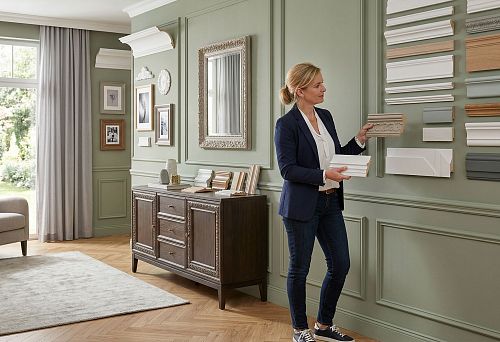
A smooth wall in a classic interior is rare. Walls are divided into panels using moldings, creating rectangles or squares, within which decor is placed or left as a smooth surface. This tradition dates back to the 18th century, when walls were clad in wooden panels to protect against cold and damp. Today, panels serve a decorative function — they structure space, create rhythm, and add volume.
polyurethane wall moldings— a modern material imitating carved wood or plaster molding. They are lightweight, moisture-resistant, easy to install, and can be painted any color. A complex panel system can be created, replicating historical patterns without overloading walls with weight and cost.wooden planks on the wallcreate vertical rhythm, visually raise ceilings, and add texture.
Classic wall division scheme — three-part. Bottom third (panel, usually darker than wall color or wood-clad), middle section (main field, often wallpapered or painted), top section (cornice, ending under the ceiling). This division creates visual stability, harmonizes with human body proportions, and makes the room comfortable to perceive.Buy polyurethane wall moldingscan vary in width and profile, allowing selection to suit any ceiling height.
Decor is placed within panels: patterned wallpaper, fabric, mirrors, paintings. It is important that decor does not extend beyond moldings — they create a frame that must not be violated. If wallpaper is used, the wallpaper edge must exactly match the inner edge of the molding. If a painting is used, its frame must be smaller than the panel, leaving space around it. This rule creates order, makes the wall readable and structured.
Panels can be used not only on walls but also on ceilings. A coffered ceiling (ceiling divided into squares or rectangles by beams) — a classic technique that adds grandeur and visually increases height. Within each coffer, one can place painting, molded ornament, or built-in lighting. Such a ceiling transforms an ordinary room into a palace hall.Plaster ceilingrequires high ceilings (at least 3 meters); otherwise, it will feel oppressive.
Color: how the palette unites ornament and emptiness
Color in a classic interior is the background on which the play of forms and textures unfolds. Color should not shout, distract, or compete with furniture. Classicism prefers calm, noble tones: beige, cream, gray, olive, terracotta. These colors never go out of fashion, do not tire the eye, and harmonize with any wood and fabric. White color — a frequent choice for classic interiors, but not pure white, rather with a subtle tint — milk white, ivory, antique white.
Dark colors are used to create depth and contrast. Dark green or burgundy walls in an office create an atmosphere of concentration and intellectual work. Dark blue walls in a bedroom calm and invite sleep. However, dark walls require good lighting; otherwise, the room becomes a cave.Wooden wall decorin light tones beautifully contrasts with a dark wall, stands out, and becomes three-dimensional.
Color accents are bright details that enliven a neutral palette. A red cushion, a gold-framed mirror, an emerald vase. There should be few such accents — three to five per room; otherwise, they cease to be accents and become chaos. Classic rule: no more than three colors in an interior — primary (walls, ceiling), secondary (furniture, drapes), accent (details).
The color of wood is a critical element. Light wood (oak, beech, birch) creates lightness and airiness, suitable for small rooms. Dark wood (walnut, mahogany, wenge) adds solidity and status, suitable for spacious rooms with high ceilings. Mixing light and dark wood in one room is not recommended — it creates a visual break.Wooden balusters pricedepends on the type of wood, so the choice between light and dark is not only aesthetic but also budget-related.
Monochromatic interiors — all shades of one color — are popular in modern classicism. For example, a room in beige tones: light beige walls, beige furniture, beige textiles, but with varying saturation and texture. This creates calmness and unity, but requires skill — without contrast, the interior may become dull. To enliven it, textures are added: smooth silk, rough linen, glossy wood, matte stone.
Furniture and architecture: how to subordinate the setting to space
Furniture does not exist in a vacuum. It lives in a specific room with defined proportions, ceiling height, and window size. Classic furniture must match the architecture; otherwise, a conflict arises. A tall cabinet in a room with low ceilings visually lowers the ceiling even further. A miniature chair in a vast hall disappears and looks ridiculous. Beforebuy classic style furnitureyou need to measure the room, assess its proportions, and understand what scale of furniture will be appropriate.
Windows determine furniture placement. Classic style requires furniture not to block windows or obstruct natural light. A sofa should not be placed with its back to the window — this blocks light and creates a dark silhouette. It’s better to place the sofa perpendicular to or directly opposite the window. Tall cabinets are placed along solid walls, leaving windows unobstructed. If the window is small, place a mirror next to it to reflect light and visually enlarge the window.
Doors affect circulation in the room. Furniture should not obstruct door opening or block pathways. Classic layout implies free movement around the room’s perimeter, without needing to navigate around furniture. If the room is pass-through, the central area remains open, and furniture is grouped against the walls. If the room is dead-end (one entrance), you can create a central composition — a sofa and chairs around a coffee table.
The fireplace — if present — becomes the main element around which the entire interior is built. Sofas and chairs are arranged facing the fireplace, creating a lounge area. Above the fireplace, place a mirror or painting, which becomes a vertical focal point. The mantel — a place for decorative items, symmetrically arranged: a pair of candlesticks, a clock in the center, a pair of vases.Buy decorative elementsThey should match the style of the furniture.
The staircase in a two-story house is an architectural element requiring special attention.Balusters for staircaseThey should match the style of the furniture in the house. If the furniture is carved, the balusters should also be carved. If the furniture is minimalist, the balusters should be geometric, without complex decoration. The staircase is the vertical axis of the house, connecting floors not only physically but also visually.
Common mistakes when buying classic furniture: how not to turn your home into a museum
The most common mistake — buying furniture without a plan. Saw a beautiful chest at an exhibition — bought it. Found an elegant chair in a store — purchased it. As a result, the home ends up with a collection of beautiful but incompatible items. Classic style requires an ensemble where each element complements the other. Before purchasing, you must create a room plan, determine central elements, choose a style (classicism, baroque, empire), color palette, and only then buy furniture.
The second mistake — over-decorating. The desire to make the interior rich leads to every item being carved, inlaid, or gilded. As a result, the eye has nowhere to rest, and the room looks like a museum, not a living space. Classic style requires balance: if the sofa is richly decorated, the side table should be simple. If the cabinet is carved, the walls should be smooth.
The third mistake — mismatched scale. A huge cabinet in a small room feels oppressive, turning the space into a storage closet. A small chair in a large hall disappears, looking toy-like. Before purchasing, you must measure the furniture, visualize it in the room, preferably make a scale model or use interior design software.furniture legsThey affect the visual weight of the item — high legs make furniture lighter, low legs make it heavier.
The fourth mistake — mixing styles. Classicism, with its strictness, does not combine with Rococo, with its playfulness. Empire, with its military symbolism, conflicts with Baroque, with its religious pathos. You can choose one style and stick to it throughout the house, or divide styles by room (living room — classicism, bedroom — baroque), but do not mix them in one room.Buy Baroque furnitureIt can be used to create a luxurious living room, but it won’t fit in a minimalist bedroom.
The fifth mistake — ignoring functionality. Classic furniture is beautiful but must be comfortable. A chair with a straight back looks elegant but is uncomfortable to sit in. A table with carved legs is luxurious but doesn’t accommodate knees. Before purchasing, check comfort — sit in the chair, open cabinet doors, pull out drawers. Beauty should not come at the expense of comfort.
How to combine classic furniture with modern technologies
A classic interior does not mean rejecting modern conveniences. Television, air conditioning, smart home systems — all can be integrated without compromising the style. The main rule — technology should be invisible. The TV is hidden behind sliding cabinet panels, which open only during viewing. The air conditioner is concealed behind decorative grilles or tucked into a niche covered with molding. Outlets and switches are chosen in retro style — brass or porcelain, without plastic inserts.
Audio systems in a classic interior — are speakers styled as antique items. For example, speakers in wooden casings resembling vintage radios. Or built-in speakers hidden behind fabric wall panels. Wires are concealed in baseboards, behind moldings, in special cable channels painted to match the wall color. No dangling wires, no black plastic boxes — everything must be hidden.
Lighting is controlled by dimmers and scenes, but the control devices are integrated invisibly. Classic-style switches, remote controls are hidden in side tables’ drawers. Motion sensors for automatic lighting are placed in inconspicuous spots — in ceiling corners, behind cornices. Technologies work, but are not visible.
Workplace — computer, printer, office equipment — requires a special approach. A classic-style desk has a pull-out keyboard panel and closed drawers for storing equipment. The monitor can be hidden behind a sliding panel that closes after work. Or choose a laptop that fits into the desk’s drawer. The key is — when work is done, the workspace should look like an antique desk, not an office.
Kitchen — a place where technology is inevitable. Refrigerator, stove, range hood, dishwasher — all must be integrated into classic facades. Facades are chosen with panels, moldings,Furniture Handlesmade of brass or bronze. The technology is completely hidden behind doors, only classic-style handles are visible. Such a kitchen looks like furniture, not technology.
Classic furniture and modern materials: when you can deviate from tradition
Classic style traditionally uses natural materials: solid wood, natural stone, real leather, silk, wool. But modern technologies offer alternatives that are visually indistinguishable from natural materials, yet cheaper, lighter, and more practical. Can they be used in a classic interior?
MDF with natural wood veneer — an alternative to solid wood. Visually indistinguishable, but cheaper, doesn’t crack or warp from humidity. Suitable for cabinet facades, doors, panels. But for load-bearing elements — chair legs, tabletops, bed frames — better use solid wood.Furniture SupportsSolid wood elements provide strength and longevity that MDF cannot offer.
Artificial stone (quartz aggregate, acrylic) — an alternative to natural marble or granite. For countertops, window sills, fireplace surrounds. Visually similar to natural stone, but lacks pores, doesn’t absorb moisture, requires no special care. Suitable for kitchens and bathrooms, where practicality matters more than the prestige of natural stone.
Eco-leather — an alternative to natural leather for upholstering furniture. Modern eco-leather looks and feels like natural leather, but is cheaper, easier to clean, and requires no special care. Suitable for families with children and pets, where furniture is subjected to heavy use. But for formal living rooms, where status matters, better use natural leather.
Polyurethane molding — an alternative to plaster molding. Lighter, cheaper, not afraid of moisture, easy to install.You can buy ready-made stucco matching the Baroque style. Calculate the quantity: linear meters of cornices and moldings, number of rosettes, pilasters, consoles, corner elements. Add a ten to fifteen percent allowance for trimming.It is available in a wide variety, replicating historical designs. Visually indistinguishable from plaster, but more practical. Suitable for ceilings, walls, cornices, moldings.Wall moldingPolyurethane molding creates classic decor without unnecessary expenses.
There is a boundary that should not be crossed. Plastic panels imitating wood look cheap, even if they resemble natural wood from afar. Parquet-patterned linoleum destroys a classic interior, even if everything else is perfect.wooden skirting board purchase— it is necessary; plastic skirting in classic style is unacceptable. There are elements where saving on materials destroys the entire style.
FAQ: Answers to the main questions about classic furniture
How to avoid overloading an interior with decor when buying classic furniture?
Follow the rule: one decorative element per square meter of wall. If the furniture is richly decorated, the walls should be minimalist. If the walls are adorned with panels and moldings, choose simpler furniture. Alternate density: rich-simple-rich-simple. Use negative space as a compositional element — it gives the eye a rest and emphasizes the beauty of ornamentation.
What proportions are important when choosing classic furniture for a small room?
For small rooms, choose furniture on high, slender legs — it appears lighter and does not clutter the space. Avoid bulky low items that 'stick' to the floor. Use light wood tones and upholstery. Mirrors and glass elements expand the space. Do not fill the room completely — leave free zones and movement routes.
Can different styles of classic furniture be mixed in one room?
Unadvisable. Classicism, Baroque, Empire, Rococo — these are different languages; mixing them creates visual chaos. It is better to choose one style for the entire room or the whole house. If variety is desired, different styles can be used in different rooms: living room — classicism, bedroom — Baroque. However, transitions between rooms should be smooth, through neutral spaces (hallway, entryway).
How to arrange furniture to maintain symmetry?
First, determine the central element of the room: fireplace, window, bed, table. This is the axis of symmetry. Place paired items (chairs, side tables, lamps) mirror-symmetrically relative to the axis at equal distances. Place non-paired items (sofa, wardrobe) centered on the axis. Distances between furniture should be equal on both sides. Use a measuring tape — visual symmetry is hard to achieve.
What textile to choose for classic furniture: natural or synthetic?
For formal rooms (living room, dining room), choose natural fabrics: silk, velvet, linen, wool. They create a noble appearance, are pleasant to the touch, and durable. For everyday rooms (bedroom, office), you can use blended fabrics with synthetic additives — they are more practical, easier to clean, less prone to wrinkling. For kitchens and children's rooms — synthetic fabrics with a stain- and water-repellent coating.
How to integrate modern technology into a classic interior?
Hide technology behind furniture facades, sliding panels, or in niches. Choose technology in retro style or neutral colors (white, beige, gray). Conceal wires in skirting boards, cable channels, or behind moldings. Choose switches and outlets in classic style (brass, porcelain). Main rule — technology should not be visible when not in use.
Do you need to buy the entire set at once, or can you assemble gradually?
You can assemble gradually, but it is important to have an overall plan. First, determine the style, color palette, and materials. Buy central elements (sofa for the living room, bed for the bedroom), then add secondary items. However, all elements must be from the same collection or maintained in one style. Inconsistency in details (different wood tones, leg types, ornamentation) destroys the impression.
How to care for classic furniture to ensure it lasts for decades?
Wipe natural wood with a soft dry cloth; polish monthly with special compounds. Avoid direct sunlight — it fades wood and fabric. Vacuum textile regularly; do chemical cleaning once a year. Wipe leather with a damp cloth; treat with leather conditioner every six months. Do not place furniture near radiators — dry air cracks wood. Use coasters for hot and wet items to avoid leaving marks on wood.
What colors to choose for a classic interior in a modern apartment?
Primary colors — neutral: beige, cream, light gray, ivory. Secondary — muted: olive, terracotta, dusty rose, gray-blue. Accent — rich but noble: burgundy, emerald, dark blue, gold. Avoid bright acidic colors, black-and-white contrasts, neon shades. Classicism — it is calmness, harmony, restraint.
Where to buy quality classic furniture and decorative elements?
Contact manufacturers with their own production specializing in classicism. Avoid mass retail — true classicism is rarely found there, mostly imitation. Check materials: furniture should be made of solid wood or MDF with natural wood veneer; upholstery — from natural or quality blended fabrics. Request quality certificates and warranties.Classic furniture pricesThey cannot be low — quality costs money.
Conclusion: STAVROS — your guide to the world of classicism
The balance between ornament and negative space, between luxury and restraint, between decorative and functional elements — this is an art that requires knowledge, experience, and taste. Classic furniture is not a set of beautiful objects, but a system where each element occupies its place, performs its role, and interacts with the rest. Proportions, symmetry, rhythm, textiles, lighting, wall panels — all of these are tools that create a harmonious classic interior.
STAVROS offers a wide range of classic furniture, produced in-house from select wood species. Each piece is handmade, adhering to traditional techniques and modern quality standards. The collection includes furniture for living rooms, bedrooms, offices, dining rooms, executed in various classic styles — from strict classicism to luxurious Baroque. Decorative elements are also available:balusters for staircases, Wooden cornices, Moldings, Wall panels, Furniture legs, decorative elementswhich complete the image of a classic interior. Delivery to Moscow, St. Petersburg, and throughout Russia. Consultations with specialists will help you choose furniture matching your space, taste, and budget. STAVROS — classicism that never goes out of style.