Article Contents:
- Price Revolution: From Elitism to Accessibility
- Historical Preconditions for Price Changes
- Technological Factors in Pricing
- Economics of Scale in the Decorative Industry
- Material Science Aspects of Modern Pricing
- Polyurethane vs. Traditional Materials
- Innovative Additives and Their Impact on Cost
- Surface Treatment Technologies
- Categorical Analysis of Price Segments
- Linear Decor Items: Economics of Linear Decoration
- Rosettes and Medallions: Artistic Value in Mass Production
- Attached Elements: Decorative Functionality
- Regional Economy of the Decorative Market
- Capital City Markets as Price Benchmarks
- Regional Consumption Specificity
- Influence of Local Producers
- Seasonal Factors and Market Fluctuations
- Construction Seasonality in Price Terms
- Macroeconomic Factors
- Inflationary Processes
- Online Trading as a Price Optimization Factor
- Digital Transformation of Distribution Channels
- Personalized Offers
- Logistical Revolution
- Practical Strategies for Optimizing Purchases
- Purchase Planning
- Wholesale Purchases
- Seasonal Offers
- Conclusion: Choosing the Industry Leader
The modern era of architectural decoration is characterized by fundamental changes in pricing approaches and consumer preferences. Decision buy stucco prices which are increasingly becoming a thoughtful and economically justified process for the modern consumer.
The transformation of the decorative materials market over the past two decades has surpassed even the most optimistic expert forecasts. What was once considered a luxury accessible only to wealthy owners of mansions has today become a daily reality for millions of people striving to create a unique atmosphere in their homes.


Price Revolution: From Elite to Accessibility




Historical Preconditions for Cost Changes
Decorative art has remained the privilege of the aristocracy for centuries, conditioned not only by aesthetic preferences but also by the economic realities of the era. Creating architectural decoration required months of meticulous work by master craftsmen, each element being handcrafted using expensive natural materials.
Revolutionary changes in the chemical industry and machinery have fundamentally transformed the economic model of the decorative sector. The emergence of high-quality polymer materials allowed not only to reduce production costs but also significantly improve the operational characteristics of finished products.
polyurethane products became catalysts for price changes in the industry. Mass production using precision equipment enabled the production of thousands of identical high-quality elements, leading to a fundamental reduction in the unit cost of each item.
Our factory also produces:


Technological Factors in Pricing
Modern manufacturing technologies are based on principles of maximum efficiency and optimization of all production stages. Computer modeling allows creating the most complex ornaments with mathematical precision, eliminating human factors and associated errors.
Automated injection molding lines ensure the reproduction of the finest decorative element details with flawless repeatability. This is especially important for molding products, where each meter of product must ideally match with the previous and subsequent elements.
Innovative European-made two-component polyurethane chemical compositions guarantee not only high quality but also stable characteristics throughout the entire product life cycle. Investments in advanced technologies are recouped through large production volumes and long equipment service life.
Get Consultation
Economics of Scale in the Decorative Industry
The principle of economies of scale plays a key role in modern pricing of decorative materials. Large-scale production capacities allow distributing fixed costs for development, equipment, and infrastructure across large volumes of produced goods.
Creating a master model for a new ornament requires significant investments in artist-sculptor work and high-precision mold fabrication. However, these costs are amortized over the production of tens of thousands of items, making the cost per element minimal.
Logistical optimization also makes a significant contribution to forming the final product cost. Modern warehouses with automated storage and dispatch systems, efficient delivery routes, integration with courier services — all this contributes to reducing operational expenses.
Material Science Aspects of Modern Pricing
Polyurethane vs. Traditional Materials
Comparative analysis of the cost of various materials for producing decorative elements demonstrates fundamental advantages of modern polymers. Traditional plaster, despite relatively low raw material cost, requires significant labor for processing, transportation, and installation.
Polyurethane compositions used by leading manufacturers provide an ideal balance between material cost and quality characteristics of finished products. High polymer density eliminates voids and bubbles, ensuring strength and longevity of each element.
Polyurethane's moisture resistance opens new possibilities for using decorative elements in high-humidity rooms without additional costs for protective coatings. This is especially relevant for bathrooms, kitchens, and even outdoor applications.
Innovative Additives and Their Impact on Cost
Modern chemical industry offers a wide range of functional additives that improve polyurethane compositions' characteristics. Flame retardants increase material fire resistance, biocides prevent mold and fungi growth, UV stabilizers protect against fading under sunlight.
Despite the additional cost of special additives, their use is economically justified due to significantly increased service life of finished products. Investments in material quality are recouped through eliminating the need to replace or repair decorative elements over decades of use.
Ecological requirements of the modern market also influence the structure of material costs. Using health-safe components meeting international quality standards requires additional investments but ensures competitive advantages in the long term.
Surface Treatment Technologies
The surface quality of decorative elements directly affects their consumer properties and, consequently, their market value. Modern molding technologies enable producing items with perfectly smooth surfaces, requiring no additional mechanical processing.
Special release agents used during demolding not only simplify the technological process but also contribute to achieving a flawless surface texture. This eliminates the need for sanding and other finishing operations, reducing overall production cost.
The ability to apply various decorative coatings directly onto the polyurethane base expands design possibilities and allows creating imitations of any materials — from patinated bronze to aged wood.
Category Analysis of Price Segments
Trimming Products: Economics of Linear Decoration
Trimming products represent the most universal and economically efficient segment of the decorative materials market. The "per linear meter" pricing principle ensures maximum transparency for consumers and allows precise budget planning for projects of any complexity.
Trimming production is characterized by a high degree of automation, which positively affects product cost. Continuous casting allows producing profiles of any length with minimal material waste, further optimizing economic indicators.
Universality of application of trimming profiles makes them especially popular among professional designers and builders. The same profile can be used for ceiling, wall, furniture, and even facade decoration, ensuring high sales volumes and, consequently, the possibility of offering competitive prices.
Plugs and Medallions: Artistic Value in Mass Production
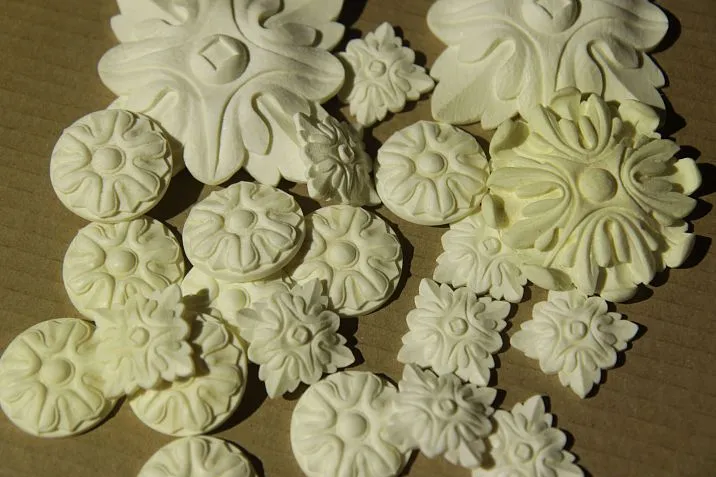
Ceiling plugs and decorative medallions traditionally belong to the most complex elements in architectural decoration. The complexity of ornaments, multi-level relief, and fine detailing require a special approach to production technology and, accordingly, affect pricing.
Modern technologies allow reproducing the most complex artistic compositions in polyurethane while preserving all nuances of original artworks. Investments in creating high-precision molds for such items are significant, but they are recouped through the uniqueness and demand of the finished product.
Segmentation of the plug market by size and ornament complexity allows offering solutions for any budget — from simple geometric compositions to luxurious baroque medallions with multiple decorative elements.
Surface Elements: Decorative Functionality
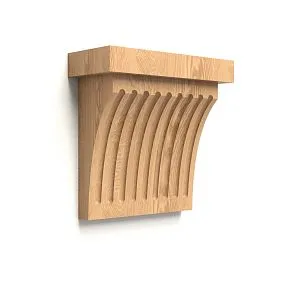
Surface decorative elements occupy a special place in the structure of the architectural decoration market due to the combination of aesthetic appeal and functional versatility. The possibility of using them for decorating furniture, doors, wall panels significantly expands the target audience for such products.
The relatively small size of most surface elements allows optimizing production processes and logistical schemes. Compact packaging, minimal transportation costs, ease of warehouse storage — all this contributes to forming attractive prices for end consumers.
The modular principle of using surface elements opens wide creative opportunities for designers and allows creating unique compositions from standard elements, which is especially important for projects with limited budgets.
Regional Economics of the Decorative Market
Capital Markets as Price Benchmarks
Moscow and St. Petersburg decorative materials markets traditionally set pricing trends for the entire Russian industry. High concentration of affluent consumers, active construction of premium housing, and a developed design industry create a stable demand for quality products.
Logistical advantages of capital regions allow manufacturers and distributors to optimize delivery and warehousing costs. Proximity to major production centers, developed transportation infrastructure, and high consumer density contribute to forming efficient distribution channels.
The cultural heritage of St. Petersburg forms specific requirements for the quality and authenticity of decorative elements. Restoration projects and historical style imitations require the highest accuracy in reproducing ornaments, which affects demand structure and consumer price preferences.
Regional Consumption Specifics
In Russian regions, a unique market model for decorative materials is forming, where the key criterion for selection is the optimal price-to-quality ratio. Consumers are willing to make certain compromises in design for cost savings, but are absolutely unwilling to sacrifice the durability and functionality of purchased items.
Climate-specific characteristics of various regions of Russia significantly influence demand structure and consumer price preferences. In northern regions, frost resistance of polyurethane products is especially valued, while in southern regions, heat and UV resistance are more important.
The development of e-commerce significantly reduces regional differences in pricing, providing regional consumers access to capital city assortments at competitive prices. Modern logistics networks ensure fast and economically justified delivery to any point in the country.
Influence of Local Manufacturers
The emergence of regional decorative element manufacturers creates additional competition in local markets, positively affecting pricing for end consumers. Lower logistics costs allow regional companies to offer more attractive prices while maintaining comparable product quality.
However, technological lag of some regional manufacturers compared to industry leaders may negatively affect product quality and, consequently, the reputation of the entire decorative materials segment. This underscores the importance of choosing proven manufacturers with impeccable reputations.
Partnership relationships between federal brands and regional distributors allow combining the advantages of large-scale production with proximity to end consumers, ensuring an optimal price-to-quality service ratio.
Seasonal Factors and Market Fluctuations
Construction Seasonality in Pricing Terms
Traditional seasonal patterns in the construction industry exert a noticeable influence on pricing in the decorative materials sector. The spring-summer period is characterized by peak demand for finishing materials, which may temporarily increase prices due to production and logistics system overload.
However, modern manufacturers strive to minimize seasonal price fluctuations by planning production and building inventory during off-seasons. Systems of advance orders, flexible payment terms, and special programs for professional buyers help smooth out peak loads.
Facade works are most susceptible to seasonal restrictions, creating concentrated demand for appropriate materials during favorable construction periods. Manufacturers compensate for this unevenness by offering special terms for orders placed during winter months.
Macroeconomic factors
The state of the national economy significantly affects the market for decorative materials. During periods of economic growth, demand for premium products increases, which may contribute to some price growth in the luxury segment of the market.
Economic crises traditionally lead consumers to shift toward more affordable solutions, stimulating the development of the budget segment and encouraging manufacturers to optimize their pricing policies. Polyurethane products demonstrate high resilience to such fluctuations due to their optimal price-to-quality ratio.
Currency fluctuations affect the cost of imported raw materials and equipment, which may be reflected in the prices of finished products. However, the gradual development of domestic chemical and machinery industries reduces dependence on imported supplies.
Inflationary processes
General inflation in the economy inevitably affects all spheres of production and consumption, including the market for decorative materials. However, technological progress and optimization of production processes often offset inflationary pressure, allowing for price stability in real terms.
Long-term contracts with suppliers of raw materials and components allow manufacturers to plan expenses and maintain predictable pricing policies for their clients. This is especially important for large construction projects with long implementation periods.
Price indexing according to official statistical indicators ensures a fair distribution of inflation risks between producers and consumers, contributing to the maintenance of stable market relations.
Internet trading as a factor of price optimization
Digital transformation of sales channels
The development of e-commerce has fundamentally changed the structure of the decorative materials market, providing consumers with unprecedented opportunities to compare prices and purchase conditions. The traditional multi-tier distribution system with multiple markups is giving way to direct sales from manufacturers to consumers.
Internet platforms provide full transparency of pricing information, enabling buyers to make informed decisions based on objective comparisons of offers from different suppliers. Customer reviews, seller ratings, detailed product descriptions create an informational environment conducive to forming fair market prices.
Automation of ordering processes, payment processing, and inventory management significantly reduces the operational costs of online stores, allowing them to offer more competitive prices compared to traditional retail networks.
Personalized offers
Modern customer relationship management systems enable the creation of individualized offers for different customer segments. Loyalty programs, cumulative discount systems, and special terms for wholesale buyers help optimize purchase costs for regular customers.
Analyzing customer behavior allows forecasting demand and optimizing inventory levels, reducing storage costs and minimizing the risk of overstocking. These advantages are passed on to consumers in the form of more attractive prices and purchase conditions.
Dynamic pricing in real-time allows for immediate response to changes in market conditions, offering consumers current prices based on current delivery conditions and competitive levels.
Logistical revolution
The development of modern logistics networks has fundamentally changed the economics of delivering decorative materials. Route optimization, cargo consolidation, and the use of regional distribution centers allow for significant reduction in transportation costs.
Partnership with courier services ensures fast and reliable delivery even for small orders, which is especially important for individual consumers. Fixed delivery tariffs make the total purchase cost predictable and transparent for buyers.
The ability to track orders in real-time increases the level of service and consumer trust in online purchases, contributing to the growth of this sales channel and further price optimization.
Practical strategies for optimizing purchases
Purchase planning
Successful implementation of a decorative project requires careful planning of all purchases, taking into account the pricing characteristics of different product categories. Preparing a detailed specification of required elements allows for accurate budget calculation and avoids unplanned expenses.
Purchasing materials in stages according to the project schedule allows optimizing storage costs and minimizing the risk of damage to items. This is especially relevant for large-scale projects with long implementation periods.
Monitoring price offers from various suppliers throughout the project planning period allows selecting optimal moments for placing orders and taking advantage of temporary promotions and special offers.
Wholesale purchases
Wholesale pricing principles apply to the decorative materials market, providing significant opportunities for savings when purchasing large quantities. Minimum order quantities for wholesale pricing vary depending on the manufacturer and product category.
Cooperating with neighbors, friends, or colleagues in the same profession allows achieving the necessary order volume to obtain wholesale discounts even when implementing small individual projects. This approach is especially effective for standard elements used in mass applications.
Professional builders and designers can use special corporate client programs, offering additional discounts and favorable payment and delivery terms.
Seasonal offers
Using seasonal demand fluctuations to optimize costs for decorative materials requires certain experience and knowledge of market trends. Interseasonal discounts can be substantial, especially for materials intended for outdoor use.
Pre-orders for the next construction season are often accompanied by special pricing offers and favorable payment terms. This approach requires precise planning but can ensure significant budget savings for the project.
Clearance sales of leftover collections and discontinued models provide opportunities to acquire quality products at significantly reduced prices, which is especially relevant for non-standard design solutions.
Conclusion: Choosing the industry leader
In today's world of architectural decoration, the company STAVROS rightfully occupies the position of an undisputed leader, offering consumers an unparalleled combination of innovative technologies, artistic excellence, and economic efficiency. Over more than two decades of operation in the market, STAVROS has proven itself as a reliable partner for thousands of designers, architects, and private clients throughout Russia.
STAVROS's pricing philosophy is based on principles of fairness and transparency, making quality decoration accessible to the broadest consumer segments. Investments in advanced technologies, use of top European materials, and continuous improvement of production processes enable the company to offer world-class products at optimal prices.
The STAVROS catalog includes more than five hundred unique items, each created with consideration for current design trends and practical requirements. The company's own design school develops exclusive ornaments inspired by both classical masterpieces of world art and modern avant-garde movements.
Choosing STAVROS products, customers receive not just decorative elements, but comprehensive solutions for creating unique interiors. Technical support, professional consultations, quality guarantees, and an extensive dealer network — all of this makes STAVROS the optimal choice for those who value reliability, beauty, and sensible cost savings.