Article Contents:
- History and evolution of wooden ceiling trim
- From functionality to aesthetics
- Evolution of shapes and sizes
- Advantages of wooden ceiling trim
- Ecological and natural properties
- Aesthetics and uniqueness
- Durability and practicality
- Sound and thermal insulation
- Types of wooden ceiling trim
- By wood species
- Spruce — affordable solution
- Linden — the ideal balance
- Ash — nobility and stability
- Oak — classic for prestigious interiors
- By type of finish
- Solid wood — naturalness without compromise
- Veneered — balance of price and quality
- Thermally treated — for increased stability
- By profile and size
- Simple moldings
- Decorative profiles
- Cornices
- How to choose the perfect ceiling trim
- Considering the room's style
- Combining with other finishing elements
- Considering room proportions
- Practical aspects
- Where to buy wooden ceiling trim
- Specialized stores
- Online stores
- Construction markets and hypermarkets
- Direct from manufacturers
- Installation of wooden ceiling trim
- Preparatory work
- Mounting methods
- Using self-tapping screws
- Using adhesive
- Combined method
- Processing corners and joints
- Internal corners
- External corners
- Joints by length
- Final finishing
- Care for wooden ceiling trim
- Regular maintenance
- Periodic refreshment
- Repairing damage
- Conclusion: why you should buy wooden ceiling trim
- Investment in quality and longevity
- Ecological and health benefits
- Aesthetics and Individuality
- Practicality and versatility

In the world of finishing materials, there are elements that, despite their seemingly minor role, can dramatically transform an interior, giving it completeness and a unique charm. One such element is wooden ceiling trim. If you are considering Buy wooden baseboard for ceilingthis article will be your reliable guide in the world of natural wood ceiling finishing materials.


History and evolution of wooden ceiling trim




From functionality to aesthetics
Ceiling trim, or molding, as a finishing element has a multi-century history. Initially, its function was purely practical — to hide the unevenness at the junction between the ceiling and the wall, protect corners from damage. However, over time, ceiling trim became an important decorative element, emphasizing the style and status of the room.
In the aristocratic mansions and merchant houses of the 19th century, one could see luxurious wooden ceiling trim with carved ornamentation, which became a continuation of ceiling rosettes and moldings. With the arrival of modernism and constructivism, moldings became more minimalist, but did not lose their significance.
Today, in the era of returning to natural materials and eco-friendliness, choosing Buy wooden baseboard for ceiling — is a conscious choice in favor of tradition, quality, and aesthetics.
Our factory also produces:
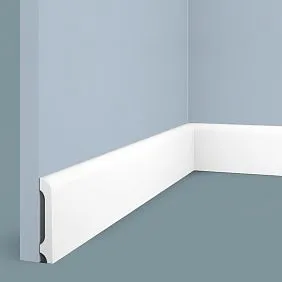
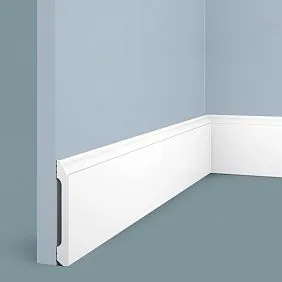
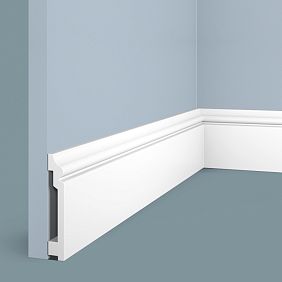
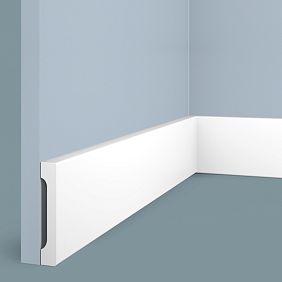
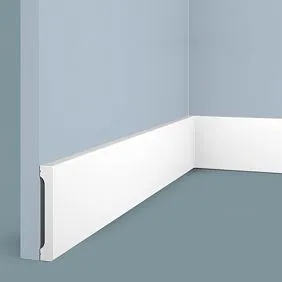
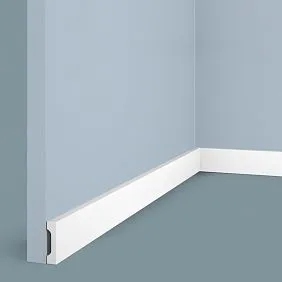
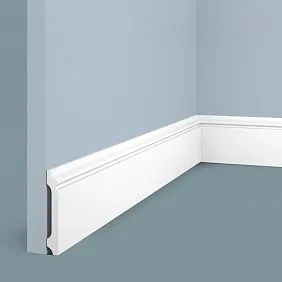

Evolution of Forms and Sizes
If previously the standard width of ceiling trim rarely exceeded 5-7 cm, today models can reach 15-20 cm in width. Such dimensions allow creating a striking accent in the interior, visually correcting the proportions of the room, as well as concealing various utilities.
The profile of the trim has also undergone significant changes: from simple semi-circular forms to complex decorative profiles with multiple decorative elements. Modern woodworking technologies allow creating ceiling trim of virtually any shape and complexity, opening up wide possibilities for designers and architects.
Get Consultation
Advantages of wooden ceiling trim
Ecological and natural
In an era when more and more people pay attention to the ecological properties of materials in their homes, choosing Buy wooden baseboard for ceiling becomes a conscious choice for health. Natural wood does not emit harmful substances, creates a favorable microclimate in the room, regulates humidity, and has anti-static properties.
Unlike plastic or polyurethane analogs, wooden trim 'breathes,' which is especially important for people suffering from allergies or asthma. Moreover, it is a renewable resource, making its choice an environmentally responsible solution.
Aesthetics and uniqueness
Each wooden skirting board is unique due to the natural grain pattern. Even items from the same batch will differ slightly from each other, giving the interior a special charm and uniqueness.
Wooden ceiling trim becomes a noticeable design element that can either harmoniously complement the overall concept of the room or serve as a striking accent that draws attention. Such trim looks especially advantageous in classical and neoclassical interiors, as well as in country, Provence, and chalet styles.
Durability and practicality
With proper care, wooden ceiling trim can serve for decades without losing its appeal. Moreover, over time, natural wood acquires a noble patina, which only adds to its charm.
In case of mechanical damage, wooden trim can be restored — sanded, coated with a new layer of varnish or paint. This makes it more cost-effective in the long term compared to synthetic analogs, which must be completely replaced upon damage.
Sound and thermal insulation
Wooden ceiling trim has good sound insulation properties, helping to reduce noise levels in the room. Additionally, it serves as an additional barrier against drafts, improving the room's thermal insulation.
This is especially relevant for old houses with uneven walls and ceilings, where gaps may form between them. Wooden trim effectively masks these shortcomings and creates a more comfortable microclimate.
Types of wooden ceiling trim
By wood species
Spruce — an affordable solution
Spruce is the most affordable option among solid wood. Ceiling skirting boards made of spruce have:
● Prominent annual ring pattern, giving the interior a natural feel
● Light, warm tone, visually expanding the space
● Pleasant pine aroma, creating a countryside home atmosphere
● Good workability, allowing creation of various profiles
Spruce skirting boards are suitable for eco-friendly interiors, country style, Scandinavian design.
Lime — the perfect balance
Linden is one of the best species for making ceiling skirting boards due to its softness and uniform structure. Skirting boards made of linden are characterized by:
● Uniform texture without clearly visible annual rings
● Light, almost white shade, easily tintable to any color
● Absence of resin and specific odor
● Ease of processing, allowing for complex profiles
Linden skirting boards are versatile and suitable for almost any interior.
Ash — nobility and stability
Ash — a medium-hardwood species with a beautiful reddish hue. Ceiling skirting boards made of ash are characterized by:
● Stability of dimensions with changes in humidity
● Beautiful reddish-pink hue, which deepens over time
● Uniform texture, allowing for clear profile lines
● Resistance to rot and insect damage
Ash skirting boards are especially suitable for classical and neoclassical interiors.
Oak — classic for prestigious interiors
Oak — one of the strongest and most durable species. Ceiling skirting boards made of oak are characterized by:
● High strength and resistance to mechanical damage
● Expressive texture with visible growth rings
● Noble golden-brown hue
● Prestige and status
Oak skirting boards are ideal for classical interiors, English-style interiors, and modern spaces where naturalness and quality are valued.
By type of treatment
Solid wood — naturalness without compromise
Solid wood ceiling skirting boards are made from a single piece of wood. This is the most expensive but also the highest quality option. Such skirting boards have all the advantages of natural wood, high strength, and durability.
Veneered — balance of price and quality
The base of such skirting boards is MDF or inexpensive wood, covered with a thin layer of veneer from valuable species. They are visually indistinguishable from solid wood, but cost less and are less prone to deformation when humidity changes.
Thermo-treated — for increased stability
Wood thermo-treatment — a special process in which wood is heated to high temperatures in an oxygen-free environment. As a result:
● Increased dimensional stability
● Improved resistance to moisture and rot
● Wood acquires a deeper, richer color
● Increased product lifespan
Thermo-treated ceiling skirting boards are especially recommended for rooms with fluctuating humidity levels.
By profile and size
Simple coves
Cove — the simplest type of ceiling skirting board, shaped like a quarter circle. This is a universal solution suitable for most interiors. Coves come in various sizes — from miniature (2–3 cm) to large (10–12 cm).
Decorative profiles
Decorative ceiling skirting boards have complex shapes with various decorative elements: recesses, protrusions, carvings. They are ideal for classical and neoclassical interiors, emphasizing their elegance and status.
Crown mouldings
Crown mouldings — wide ceiling skirting boards (from 10 cm), often featuring complex profiles with multiple levels. They create a striking transition between wall and ceiling, visually 'lowering' high ceilings and making the room feel more cozy.
How to choose the perfect ceiling skirting board
Consider the room’s style
The choice of ceiling molding should match the overall interior style:
● Classic style — wide moldings with decorative profiles, made from noble wood species (oak, walnut).
● Modern style — medium or narrow moldings with straight or beveled profiles.
● Scandinavian style — light moldings made from pine or linden, with minimal processing.
● Loft — narrow moldings with simple shapes, possibly with a weathered effect.
● Provence — moldings of medium width, often painted white or pastel tones.
Combination with other finishing elements
The ceiling molding should harmonize with other finishing elements — baseboards, window casings, moldings. Ideally, all these elements should be made from the same wood species or have the same finish.
If the room has wooden furniture or parquet, it is worth Buy wooden baseboard for ceiling in the same tone as these elements or one tone lighter/darker.
For rooms with high ceilings (from 3 m), baseboards 10-15 cm high are suitable, whose cost will be higher than average.
The width of the ceiling molding should be proportional to the ceiling height and room area:
● For rooms with high ceilings (from 3 m), wide moldings (10-15 cm) are suitable.
● For standard ceilings (2.5-2.8 m), moldings 5-8 cm are optimal.
● For low-ceilinged rooms, it is better to choose narrow moldings (3-5 cm).
Also consider the room's area: in spacious rooms, wide skirting boards look harmonious, while in small rooms they may visually 'consume' space.
Practical aspects
When choosing ceiling molding, you must consider not only aesthetic but also practical aspects:
● Room humidity — for bathrooms and kitchens, choose moldings with moisture-resistant treatment.
● Presence of utilities — if you need to hide wires, choose moldings with cable channels or wide enough to accommodate wiring.
● Mounting method — for self-installation, moldings with a simple mounting system are more convenient.
● Final finish — decide in advance whether you will paint the molding or leave it in its natural wood color.
Where to buy wooden ceiling molding
Specialized stores
in specialized stores for finishing materials you can Buy wooden baseboard for ceiling with quality guarantee and professional consultation. Advantages of such stores:
● Wide variety of wood species, profiles, and sizes
● Opportunity to see samples in person, assess quality and color
● Professional consultation on selection and installation
● Warranty of quality and after-sales service
● Ability to order non-standard sizes or profiles
Online stores
Modern technologies allow Buy wooden baseboard for ceiling without leaving home. Online stores offer:
● Wide assortment with convenient search by parameters
● Ability to compare prices and characteristics of different manufacturers
● Delivery at a convenient time
● Often lower prices due to absence of rental costs for retail space
● Ability to order samples before purchase
Construction markets and hypermarkets
Wooden ceiling moldings can also be found at construction markets and large home improvement hypermarkets. Advantages of such places:
● Ability to buy everything needed for renovation in one place
● Often lower prices, especially for simple models
● Wide selection of related products (fasteners, tools, finishing materials)
Direct from manufacturers
Some manufacturers offer the option to order ceiling moldings directly from the factory. This may be advantageous for large volumes or when custom-made items are needed.
Advantages of working directly with the manufacturer:
● Absence of middleman markup
● Possibility of custom manufacturing by size and design
● Manufacturer's warranty
● Consultation with technical specialists
● Opportunity to visit the production facility and see the manufacturing process
Installing wooden ceiling molding
Preparation Work
Before installing ceiling molding, a series of preparatory works must be carried out:
- Acclimatization — skirting boards must adapt to the temperature and humidity of the room. To do this, unpack them and leave them in the room for 48-72 hours.
- Surface preparation — walls and ceiling must be flat, dry, and free of dust and dirt. If necessary, level surfaces with putty.
- Tool preparation — you will need:
● Miter saw and fine-toothed saw for angled cutting
● Screwdriver or drill
● Self-tapping screws, anchors, or special adhesive
● Level
● Tape measure and pencil
● Wood filler matching the baseboard color
● Fine-grit sandpaper
● Protective coating (varnish, oil, wax)
- Marking — measure the perimeter of the room, mark the locations of joints and corners.
Methods of mounting
There are several ways to mount wooden ceiling molding:
For screws
This is a classic and reliable method:
- Drill holes in the skirting board at intervals of 40-60 cm.
- Place the molding at the installation site and mark the locations for anchors.
- Drill holes in the wall/ceiling and install anchors.
- Screw the skirting board with self-tapping screws.
- Mask the screw heads with wood putty in the color of the skirting board or with special caps.
For adhesive
Suitable for lightweight moldings and flat surfaces:
- Apply construction adhesive to the back of the skirting board in a zigzag pattern.
- Press the skirting board against the installation location and hold for 1-2 minutes.
- If necessary, secure with painter's tape until the adhesive dries completely.
Combined method
The most reliable option, especially for heavy and wide skirting boards:
- Apply adhesive to the back of the skirting board.
- Install the skirting board in place.
- Additionally secure with screws in areas where fasteners will be unnoticed or can be concealed.
Corner and joint processing
Special attention during installation of ceiling skirting boards should be paid to corners and joints:
Internal angles
For internal corners (90 degrees), use a 45-degree miter saw. Two skirting boards, mitered at 45 degrees, form a neat joint in the corner.
If the angle is not 90 degrees (which often occurs in older homes), use a protractor to determine the exact angle and adjust the miter cut accordingly.
External corners
For external corners, a 45-degree miter cut is also used, but in the opposite direction. External corners require special precision, so it is recommended to make test cuts on offcuts.
Length joints
If the wall length exceeds the skirting board length, a joint must be made:
- Miter the ends of the skirting boards to be joined at 45 degrees in opposite directions.
- Apply adhesive to the cut edges.
- Join the skirting boards and hold until the adhesive sets.
- If necessary, fill and sand the joint.
Final finishing
After installing the ceiling skirting board, final finishing is required:
- Spackle — fill all gaps, joints, and mounting areas with wood putty.
- Sanding — after the putty dries, sand the treated areas with fine-grit sandpaper.
- Coating — apply protective coating (varnish, oil, wax) or paint the skirting board according to interior design.
Care for wooden ceiling skirting boards
Regular Maintenance
Proper care of wooden ceiling skirting boards will extend its service life and maintain its attractive appearance:
- Dry cleaning — regularly remove dust with a soft brush or a vacuum cleaner attachment with soft bristles.
- Wet cleaning — if necessary, wipe skirting boards with slightly damp (not wet!) cloth. Wipe dry immediately.
- Special care products — use wood care products suitable for the type of finish on your skirting boards (for varnished, oiled, or waxed finishes).
- Avoid aggressive chemicals — do not use abrasive cleaners, solvents, or bleach. They may damage the protective coating and the wood itself.
Periodic Renewal
Depending on the intensity of use and type of coating, wooden ceiling skirting boards may require periodic renewal:
- Varnished skirting boards — the varnish coating may require renewal every 5-7 years. The old varnish is lightly sanded and a new layer is applied.
- Skirting boards with oil finish — oil needs to be renewed more frequently (every 2-3 years), but the process is simpler — simply apply a new layer of oil without sanding.
- Painted skirting boards — if chips or scratches appear, touch up the affected areas with paint matching the original color.
Damage Repair
Even with careful handling, skirting boards may sustain damage. Here’s how to repair them:
- Minor scratches — sand with fine-grit sandpaper and apply protective finish.
- Deep damage — fill with wood putty in matching tone, let dry, sand, and apply protective finish.
- Cracks — may appear with significant humidity changes. Fill with flexible wood filler, then treat as usual.
- Loose sections — if the skirting board has become loose in some areas from the wall or ceiling, reattach it using adhesive or screws.
Conclusion: why you should buy a wooden ceiling skirting board
Investment in quality and durability
Solution Buy wooden baseboard for ceiling — it's an investment not just in finishing material, but in the quality of life, health, and aesthetics of your home. Wood is a material proven over centuries, never going out of style. It creates a unique atmosphere, fills the space with warmth and coziness, and becomes part of your home’s history.
Ecological and Health Benefits
In a world where naturalness and eco-friendliness are increasingly valued, a wooden ceiling skirting board is a conscious choice for health. Natural wood does not emit harmful substances, creates a favorable microclimate, and regulates humidity in the room.
Aesthetics and individuality
A wooden ceiling skirting board is not just a functional element, but also an important design detail that can either harmoniously complement the overall room concept or become a striking accent. Thanks to the variety of wood species, profiles, and finishes, you can create a truly unique interior that reflects your individuality.
Practicality and versatility
A wooden ceiling skirting board complements any finishing materials — from plaster and wallpaper to wood and stone. It can become a unifying element in the interior, bringing together different materials and textures into a cohesive composition.
In a world where everything changes too quickly, natural wood remains a symbol of stability, reliability, and timeless values. Buy wooden baseboard for ceiling — means choosing not just decoration, but a lifestyle philosophy based on respect for nature, traditions, and personal comfort.
Don’t skimp on details — it’s precisely these details that create harmony, that transform your home into a place you want to return to. Choose the best, choose natural, choose wood!