Article Contents:
- Buy picture frame molding by the meter: what exactly the customer is buying
- What is frame molding by the meter
- How it differs from a ready-made frame
- When it's more cost-effective to buy by the meter
- When you need to purchase for a specific size
- When it's better to buy picture frame molding by the meter
- Non-standard sizes — the main reason
- A series of pictures with unified framing
- Canvas Stretching on a Frame
- Economics: Larger Sizes Are More Cost-Effective
- DIY Assembly or Workshop Order
- How to Choose a Wooden Picture Frame: Profile, Width, Relief
- Profile Width: The Main Parameter
- Rebate Depth: Critical for Canvases
- Smooth or carved profile
- For Classical Painting
- For Posters and Graphics
- For modern interior
- Which Works Suit Molding Strips: Breakdown by Object Type
- Canvas painting (on stretcher)
- Reproduction on Paper or Canvas
- Poster and photograph
- Embroidery
- Icon
- Panel and decorative object
- Picture frame molding by size: what to know before buying
- Inner frame size
- Footage calculation for one frame
- Footage calculation for a series of paintings
- When extra margin is needed
- What determines the price of picture frame molding: an honest breakdown
- Material: oak or beech
- Profile width
- Complexity of carving and number of relief levels
- Purchase format: footage or frame manufacturing
- Order volume: retail or wholesale
- Finishing
- Where to buy picture frame molding without mistakes
- When to choose a ready-made frame instead of by the meter
- How to choose a wooden frame molding supplier
- What to look for in a catalog
- How to order for a non-standard format
- Wooden frame molding by the meter: profile handling rules
- Cutting tools
- Frame Assembly
- Finishing before or after assembly
- The art of framing: the final word on wooden frame molding
- About the Company STAVROS
- FAQ: answers to questions about buying picture frame molding

There comes a moment when you realize: the painting is done, the canvas is stretched, the work is complete — and one final step remains, which will either make the piece finished or leave it hanging on the wall like an unanswered question. That step is choosing and buying the right frame molding. Not a ready-made frame from a marketplace, but precisely the profile that perfectly matches the painting's format, its style, and the character of the interior where it will live.
Buying picture frame molding by the linear meter means buying not a finished product, but material for creating a frame. It's a different purchasing logic, a different scale of freedom, a different level of result. This is precisely what the entire further conversation is about. Without unnecessary digressions, with maximum practical value.



Buying picture frame molding: what exactly the customer is buying
Let's start from the very beginning, because confusion often arises here.




What is frame molding
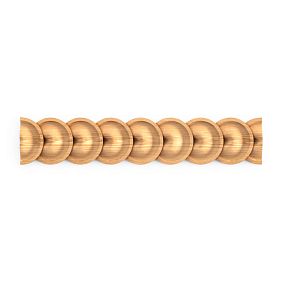
Frame molding is a profiled wooden strip sold by the linear meter or in long lengths (standard: 2.4 and 3.0 m). It has a rabbet — an inner lip into which the artwork itself (canvas, glass, mat) is inserted when assembling the frame. On the outside, the profile carries a decorative relief: from a minimalist bevel to rich, multi-level carving.
The key word here is 'molding.' It means you are buying not a finished item, but a length of profile from which a frame is made to your specific size. This is fundamentally different from buying a '50×70' frame off the store shelf.
Our factory also produces:


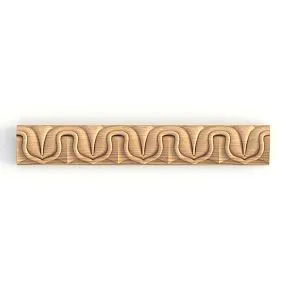


How it differs from a ready-made frame
A ready-made frame is a finished rectangle for a standard format. Buy, insert, hang. Convenient, fast, limited.
Frame molding is a blank with potential. From the same strip of profile, you can make a 47×63 cm frame (custom for an original canvas), an 80×120 cm frame (large painting), a series of 30×30 frames (square photo series), and half a dozen other formats. Moreover, each frame will be made from the same profile, the same material, with the same finish — and this creates a visual integrity for a series that is impossible to achieve by buying ready-made frames one by one.
Buy wooden picture frame mouldingfrom solid oak or beech means gaining full control over the format, profile, finish, and quantity.
Get Consultation
When it's more cost-effective to buy by the meter
Buying by the meter is the right choice in the following situations:
-
Non-standard artwork size. Original canvas paintings are rarely multiples of 'store' formats. If your painting is 63×89 cm, a ready-made frame of that size practically doesn't exist.
-
A series of works of the same scale but different proportions. The same profile creates visual unity for the collection.
-
Working in a studio. Artists, designers, framers, and manufacturers of interior objects all work with meterage as the primary purchasing format.
-
Economics. For volumes of 5–10 meters, the cost per linear meter is noticeably lower than assembling individual ready-made frames of the required sizes.
When you need to purchase for a specific size
For particularly significant works—large original paintings, collectible reproductions, exhibition pieces—they order not just meterage, but custom frame fabrication to exact dimensions. This is a type of 'turnkey' service: the supplier cuts the profile to your sizes, assembles the frame, checks the geometry, and delivers the finished product. The cost is higher, but the result is guaranteed to be precise.
When is the best time to buy picture frame molding by the meter
This scenario is so important that it deserves a separate detailed analysis. The meterage is the heart of professional work with paintings and frames.
Non-standard sizes are the main reason
Standard frame formats: A4 (21×30), A3 (30×42), 30×40, 40×60, 50×70, 60×80. Everything outside this list is non-standard. And original painting, as a rule, lives precisely there. Artists work on stretchers for their own formats, architectural niches dictate non-standard sizes, design projects require exact proportions. Meterage completely solves this issue.
wooden molding by the meterfrom STAVROS is a profile, cut to the required size with a tolerance of ±0.1 mm, made from dry solid oak or beech. You get four elements for your dimensions, cut at 45°, ready for assembly.
Series of paintings with unified framing
Imagine: a gallery of eight photographs from one expedition, hung in a corridor. The formats are different: 20×30, 30×40, 30×45, 40×60. In a store, you will find frames for several, but not all formats — and they will not look like a series because the manufacturers are different, the profiles are different, the tone is different.
Meterage solves this task: you choose one profile, take the required number of linear meters, cut it for each size in the series. Eight frames — one profile, one material, one finish. Visual unity is guaranteed.
Framing a canvas on a stretcher
An oil painting on canvas is not paper in a plane. It is volume: a stretcher 15–40 mm thick, sometimes even more. Standard ready-made frames are not designed for such thickness. When orderingbuy wooden molding by the meteryou choose a profile with the required rabbet depth — from 15 to 30 mm or more — which will precisely 'embrace' your canvas.
Economy: buying by the meter is more cost-effective for volume
When purchasing 10 or more linear meters, the unit price decreases noticeably. For workshops, designers, and artists who regularly frame works, this represents real savings. For example, with a retail profile price of 600 rubles/m and a batch of 20 meters — 12,000 rubles for material for 6–8 medium-format frames. Comparable ready-made frames made of natural wood would cost 2–3 times more.
Self-assembly or ordering from a workshop
Buying by the meter suits both scenarios. If you have a miter box (miter saw) and the skill — you cut and assemble it yourself. If not — you take the molding to the nearest frame workshop, where they will assemble the frame for a reasonable additional fee. This is still cheaper and more precise than searching for a ready-made frame of a non-standard format.
How to choose wooden molding for a painting: profile, width, relief
The profile catalog can be overwhelming. Hundreds of items, different widths, different decorations. But the selection logic is clear and finite.
Profile width: the main parameter
The profile width determines how wide the frame will be on the outside. This is not just aesthetics — it's a proportion that cannot be violated.
-
10–20 mm — minimum glazing bead profile; for small works up to 20×20 cm, for miniature series, for inserts in furniture fronts.
-
20–40 mm — working range for most standard tasks: paintings up to 50×70 cm, photographs, posters, graphics.
-
40–70 mm — medium-wide profile; looks good on large canvases from 60×80 and above, on paintings with rich painterly surfaces.
-
70–120 mm and above — architectural scale; for large works, representative spaces, gallery exhibitions.
Rebate depth: critical for canvases
The rebate is the internal recess of the profile into which the frame's contents fit. For a painting on canvas (stretcher 18–30 mm), a rebate depth of at least 15–20 mm is needed. For watercolor under glass, 8–10 mm is sufficient (2 mm glass + mat board + backing). Be sure to clarify this parameter when choosing a profile — a mistake here means redoing the work.
Smooth or carved profile
A smooth profile is a frame that 'doesn't interfere' with the painting. Clean edges, minimal decoration, emphasis on the work itself. Optimal for photography, contemporary graphics, conceptual works. The more important the image itself — the more modest the frame should be.
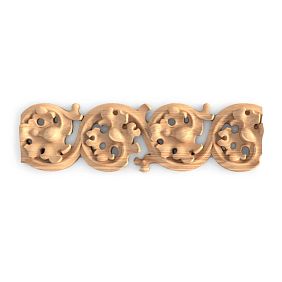
A carved profile is a frame as part of the artwork. Ornament, relief, play of shadows — the frame becomes an architectural surround, especially with side lighting. Suitable for academic painting, portraits, still lifes in classical style, icon painting.
Carved wooden picture frame mouldingfrom the STAVROS K-066, K-104 series — these are profiles with deep, multi-level relief made of solid oak. Such a profile literally 'integrates' the painting into a classic interior, becoming part of its architecture.
For classical painting
Academic oil painting — landscape, portrait, narrative composition — requires a frame with weight and character. Wide profile (50–100 mm), shaped or carved relief, toned in walnut or wenge, or patinated with gilding in the recesses of the carving. Oak is the preferred material due to its pronounced texture and visual solidity.
For posters and graphics
Posters, prints, original graphics — works that typically call for light, contemporary framing. Narrow or medium-wide profile 25–45 mm, smooth or with a soft bevel, in white enamel or light varnish. Beech for painting is the ideal material: its uniform, fine-pored structure provides an even, non-blotchy surface.
For contemporary interior
A wooden frame and a modern interior are not a conflict, but a dialogue. A minimalist flat strip 20–30 mm in matte enamel, a smooth bevel with a single chamfer, a thin 'floating' profile — all of this fits organically into Scandinavian style, high-tech, and modern classic. The key rule: the more restrained the interior, the more laconic the frame.
What types of works are suitable for moulding: breakdown by object type
The correct choice of profile depends not only on size and style, but also on the type of artwork. Different objects impose different requirements on the frame's construction.
Painting on canvas (on stretcher)
This is the most demanding option in terms of construction. The stretcher creates volume: 15–40 mm thickness. The frame's rabbet must fully accommodate it, otherwise the canvas will press against the edges of the profile and deform. Choose a profile with a deep rabbet. Glass is not used for oil painting — the film of linseed oil and varnish 'breathes' and does not tolerate sealing.
When framing a canvas, wide profiles with a 'floating' quarter work well — when a gap of 2–3 mm remains between the edge of the canvas and the inner edge of the profile. This prevents wear on the edges of the painting.
Reproduction on paper or canvas
A reproduction on paper is framed like a watercolor or photograph: under glass with a mat. A reproduction on canvas is framed like an original painting: without glass, with a deep rabbet. The level of framing should correspond to the value of the print. An inexpensive print gets a simple, smooth profile. A high-quality reproduction by a renowned master gets a substantial wooden profile with appropriate relief.
Poster and photograph
Under glass, with a mat is the standard mounting. The mat serves two functions: it protects the paper surface from sticking to the glass in humid conditions and creates an 'airy' gap-frame around the image. The recommended mat width is from 40 mm for formats up to A3, and from 60 mm for formats from A3 and larger.
The profile for a poster should be light, no more than 35–45 mm. An overloaded frame overwhelms the informational and decorative graphics.
Embroidery
Embroidered works are particularly demanding regarding mounting. The canvas must be stretched evenly and secured to a backing before being placed in the frame. A mat is essential—it hides the edges of the canvas and prevents the embroidery from sagging. The frame profile should be subdued, 30–50 mm, without overloaded decoration that would compete with the handiwork. Preferred finishes are neutral: white enamel, light varnish, soft tinting.
Icon
An icon is a special case. Traditionally, icons are placed in a kiot (a box-frame with glazing) or in a wide molding with patina and gilding. For icons in classic traditional interiors, use a wide oak profile (50–80 mm) with dark tinting and gilding on the carving details. For modern spaces, use a restrained profile without excessive decoration, emphasizing the wood texture.
Panel and decorative object
A decorative panel—a pictorial or photographic series on a single plane—requires framing that 'holds' the entire object together without falling apart. Structural strength of the corner joints is especially important here. Choose a profile with a width of at least 50 mm and always check the rabbet depth relative to the overall thickness of the panel.
Picture frame molding by size: what you need to know before buying
Calculating the linear footage is specific math you need to know before you proceed to place an order.
Inner frame size
Inner frame size = artwork size (or image size) + 1–3 mm technical gap on each side. The gap is needed for easy insertion and material thermal expansion. Too tight fit of the artwork in the frame during humidity fluctuations can lead to deformation.
For canvas on stretcher bars — inner frame size = stretcher bar size (not canvas!) + 2–3 mm gap on each side.
Linear footage calculation for one frame
Formula: frame perimeter + 15–20% waste allowance for miter cutting.
Calculation example for a 50×70 cm frame:
-
Perimeter = (50 + 70) × 2 = 240 cm = 2.4 m
-
20% allowance = 0.48 m
-
Total: 2.88 m → round up to 3.0 m
The standard molding length in the STAVROS catalog — 3.0 m — is designed with this logic: one molding piece covers one medium-format frame with allowance.
Calculating footage for a series of paintings
For a series of multiple works, sum the perimeters of all frames and add a general allowance of 10–15%.
Example: a series of 5 frames with formats 30×40, 30×40, 40×50, 40×50, 50×60:
-
Perimeters: 140, 140, 180, 180, 220 = 860 cm = 8.6 m
-
15% allowance = 1.29 m
-
Total: 9.89 m → take 10.5–11 m
When additional allowance is needed
Increase the allowance to 20–25% if:
-
you have no experience with 45° miter cutting;
-
you are working with a wide, expensive profile where every defect is costly in terms of money;
-
Profile with an asymmetrical pattern requiring ornament matching at the corners.
What determines the price of picture frames: an honest breakdown
Price range of wooden frames from STAVROS — from 180 to 15,490 rubles per linear meter. Why such a spread? Here's the full logic.
Material: oak or beech
Oak is denser, heavier, more expressive in texture. It is more difficult to process, more expensive to purchase. An oak profile costs on average 15–25% more than a similar beech one. Both are solid wood, both are durable, both surpass any pressed alternatives.
Beech is softer in milling, holds fine relief better, and is ideal for painting. It is chosen when carving precision is important or a white enamel finish is planned.
Profile width
The wider the profile, the more material per linear meter. An 80 mm oak profile uses 2.5 times more wood volume than a 30 mm profile of the same length. The price increases proportionally.
Complexity of carving and number of relief levels
Smooth profile — one pass of the cutter, minimal time. Profile with two relief levels — three to four passes, different tooling. Complex carved ornament of the K-104 series — dozens of passes, precise 3D milling, manual finishing. This is different labor intensity, and the price honestly reflects it.
Purchase format: by the meter or custom frame making
By the meter — cheaper. You pay only for the material. Custom frame making (cutting at 45°, assembly, corner veneering, geometry control) — more expensive, because it includes the craftsman's work. The difference depends on the complexity of the profile and the size of the frame.
Order volume: retail or wholesale
Retail — price per unit is higher. Wholesale from 20–50 m and more — discount from the price list, plus regular supply terms for designers and manufacturers.
Finishing
Unfinished blank ('for painting') — the most affordable price. Factory tinting in walnut, wenge, natural oak; varnishing; patination; imitation gilding — all of this adds to the cost but saves time on self-processing.
| Profile type | Material | Price range |
|---|---|---|
| Smooth, narrow 20–30 mm | Beech | from 180–350 rub./m |
| Figurative, 30–50 mm | Oak/beech | from 400–900 RUB/m |
| Carved, 50–80 mm | Oak | from 1,500–3,500 rub./m |
| Complex carved, from 80 mm | Oak | from 4,000–15,490 rub./m |
Where to buy picture frame molding by the meter without mistakes
Final block — purchasing practice. Specifically and without fluff.
When to buy a ready-made frame, not by the meter
Only one scenario where a ready-made frame is justified without reservations: standard format (A4, A3, 30×40, 40×60) + one piece + no cutting tools + need it fast. That's it. If even one of these parameters is not met — buy by the meter.
How to choose a wooden moulding supplier
Criteria to consider:
-
Material. Solid wood — yes. Pressed MDF, polyurethane foam, plastic — no, if we're talking about long-lasting framing.
-
Wood moisture content. Dry wood (8–12%) won't warp the frame. Damp wood — will cause deformation in a month or two.
-
Geometric precision. Tolerance of ±0.1 mm per linear meter — the standard for quality production. Checked during visual inspection: straightness of the strip, sharpness of edges, absence of twisting.
-
Range and availability. It's important that the needed profile is in stock, not 'on order in 6 weeks'.
STAVROS produceswooden picture moldingat our own production facility in St. Petersburg, with full quality control from blank to shipment. Stock items are available for quick order.
What to look for in the catalog
-
Product type: molding or trim (in the STAVROS catalog, this is a separate filter).
-
Material: oak or beech.
-
Profile width: must match your format and style.
-
Rebate depth: should accommodate your canvas or glass.
-
Relief type: smooth, figured, carved.
-
Finish: for painting or ready-made.
-
Price per linear meter: multiply by the required footage with a margin.
How to order for a non-standard format
Non-standard profile, unique ornament, or atypical cross-section — this is custom production. STAVROS performs it subject to a bulk order. To discuss terms, deadlines, and cost — call 8 (800) 555-46-75 (toll-free within Russia) or write via the feedback form on the website.
to buy a wooden frame for a paintingfrom the STAVROS catalog can be purchased both retail (from 1 linear meter) and wholesale — with corresponding conditions.
Wooden molding by the meter: working with profile rules
Buying the right profile is half the job. The second half is working with it skillfully.
Cutting tool
A miter box — wooden or metal, with 45° cutouts — is the minimum necessary tool for DIY cutting. The best option is a miter saw with a rotating table: it gives a perfectly straight cut, independent of manual precision. For profiles 60 mm wide or more — only a saw; a miter box won't provide the required accuracy.
Assembling the frame
Corners are joined with PVA glue or wood glue + L-shaped brackets or special corner clamps. For wide profiles (60 mm or more) — additionally, wooden diamond-shaped inserts ('keys') are glued into the back of the corner for rigidity. Corner geometry is checked with a square: a deviation of more than 0.5 mm is already visible to the naked eye.
Finishing before or after assembly
Better — before assembly: paint or stain each piece separately, let it dry, then assemble. The corners will still need touching up after assembly — the end grain of wood is always darker than the side surface. But this is quick and easy.
The art of framing: the final word on wooden molding
A painting without a frame is a sketch. Not a finished work, but an intention to create one. It is the frame that tells the viewer: 'Here is the work. Look.' It establishes the boundary between the ordinary space of the wall and the space of art.
Woodenwooden picture frame molding— this is not an expense, it's an investment. In the safety of the artwork (wood protects, absorbs shocks, prevents static electricity). In its visual value (the right frame literally increases the perceived value of the painting). In the durability of the interior solution (solid oak lasts 40–50 years without losing its appearance).
When you're deciding whether to spend an extra 500 rubles per linear meter on an oak profile instead of beech, or an extra 1,500 rubles on a carved profile instead of a smooth one — remember: you pay this money once. The painting will hang in this frame for decades.
Read more about howwooden molding works in interior and gallery projects, — in separate materials in the STAVROS articles section.
About the company STAVROS
STAVROS is a Russian manufacturer of wooden moldings and millwork from solid wood since 2002. The company's founders are artists who started by restoring palace interiors: among the objects are the Hermitage, the Alexander Palace, the Konstantinovsky Palace in Strelna.
Own production in St. Petersburg. Full cycle: wood selection and drying to 8–12%, four-sided planing on German equipment, 3D milling, manual finishing, final sanding. Geometric tolerance of ±0.1 mm per linear meter is a production standard, not a marketing promise.
STAVROS assortment — over 50 series of wooden molding from 180 rub./m to 15,490 rub./m. Oak, beech, high-density MDF. Retail and wholesale, custom project manufacturing. Showrooms in Moscow and St. Petersburg. Delivery across Russia and CIS. Phone: 8 (800) 555-46-75 (free within Russia).
FAQ: answers to questions about buying picture molding
What does 'picture molding millwork' mean?
This is a profiled wooden strip (millwork), sold by the linear meter, from which picture frames are made to a specific size. Unlike a ready-made frame, millwork allows making a frame of any non-standard format.
How is baguette molding different from a ready-made frame?
A ready-made frame is a finished product for a standard format. Molding is a material for making a frame to any size. Molding is more flexible, more precise in format, and more cost-effective for bulk orders.
When is it better to buy wooden picture frame molding by the meter?
When the painting is a non-standard size; when you need a series of frames with the same profile; when you work in a workshop; when the economics of a bulk order are important; when the canvas is on a stretcher and a specific rabbet is needed.
How to calculate how many meters of molding are needed?
Frame perimeter + 15–20% margin. For a 50×70 frame: (50+70)×2 = 240 cm = 2.4 m + margin = 2.9–3.0 m. One standard plank of 3.0 m covers one frame of this format with a small margin.
Which wooden molding is best for a canvas?
Profile with a deep rabbet (15–25 mm) — to accommodate the stretcher. Without glass. Wide profile from 50 mm for large canvases. Oak is the preferred material for its strength and visual weight.
Can I buy molding for a painting of a non-standard size?
Yes — that's exactly what molding by the meter is for. You take the required number of linear meters of the desired profile and cut it to your sizes. For particularly complex cases — order custom-made frames from the manufacturer.
What is more cost-effective: a ready-made frame or wooden molding by the meter?
For standard formats and single pieces — a ready-made frame is simpler. For non-standard sizes, series, or volume — molding by the meter is always more cost-effective in price and more precise in results.
How to choose molding for a series of paintings?
One profile — for the entire series, regardless of formats. This creates visual unity. Take the total footage + 15% reserve — and cut for each size from one material.
Can I order wooden molding for paintings with delivery?
Yes. STAVROS delivers throughout Russia and the CIS. Terms and deadlines depend on the region and order volume — check with the manager by phone 8 (800) 555-46-75.
What affects the price of wooden molding for paintings?
Material (oak is more expensive than beech), profile width, complexity of carving, type of finish (for painting or with a final coating), order volume (wholesale is cheaper than retail), purchase format (by the meter or a turnkey frame).