Article Contents:
- Wood species: character in every fiber
- Oak: aristocracy of the wood world
- Ash: flexibility and elegance
- Beech: stability and warmth
- Maple: strength in an elegant shell
- Stylistic solutions: from classic to avant-garde
- Classic style: Eternal elegance
- Scandinavian style: philosophy of simplicity
- Country style: rustic charm
- Loft: industrial romance
- Sizes and proportions: mathematics of comfort
- Standard sizes for different numbers of people
- Table height: ergonomics above all
- Round tables: layout features
- Manufacturing technologies: from rough cut to masterpiece
- Wood preparation: foundation of quality
- Lamella gluing: strength through unity
- Surface treatment: art in details
- Finishes and protection: longevity through care
- Oil finishes: breath of wood
- Varnish Systems: Maximum Protection
- Wax finishes: traditions and modernity
- Operation and maintenance: secrets of longevity
- Daily care: simplicity in details
- Preventive treatment: investment in the future
- Repairing damage: restoration by yourself
- Combination with interior: harmony of styles
- Color solutions: mood palette
- Textural combinations: play of contrasts
- Lighting: highlighting beauty
- Economic aspects: investment in quality of life
- Pricing: Understanding Value
- Long-term Savings: Planning for the Future
- Ecological Value: Caring for the Planet
- Trends and Innovations: Looking to the Future
- Modern Processing Technologies
- Digital technologies in production
- Personalization and individual approach
- Health and Comfort: Impact on Quality of Life
- Psychological Impact
- Safety and Hygiene
- Creating a Healthy Microclimate
- Conclusion: Generational Choice
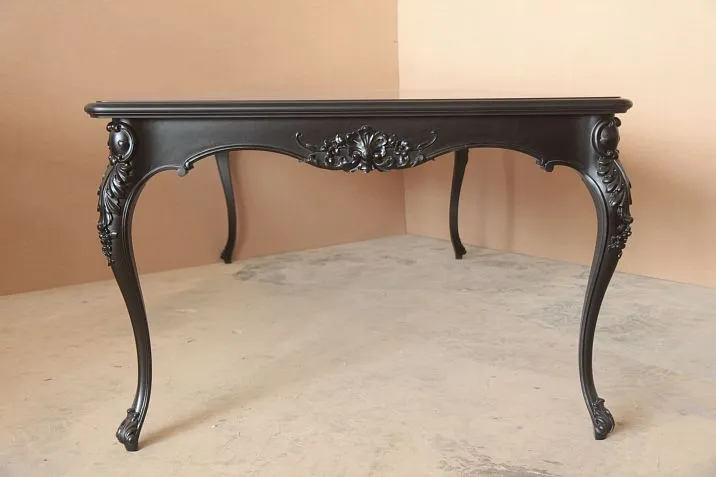
What unites the most cozy kitchens in the world? The answer is simple - the heart of the home always beats where a properly chosen %s stands. wooden kitchen tableThis piece of furniture becomes not just a functional element, but a magnet attracting all family members for shared meals, heartfelt conversations, and festive gatherings.
The modern pace of life dictates its own conditions: we increasingly prefer synthetic materials, forgetting the indescribable feeling of warmth and coziness that live wood offers. Natural wood possesses a special energy - it breathes, lives its own life, creating an atmosphere of harmony and tranquility in the home. Every touch of such a surface reminds us of our connection to nature, of roots and traditions passed down from generation to generation.
Choosing a wooden table for the kitchen is an investment not only in the beauty of the interior, but also in the health of the entire family. Natural wood does not emit toxic substances, possesses antibacterial properties, and creates a favorable microclimate in the room. This is especially important in the kitchen, where we spend a significant amount of time preparing food and interacting with loved ones.


Wood Species: Character in Every Fiber
Choosing a wood species for a kitchen table determines not only the appearance of the future product, but also its operational characteristics. Each species has unique properties that make it suitable for various interior styles and usage conditions.




Oak: Aristocracy of the Wooden World
Oak kitchen tables are rightfully considered the standard of quality and durability. This wood species is distinguished by exceptional hardness - 1290 units on the Janka scale, making it practically immune to everyday mechanical impacts. Oak has high moisture resistance, which is critically important for kitchen furniture, where contact with water and steam is inevitable.
The color palette of oak wood is impressive in its variety: from delicate honey tones to rich chocolate shades. The characteristic texture with pronounced annual rings gives each item a unique pattern. Oak easily accepts staining, allowing it to be adapted to any interior design style.
Our factory also produces:





Ash: Flexibility and Elegance
Ash occupies a special place among species used for making kitchen furniture. Its hardness is 1320 units on the Janka scale, exceeding even oak's figures. At the same time, ash is distinguished by remarkable flexibility, allowing the creation of tables with elegant curved forms without the risk of cracking.
Ash tables are characterized by light, almost white wood with contrasting dark veins, creating a wavy pattern. This species is ideal for Scandinavian style and modern minimalist interiors, where the natural beauty of the material is appreciated without excessive ornamentation.
Get Consultation
Beech: Stability and Warmth
Beech wood attracts attention with its uniform structure and pleasant pinkish hue. The hardness of beech is 1300 units on the Janka scale, ensuring high wear resistance. A distinctive feature of this species is the minimal number of pronounced defects - knots, cracks, color inconsistencies.
Beech kitchen tables are distinguished by dimensional and shape stability. This species is less prone to warping and cracking under changes in air humidity compared to others. Beech accepts various finishes well - from natural oil to colored varnishes and stains.
Maple: Strength in an Elegant Shell
Maple is rightfully considered one of the hardest wood species - its rating reaches 1450 units on the Janka scale. At the same time, maple wood has a light, almost white color with barely noticeable annual rings, creating a sense of purity and freshness.
Maple tables are especially popular among professional chefs due to their exceptional resistance to mechanical damage and ease of maintenance. The dense wood structure prevents moisture and bacteria penetration, making maple an ideal choice for intensive kitchen use.
Stylistic Solutions: From Classic to Avant-Garde
Classic Style: Eternal Elegance
In a Classic Interior wooden kitchen table Becomes the central element around which the entire composition is formed. This style is characterized by massive tables made of dark wood species - oak, walnut, mahogany - with carved elements and noble patina.
Classic wooden tables are distinguished by strict proportions, symmetry of forms, and richness of decorative elements. Tabletops can be rectangular or oval, necessarily with routed edges and characteristic profiled legs.
Scandinavian style: philosophy of simplicity
Scandinavian kitchen design is unthinkable without light-colored natural wood. Here, tables made of birch, pine, light oak, or white ash prevail. Main principles - functionality, minimalism, and eco-friendliness.
Tables in the Scandinavian style are characterized by simple geometric forms, absence of excessive decoration, and emphasis on the natural beauty of wood. Surfaces are treated with transparent oils or matte varnishes, preserving the natural texture of the material.
Country style: rustic charm
Kitchens in the country style create an atmosphere of a cozy countryside home, where time flows steadily and peacefully. For this direction, tables made of solid wood with intentionally rough finishes are characteristic, highlighting the natural origin of the material.
Artificially aged surfaces, brushing that reveals wood texture, and natural oil finishes that give the item a matte sheen are often used. The color palette ranges from natural honey tones to rich brown shades.
Loft: industrial romance
In loft-style interiors, wooden tables create a contrast with metallic and concrete elements, softening the industrial rigidity. Here, tables made from solid slabs - whole tree sections retaining natural edges and natural defects - are appropriate.
Loft-style tables often combine wooden tops with metal bases made of black steel or cast iron. This combination creates a striking visual contrast and emphasizes the style's brutishness.
Dimensions and proportions: mathematics of comfort
The correct choice of kitchen table dimensions determines not only its usability comfort but also the harmony of the entire interior. There are time-tested standards that ensure maximum comfort for all family members.
Standard sizes for different numbers of people
For a family of four, dimensions of 120×90 cm are considered optimal. Such a table provides each diner with a comfortable zone 60 cm wide and 40 cm deep, corresponding to ergonomic standards.
A family of six will suit a table of 150×90 cm. This allows seating two people on each long side and one at each end, while still maintaining sufficient space for serving and dish presentation.
For eight people, a table of at least 200×110 cm is required. Such dimensions ensure comfortable seating and allow for elegant table settings even during festive dinners.
Table height: ergonomics above all
The standard height of a kitchen table is 75-76 cm from the floor to the top of the tabletop. This dimension is calculated for an average human height of 165-170 cm and ensures a comfortable elbow position when seated on standard 45 cm high chairs.
For tall individuals, tables of 78-80 cm height may be considered, while for shorter family members, 72-74 cm is optimal. Some manufacturers offer tables with adjustable leg heights, allowing the furniture to be adapted to individual needs.
Round tables: layout specifics
Round wooden tables create a more democratic atmosphere, as there is no clear distinction between 'main' and 'secondary' seating. For four people, a diameter of 90-120 cm is sufficient, for six people - 130 cm, and for eight - 150-170 cm.
Round tables occupy more space in a room due to the need to ensure free access from all sides. However, they are ideal for square kitchens and create a more cozy atmosphere for conversation.
Manufacturing technologies: from rough cut to masterpiece
Wood preparation: the basis of quality
The process of creating a quality kitchen table begins with proper wood preparation. Kiln drying is a mandatory stage, allowing the material's moisture content to be reduced to optimal 8-12%. Only at this moisture level does wood remain stable and not deform during use.
Modern drying chambers allow control not only of temperature but also of air humidity, ensuring even drying throughout the entire volume of the rough cut. The process may take from several days to several weeks depending on the wood species and material thickness.
Laminating: strength through unity
Modern kitchen tables made of natural wood are primarily manufactured by laminating individual laminates. This is not a compromise on quality, but a technological solution that enhances the stability of the product.
Glued countertops are less prone to warping, as stresses in the wood are mutually compensated. Water-resistant D4 class adhesives are used, providing a bond stronger than the wood itself. A well-glued countertop is more likely to split along the grain than to separate at the adhesive joint.
Surface treatment: art in details
Finish treatment determines not only the appearance of the table but also its functional properties. Sanding is performed in several stages — from coarse sanding with grit 80-120 to final polishing with abrasive grit 220-320.
After sanding, the surface is carefully cleaned of dust and prepared for applying protective coating. Modern technologies allow creating various effects — from perfectly smooth glossy surfaces to intentionally rough textures with pronounced annual ring relief.
Coatings and protection: longevity through care
Oil-based coatings: the breath of wood
Oil-based coatings penetrate deeply into the wood structure, highlighting its natural beauty and preserving tactile sensations. They do not form a surface film, allowing the wood to 'breathe' and maintain natural moisture exchange with the surrounding environment.
The advantage of oil-based coatings is their ease of renewal — simply lightly sand the surface and apply a new layer of oil. Such a coating is easily restorable in case of local damage, making it ideal for families with children.
Lacquer systems: maximum protection
Polyurethane lacquers create a strong protective film on the wood surface, providing high resistance to moisture, mechanical damage, and chemical exposure. Modern lacquer systems can have various gloss levels — from deep gloss to completely matte surfaces.
Two-component lacquers provide maximum coating durability and are suitable for intensive use. They do not require frequent renewal, but in case of severe damage, professional restoration is needed.
Wax coatings: traditions and modernity
Wax is one of the oldest methods of wood protection, not losing relevance even today. Wax coatings give the surface a soft, noble gloss and pleasant tactile sensations. They are environmentally safe and create a special, cozy atmosphere in the room.
The drawback of wax coatings is the need for regular renewal — every 3-6 months depending on usage intensity. However, such care transforms into a meditative ritual of caring for the home.
Operation and maintenance: secrets of longevity
Daily care: simplicity in details
Daily care of a wooden table does not require special skills or expensive products. Simply wipe the surface daily with a dry soft cloth, removing dust and crumbs. For wet cleaning, use a slightly damp cloth without cleaning agents.
The main rule — immediately clean up any spills, preventing moisture from penetrating the wood structure. Hot dishes should be placed only on protective pads that shield the surface from thermal damage.
Preventive treatment: investment in the future
Periodic renewal of protective coating is the key to the longevity of a wooden table. The frequency of treatment depends on the type of coating and usage intensity. Oil-based coatings require renewal every 6-12 months, lacquers every 2-3 years.
Before applying a new layer of coating, the surface is lightly sanded with fine sandpaper (320-400 grit) to improve adhesion. Then all dust is carefully removed, and the protective agent is applied according to the manufacturer's instructions.
Repairing damage: DIY restoration
Minor scratches and scuffs on wooden surfaces can be repaired yourself. Use special wax pencils matched to the wood tone, or touch-up markers.
More serious damage requires professional intervention. Deep scratches, dents from impacts, and heat marks are best entrusted to a professional furniture restorer. Properly executed repair will make the damage practically invisible.
Combining with interior: harmony of styles
Color solutions: mood palette
The color choice of a wooden table should harmonize with the overall color scheme of the kitchen. Light shades — birch, maple, light oak — visually expand the space and are suitable for small rooms. They create a sense of freshness and cleanliness, especially when combined with white kitchen cabinet facades.
Dark tones — walnut, wenge, stained oak — give the interior a sense of solidity and elegance. They suit spacious kitchens with good natural lighting. Warm tones — cherry, mahogany — add warmth and coziness, creating an atmosphere of a home hearth.
Textural combinations: play of contrasts
Combining different textures creates visual interest and depth in the interior. A smooth polished countertop contrasts with matte kitchen cabinet facades, while a brushed surface with pronounced relief complements industrial elements in a loft style.
It is important to maintain a balance between different materials. If the countertop has an active texture, then other interior elements should be more restrained, and vice versa.
Lighting: Highlighting beauty
Proper lighting can turn an ordinary wooden table into a work of art. Warm light highlights the natural beauty of wood, reveals the subtleties of texture and color play. Cold lighting, on the contrary, can make even the most beautiful wood lifeless and unattractive.
It is recommended to use multiple light sources of different intensities — general lighting, task lighting, and decorative accents. Pendant lights over the table create a cozy atmosphere and highlight the dining area.
Economic aspects: investment in quality of life
Pricing: Understanding cost
The cost of a wooden kitchen table made of natural wood consists of several factors. The main expense is the material. Local species (oak, ash, birch) are usually cheaper than exotic ones. Rare wood species with special texture have a premium price.
Manufacturing complexity also affects the cost. Simple rectangular tables are cheaper than those with complex shapes. Additional operations — carving, inlay, patination — increase the price but make each item unique.
Long-term savings: Planning for the future
With proper care wooden kitchen table made of natural wood serves for decades, unlike furniture made of artificial materials, which requires replacement every 5-10 years. The possibility of restoration allows updating the appearance without fully replacing the item.
A quality wooden table does not lose value over time, and sometimes even appreciates, especially if it is made from valuable wood species or has historical significance. This makes such a purchase not only practical but also investment-worthy.
Ecological value: Caring for the planet
Choosing natural wood is choosing for the environment. Wood is a renewable resource that, with proper forest management, does not harm the environment. Moreover, trees absorb carbon dioxide from the atmosphere, helping to purify the air.
At the end of its service life, a wooden table can be recycled or disposed of without harming nature. This fundamentally distinguishes natural wood from synthetic materials, which take hundreds of years to decompose, polluting the environment.
Trends and innovations: Looking to the future
Modern Processing Technologies
Thermo-modification of wood is an innovative technology that allows significantly improving the material's properties. Processing at 160-230°C in a steam environment changes the wood's structure, increasing its stability, biostability, and moisture resistance.
Thermo-modified wood acquires a beautiful dark tone without using chemical dyes. Such material is ideal for making kitchen tables, as it combines natural beauty with improved performance characteristics.
Digital technologies in production
CNC processing has revolutionized the production of solid wood furniture. Computer control allows creating items of complex shapes with millimeter precision, eliminating human error and guaranteeing repeatability of results.
3D modeling allows seeing the future product before production begins, making adjustments and optimizing the design. This is especially important when manufacturing custom projects, where every detail matters.
Personalization and Individual Approach
Modern consumers increasingly choose individual solutions that reflect their personality and lifestyle. Laser engraving allows applying any images, ornaments, family crests, or commemorative inscriptions onto the table surface.
The ability to choose dimensions, shape, wood species, finish type, and decorative elements makes each table a unique piece, created specifically for a particular family and interior.
Health and comfort: Impact on quality of life
Psychological impact
Natural materials have a positive effect on a person's psychological state. Touching a warm wooden surface, inhaling its subtle aroma, admiring the unique texture pattern — all this creates a sense of harmony and calm.
Studies show that people surrounded by natural materials feel more relaxed and comfortable. This is especially important in the kitchen — a place where the family spends a lot of time, communicating and eating.
Safety and hygiene
Natural wood has inherent antibacterial properties. Some species, such as oak or cedar, contain tannins and essential oils that inhibit the growth of pathogenic microorganisms.
With proper treatment, a wooden surface does not accumulate static electricity, preventing dust and small particles from being attracted. This makes table maintenance simpler and more effective.
Wood regulates humidity in the room, absorbing excess moisture when humidity is high and releasing it when the air is dry. This creates a comfortable microclimate, especially important for people with respiratory diseases.
The ability of wood to 'breathe' also contributes to natural ventilation, preventing air stagnation and accumulation of unpleasant odors. This is especially valuable in the kitchen, where food is prepared with various aromas.
Conclusion: Generations' choice
Decision to purchase
- this is a choice that determines the atmosphere of the home for many years to come. It is an investment not only in beauty and functionality, but also in the health of the family, in creating a space where everyone feels safe and loved. wooden kitchen table Natural wood carries within it the memory of the forests where it grew, of the sun and rain that nourished its sap, of the time that made it strong and beautiful. Each such table is unique, like a fingerprint, and carries a piece of living nature that is so lacking in modern urban interiors.
In a world of mass production and disposable items, a wooden table becomes a symbol of permanence, quality, and respect for traditions. It unites generations, becoming a place where grandmother teaches her granddaughter to bake pies, where parents help children with homework, where the family gathers for festive dinners.
Choosing tables made of natural wood is a philosophy of life where authenticity, quality, and beauty are valued. This is the choice of those who understand that true luxury lies not in ostentatious expense, but in harmony with nature and in creating a space for a happy family life.
Modern technologies allow combining traditional craftsmanship with innovative processing methods, creating products that surpass the best examples of the past in every parameter. Thermomodification, stabilization, precision machining on CNC machines — all this serves one purpose: creating the ideal table for a modern family.
Modern technologies allow combining traditional craftsmanship with innovative processing methods, creating products that surpass the best examples of the past in every aspect. Therm modification, stabilization, precision machining on CNC machines — all this serves one purpose: creating the perfect table for a modern family.
Solid wood tables distinguished not only by flawless quality, but also by attention to every detail. Each item is created with soul, with an understanding that it will become a witness to important moments in the family's life, a place where important decisions will be made and warm memories created.
STAVROS Company understands the full responsibility that lies on the producer of quality furniture. Years of experience, use of only premium wood, modern equipment, and, above all, love for one's craft — all this guarantees that each table will become not just a piece of furniture, but a true work of art capable of serving several generations of one family.