Article Contents:
- Evolution of Requirements for Kitchen Materials
- Modern Safety Standards
- Wood Composites as the Foundation of Modern Kitchens
- MDF — The Gold Standard of Kitchen Furniture
- Innovative Particleboard for Kitchen Applications
- Plywood in Kitchen Manufacturing
- Metallurgical Solutions for Kitchen Structures
- Stainless Steel — The Benchmark of Hygiene
- Aluminum Alloys in Kitchen Design
- Steel Structures and Hardware
- Polymer Technologies in the Kitchen Industry
- Acrylic Materials — Transparency and Strength
- Polyurethane Coatings of the New Generation
- Innovative Composite Plastics
- Stone and Ceramic: Natural Durability
- Natural Stone in Kitchen Design
- Engineered Stone — Technological Alternative
- Ceramica and Technical Ceramic
- Glass in Kitchen Design
- Tempered Glass — Safety and Functionality
- Laminated Glass and Glass Panels
- Glass-Ceramic and Sital
- Innovative Coatings and Finishing Materials
- Nanocoatings and Their Applications
- High-Pressure Laminated Coatings
- Film Coatings and Coating Technologies
- Manufacturing Processes for Kitchen Furniture
- Ecological Standards and Safety
- Formaldehyde Emissions and Their Control
- Certification and quality standards
- Recycling and reuse
- Manufacturing Processes for Kitchen Furniture
- Cutting and Preparation Operations
- Facade Manufacturing Technologies
- Assembly Processes and Quality Control
- Innovative Solutions in Kitchen Furniture
- Integration of smart technologies
- Adaptive Furniture and Transformers
- Ergonomic innovations
- Regional Characteristics of Materials
- Adaptation to Climatic Conditions
- Logistical aspects
- Economic Aspects of Material Selection
- Lifecycle Cost Analysis
- Impact of Production Volumes
- Trends in Development of Materials for Kitchen Furniture
- Bio-Materials and Ecological Innovations
- Personalization and customization
- Intelligent Materials
- Conclusion: The Material Foundation of Kitchen Excellence
- Frequently Asked Questions
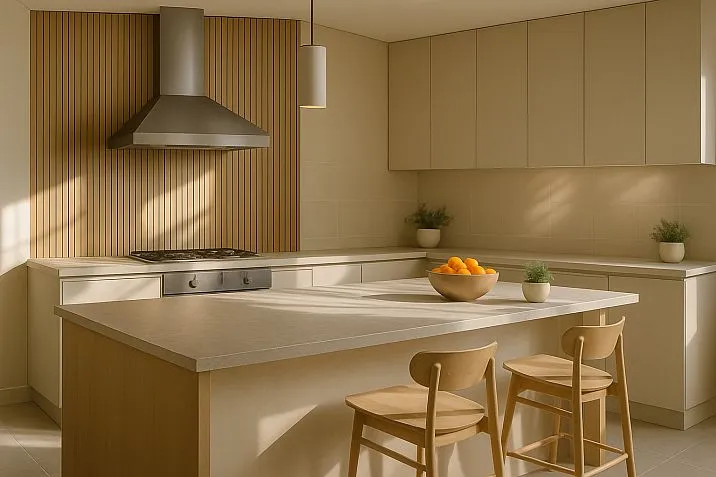
Kitchen — the heart of the home, where materials are subjected to the harshest tests. Here, extreme conditions prevail: boiling steam, grease splashes, aggressive cleaning chemicals, constant temperature fluctuations. That is why kitchen furniture is made of it requires a deep engineering analysis and understanding of the characteristics of each material.
Modern kitchen furniture is a high-tech product, where each component is selected based on specific operational requirements. Moisture resistance, thermal stability, chemical inertness, hygiene — these are just some of the characteristics that must be considered when designing kitchen furniture. Over the past decade, materials science in this field has made a giant leap, offering solutions that were once considered science fiction.


Revolution in Kitchen Furniture Materials Science




Evolution of Requirements for Kitchen Materials
When we analyze, What materials are used for kitchen furniture in the 21st century, we see radical changes compared to previous decades. If previously the main criteria were strength and appearance, today the list of requirements has significantly expanded.
The modern kitchen environment is characterized by increased usage intensity. Frequent food preparation, use of dishwashers, various household appliances create an aggressive environment that destructively affects materials. Temperature fluctuations from +5°C in the refrigerator to +200°C on the stove, humidity ranging from dry air from air conditioners to saturated steam during boiling — all this requires materials to exhibit exceptional stability.
The chemical aggressiveness of the kitchen environment has also significantly increased. Modern cleaning agents contain active components capable of destroying many traditional materials. Acids from fruits and vegetables, various types of fats, salts — all this creates a complex cocktail of effects.
Hygiene requirements have become stricter due to increased understanding of the importance of food safety. Materials must not emit harmful substances, must be easy to clean and disinfect, and must not accumulate contaminants and microorganisms.
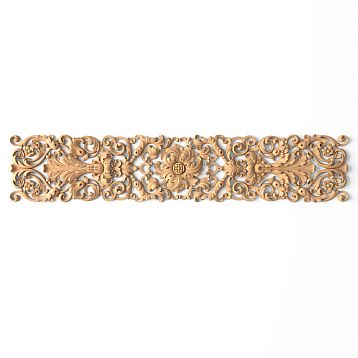
Our factory also produces:



Modern Safety Standards
European EN standards and Russian GOST standards set strict requirements for materials in contact with food products. Formaldehyde emission class E1 has become the minimum requirement, while E0 is the preferred standard for kitchen furniture.
Antibacterial properties of materials are becoming increasingly important. Silver ions, titanium dioxide, and other active additives are integrated into the material structure, providing suppression of pathogenic microorganism growth.
Flame retardancy is another critically important parameter. Modern materials must not only not support combustion, but also not emit toxic gases when heated.
Get Consultation
Wood-based composites as the foundation of modern kitchens
MDF — the golden standard of kitchen furniture
Medium-density fiberboard revolutionized kitchen furniture production. Unlike traditional particleboard, MDF has a homogeneous structure, ensuring geometric stability even under varying humidity conditions.
Moisture-resistant MDF is specifically designed for kitchen conditions. Special resins and paraffin additives create a barrier against moisture penetration. Such a board withstands direct contact with water for 24 hours without noticeable swelling.
MDF production technology allows creating boards of various densities — from 600 to 800 kg/m³. Denser variants are used for countertops and load-bearing elements, while less dense ones are used for decorative panels and facades.
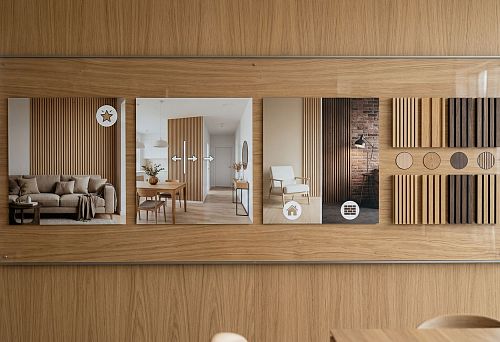
Surface treatment of MDF opens up endless design possibilities. Laminating, veneering, painting, milling — all these technologies allow creating Unique kitchen interiors with any aesthetic.
Innovative MDF for kitchen applications
Modern MDF fundamentally differs from the material known several decades ago. The use of oriented strands, multi-layer structure, and special binders create a material with improved performance characteristics.
P5 moisture-resistant MDF is specifically designed for humid areas. Melamine-formaldehyde resins with paraffin additives create a water-repellent effect. Such a panel can even be used in close proximity to a sink.
Laminated MDF with quality coating provides not only aesthetics but also protection against aggressive influences. Modern finishes mimic any material — from exotic wood species to natural stone.
Edge banding is a critically important step in processing MDF for kitchen furniture. Modern PVC and ABS edges, 2-3 mm thick, provide reliable end sealing. Laser edge processing creates virtually invisible seams.
Furniture-grade plywood
Birch plywood FSF (phenol-formaldehyde) has exceptional moisture resistance and can be used in the most demanding areas of kitchen furniture. Its multi-layer structure provides high strength at relatively low weight.
Flexible plywood opens up new possibilities for creating curved elements. Rounded facades, arched structures, streamlined forms — all of this becomes achievable thanks to this innovative material.
Decorative plywood with natural veneer combines the ecological nature of natural wood with the practicality of composite material. Special surface treatment with varnishes and oils creates a protective barrier against moisture and contamination.
Metallurgical solutions for kitchen structures
Stainless steel — the standard of hygiene
Stainless steel remains the unrivaled material for kitchen applications where absolute hygiene is required. Austenitic steels such as 304 and 316 have exceptional corrosion resistance and inertness to food products.
Different surface treatments of stainless steel determine its aesthetic and functional properties. Mirror polish is easy to clean but shows fingerprints. Matte finish is more practical in use. Structured surfaces hide minor scratches and add character to the material.
The thickness of stainless steel sheets for kitchen furniture varies from 0.8 to 3 mm depending on the application. Thin sheets are used for cladding, while thicker ones are used for countertops and work surfaces.
Modern technologies allow creating complex shapes from stainless steel. Hydroforming, stamping, and laser cutting open new possibilities for kitchen furniture design.
Aluminum alloys in kitchen design
Aluminum and its alloys are finding increasingly wider use in kitchen furniture. The material’s lightness, corrosion resistance, and ability to be anodized make it attractive for many applications.
Aluminum profile systems are used to manufacture cabinet frames, facade frames, and guide systems. Extrusion profiles allow creating complex cross-sections with integrated functional elements.
Anodized aluminum gains additional surface strength and color variety. Anodized coating thickness of 15-25 microns provides long-lasting protection against corrosion and mechanical damage.
Casting aluminum elements are used to manufacture hardware, decorative details, and functional components. Modern casting technologies allow creating parts of complex shapes with high dimensional accuracy.
Steel structures and hardware
Carbon steels with protective coatings are widely used in kitchen furniture for concealed structural elements. Powder coatings provide long-lasting corrosion protection at relatively low cost.
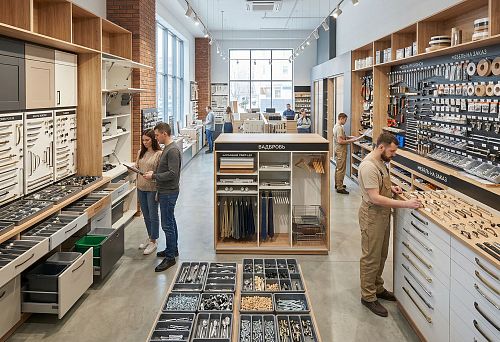
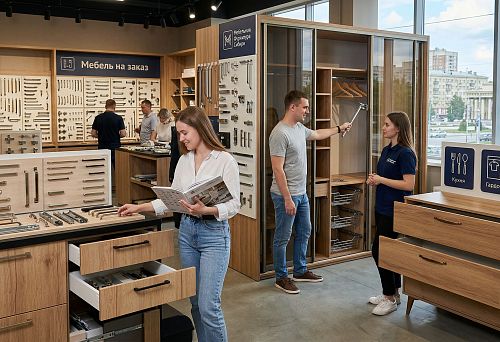
Modern Furniture hardware for base cabinet makers Includes a wide range of steel elements: hinges, guides, transformation mechanisms. The quality of steel and coatings determines the longevity and smooth operation of the furniture.
Special steels for spring elements ensure reliable operation of opening and closing mechanisms. Quenching and tempering impart the necessary elastic properties to the steel.
Polymer technologies in the kitchen industry
Acrylic materials — transparency and strength
Acrylic materials open up new possibilities for kitchen design. Transparency, allowing for a weightless effect, combines with high strength and chemical resistance.
Cast acrylic is used to manufacture countertops, sinks, and decorative elements. The material is easy to process, bond, and polish. The ability to thermoform allows creating items of complex shapes.
Extruded acrylic is more cost-effective but has somewhat limited processing capabilities. It is used to manufacture facades, shelves, and protective screens.
Modifying acrylic with special additives allows obtaining materials with improved properties. Antibacterial additives, UV stabilizers, and anti-slip textures expand application areas.
New-generation polyurethane coatings
Polyurethane paints and varnishes provide exceptional durability for kitchen furniture finishes. Two-component formulations create chemically resistant coatings that are abrasion-resistant, scratch-resistant, and resistant to household chemicals.
Polyurethane films for membrane-vacuum pressing allow covering surfaces of complex shapes. The technology enables creating facades with deep relief, imitating solid wood or other textures.
UV-curable polyurethane coatings provide instant polymerization under ultraviolet radiation. This significantly speeds up production and improves coating quality.
Innovative composite plastics
Modern composite materials combine the advantages of various components. Glass-fiber, carbon-fiber, and organic-fiber composites are used in high-load elements of kitchen furniture.
Wood-polymer composites (WPC) combine the naturalness of wood with the practicality of plastic. The material is resistant to moisture, does not rot, requires no special maintenance, while retaining the pleasant texture of wood.
Acrylic-based mineral composites combine the beauty of natural stone with the technological advantages of artificial materials. The ability to create seamless constructions, repairability, and hygiene make them ideal for kitchen applications.
Stone and ceramic: natural strength
Natural stone in kitchen design
Granite remains the benchmark of strength for kitchen countertops. Its exceptional hardness, chemical inertness, and heat resistance make it a practically eternal material. Various quarries provide a wide palette of colors and textures.
Marble, despite its lower hardness compared to granite, is valued for its unique beauty. Modern processing and protection technologies allow using marble in kitchen conditions with certain limitations.
Quartzite combines the beauty of marble with the strength of granite. This metamorphic stone practically has no pores, making it an exceptionally hygienic material.
Tufa, limestone, slate expand the palette of natural materials. Each has its own characteristics and areas of application in kitchen design.
Engineered stone — a technological alternative
Quartz aggregates contain up to 95% natural quartz bound with polymer resins. This composition provides strength surpassing many natural stones, while simultaneously lacking pores and microcracks.
Engineered stone production allows controlling color, texture, and inclusions. The ability to create large slab sizes minimizes the number of joints in the finished product.
Engineered stone processing requires special diamond-coated tools, but the result exceeds expectations. The material is easily polished, machined, and bonded.
Ceramogranite and technical ceramics
Modern ceramogranite fundamentally differs from traditional tiles. Thickness of 12–20 mm, sizes up to 3×1.5 meters, imitation of any natural materials — all this makes ceramogranite a serious competitor to natural stone.
Technical ceramics possess unique properties: exceptional hardness, chemical inertness, and heat resistance. Aluminum oxide, silicon carbide, and other technical ceramics find application in specialized kitchen uses.
Nano-ceramic coatings provide self-cleaning surfaces, antibacterial properties, and hydrophobicity. These technologies are gradually finding application in kitchen furniture.
Glass in kitchen design
Tempered glass — safety and functionality
Tempered glass has strength 5–7 times greater than ordinary glass. Upon breaking, it shatters into small, blunt fragments, ensuring safety in kitchen conditions.
Various surface treatments create different aesthetic and functional effects. Acid or sandblasting creates a uniform matte surface. Satinizing provides a softer, silk-like effect.
Coloring glass in mass or applying colored coatings allows achieving virtually any color. Modern technologies ensure color resistance to fading and mechanical impacts.
Laminated glass and glass panels
Triplex — laminated glass with a polymer interlayer — provides exceptional safety. Even upon breaking, fragments remain connected by the film, preventing injury.
Glass panels in kitchen furniture are used to create display cases with climate control. Inert gas between the glass panes provides insulation, while special coatings offer protection against condensation.
Glass-ceramics and ceramics
Glass-ceramic materials combine the transparency of glass with the strength of ceramics. The material withstands extreme temperature fluctuations and has zero thermal expansion.
Ceramics — crystallized glasses — possess unique properties. Controlled crystallization allows obtaining materials with specified characteristics of strength, thermal resistance, and chemical resistance.
Innovative coatings and finishing materials
Nanocoatings and their application
Nanotechnological coatings fundamentally change surface properties. Hydrophobic coatings create self-cleaning surfaces that repel water and contaminants.
Photocatalytic coatings based on titanium dioxide break down organic contaminants under light. Such surfaces have self-cleaning and antibacterial properties.
Antibacterial coatings with silver or copper ions suppress microbial growth. The effectiveness of such coatings is confirmed by numerous studies.
High-pressure laminated coatings
HPL (High Pressure Laminate) — high-pressure coatings — provide exceptional resistance to mechanical and chemical effects. The multi-layer structure includes a decorative layer, protective overlay, and kraft paper.
Modern HPLs mimic any material with photographic accuracy. Synchronized textures create tactile sensations matching visual perception.
Compact HPL panels are self-supporting materials requiring no backing. Thickness of 6–25 mm allows their use for countertops, facades, and structural elements.
Film coatings and laminating technologies
PVC films for membrane-vacuum lamination allow covering surfaces of any complexity. Modern films accurately mimic wood, stone, metal, and fabric.
Polyurethane laminating coatings create seamless surfaces of complex shapes. The technology enables manufacturing products with integrated functional elements.
Acrylic laminating coatings provide high-quality glossy or matte surfaces. The ability to create gradients and special effects expands design possibilities.
Ecological standards and safety
Formaldehyde emissions and their control
Formaldehyde remains the main ecological problem of wood composites. E1 class allows emission of no more than 0.1 ppm, E0 — practically zero emissions.
Formaldehyde-free binders based on polyurethane, isocyanates, and other polymers completely eliminate emission issues. Such materials are recommended for children's furniture and allergy sufferers.
Emission reduction methods include special treatments, lamination, and edge banding. Proper treatment can reduce emissions by dozens of times.
Certification and quality standards
FSC certification guarantees that wood originates from responsibly managed forests. PEFC — another international certification system for forest products.
GREENGUARD Gold — the strictest standard for chemical emissions. Products with this certification are recommended for schools and hospitals.
European EN standards set requirements for strength, durability, and safety of furniture. Compliance with these standards is a guarantee of product quality.
Recycling and reuse
Circular economy requires considering the full life cycle of materials. Recyclability becomes an important criterion for selection.
Mechanical recycling of wood composites allows using them as raw material for new panels. Chemical recycling breaks down the material into its original components.
Furniture design should provide for easy disassembly for subsequent recycling. Minimizing adhesive joints and using mechanical fasteners facilitate disassembly.
Manufacturing technologies for kitchen furniture
Cutting and fabrication operations
Modern CNC format-cutting machines ensure cutting accuracy of ±0.1 mm. Optimization of cutting using software minimizes material waste.
Edge banding machines apply edge bands with precise positioning and high-quality bonding. Modern melt adhesives provide bonding strength exceeding the strength of the base material.
Drilling and fitting machines perform precise marking and drilling holes for hardware. CNC ensures dimensional repeatability and eliminates marking errors.
Facade manufacturing technologies
CNC milling of MDF allows creating complex profiles and relief. Modern CNC centers perform 3D modeling-based volumetric processing.
Membrane-vacuum pressing provides facades with complex shapes. The technology allows obtaining products with deep relief and sharp angles.
Painting lines with robotic application ensure uniform coating and high surface quality. Multi-layer coating with intermediate sanding provides a mirror-like surface.
Assembly processes and quality control
Modern kitchen furniture assembly uses high-precision hardware and specialized tools. Pneumatic screwdrivers with torque control ensure reliable connections.
Confirming systems and eccentric clamping allow creating high-strength disassemblable structures. Correct hole geometry ensures precise assembly without misalignment.
Quality control includes checking geometry, connection strength, and coating quality. Modern measurement systems allow monitoring all critical parameters.
Innovative solutions in kitchen furniture
Integration of smart technologies
Built-in electronics have become an essential part of modern kitchen furniture. Touch-opening systems, LED lighting, and wireless charging are integrated into the furniture structure.
Climate control systems support optimal product storage conditions. Temperature and humidity sensors automatically regulate the microclimate in cabinets.
Smart locks with biometric identification ensure storage security. Smartphone apps allow remote monitoring and control of furniture.
Adaptive furniture and transformers
Height-adjustable countertops adapt to user height. Electric drives provide smooth adjustment over a wide range.
Pull-out and rotating elements maximize space usage. Modern mechanisms ensure smooth movement and long service life.
Modular systems allow easy kitchen configuration changes. Standardized connections ensure compatibility of elements from different manufacturers.
Ergonomic Innovations
Kitchen furniture ergonomics considers anthropometric data and biomechanics of movement. Working surface height, cabinet depth, and handle placement are optimized for user comfort.
Soft-close systems reduce noise and extend furniture lifespan. Dampers provide smooth braking of moving elements.
Work area lighting is integrated into furniture structure. LED fixtures provide even illumination without glare or shadows.
Regional material characteristics
Adaptation to Climatic Conditions
Different climate zones impose specific requirements on kitchen furniture materials. High humidity in tropics requires maximum moisture resistance. Dry desert climates cause cracking issues.
Temperature fluctuations affect dimensional stability. Materials must have similar coefficients of thermal expansion to prevent deformation.
Ultraviolet radiation causes polymer degradation and fading. UV stabilizers and protective coatings extend material lifespan.
Transportation of oak balusters requires special precautions due to their weight and value. Special packaging is used to prevent mechanical damage.
Long-distance material transportation affects cost and availability. Regional manufacturers often have logistical cost advantages.
Material packaging and protection during transportation require special solutions. Moisture-resistant coatings, cushioning materials, and special packaging ensure cargo integrity.
Storing materials under various climatic conditions requires special requirements. Ventilation, humidity control, and protection from direct sunlight are critical for maintaining quality.
Economic aspects of material selection
Life Cycle Cost Analysis
When selecting materials, it is important to consider not only initial cost but also expenses over the entire service life. More expensive materials may be economically advantageous due to greater durability.
Maintenance and repair costs vary significantly for different materials. Some require regular care, while others require almost no maintenance.
Residual value of materials after service life must also be considered. Recyclability or reusability affects the overall project economics.
Impact of production volumes
Mass production reduces material cost through bulk purchasing and process optimization. Small-batch production requires more flexible and expensive solutions.
Standardizing sizes and formats reduces material costs. Using standard-sized panels, profiles, and hardware optimizes production processes.
Regional availability of materials affects their cost. Imported materials may be of higher quality but significantly more expensive than local alternatives.
Trends in development of materials for kitchen furniture
Bio-materials and ecological innovations
Bio-plastics based on plant raw materials gradually replace traditional polymers. Materials made from corn starch, cellulose, and other plant components are fully biodegradable.
Composites based on natural fibers — flax, hemp, jute — have high strength characteristics while maintaining ecological safety.
Mycelium-based materials, grown on plant waste, create materials with properties similar to polystyrene but fully biodegradable.
Personalization and Customization
3D printing opens opportunities to create unique kitchen furniture elements. Printing large-scale components becomes technically feasible and economically justified.
Digital printing on materials allows creating unique decorations tailored to specific orders. Any image can be applied to the surface with high detail.
Laser processing ensures precise fitting of parts to specific dimensions and requirements. The ability to quickly modify the processing program enables small-batch production.
Intelligent materials
Materials with shape memory can change their configuration under the influence of temperature or other factors. Such materials open possibilities for creating adaptive furniture.
Self-healing coatings can "repair" minor damage under the influence of heat or ultraviolet light. This significantly extends the service life of surfaces.
Chromogenic materials change color depending on lighting, temperature, or electric field. Furniture made from such materials can adapt to changing conditions.
Conclusion: the material foundation of kitchen perfection
Modern answer to the question what materials kitchen furniture is made of covers a wide spectrum of innovative solutions, each designed to address specific challenges in harsh kitchen environments. From traditional wood-based materials to high-tech composites and smart coatings — the modern industry offers solutions for any requirements and budgets.
Choosing the optimal material requires a comprehensive analysis of multiple factors: operating conditions, aesthetic preferences, budget, and ecological requirements. where to buy furniture decor and quality materials becomes a critically important issue, determining the final quality of the product.
The future of materials for kitchen furniture is linked to further development of nanotechnologies, bio-materials, and smart coatings. Integration of electronics, adaptability, and ecological safety become not just desirable, but necessary characteristics of modern materials.
STAVROS Company, possessing deep expertise in materials science and extensive experience working with various materials, offers comprehensive solutions for creating high-quality kitchen furniture. Its own research and development base, partnerships with leading material suppliers, and strict quality control at every production stage enable STAVROS to produce products meeting the highest international standards.
STAVROS's innovative approach to material selection and application ensures optimal combinations of functionality, aesthetics, and durability. The company's team of experts continuously monitors the emergence of new materials and technologies, integrating the best solutions into production processes.
Frequently asked questions
Which materials are considered most suitable for kitchen furniture in high-humidity conditions?
For high-humidity conditions, optimal materials include moisture-resistant MDF class P5, stainless steel, engineered stone, and HPL plastics. These materials have minimal water absorption and are resistant to deformation under humidity changes. It is also important to ensure high-quality edge banding and sealing of all joints.
How to determine the quality of particleboard and MDF for kitchen furniture?
Quality panels have a uniform structure without voids or delamination, dense edges without chipping, high-quality lamination without bubbles. The emission class should not exceed E1, preferably E0. Thickness and edge quality are also important — the edge should fit tightly without gaps or delamination.
Is it worth paying extra for countertops made of natural stone?
Natural stone justifies its cost in intensive kitchen use. Granite is practically eternal, resistant to scratches and high temperatures. Marble is beautiful but requires careful maintenance. Engineered stone may be a compromise solution — it is cheaper than natural stone but surpasses it in performance characteristics.
Which facade coatings are most practical for the kitchen?
The most practical coatings are acrylic and polyurethane coatings, HPL plastics, and high-quality PVC films. They are resistant to moisture, grease, household chemicals, and easy to clean. Avoid water-based coatings and simple melamine films — they are not durable in kitchen conditions.
Avoid water contact with edges and unprocessed surfaces, use hot pads, do not use abrasive cleaning agents. Regularly inspect the condition of edges and hardware. Address any damage immediately to prevent further material degradation.
Avoid water contact with edges and unprocessed surfaces, use hot pads, do not use abrasive cleaning agents. Regularly inspect the condition of edges and hardware. Address any damage immediately to prevent further material degradation.