Article Contents:
- Anatomy of wood fibers: science of strength
- Molecular structure as the basis of durability
- Physical characteristics of various species
- Production alchemy: from forest to bedroom
- Revolution in drying technologies
- Precision processing: art of modern craftsmanship
- Ergonomic design principles
- Anthropometric foundations of comfort
- Support systems and their impact on health
- Stylistic diversity: from classic to avant-garde
- Neoclassicism: modern interpretation of timeless forms
- Scandinavian Minimalism: Philosophy of Simplicity
- Loft: industrial aesthetics in the bedroom
- Secrets of longevity: finishing coatings
- Oil systems: wood’s breath
- Waxes: luxury of tactile sensations
- Lacquer systems: modern protection
- Economics of quality: investments in the future
- Analysis of total cost of ownership
- Factors influencing pricing
- Care and maintenance: art of preserving beauty
- Creating optimal operating conditions
- Regular maintenance
- Preventive maintenance
- Ecological aspects: Responsibility to nature
- Carbon footprint and climate commitments
- Certification and traceability
- Technological innovations: looking toward the future
- Smart materials and technology integration
- Nanotechnology in wood processing
- Psychology of perception: emotional connection with material
- Biophilic design and health
- Social semiotics of materials
- Regional schools of craftsmanship
- Russian Woodworking Traditions
- European traditions
- Personalization and individual approach
- Customization possibilities
- Emotional design
- STAVROS: workshop of perfection in every detail
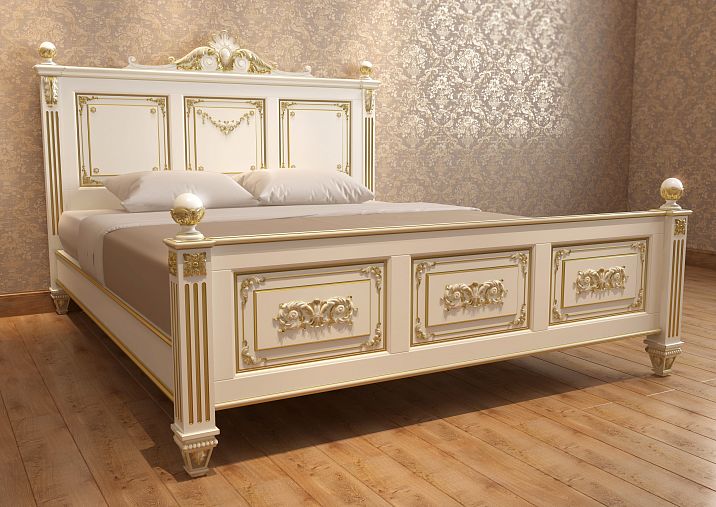
Can you imagine a morning when the first rays of sunlight touch the surface of a noble oak from which your bed made of natural wood? At this moment, the wood seems to come alive, radiating warmth and energy accumulated over decades of growth. The modern world of bedroom furniture is experiencing a true renaissance of natural materials, as discerning buyers increasingly reject synthetic substitutes in favor of the authentic beauty and longevity of solid wood.
Wood is not just a material. It is a philosophy of life, embodied in every fiber, every growth ring, every natural curve of texture. When a craftsman takes in hand a blank of a century-old oak or a thousand-year-old ash, he holds history — the history of rains and droughts, frosts and thaws, which shaped the character of the future furniture.


Anatomy of wood fibers: the science of strength




Molecular structure as the basis of durability
What lies behind the attractive appearance of a wooden surface? An amazing engineering structure created by nature. Cellulose fibers, forming the basis of wood, are arranged parallel to the trunk axis, creating a natural reinforcement. Each fiber can withstand a tensile load up to 600 MPa — a figure comparable to some steels.
Lignin, a natural polymer, binds fibers into a single system. Its concentration determines the hardness of the species: in oak it reaches 25%, in pine — 30%. It is lignin that gives wood the ability to resist compression and bending, making it an ideal material for creating furniture frames.
Hemicellulose performs the role of a natural plasticizer, ensuring the material's elasticity. Its content varies from 20% in conifers to 35% in hardwoods, determining the wood's ability to adapt to humidity changes without critical deformations.
Our factory also produces:


Physical characteristics of various species
Oak is an undisputed leader in mechanical strength among furniture species. The density of dried wood is 720-750 kg/m³, compressive strength reaches 65 MPa. High tannin content (up to 12%) provides natural protection against rot and insects.
Beech demonstrates density of 680-720 kg/m³ with exceptional structural uniformity. Fine-grained texture creates a perfectly smooth surface, and high hardness ensures resistance to abrasion.
Ash combines the strength of oak with elasticity surpassing most hardwoods. Elastic modulus 13000 MPa against 12000 MPa in oak makes ash furniture especially resistant to dynamic loads.
Walnut impresses with the beauty of its texture while maintaining sufficient strength for furniture production. Density 640-680 kg/m³ combines with excellent workability, allowing the creation of elegant carved elements.
Get Consultation
Production alchemy: from forest to bedroom
Revolution in Drying Technologies
Modern bed made of natural wood is born in high-tech drying chambers, where temperature, humidity, and air circulation are controlled with pharmaceutical precision. Convective drying at 60-80°C gradually reduces wood moisture from 30-50% to optimal 8-12%.
Vacuum drying at reduced pressure 0.1-0.3 atm allows removing moisture at 40-60°C, preserving the natural properties of wood. Processing time is halved, and drying quality improves due to process uniformity.
Microwave drying uses electromagnetic waves at 2.45 GHz for volumetric heating of wood. Moisture evaporates from the inside out, eliminating surface cracks and internal stresses.
Precision processing: the art of modern craftsmanship
CNC milling centers of the latest generation achieve positioning accuracy of 0.002 mm at feed speeds up to 100 m/min. Diamond-tipped tools with polycrystalline coatings provide surface quality Ra 0.2 μm, unattainable with manual processing.
Five-axis processing allows creating the most complex three-dimensional elements in a single setup. Automatic tool change from a 40-position magazine ensures continuous technological process.
Laser engraving with up to 1200 dpi resolution creates detailed patterns and ornaments inaccessible to traditional carving. Engraving depth is adjustable from 0.1 to 2.0 mm depending on the designer's intent.
Ergonomic design principles
Anthropometric foundations of comfort
The height of the sleeping surface is determined not by fashion trends, but by the biomechanical laws of the human body. The optimal height of the mattress above the floor is 50-60 cm, ensuring comfortable seating at a knee bend angle of 90°.
The width of the sleeping surface is calculated at 80-90 cm per person plus 20-30 cm reserve. For comfortable sleep for two, the minimum bed width is 160 cm, optimal — 180-200 cm.
The length of the sleeping surface should exceed the user's height by 20-25 cm. Standard length 200 cm is comfortable for people up to 175-180 cm tall; for taller individuals, lengths of 210-220 cm are recommended.
Support systems and their impact on health
An orthopedic base of flexible slats — a key element of modern wooden beds. Birch slats 8-10 mm thick with 50-70 mm spacing provide even support for the mattress across the entire surface.
Zoned support implies using slats of varying stiffness depending on the load on different parts of the body. Stiffer slats in the pelvic area, softer — in the shoulder and head zones.
Adjustable slats allow individually adjusting the stiffness of each zone. Double slats with regulators provide 5-7 levels of stiffness at each point.
Stylistic diversity: from classic to avant-garde
Neoclassicism: modern interpretation of eternal forms
Neoclassical Solid wood beds They combine traditional proportions with modern manufacturing technologies. High headboard with soft upholstery, elegant curved legs, paneled sides — every detail is thought out to the smallest detail.
The proportions of the golden section determine the ratios of all structural elements. The height of the headboard relates to the height of the sides as 8:5, the width of the bed to the length as 3:5.
Carved elements are created on five-axis milling centers based on 3D models. Relief depth of 5–15 mm creates expressive play of light and shadow.
Scandinavian minimalism: philosophy of simplicity
The Northern School of Design cultivates the beauty of natural materials without decorative excesses. Light woods — birch, beech, maple — create a sense of purity and freshness. Every line is functional, every surface serves a specific purpose.
The ecological philosophy of Scandinavian style implies using only certified wood from sustainably managed forests. Water-based finishes exclude the emission of volatile organic compounds.
The modularity of the construction allows adapting the bed to changing needs. Detachable headboard, adjustable height, additional storage elements — all this makes the furniture maximally functional.
Loft: industrial aesthetics in the bedroom
The loft style transforms the roughness of industrial materials into refined aesthetics. Massive beams of aged oak, metallic fastening elements, deliberately simple forms create an atmosphere of a creative workshop.
Artificial aging is achieved through mechanical processing — brushing, sandblasting, hand scraping. Each tool mark becomes a decorative element.
Contrast of materials — wood and metal, rough and smooth, warm and cold — creates a dynamic composition. Steel elements emphasize the naturalness and warmth of wood.
Secrets of longevity: finishing coatings
Oil systems: the breath of wood
Natural oils — linseed, tung, Danish — create coatings that do not form a film on the surface but penetrate into the wood pores. Penetration depth reaches 2–3 mm, creating a protective barrier from within.
Oil polymerization occurs through oxidation by air oxygen. The process lasts 2–3 weeks, during which an elastic protective structure forms. The coating remains breathable, allowing the wood to regulate humidity.
Coating regeneration — a unique property of oil systems. Local damage is repaired by simply applying oil without re-sanding the entire surface.
Waxes: luxury of tactile sensations
Natural waxes — carnauba, beeswax, candlegel — create coatings with unique tactile properties. The surface acquires silkiness and a noble matte sheen.
Carnauba wax from the leaves of the Brazilian palm is considered the hardest natural wax. Melting point of 82–86°C ensures coating stability under any climatic conditions.
Application technology requires special skill. Wax is applied in ultra-thin layers and polished until the characteristic glow appears. Up to 20 layers create depth and richness of the surface.
Lacquer systems: modern protection
Two-component polyurethane varnishes provide maximum protection against mechanical impacts and moisture. Hardness of the coating reaches 2H on the pencil scale while maintaining elasticity.
Nanoparticles in the varnish composition create self-cleaning surfaces. Particle size of 10–50 nanometers ensures optical transparency of the coating while enhancing its operational properties.
UV stabilizers prevent wood discoloration under sunlight. Stabilizer concentration of 2–5% blocks up to 98% of ultraviolet radiation.
Economics of quality: investments in the future
Analysis of total cost of ownership
The initial cost of a quality solid wood bed may be 2–4 times higher than the price of analogs made from composite materials. However, analysis of the total cost of ownership over the product’s lifecycle demonstrates the economic justification of such a choice.
The service life of a solid wood bed is 30–50 years with proper care. The possibility of multiple restorations extends its service life to 100 years and more. Composite materials serve 10–15 years without the possibility of restoration.
The residual value of quality wooden furniture remains high throughout its entire service life. Antique beds from the 18th–19th centuries demonstrate an annual price increase of 5–8%, outperforming most financial instruments.
Factors forming the price
The wood species is the primary pricing factor. Oak and beech belong to the mid-price category, walnut and cherry to the premium segment, exotic species to the luxury category.
The processing technology includes the number of operations, profile complexity, and finish quality. Each additional operation increases the cost by 10-20%.
Production volume significantly affects unit cost. Mass production reduces costs by 25-35% due to optimization of technological processes.
Care and maintenance: the art of preserving beauty
Creating optimal operating conditions
Temperature regime is a key factor in preserving wooden furniture. Optimal temperature is 18-22°C with daily fluctuations no more than 2-3°C. Sudden changes cause internal stresses and cracking.
Relative humidity should be maintained within 45-65%. Below 40%, wood dries out and cracks; above 70%, it swells and may be susceptible to mold.
Lighting affects the preservation of wood color and structure. Direct sunlight causes lignin photodegradation and color changes. It is recommended to use UV filters on windows or place furniture away from intense lighting.
Regular Maintenance
Daily cleaning with a dry, soft cloth removes dust and prevents its accumulation in wood pores. Movements should follow the grain direction, avoiding crosswise motions.
Weekly wet cleaning is performed with slightly damp cloth without excess water. The pH of cleaning solutions should be in the range of 6.5-7.5 to prevent chemical damage to the finish.
Monthly treatment with specialized products maintains the protective properties of the finish. Wax-based polishes nourish the wood and restore surface gloss.
Preventive Maintenance
Annual inspection reveals early signs of wear or damage. Timely removal of minor defects prevents them from developing into serious problems.
Reapplication of finish every 3-5 years maintains protective properties and appearance of furniture. Oil-based finishes are renewed by applying a new layer after light sanding.
Professional restoration may be required after 15-20 years of intensive use. It includes resanding the surface, repairing damage, and applying a new finish.
Ecological aspects: responsibility toward nature
Carbon footprint and climate commitments
Wood is the only construction material with a negative carbon footprint. During growth, trees absorb CO₂ from the atmosphere, binding carbon into cellulose. One cubic meter of oak wood contains 300-350 kg of bound carbon.
The life cycle of a wooden bed includes CO₂ absorption during tree growth (negative emissions), minimal emissions during processing and transport, and zero emissions during use. The overall balance remains negative.
Energy consumption for producing wooden furniture is 8-12 times lower than for metal equivalents. Renewability of resources under sustainable forestry makes wood the most eco-friendly material.
Certification and traceability
FSC certification guarantees that wood originates from responsibly managed forests. Strict ecological and social standards ensure preservation of forest ecosystems for future generations.
The supply chain is tracked from the forest to the finished product. Each batch of wood has a unique number, allowing its journey to be traced and compliance with standards to be verified.
PEFC certification is an alternative European system recognizing national standards for sustainable forest management. It covers over 300 million hectares of certified forests.
Technological innovations: looking toward the future
Smart materials and technology integration
Modern solid wood bed Integrates with smart home systems. Sensors monitoring wood moisture transmit data about material condition, alerting when maintenance is needed.
IoT sensors control the microclimate in the bedroom, automatically turning on humidifiers or dehumidifiers. The system maintains optimal conditions for wood preservation and user comfort.
Biometric systems are integrated into the headboard to monitor sleep quality. Motion, pulse, and respiration sensors create a detailed sleep profile without any discomfort.
Nanotechnology in wood processing
Nanomodification of wood alters its properties at the molecular level. Impregnation with silicon nanoparticles increases hardness by 20-30% without loss of elasticity.
Self-healing coatings contain microcapsules with polymer. When microcracks form, the capsules rupture, releasing polymer that seals the damage.
Antibacterial coatings with silver nanoparticles provide hygienic safety without using chemical disinfectants.
Psychology of perception: emotional connection with material
Biophilic Design and Health
The presence of natural wood in the bedroom activates the parasympathetic nervous system, reducing stress levels and improving sleep quality. The fractal structure of wood texture is perceived by the brain as harmonious and calming.
Tactile sensations from touching wood stimulate the production of oxytocin — the hormone of attachment and trust. This explains the intuitive preference for wooden furniture over synthetic alternatives.
Aromatherapy — a natural property of various wood species. Coniferous species emit phytoncides with antiseptic properties, while oak releases tannins with a calming effect.
Social semiotics of materials
Choosing natural wood conveys certain values: ecological awareness, commitment to quality traditions, high social status. In the era of mass production, handmade aesthetics become a symbol of individuality.
Family identity is formed around significant interior items. A quality wooden bed becomes the center of family history, witnessing important life moments.
Cultural continuity — passing aesthetic values from generation to generation. Solid furniture made of solid wood embodies a connection with ancestors and care for descendants.
Regional schools of craftsmanship
Russian woodworking traditions
The Russian school of carpentry developed over centuries, cultivating unique techniques and aesthetic principles. Northern masters specialized in working with coniferous species, creating massive, sturdy furniture.
Archangelic carving is distinguished by deep relief and floral motifs. The technique of through carving created intricate, astonishingly complex and beautiful patterns.
Tver's straw inlay technique gave furniture a golden glow. Delicate strips of straw were arranged into complex geometric patterns.
European traditions
The German school is renowned for technical perfection and the longevity of its products. Bavarian masters developed a unique multi-layer lacquering technique, creating a mirror-like sheen.
Italian masters reached the pinnacle in marquetry — inlaying wood into wood. Complex pictorial compositions were created from pieces of various species.
The French school of the 18th century is known for marquetry — the finest mosaic of veneers from precious species. Such furniture adorned the palaces of European nobility.
Personalization and Individual Approach
Customization possibilities
Modern technologies allow for creating wooden beds on individual projects. 3D modeling visualizes the result even during discussions with the client.
Parametric design automatically adapts the construction to non-standard room dimensions. Changing one parameter corrects the entire geometry of the item.
The digital library contains thousands of texture, profile, and decorative element samples. The client can choose any combination to create a unique item.
Emotional design
Participating in creating furniture forms a special emotional bond between the owner and the item. Knowing the history of each detail and understanding technological nuances turns furniture into an object of pride.
Family heritage — a bed created for a specific family becomes part of its history. Childhood memories associated with the parents' bed form an emotional attachment for life.
Creative self-expression through the choice of materials, forms, and decorative elements allows creating an item fully aligned with the owner's individuality.
STAVROS: workshop of perfection in every detail
Concluding our journey into the world of bedroom wooden furniture, it is impossible not to mention the company STAVROS — a recognized leader in the Russian market of elite natural wood products. For more than twenty years, the company has created benchmark samples of furniture art, where traditional craftsmanship combines with cutting-edge 21st-century technologies.
STAVROS specializes in producing exclusive beds from carefully selected Caucasian oak and beech wood of the highest quality. Each tree undergoes a multi-stage selection process based on wood density, absence of defects, and proper fiber alignment. The company’s own kiln-drying technology ensures a material moisture content of 8-9%, guaranteeing geometric stability for decades.
The company’s production facilities are equipped with European state-of-the-art equipment. CNC machining centers achieve positioning accuracy down to thousandths of a millimeter, enabling the creation of items of any complexity — from strict minimalist forms to intricate carved compositions in historical styles.
Special attention is paid to the final finishing of surfaces. The multi-stage sanding system includes up to eight stages with gradually decreasing abrasive grit. Finishing with premium European-made natural oils and waxes not only protects the wood from external influences but also highlights the full depth of its natural beauty.
The STAVROS portfolio includes participation in the restoration of federal cultural heritage sites — the Alexander Palace in Tsarskoye Selo, the Trinity Cathedral in Saint Petersburg, and many other architectural landmarks. This invaluable experience working with historical pieces enables the company’s craftsmen to recreate furniture of any era and style with museum-level precision.
Today, STAVROS offers a complete range of bedroom furniture — from classic beds with high carved headboards to modern minimalist designs. Each piece is crafted individually, taking into account the client’s preferences, interior characteristics, and functional requirements.
Choosing STAVROS products means acquiring not just furniture, but a work of art that will serve generations of your family, preserving its original beauty and acquiring a noble patina over time. This is an investment in quality of life, where every night becomes a meeting with the authentic beauty of natural materials, handcrafted by true masters.