Article Contents:
- Introduction to the concept of wooden facade
- Advantages of wooden facade
- Ecological and natural properties
- Aesthetic appeal
- Thermal and acoustic insulation
- Durability and Repairability
- Traditional motifs and modern trends
- Use of Decorative Elements
- Architectural solutions for different types of buildings
- Material Selection and Preparation
- Traditional craftsmanship methods
- Modern Processing Technologies
- Protective coatings and surface treatment
- Project Planning
- Collaboration with professionals
- Maintenance and regular servicing
- Examples of successful projects

Facade is the business card of any building, its first impression on those around it. One of the most elegant and durable options for finishing is a beautiful wooden facade. Such an approach allows creating a unique combination of nature and architectural craftsmanship, giving the building warmth, individuality, and ecological purity. In this article, we will thoroughly examine the features of wooden facades, pay attention to decorative elements such as %sWooden Inserts, applied decor andWooden beamstheir functionality, aesthetic appeal, and advantages in operation. We will explore this topic in detail and thoroughly, paying attention to both traditional technologies and modern methods of processing and protecting wooden facades.


Introduction to the concept of wooden facade
Wood is one of the oldest materials used by humans for construction and finishing buildings. Today, wooden facade is becoming increasingly popular due to its unique properties: natural beauty, thermal insulation, eco-friendliness, and durability. A beautiful wooden facade can transform a building, create a harmonious blend with the surrounding landscape, and add a special elegance to the architecture.
Modern technologies allow using wood in facade finishing not only in traditional form, but also in combination with modern materials and decorative elements. Important roles here are played by details such as %sWooden Inserts, applied decor andWooden beamsThey not only protect the structure, but also give the facade a distinctive character, creating an impression of living sculpture.




Advantages of wooden facade
Our factory also produces:


Ecological and natural properties
One of the main advantages of wood is its eco-friendliness. Unlike synthetic materials, wood is entirely natural, contains no harmful chemicals, and has the ability to "breathe". This is especially important for residential and public buildings, where quality ecology and natural materials contribute to creating a healthy atmosphere inside the premises. A beautiful wooden facade allows highlighting the connection of the building with nature and demonstrating care for the environment.
Get Consultation
Aesthetic appeal
Natural texture, unique wood grain patterns, and warm tones of wood create an incomparable atmosphere of coziness and harmony. A beautiful wooden facade can give the building individuality and emphasize its architectural style. Decorative elements such as %sWooden Insertsallow varying the facade's appearance—from strictly classical to bold modernist solutions. Moreover, natural wood acquires patina over time, which only adds charm and highlights its historical value.
Thermal and acoustic insulation
Wood has excellent thermal insulation properties. A wooden facade helps retain heat in winter and creates a pleasant coolness in summer. Additionally, natural wood fibers effectively absorb sound, reducing external noise levels. This is especially relevant in urban conditions, where noise can be a serious problem.
Durability and repairability
With proper processing and regular maintenance, a wooden facade can serve for decades, preserving its aesthetic and functional properties. In case of damage, wood is easy to repair—individual elements can be replaced or the coating restored. This allows significantly extending the product's service life and maintaining its appearance at a high level.
Design and architectural solutions
Traditional motifs and modern trends
A beautiful wooden facade can be executed in various styles—from classical to ultra-modern. Traditional motifs often include carved patterns, decorative inserts, and ornaments that give the building solidity and grandeur. Using %soverlay decoration allows highlighting the craftsman's skill and incorporating elements of folk art into the facade.
Modern architects often combine traditional elements with minimalist forms, creating facades that look fresh and original. For example, %sWooden beams can be used as accent elements, framing windows, doors, or entrance groups. Such a combination of tradition and innovation allows creating a unique image that harmoniously fits into any landscape.
Using decorative elements
In facade design, decorative elements play a significant role, giving the building individuality. Among them, special place is occupied by:
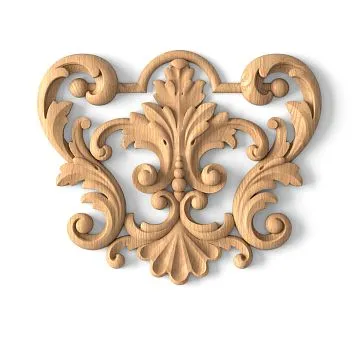
● Wooden InsertsThey can be made in the form of carved panels, decorative inserts, or complex ornaments. Such inserts add elegance and historical charm to the facade.
● applied decorModern solutions allow creating decorative elements that are easy to install and can be changed according to the owner's preferences.
● Wooden beamsThey serve not only as a functional element concealing joints and irregularities, but also as an important decorative accent, completing the overall facade appearance.
Each of these elements can be combined to achieve the most harmonious effect. Thus, the presence of carved overlays can be complemented by modern applied decorative elements, creating an interesting contrast between traditional craftsmanship and contemporary trends.
Architectural solutions for different types of buildings
Wooden facades can be applied to both residential houses and public buildings, commercial structures, and country estates. Depending on the building's purpose, an appropriate design is selected. For private homes, facades emphasizing coziness and warmth, using traditional motifs and decorative elements, are often chosen. Public buildings may employ more rigorous and minimalist solutions, where emphasis is placed on functionality and durability.
In any case, the correct choice of finishing and decorative elements allows creating a facade that not only protects the building but also enhances its appearance. A beautiful wooden facade can highlight the uniqueness of the object, make it recognizable, and create an unforgettable image that will delight the eye for many years.
Technologies and processing methods
Material selection and preparation
The foundation of any quality wooden facade is, of course, the material. Natural wood used for facade structures must possess high strength, resistance to atmospheric influences, and an attractive texture. For such products, solid wood is often used, which undergoes special preparation: planing, drying, sanding, and treatment with protective compounds. This ensures that the wooden facade will not only be beautiful but also last long, retaining its properties even under adverse climatic conditions.
Traditional craftsmanship methods
One of the distinctive features of wooden facades is the use of traditional craftsmanship techniques, such as wood carving. Masters with years of experience create unique patterns and ornaments that give the facade individuality and historical depth. Such elements asWooden Insertsare a vivid example of how ancient techniques can be integrated into modern construction to create a unique design.
Modern Processing Technologies
With the development of technology, traditional processing methods combine with modern innovations. Laser cutting, computer modeling, and automated machines allow achieving incredible precision and reproducibility even for the most complex decorative elements. Such technologies enable creatingapplied decorthat precisely matches the designer's concept and harmoniously integrates with the overall facade style.
Protective coatings and surface treatment
One of the key stages in creating a beautiful wooden facade is the final finishing. Natural wood requires protection from moisture, ultraviolet rays, and mechanical damage. For this purpose, various protective compounds — varnishes, oils, waxes, and antiseptics — are used. Proper treatment not only preserves the natural beauty of wood but also enhances its texture, making the facade even more expressive.
Using modern protective coatings ensures the longevity of the wooden facade, preserving its original appearance even under strong sunlight and temperature fluctuations. This is especially important for exterior structures, which are constantly exposed to environmental conditions.
Practical tips and recommendations
Project Planning
Before beginning to create a beautiful wooden facade, it is essential to carefully plan the design and prepare a detailed work plan. Determine which decorative elements you wish to use — these may beWooden Inserts, applied decor orWooden beams. Consider the building's architectural style, climatic conditions, and functional requirements. This will help avoid errors during implementation and achieve a harmonious result.
Collaboration with Professionals
Creating a facade is a complex process requiring high qualification and experience. Consulting professionals will not only speed up the work but also ensure high-quality execution. Experienced masters can recommend optimal materials, select decorative elements, and correctly install all components, guaranteeing the facade's longevity and aesthetic appeal.
Care and Regular Maintenance
To ensure a beautiful wooden facade retains its original attractiveness, regular maintenance is necessary. Monitor the condition of the protective coating, periodically clean and treat with natural products. Proper care will prevent fading, cracking, and other damage, preserving the unique beauty of wood for many years.
Examples of successful projects
Studying examples of implemented projects can be an excellent source of inspiration. On specialized websites and in architectural journals, you can find numerous photos and descriptions of wooden facades. These examples demonstrate how traditional craftsmanship techniques can be combined with modern technologies to create unique and durable solutions. Each image is a story about craftsmanship, creativity, and love for natural materials.
Conclusion
A beautiful wooden facade is a combination of nature, art, and modern technology capable of transforming the building's exterior and creating a unique atmosphere of coziness and harmony. Using such decorative elements asWooden Inserts, applied decor andWooden beams, you can create a facade that is not only functional but also aesthetically appealing. Proper material selection, adherence to traditional craftsmanship techniques combined with innovative processing methods, and regular maintenance — all of this allows achieving an outstanding result.
Natural wood used for facade decoration imparts buildings with a unique character, reflecting the richness of cultural traditions while simultaneously showcasing a modern approach to architectural design. A beautiful wooden facade can become the building's signature, evoking feelings of warmth, stability, and harmony with the surrounding nature. This is an investment in aesthetics, quality, and durability that will last for decades, delighting the eye and inspiring with its natural charm.
Thus, creating and decorating a wooden facade is a creative process requiring attention to detail, respect for traditions, and use of modern technologies. Following the provided recommendations and relying on professional experience, you will be able to implement a project that not only protects the building from external influences but also becomes a true work of art embodied in natural wood.