Article Contents:
- Anatomy of the classic molding profile: form, function, and visual logic
- Framing decor in interior design history: from paintings to architectural panels
- Wall framing: techniques, methods, and visual effects
- Transitions and joints: how molding solves the problem of connecting materials and planes
- Stylistic pairs: how molding interacts with other interior elements
- Classic: what makes molding classic and how to interpret it today
- Combinatorics of molding profiles: creating complex compositions
- Materials and finishes: from solid wood to imitation, from gilding to patina
- Application scenarios for molding in various rooms
- Practical aspects: selection, calculation, installation
- Care and longevity: how to preserve the beauty of molding for years
- Mistakes to avoid when using molding
- FAQ: answers to popular questions about molding
- Conclusion: molding as a tool of architectural thinking
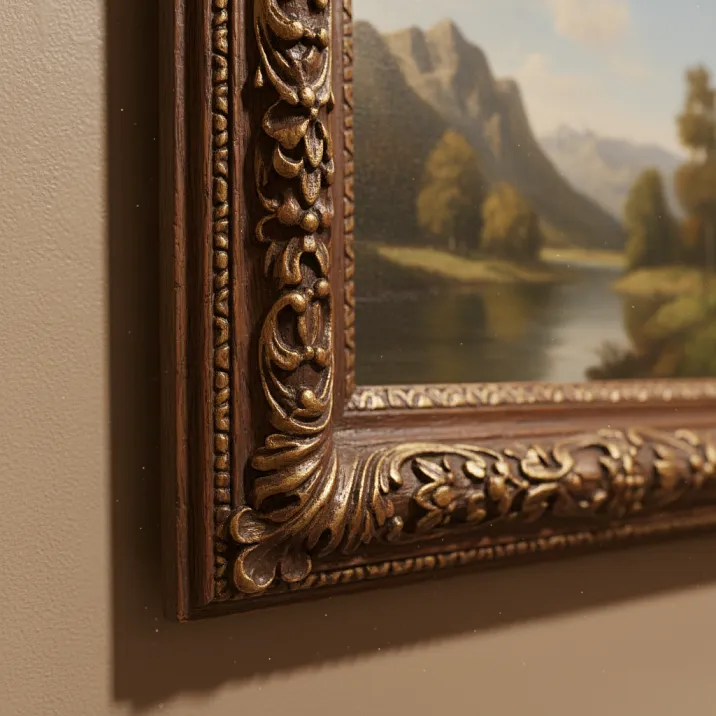
Molding is a word that instantly conjures images of museum galleries, framed canvases, noble wood, and gilded reliefs. But behind this image lies a much broader reality: molding today is a universal tool of architectural and interior design, capable of transforming space, creating visual accents, marking transitions between materials and planes, establishing stylistic pairs and compositions.picture frames are used not only for framing but also as standalone decorative elements — for creating wall panels, decorating ceilings, embellishing furniture, forming niches and portals.It is not just a decorative strip, but an architectural phrase that can be concise or ornate, strict or luxurious, but always — meaningful and precise.
The history of molding traces back to the Renaissance, when framing paintings became a standalone art. Masters created complex profiles with carving, gilding, inlay, turning the frame into an extension of the artwork. Over time, molding moved beyond frame decoration and began to conquer walls, ceilings, furniture, doors. Today, classic molding profiles are used not only for paintings but also for creating wall panels, framing mirrors, zoning walls, accenting niches and openings, forming complex architectural compositions.



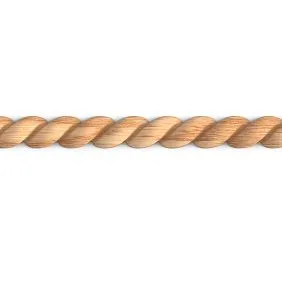


Anatomy of the classic molding profile: form, function, and visual logic
The classic molding profile is the result of centuries of evolution, during which its form was refined to perfection. Its main feature is a concave shape, where the outer edge is higher than the inner one. This geometry creates a sense of perspective, visually deepens the plane, and directs the viewer's gaze. In cross-section, a classic profile resembles a trough or gutter, and it is precisely this shape that provides the visual drama we associate with traditional frames and architectural decoration.
Why does the classic profile work? Because it creates a play of light and shadow. The concave surface catches light at different angles, producing soft gradients and transitions. The protruding outer edge casts a shadow on the wall, marking the boundary and creating depth. The inner bevel directs the viewer's gaze toward the center of the composition, whether it's a painting, mirror, or architectural panel. This geometry is not accidental — it has been refined over centuries of practice and perfected by masters who understood the laws of visual perception.
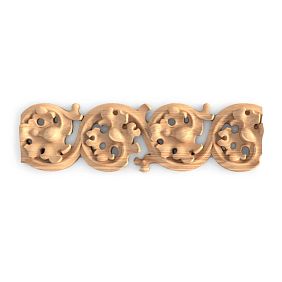
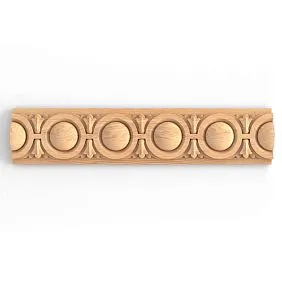
Classic profiles can be smooth or decorated. A smooth profile demonstrates the purity of lines, the nobility of the material, and quiet elegance. A decorated profile is adorned with carving: vegetal ornaments, geometric patterns, rocaille scrolls, beads, ribbons, rosettes. The level of decoration determines the stylistic affiliation of the molding: from strict neoclassicism to lavish baroque, from restrained art deco to opulent rococo.
The reverse profile is the opposite of classic: here the inner edge is higher than the outer, creating a convex shape. This profile visually pushes the framed object forward, making it more voluminous and closer to the viewer. The reverse profile is ideal for still lifes, portraits, mirrors — anywhere where it is important to emphasize the physical presence of the object, its materiality, and volume.
The flat profile is minimalism in the world of molding. Here, there is almost no height variation, the surface is flat or with barely noticeable relief. Such a profile does not compete for attention; it merely marks the boundary, creating a frame without visual noise. The flat profile is ideal for modern art, photography, graphics, and anything that requires a concise, unobtrusive frame.
The round profile has a semicircular or oval cross-section. This is a soft, pliable, streamlined variant that looks both traditional and modern. The round profile is suitable for interiors where smooth lines, absence of sharp angles, and visual softness are valued. It can be made in various materials and finishes: from natural wood to metallic coatings.
The 'box' profile has a large height relative to its small width. It creates a deep quarter into which volumetric objects can be placed: icons with frames, relief panels, three-dimensional embroidery, medals in cases. The box profile is a functional profile that solves specific tasks related to the depth of the framed object.




Framing decor in interior design history: from paintings to architectural panels
Framing decor is not only about paintings. It is an entire direction in architectural and interior design that uses the principle of framing to structure space, create visual accents, and form rhythmic compositions. The classical tradition of applying framing decor dates back to palace interiors of the 17th-19th centuries, where walls were divided into panels using molding strips,of polyurethane moldingsand wooden profiles.
Wall panels framed with molding create the effect of a precious box. An empty wall transforms into a gallery of rectangles and squares, each perceived as an independent artistic field. Inside these frames, there can be contrasting colors, patterned wallpaper, decorative plaster, fabric covering — options are numerous. Importantly, the frame creates a boundary, marks the transition from one texture or color to another, making this transition visually meaningful and aesthetically complete.
Historically, framed decoration was a privilege of aristocratic interiors. Wooden moldings were hand-carved, covered with lacquer, gilded with gold leaf, or patinated. This was a craft requiring skill and time. Today, technologies have changed, but the aesthetics remain:molding wholesalecan be purchased in various styles, from budget to premium, but the principle of use remains the same — creating a visually structured, noble, architecturally meaningful space.
Framed decoration works especially effectively in rooms with high ceilings. Here, you can create a multi-level composition: lower panels at 90–120 cm from the floor, middle panels at 180–220 cm, and upper panels under the ceiling. Each level is framed with molding, creating a visual hierarchy and complex rhythmic structure. This solution is characteristic of neoclassical interiors, English classicism, and French style.
In modern interiors, framed decoration is used more sparingly, but no less effectively. One accent wall with several large panels framed with minimalist molding can become the compositional center of the entire space. Inside the panels, you can place contrasting wallpaper, mirror inserts, decorative painting, or simply paint in another color. The frame makes this composition complete, transforming a decorative technique into an architectural statement.
An interesting technique — using molding to frame functional zones. For example, a TV on the wall can be surrounded by a molding frame, creating an illusion of a painting or portal. The headboard of a bed can be framed with a wide molding composition, turning it into an architectural accent. Even a simple niche in the wall can be enhanced by adding a molding profile around its perimeterwooden corniceor molding profile.
Our factory also produces:


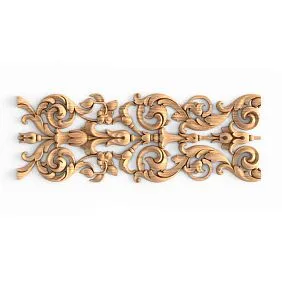


Wall Framing: Techniques, Methods, and Visual Effects
Framing walls with molding is an art requiring understanding of proportions, rhythm, and balance. The main task is to create a composition that is visually harmonious, not overloaded, yet not empty. There are several classic framing schemes, each working within a specific stylistic context.
The first scheme — symmetrical division of the wall into equal panels. This is a classic approach, characteristic of French and Italian interiors. The wall is divided vertically into three or five parts, horizontally — into two or three levels. This creates a grid of rectangles, each framed with molding. It is important to correctly calculate proportions: too small panels create visual noise, too large ones lose intimacy. The golden ratio is an excellent guide for calculation.
The second scheme — asymmetrical division with a dominant element. Here, one panel is made larger than the others, becoming the visual center of the composition. The remaining smaller panels create a visual environment, supporting the main theme. This scheme is characteristic of eclectic interiors, modern interpretations of classicism, and spaces where dynamics and visual intrigue are important.
The third scheme — horizontal division of the wall using molding strips. The wall is divided into the lower third (often painted in a darker color or covered with panels), the middle section (main field), and the upper section under the ceiling. Boundaries are marked by horizontal molding strips that run around the entire perimeter of the room. This division visually reduces the ceiling height, making the space more intimate and cozy.
The fourth scheme — framing individual architectural elements. Door and window openings, niches, protrusions, columns — all of these can be framed with molding, transforming structural elements into decorative ones. This works especially effectively with doors: a wide molding frame around a door opening turns an ordinary door into an architectural portal.
When framing walls, it is important to consider not only geometry but also materials. If walls are painted, molding can be contrasting in color, creating clear graphic lines. If walls are covered with wallpaper, molding is better chosen to match the main color of the wallpaper or the pattern color. If walls are covered with fabric, molding should harmonize with the fabric texture: smooth molding for silk, relief molding for velvet.
ceiling molding orCeiling cornicewhich visually completes the composition, creating a smooth transition from vertical to horizontal. Combined with wall molding, ceiling molding forms a unified architectural frame within which the entire interior scenario unfolds.
a baseboard for the floorWooden baseboardIn a classical interior, a wide baseboard is not just a technical necessity — it is an architectural element that sets the scale of the entire space. A 12–15 cm high baseboard with a classic profile transforms an ordinary room into a grand hall. A narrow 5–7 cm baseboard creates a more modern, minimalist feeling.
Get Consultation
Transitions and Joints: How a Bargeboard Solves the Problem of Connecting Materials and Surfaces
Transitions are always problematic zones in interior design. The junction of wall and ceiling, wall and floor, different finishing materials, color zones — all of this requires a visual solution that turns a technical necessity into an aesthetic value. A bargeboard is the ideal tool for working with transitions.
The transition between wall and floor is resolved using
Transition between wall and floor is resolved usingwooden baseboard for floor. A wide skirting board in a classic interior is not just a technical necessity — it is an architectural element that sets the scale of the entire space. A skirting board 12-15 cm high with a classic profile transforms an ordinary room into a grand hall. A narrow skirting board 5-7 cm creates a more modern, minimalist feel.
Transitions between different materials on the wall also require framing. If the lower part of the wall is covered with wooden panels and the upper part is painted, a divider is needed between them. A horizontal molding strip or molding marks the boundary, making the transition visually meaningful. The same applies to transitions from wallpaper to paint, from one color to another, from smooth to textured surfaces.
Transitions in areas with different ceiling heights are especially interesting. If a room has a stage or niche, or if the ceiling is multi-level, molding helps mark these height changes, turning them into architectural features. A vertical molding along the edge of a niche creates a portal effect, while a horizontal molding around the perimeter of a ceiling box emphasizes its geometry.
Internal and external corners — another area where molding demonstrates its functionality. A correctly mitered 45-degree joint between two molding strips at a corner is a sign of professionalism and attention to detail. An ideal corner joint makes the molding composition unified and monolithic, as if carved from a single piece of wood.
Molding is also used to frame technical elements that need to be visually enhanced. Ventilation grilles, outlets, switches, technical boxes — all of these can be framed with small molding frames, transforming functional elements into part of a decorative system.
Stylistic Pairs: How Molding Interacts with Other Interior Elements
Bargeboard does not exist in isolation. It is part of the interior ensemble, and its interaction with other elements determines the final result. Stylistic pairs — these are combinations of elements that reinforce each other, create visual rhymes, and form a unified composition.
The first classic pair — bargeboard anddecorative polyurethane elements. Polyurethane molding on the ceiling combined with wooden bargeboard on the walls creates a multi-level composition where each material plays its own role. Polyurethane is lighter, cheaper, and allows for complex shapes. Wood provides nobility, tactility, and a sense of authenticity. Together, they create an interior that looks expensive and thoughtfully designed.
The second pair — bargeboard and classic furniture. If classic furniture is present in the interior,Classic Furniture, the bargeboard on the walls should correspond to its decoration. Carved elements on the furniture find resonance in the bargeboard’s carving, the color of the furniture wood matches the bargeboard’s color, and the proportions of the furniture details correspond to the width and height of the bargeboard profiles. This harmony creates a sense of thoughtfulness and stylistic unity.
The third pair — bargeboard andFurniture legs. At first glance, what do they have in common? But upon closer inspection,Legs for tablesorLegs for chairsoften have similar profiles to the bargeboard: the same grooves, the same baluster-like extensions, the same carved details. When these elements are coordinated, the interior achieves visual continuity at all levels — from ceiling to floor.
The fourth pair — bargeboard and doors.Wooden casingsAround doors, they should correspond to the wall bargeboard. They can be from the same collection, have similar profiles, repeat decorative motifs. A door framed by casings that correspond to the wall bargeboard becomes an organic part of the architectural composition.
The fifth pair — bargeboard and mirrors. A mirror in a bargeboard frame — a genre classic. But here it is important to coordinate the mirror frame with the wall bargeboard. They can be contrasting (a mirror in a gold frame against a white wall bargeboard) or harmonious (mirror and walls framed with identical profiles). Both options work — the key is conscious choice.
The sixth pair — bargeboard andMolding on the Wall— rosettes, cartouches, garlands, ornaments — all these— everything must correspond to the chosen era.combine beautifully with bargeboard, creating a rich, multi-layered composition. It is important not to overdo it: molding should complement the bargeboard, not compete with it for attention.
Classic: What Makes Bargeboard Classic and How to Interpret It Today
Classic: what makes a baguette classic and how to interpret it today
Classic is a multi-layered concept. In the context of bargeboard, classic means adhering to certain canons of form, proportions, and decoration that developed between the 17th and 19th centuries in European architecture and applied arts. A classic bargeboard possesses several recognizable features.
First, it is symmetry and compositional balance. A classic profile is harmonious, with no random elements — every curve, every edge has its purpose. The profile reads as a complete phrase, not a collection of details.
Second, it is decoration based on natural and geometric motifs. Acanthus leaves, grapevines, rosettes, palmettes, Ionic capitals, beads, ribbons — all of this constitutes the classic decorative vocabulary, which passed from style to style, era to era, modified but retaining recognizability.
Third, it is specific proportions. The width of a classic bargeboard relates to its height according to the golden ratio or similar proportions. A bargeboard that is too wide and flat or too narrow and tall looks disharmonious in a classic context.
Fourth, it is noble materials and finishes. A classic bargeboard is traditionally made of solid wood, often oak, walnut, or mahogany. Finishes may be natural (emphasizing wood texture), stained (imitating valuable species), gilded (using gold leaf or gold-colored paints), or patinated (creating an effect of noble antiquity).
Today, classicism is interpreted differently. There are two main approaches: historical authenticity and modern interpretation. The first approach implies strict adherence to canons: selecting authentic profiles, using traditional materials and finishing techniques, creating interiors that appear as if transported from the 18th-19th centuries. This approach is characteristic of museum restorations, palace interiors, and representative spaces.
The second approach — reinterpreting classicism through the prism of modern aesthetics. A classic profile may be simplified, stripped of excessive ornamentation, painted in unexpected colors, combined with modern materials. For example, a classic bargeboard made ofsolid woodcan be painted graphite gray and used in a minimalist interior, where it creates a subtle nod to classical tradition without falling into stylization.
It is important to understand that classicism is not museum archaism, but a living tradition that continues to evolve. Modern manufacturers offer collections of bargeboard in which classic profiles are adapted to contemporary tastes and technologies. This allows creating interiors that simultaneously respect tradition and meet current requirements for comfort and aesthetics.
Combinatorics of crown molding profiles: creating complex compositions
Combinatorics is the art of combining different elements to create something new and more complex. In the world of crown molding, combinatorics allows you to go beyond standard solutions and create unique compositions that highlight the individuality of the interior.
First technique: using crown moldings of different widths. A wide molding in combination with a narrow one creates visual hierarchy. The wide molding can frame main panels, while the narrow one divides them into smaller sections or serves as an additional decorative element. This creates a complex, multi-level composition in which each element has its own place and significance.
Second technique: combining crown moldings of different profiles. A classic concave profile paired with a flat one creates an interesting contrast in shape. The concave molding can run along the outer perimeter of a panel, while the flat one runs along the inner edge, creating a double-frame effect. Alternatively, the flat molding can serve as a base, while the classic profile adds a decorative accent.
Third technique: combining crown moldings of different colors and finishes. A gilded molding in combination with dark wood, white with gray, natural wood with painted wood — there are countless options. The key is to maintain balance: if contrasting colors are used, their quantity must be precisely measured to prevent the composition from becoming visually chaotic.
Fourth technique: adding additional decorative elements. Corner piecesdecorative rose outletsat joints, ornamental inlays in the center of panels, carved consoles under the molding — all of this enriches the composition, making it more expressive and individual.
Fifth technique: using crown molding in combination with other architectural elements. For example,wooden balusterscan be integrated into wall compositions as vertical separators between panels. OrDecorative bracketscan support a horizontal molding, creating an illusion of constructive logic.
Sixth technique: creating nested crown molding frames. A large frame surrounds the entire wall, within which several smaller frames are placed, each potentially containing even smaller elements. This creates a matryoshka effect, visual depth, and complexity that unfolds gradually as it is viewed.
Seventh technique: asymmetrical combinatorics. This is a bolder approach, characteristic of eclectic and modern interiors. Here, moldings of different sizes and profiles are arranged not according to a strict symmetrical scheme, but to create a dynamic, visually interesting composition. It is important that, despite the asymmetry, the composition remains balanced and does not lose equilibrium.
Materials and finishes: from solid wood to imitation, from gilding to patina
Choosing the material and finish for crown molding is a critically important decision that determines not only the appearance but also the durability, tactile qualities, and overall atmosphere of the interior.
Solid wood — a classic material for crown molding. Oak, beech, ash, walnut — each species has its own texture, color, character.Oak solidOak has a pronounced texture, high density, and nobility that is unmistakable. Beech is more uniform, pinkish, and soft to the touch. Ash is light with a contrasting texture. Walnut is dark, chocolate-colored, and luxurious.
Solid wood can be processed in different ways. Natural finishes with oil or wax preserve the wood's texture and color, emphasizing its natural beauty. Staining allows you to change the tone, giving the wood a darker or lighter shade, or imitating valuable species. Painting completely hides the texture, creating a smooth, uniform surface of the desired color.
Gilding — a traditional finish for classic crown molding. Real gold leaf is applied to a special primer (levkas), creating a warm, deep, shimmering effect. Imitation gilding using gold-colored paints or leaf gives a brighter but less deep result. Modern technologies allow creating gilding in various shades: from light lemon to dark crimson.
Patina — a process of artificial aging, where special compounds are applied to the molding to simulate the effects of time. Patina can be dark (darkening in recesses of carving) or light (lightening raised parts). Patinated molding looks antique, with a history, which is especially valued in classic interiors.
Silvering — a finish similar to gilding, but using silver-colored materials. Silver gives a cooler, noble, restrained effect. It pairs well with modern interiors, gray and blue color schemes, metal, and glass.
In addition to solid wood, crown molding can be made frompolyurethanePolyurethane molding is lighter, cheaper, resistant to deformation, and easy to install. Modern technologies allow creating polyurethane molding that is visually almost indistinguishable from wood. However, it lacks the tactile quality, weight, and sense of authenticity provided by natural wood.
MDF with veneer — a compromise option that combines relatively low cost with the presence of a natural wooden finish. Veneer provides the texture and color of real wood, while the MDF base ensures geometric stability and ease of processing.
Composite materials and plastic — budget options that imitate wood or other materials. They are suitable for temporary solutions, rentals, or budget projects, but cannot replace real materials in interiors where quality and durability are important.
Crown molding is versatile, but it works differently in each type of room, solving specific tasks and creating a particular atmosphere.
Living room. Here, crown molding is used to create grandeur and architectural significance. Walls can be divided into panels, a fireplace can be framed, or a composition can be created around a television or painting. Crown molding in the living room can be sufficiently wide and decorative, especially if the ceilings are high. In combination with
crown molding creates an interior that speaks of the taste and status of the owners.classic furnitureThe baguette creates an interior that speaks of the owners' taste and status.
Bedroom. Here, privacy, coziness, and softness are important. Crown molding in the bedroom is used more modestly: framing the headboard of the bed, small panels on the walls, a ceiling cornice. Preferred colors are calm: natural wood, white, gray, pastel tones. Carved decoration may be present, but it should not be aggressive or overloaded.
Dining room. This is a formal space where grandeur is appropriate. A wide crown molding forming panels on the walls, in combination withceiling corniceCreates an atmosphere of classic elegance. If there is a buffet or sideboard in the dining room, the molding on the walls should complement the furniture decor.
Office. Here, molding creates an atmosphere of solidity, seriousness, and intellect. Dark wood, classic profiles, bookshelves framed with molding create an interior conducive to work and contemplation. Molding can frame bookshelves, creating visual structure and emphasizing the importance of the library.
Entryway. This is the first room guests see, and it should set the tone for the entire interior. Molding in the entryway is used to frame mirrors, doorways, and create wall panels. Even a small entryway, decorated with molding, appears more noble and thoughtfully designed.
Bathroom. Unconventional but possible application. Here, moisture resistance is important: better to usepolyurethane moldingor wood treated with special waterproof compounds. Molding in the bathroom creates a spa atmosphere, especially when combined with marble cladding and classic sanitary ware.
Corridor. A long, narrow space can be visually organized using molding. Horizontal panels framed with molding divide the wall into sections, creating rhythm and structure. This is especially effective in long corridors, where monotony must be avoided.
Practical aspects: selection, calculation, installation
Choosing molding begins with defining the interior style and functional tasks. Ask yourself: what atmosphere do I want to create? What colors and materials are already present in the interior? What is the ceiling height? What is the budget?
After determining the style, choose the profile. For classic interiors, use recessed profiles with decoration; for modern interiors, choose flat and minimalist profiles; for eclectic interiors, you can experiment with combinations.
The amount of molding is calculated based on the perimeter of the surfaces to be framed plus allowance for trimming (usually 10-15%). If planning to create panels, draw a layout, calculate the length of each element, and sum them up.
Installing molding requires precision. Corner joints must be mitered at 45 degrees using a miter box or a circular saw. Mounting is done with adhesive (for lightweight profiles) or a combination of adhesive and finish nails (for heavy wooden profiles). It is important that the wall surface is flat and primed.
After installation, joints are spackled, sanded, and if necessary, touched up to match the molding color. A well-installed molding looks like a single unit, with no visible joints or fasteners.
Care and longevity: how to preserve the beauty of molding for many years
Proper care ensures the longevity of molding and preserves its aesthetic qualities. Wooden molding should be regularly cleaned of dust with a dry or slightly damp cloth. Avoid aggressive cleaning agents and abrasives that may damage the finish.
If the molding is coated with oil or wax, it can be periodically refreshed by applying a new layer over the old one. This maintains the protective properties of the coating and refreshes the appearance. Painted molding can be repainted in areas of wear as needed.
Gilded molding requires delicate handling. Dust is removed with a soft brush; serious stains are cleaned with specialized gilding cleaners. Mechanical impact can damage the thin layer of gold, so be careful.
Polyurethane molding requires the least care: it can be wiped with a damp cloth and mild detergent. It is not afraid of moisture, does not deform, and does not crack.
Errors to avoid when using molding
Mismatched scale. Too wide molding in a low room visually reduces the space. Too narrow molding in a large room becomes insignificant and fails to perform its function.
Excessive decoration. Molding overloaded with carving, combined with abundant moldings, complex wallpapers, and decorative furniture, creates visual chaos.
Color mismatch. Molding that does not match any element in the interior by color appears random and inappropriate.
Poor installation quality. Crooked joints, visible nails, uneven gaps ruin the effect of even the most beautiful molding.
Ignoring style. Baroque molding in a minimalist interior or ultra-modern flat profile in a classic living room — this stylistic conflict rarely looks harmonious.
FAQ: Answers to popular questions about molding
Can molding be used in a modern interior?
Yes, absolutely. Choose minimalist profiles, neutral colors, minimal decoration. Flat molding painted gray or black fits perfectly into modern aesthetics.
Which material is better: wood or polyurethane?
It depends on priorities. Wood provides authenticity, tactile quality, and elegance. Polyurethane offers practicality, easy installation, and lower cost.
Is gilding mandatory for a classic interior?
No. A classic interior can be restrained. Natural wood or tinted molding without gilding looks noble and elegant.
Can you combine battens of different styles?
Yes, if done intentionally. Eclecticism allows combining different styles, but requires refined taste and a sense of proportion.
What is the cost of a batten?
It varies greatly: from 200 rubles per linear meter for a simple polyurethane profile to 5000+ rubles per linear meter for an exclusive carved batten made of precious wood with gilding.
How to care for gilded batten?
Remove dust with a soft brush, avoid moisture and mechanical impacts. In case of serious soiling, consult restoration specialists.
Is batten only for classic styles?
No. Batten is used in various styles: from baroque to minimalism. It all depends on the profile, material, color, and application method.
Can you paint wooden batten?
Yes. After sanding and priming, batten can be painted in any color. This allows adapting it to any color scheme.
Is batten needed in a small apartment?
Not necessarily, but if used sparingly (e.g., framing a mirror, small panels), it can add elegance to the interior without overcrowding the space.
Conclusion: batten as a tool of architectural thinking
Batten is not just a decorative strip. It is a tool of architectural thinking that allows structuring space, creating visual accents, marking transitions, forming stylistic pairs, and linking disparate interior elements into a unified composition. A beautiful batten is the result of proper selection of profile, material, color, finish, and, most importantly, understanding the role it should play in a specific interior.
Classic profiles have proven their viability, enduring through centuries and remaining relevant in various stylistic contexts. They work because they are based on fundamental principles of form, proportion, and interaction of light and shadow. Modern interpretations of classicism show that these principles remain alive and continue to evolve, adapting to new tastes and technologies.
The combinatorics of batten profiles open up boundless creative possibilities. Combining different profiles, materials, colors, and finishes allows creating unique solutions that highlight the individuality of each interior. The key is not to fear experimenting, but to do so intentionally, based on understanding basic principles of composition and style.
Framing decor and wall outlining with batten transform ordinary planes into architectural statements. Transitions between materials and planes, resolved with batten, become not technical seams but aesthetic values. Stylistic pairs in which batten interacts with stucco, furniture, and textiles create interiors where everything is thought out, connected, and meaningful.
STAVROS offers a wide selection of batten profiles, moldings, cornices, baseboards, and other elements for creating classic and modern interiors. The catalog features products made of solid wood and polyurethane, with various finishes — from natural wood to gilding and patination. STAVROS is not just a material supplier, but a partner in creating thoughtful, beautiful, long-lasting interiors. Here you will findmolding wholesale, Wooden cornices, Baseboards, Moldings, decorative elements, furniture legs, balusters for staircases, classic furnitureand much more. Professional consultants will help select solutions that perfectly fit your project, while high-quality products ensure their longevity and enduring beauty for decades.