Article Contents:
- Wood in interior – warmth, style, and limitless possibilities
- Types of wooden panels in interior
- Carved panel
- Geometric panel
- Panel with natural wood grain
- Abstract panel
- In the living room
- In the bedroom
- In the entryway
- In the office or library
- Define the Interior Style
- Choose color and texture
- Consider size and placement
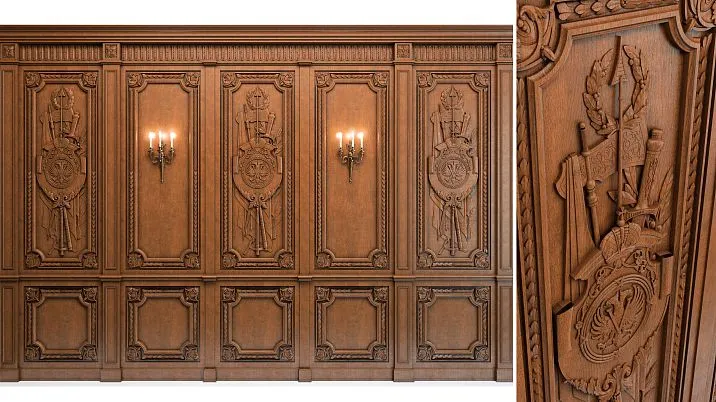


Wood in interior – warmth, style, and limitless possibilities
Every home is a space filled with character and history. Details decorating the walls do not merely complement the interior; they give it meaning, making the atmosphere unique. A beautiful wooden panel is one of those elements capable of transforming the space, bringing a touch of nature, and creating a unique aesthetic.
Wooden panels made from natural wood are not just decorative accents; they are art that combines the natural energy of the material with human craftsmanship. They can be classic carved, modern abstract, minimalist, or complexly composed. Wood is universal: it looks naturally harmonious in restrained Scandinavian style, luxurious classic, and brutal loft.
In this article, we will examine the types of wooden panels, how to properly choose style, size, and shape, as well as what to add to complete the interior.
Polyurethane moldings and polyurethane molding can become an excellent complement to a wooden panel, creating interesting stylistic solutions.




Types of wooden panels in interior
Our factory also produces:


Carved panel
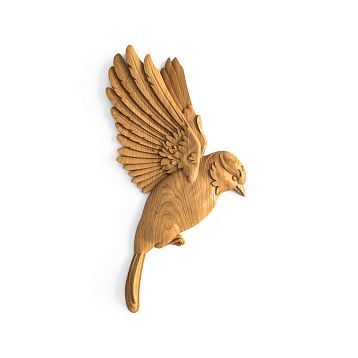
Wood carving is an art rooted in ancient traditions. Such wooden panels can be executed in a classic style with ornaments and patterns, depict landscapes, animals, or symbolic motifs.
Carved panels are created by hand or using laser cutting technology. They can be flat or three-dimensional, monochromatic or painted in various shades.
Such wooden panels will fit perfectly into classic interiors enhanced with luxurious elements, such asPolyurethane moldingsSuch a combination creates an effect of aristocratic luxury characteristic of palace styles.
Get Consultation
Geometric panel
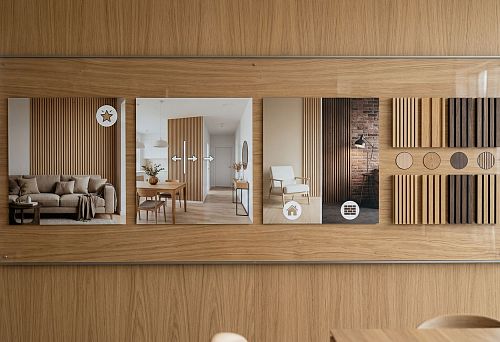
Modern interiors increasingly decorate with geometric compositions. These can be wooden panels in the form of honeycombs, squares, rectangles, or complex patterns, executed in a single color or with combinations of various wood shades.
Geometric panels may consist of individual wooden elements creating a three-dimensional effect. This is an ideal solution for loft, minimalism, or Scandinavian styles.
Panel with natural wood grain
If nature has already created a masterpiece, why change it? A wooden panel made from a tree trunk slice preserving the natural texture looks incredibly striking. It retains natural patterns of growth rings, cracked bark, and other features of the natural material.
Such a panel can be complementedpolyurethane moldingto give the interior harmony between natural and classical elements.
Abstract panel
Those who appreciate original solutions should pay attention to non-standard wooden panels executed in an abstract style. These can be asymmetrical wooden elements chaotically arranged on a base, or complex compositions resembling artistic canvases.
An abstract panel looks great in modern interiors, especially when combined with metallic and glass elements.
In such a case, polyurethane molding can be used to create a contrast between antique forms and modern design.
Where to place a beautiful wooden panel?
In the living room
The central wall in the living room is an ideal place to place a wooden panel. It can become a bright accent, highlighting the interior style. If the room is decorated in a classical style, the panel can be complemented with elegant polyurethane molding.
In the bedroom
A wooden panel above the bed looks great, executed in the form of soft lines or natural patterns. The warm tone of wood creates coziness and harmony, which is especially important in the resting area.
In the hallway
In narrow spaces, walls often remain empty, and a wooden panel will help make the interior more stylish. Geometric panels or abstract compositions will add dynamism and individuality to the hallway.
In the office or library
The workspace should inspire. A wooden panel with deep textured lines or philosophical motifs will give the office a unique character. Combined with wooden shelves and classical details, it will create an atmosphere of aristocracy and intellect.
How to choose a wooden panel?
Define the Interior Style
Before purchasing or manufacturing a wooden panel, it is important to consider the overall style of the room.
● Suitable for classical interiors are carved patterns and additional polyurethane molding.
● In minimalist spaces, geometric structures and panels with natural wood texture are appropriate.
● In loft style, rough wooden panels with an aged effect look great.
Choose color and texture
If the interior has light tones, the wooden panel can be left natural or coated with a light lacquer. Dark wood species — walnut, wenge, mahogany — create an effect of luxury and depth.
Consider size and placement
● Large wooden panels are suitable for spacious walls in the living room.
● Vertical structures visually increase the height of the room.
● Small panels can be combined into compositions, creating original art objects.
Conclusion
A wooden panel is a unique interior element that combines aesthetics and natural energy. It can decorate any room, making it cozy and stylish.
By complementing it with polyurethane molding or creating contrasting combinations, you can achieve incredible visual effects.
When choosing a wooden panel, it is important to consider the interior style, shape, color scheme, and size, so that the item fits organically into the space. It can become a key accent in the room or harmoniously complement other decorative elements.
Wood is a material that lives, breathes, and creates around itself an atmosphere of coziness. A beautiful wooden panel is not just decoration, but a real interior detail that gives the house a special individuality.