












































































Article Contents:
- Introduction: Why do you need a beautiful wooden door?
- Project planning: The foundation for success
- Defining the Concept and Style
- Creating a detailed work plan
- Work area preparation
- Types of wood for making a door
- Additional elements: Molding, cornice, and baseboards
- Basic tools for working with wood
- Additional accessories
- Stage 1: Preparation and Marking
- Stage 2: Initial assembly and frame construction
- Stage 3: Precise edge processing and sanding
- Stage 4: Decorative carving and installation of decorative elements
- Stage 5: Final finishing
- Stage 6: Installing hardware and mounting
- Experiment, but don't forget the basics
- Quality materials — the key to success
- Use additional decorative elements
- Carefully choose the final finish
- Individuality and exclusivity
- Cost savings and quality control
- Deep satisfaction from completed work
- Unexpected technical problems
- Errors in layout and measurements
- Problems with finishing
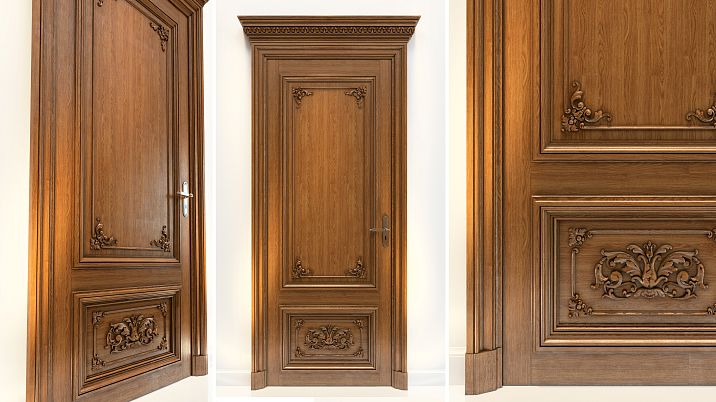
Making a wooden door by hand is not just a craft, but a true art capable of transforming the interior and bringing a piece of soul and warmth into the home. In this article, we will thoroughly examine all stages of the work: from planning the project to finishing, as well as discuss the nuances of choosing materials and tools. You are about to immerse yourself in the world of traditional technologies, where craftsmanship combines with innovative approaches. Ready to challenge the ordinary and create something unique? Then let’s begin!


Introduction: Why Do You Need a Beautiful Wooden Door?
A wooden door is not only a functional element of interior design, but a true work of art. It sets the tone for the entire room, reflecting the character of the owners and the style of the dwelling. Creating such a door by your own hands allows you not only to save money, but also to realize your own creative idea, emphasizing individuality and quality of execution.
When choosing doors, most prefer mass production, but ready-made items are often lacking in uniqueness and personal approach. Making a door by hand is an opportunity to experiment, use high-quality materials, and even introduce innovative solutions into traditional craftsmanship. Moreover, such a project will allow you to feel proud of your handiwork, and the result will serve you for many years, delighting you and your loved ones.




Project Planning: The Foundation for Success
Before starting to make a door, it is important to carefully plan the project. The correct planning not only affects the appearance of the finished product, but also its functionality, durability, and compatibility with the interior.
Our factory also produces:



Defining the Concept and Style
The first step is defining the concept of the future door. Ask yourself: what atmosphere do you want to create in the house? Perhaps you prefer classic with elements of modern design, or you are attracted to minimalism? Defining the style will help you choose the optimal materials and methods of wood processing.
The door should harmonize not only with the interior, but also with the exterior of the house. If the facade is in a traditional style, a door made in modern minimalism may stand out from the overall ensemble. In this case, it is better to choose classic shapes and natural wood tones that highlight the natural beauty of the material.
Get Consultation
Creating a detailed work plan
An equally important stage is creating a detailed work plan. Break the process into several stages: from selecting materials to final finishing. Think about what tools you will need, in what order the work will be performed, and how much time each stage will take.
Planning also includes budget assessment. Although making a door by hand may seem like a more economical option, you must consider the costs of purchasing high-quality materials and specialized tools. Neglecting quality for the sake of economy is a mistake that may affect the durability and aesthetics of the product.
Preparation of the Work Area
The presence of a properly organized work area is the key to successful work. Prepare a spacious room where you can not only perform carpentry work, but also safely store tools and materials. Lighting should be sufficient, and the work surface should be strong and stable.
Don't forget about protective equipment: safety glasses, gloves, and a mask for protecting your respiratory organs. Working with wood, especially when processing the surface, can generate a lot of dust and small shavings, which can be harmful to your health.
Choosing Materials: Wood as the Foundation of a Masterpiece
Choosing the right type of wood is one of the key factors for success. A beautiful wooden door should not only be aesthetically pleasing, but also strong and resistant to external influences.
Types of Wood for Making a Door
There are many types of wood, each with its own characteristics and advantages. Let's consider the most popular options:
● Oak – known for its strength and durability. Doors made of oak have a rich texture and unique pattern that becomes even more beautiful over time.
● Ash – distinguished by its elegant texture and light color. A great choice for those who prefer light interiors with Scandinavian design elements.
● Birch – has a delicate texture and soft color. Perfect for creating doors in classic and modern styles.
● Maple – has a smooth texture and uniform color, allowing you to create a minimalist and modern design.
When choosing wood, pay attention to its moisture content and treatment. The material must be properly dried and treated with antiseptics to prevent mold and insects.
Additional Elements: Moldings, Cornices, and Baseboards
To create an elegant door design, pay attention to details. Decorative elements such asmoldings, cornices, baseboardscan give the product a special expressiveness. They will help hide joints, emphasize the elegance of lines, and add completeness to the overall design.
Using these elements, you can not only improve the aesthetic component, but also strengthen the structural integrity of the door. This is especially important if you plan to use complex decorative elements or combine different types of wood.
Tools and Equipment: What You Need as a Craftsman
To perform the work qualitatively, a set of tools is required that will ensure precision and neatness at every stage of manufacturing.
Main tools for working with wood
● Saw – for primary cutting of wood. Depending on the complexity of the work, you can use a hand saw or an electric saw.
● Plane – necessary for leveling and sanding the surface. It will help give the door smoothness and evenness.
● Drill – for creating holes for hardware. Modern drills are equipped with speed adjustment, allowing work with various materials.
● Sander – will speed up the surface processing, especially if painting or varnishing is planned.
● Chisels and gouges – for fine carving and decorative edge treatment of the door.
Additional accessories
Don't forget about measuring tools: tape measures, squares, levels. They will help achieve absolute accuracy in the dimensions and proportions of the item.
Also prepare fasteners, wood glue, sandpaper of various grits, and protective gear. Each tool and material must be carefully selected, as this directly affects the final result.
Step-by-step guide to creating a door
Let's move to the practical part – a step-by-step guide that will help you at every stage of work. Here we will consider the main stages, from preparation to final finishing.
Stage 1: Preparation and marking
Before starting work, it is necessary to carefully prepare all materials. Cut out blanks of the required sizes, plan the placement of decorative elements, and determine the locations for installing hardware.
At this stage, it is important to conduct accurate measurements and marking to avoid errors in the future. It is recommended to use squares and tape measures, and also to mark lines with a pencil to ensure maximum accuracy of the cut line.
Stage 2: Primary assembly and frame assembly
The next step is assembling the main structure of the door. If your door consists of several elements, connect them using glue and screws. It is important to ensure strong connections so that the door does not deform over time.
If you plan to install additional decorative elements, such asmoldings, cornices, baseboards, install them into the structure at this stage. This will prevent the need for additional adjustments in the future.
Stage 3: Precise edge processing and sanding
After assembling the frame, proceed to sanding and edge processing. A plane and sander will help remove irregularities and prepare the surface for applying finishing materials. Here, patience is key – the better the surface is processed, the better the paint or varnish will adhere.
Stage 4: Decorative carving and installation of decorative elements
If you decided to decorate the door with decorative carving, this stage requires special attention and care. Use chisels and special gouges to create patterns and ornaments. Here you can let your imagination run wild: experiment with different motifs, combining traditional patterns with modern elements.
Do not forget about the importance of small details. Decorative elements, such asmoldings, cornices, baseboards, can become the highlight of your project. They not only decorate the door but also give it a finished look capable of surprising even an experienced viewer.
Stage 5: Final finishing
Final stage – surface finishing. Here you can choose several options: natural oil, varnish, paint, or a combination of several methods. Natural oils will highlight the wood grain, while varnish will give the surface a shine and protect it from external influences.
When choosing the final finish, it is important to consider the operating conditions of the door. If the door will be installed in a high-humidity room or subjected to intensive use, consider more durable and resistant finishes.
Stage 6: Installing hardware and mounting
After all work on the door is completed, it's time to install hardware: handles, hinges, locks. The quality of installation affects not only the aesthetic appearance but also the functionality of the door. Check that all fasteners are securely fixed and do not loosen over time.
Installing a door in the frame is a separate topic requiring attention and care. Use a level to ensure the door hangs evenly, and don't forget to adjust the hinges for smooth opening and closing.
Master Secrets: Tips from Professionals
Experienced door makers know that the success of a project depends on many small details. Here are several recommendations that will help you achieve a flawless result:
Experiment, but don't forget the basics
Creating a beautiful wooden door is a creative process with no rigid boundaries. Don't be afraid to experiment with shapes, patterns, and finishes, but remember the fundamental principles of working with wood. Proper material preparation and adherence to technique are the keys to the longevity of the product.
Quality of materials is the key to success
When purchasing wood, don't cut corners on quality. Well-dried and properly treated wood will last longer and look better. Similarly, don't skimp on tools—quality tools will help you achieve a perfect finish and save time.
Use additional decorative elements
Details can make your door truly unique. Be sure to pay attention tomoldings, cornices, baseboards, which will help highlight the elegance and refinement of the piece. Don't be afraid to combine them with other decorative elements—this will give the door individuality and charm.
Carefully choose the final finish
Each finishing method has its advantages and disadvantages. Natural oils will preserve the wood's natural texture, while varnish will add shine and extra protection. Test several options on a small area before making your final decision.
Advantages of making a door yourself
Creating a wooden door by hand is not just a craft—it's a journey filled with creative discoveries and personal achievements. Let's consider the main advantages of this approach:
Individuality and exclusivity
When you create a door with your own hands, each piece becomes unique. You can bring to life the boldest ideas, adapt the design to specific needs and preferences, and, most importantly, be confident that your door will not be replicated anywhere else.
Cost savings and quality control
Buying ready-made items often costs more than making a door yourself. You personally control the selection of materials and stages of work, which allows you to avoid hidden costs and unpleasant surprises. Moreover, self-production guarantees that every detail will be executed with due care and attention.
Deep satisfaction from completed work
Working with wood is not only a technical process but also a way to express yourself creatively. Upon completing the project, you will be proud of your work and enjoy the result, which will delight you every day. Such an experience cannot be compared to any purchased item—it fills your soul with warmth and confidence in your own abilities.
Possible difficulties and ways to overcome them
As with any creative process, making a door by hand comes with certain challenges. But every problem is an opportunity to improve and learn something new. Let's consider the main difficulties that may arise and ways to solve them.
Unexpected technical problems
During work, it may happen that the structure does not assemble as intended, or there are issues with installing hardware. In such cases, it's important to remain calm, analyze the situation, and seek optimal solutions. Remember, every mistake is a step toward mastering your craft.
Errors in marking and measurements
There is nothing worse than inaccurate measurements, which can lead to an unsatisfactory result. Therefore, always check your markings several times, use quality tools, and don't rush. An error made early on may cost you dearly later.
Problems with finishing
An inappropriate finish or uneven application of varnish/paint can ruin the door's appearance. If you notice flaws, don't hesitate to redo the finishing—often a small adjustment can dramatically change the result. Don't forget to test on a small area to ensure the chosen method is correct.
Conclusion: Create Your Legend
Making a beautiful wooden door by hand is not just repair or interior modernization. It is an opportunity to create something greater than just a functional element — it is a chance to infuse a part of your soul into creating a unique masterpiece that will delight the eyes and warm the heart for many years.
Each stage of work requires attention to detail, patience, and diligence, but the result is worth it. Your door will become a symbol of your craftsmanship, proof that even in the age of mass production, you can create a unique product filled with individuality and the warmth of handcrafted work.
If you are ready to challenge the ordinary and immerse yourself in the world of creativity, do not be afraid to experiment, use innovative solutions, and bring your ideas to life. Let every hammer strike and every chisel stroke bring you closer to your goal — creating a door that will not just be part of your home, but a true legend of your creativity.
In conclusion, it should be noted that creating a wooden door is a process requiring a comprehensive approach and deep understanding of woodworking technology. From proper planning to final finishing — every detail plays an important role. And if you are determined and willing to learn from your own experience, the result will exceed all expectations.
Finally, I want to remind you: do not underestimate the importance of details. Decorative elements, such asmoldings, cornices, baseboards, can become that very touch that turns an ordinary door into a work of art. Pour your soul into the process, and you will see how your creation becomes a reflection of your character and professionalism.
By creating a wooden door by hand, you not only decorate your home, but also leave your mark in the history of craftsmanship, demonstrating that true craftsmanship is capable of overcoming any boundaries and stereotypes. May your labor be duly appreciated, and each new project bring inspiration and joy of creativity.
This article is merely a starting point for your creative journey. Be inspired by ideas, experiment with forms and textures, and remember: every detail matters, and every mistake is an opportunity to improve. Create, perfect yourself, and do not fear moving forward, for a true master knows: there is no limit to perfection.
Thus, if you dream of a door that will become a true ornament of your home and a symbol of your creative spirit, do not postpone what you can do today. Study the basics of working with wood, acquire quality materials, prepare your workspace, and begin to create. May every wooden door you make with your own hands be a testament to your skill, experience, and love for your craft.
In conclusion, I wish you success and inspiration in this challenging yet exciting process of creating a beautiful wooden door by hand. Your home deserves the best, and you — to be the one who can transform space, bring warmth, and a unique style. Good luck on your creative path, and may every new door be another step toward perfection!


